
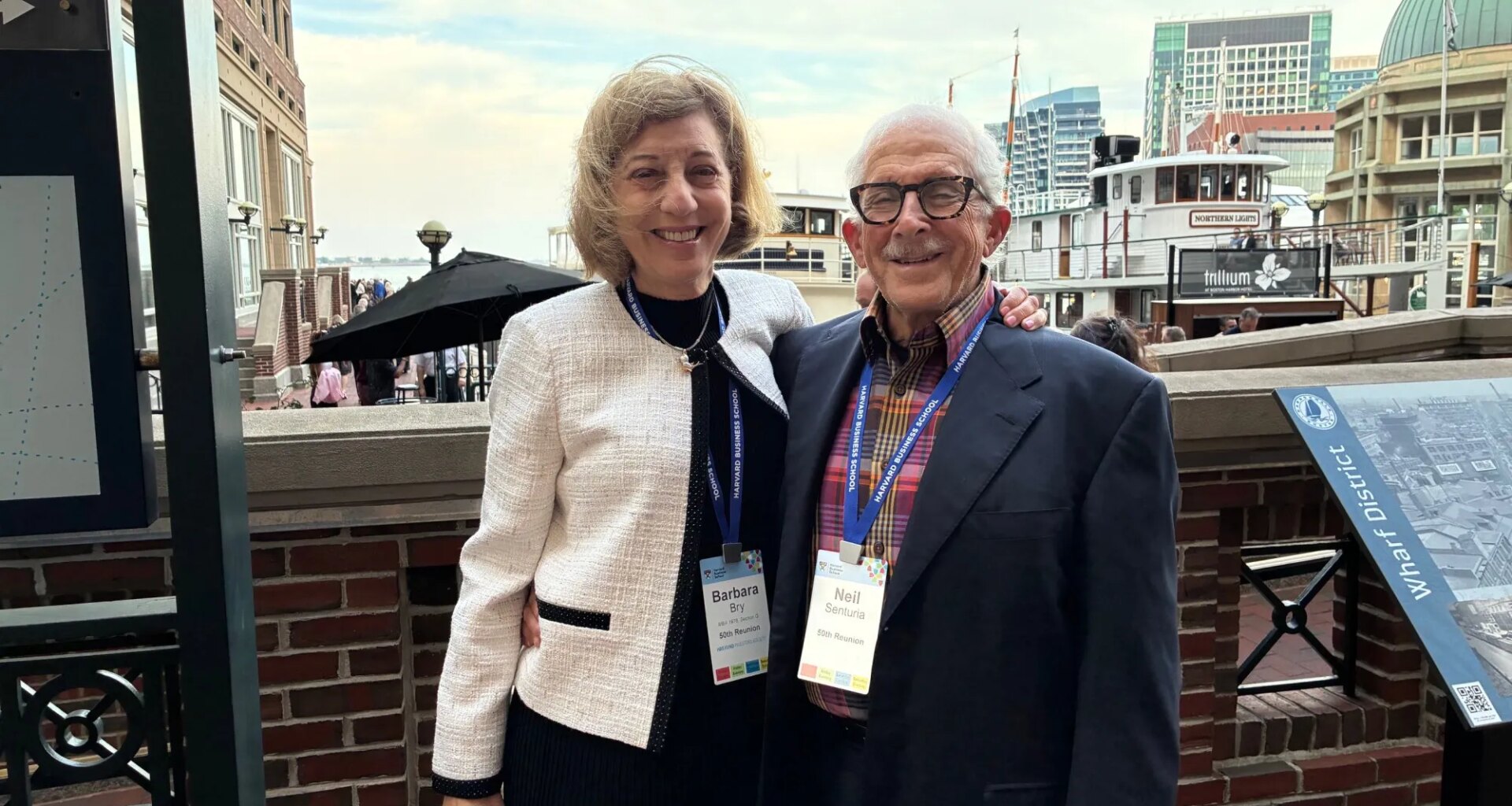
Fifty-two years ago this September, I drove my 1970 yellow Karmann Ghia convertible from Philadelphia to Boston to enter the MBA class of 1976 at Harvard Business School. I was one of 106 women who graduated — almost 15% of the class — up from 86 the year before. The school had begun admitting women to its full-time MBA program in 1963. That first group was known as the original eight.
I still remember standing in line to register for classes while representatives from major banks offered us credit cards. This was a big deal. In 1974, a woman generally couldn’t get a credit card in her own name.
The business school culture was male and money, which felt foreign to me. I had been working for a small Philadelphia urban real estate developer where I wore jeans to work. At HBS, the men wore nice pants and blue blazers, the women wore blouses with bows. Many of my classmates had come from jobs at Fortune 500 companies, banking and consulting, and the school seemed focused on turning out leaders in those industries — while I dreamed of a career in journalism. A few male classmates told me I was only there to find a husband or that I was taking the place of a qualified man.
The school used the case method that included the “cold call.” You read about a problem being confronted by a particular company, and the professors call on you whether or not your hand is raised. It was terrifying. It was also, I came to understand, one of the great gifts of my education. It taught me to raise my hand — and to keep it up.
For all my awkwardness, the school gave me extraordinary things: world-class faculty, classmates from all over the globe, and the ability to create my own course, Business and the Media, when nothing in the catalog matched my interest. I graduated in the middle of the class, but I was then and forever an alum.
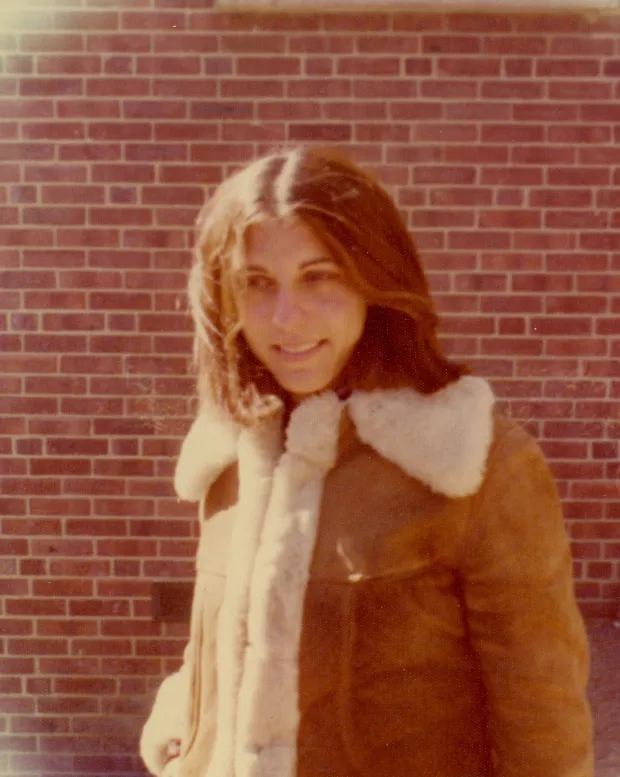 Barbara Bry, pictured here in 1974, remembers standing in line to register for classes at Harvard Business School while representatives from major banks offered credit cards. This was a big deal, she said. In 1974, a woman generally couldn’t get a credit card in her own name. (Barbara Bry)
In June, my husband Neil and I returned to campus for my 50th reunion. I walked across Soldiers Field with a mix of nostalgia, pride and disbelief that five decades had passed since I drove my yellow convertible to Boston. So much has changed.
Women now make up almost half of every entering class. The school’s view of its mission has broadened to recognize that careers are fluid — that graduates may move among business, government and the nonprofit world over a lifetime. Today, the school’s stated mission is to educate leaders who make a difference in the world. I don’t remember what the mission was in 1974, but I suspect it had more to do with large corporations and making money. At least that was the vibe I felt.
Some things haven’t changed: the commitment to excellence and to be at the forefront of whatever is coming next. Today, that means artificial intelligence — how to weave it into the curriculum and into the practice of leadership. I was impressed by a new program, Foundry, which uses AI to propel a community of entrepreneurs from early-stage ideas or research to launch. The entrepreneurs also meet in person, and the program participants come from universities and accelerators all over the world.
I have attended every reunion but one, and over 50 years, the conversations have traced the arc of our lives. At the early reunions, we talked about our careers — who had made partner, who had started a company, who was running what. In the middle years, the talk turned to families, children and community service. At this one, the conversation was about legacy: what we want to do with the years we have left and what we hope to leave behind.
At a moving memorial service, we remembered the classmates who are no longer with us, and we are keenly aware that others are very sick. I felt grateful for the alumni with whom I reconnected, and for the time we still have.
Fifty years later, I can see clearly what that uncomfortable young woman in jeans learned. I learned to raise my hand. I learned resilience, which carried me through a divorce and through the leap of becoming an entrepreneur in my 40s and then elected office in my 60s. I graduated determined to make the path easier for the women who came after me — which led me to start Athena Stem and Run Women Run. The 15% of us in the class of 1976 could not have imagined a school where today women fill almost half the seats. But we hoped for it, we worked for it, and we got to see it.
It turns out that the case method is good preparation for life. You get cold-called, whether your hand is up or not, by markets, by illness, by loss, by change. The trick is to raise it anyway, at every age, for whatever chapter comes next.
Please email your column ideas to me at bbry@blackbirdv.com.