
San Rafael is standing firmly behind its insistence that a development proposal for the Dominican Valley area must comply with the California Environmental Quality Act.
Dominican Valley LLC has proposed 27 houses, 17 townhomes and six duplex dwellings on a forested 21-acre site adjacent to Dominican University of California. The project would include 14 junior accessory dwellings that would be deed-restricted for low-income households.
In an April 24 letter, the developer’s attorney, Brian O’Neill, asserted that the city’s processing of the application had unnecessarily delayed it and resulted in needless increased costs.
“Please take notice that the city has undertaken a course of conduct that effectively disapproves the proposed housing development without taking final administrative action,” O’Neill wrote.
O’Neill added that if the city failed to immediately approve the project ministerially, his client would have no choice but to sue.
In its reply, sent days before a legal deadline, the city said the letter “includes no facts that would support its conclusions and fails to acknowledge that state housing laws, including law related to the builder’s remedy, have changed since the applicant first submitted the project application.”
O’Neill did not respond to a request for comment. In his letter in April, O’Neill wrote that one of the city’s tactics to delay the project was to declare it incomplete three times before finally deeming it complete on Oct. 8, 2024. The city stated that it only changed its position because of a new state law signed by Gov. Gavin Newsom in September 2024.
The city maintains that the project is inconsistent with its general plan height and density standards as well as its hillside development standards. It is requiring the developer to prepare an environmental impact report to evaluate the project’s compliance with the California Environmental Quality Act.
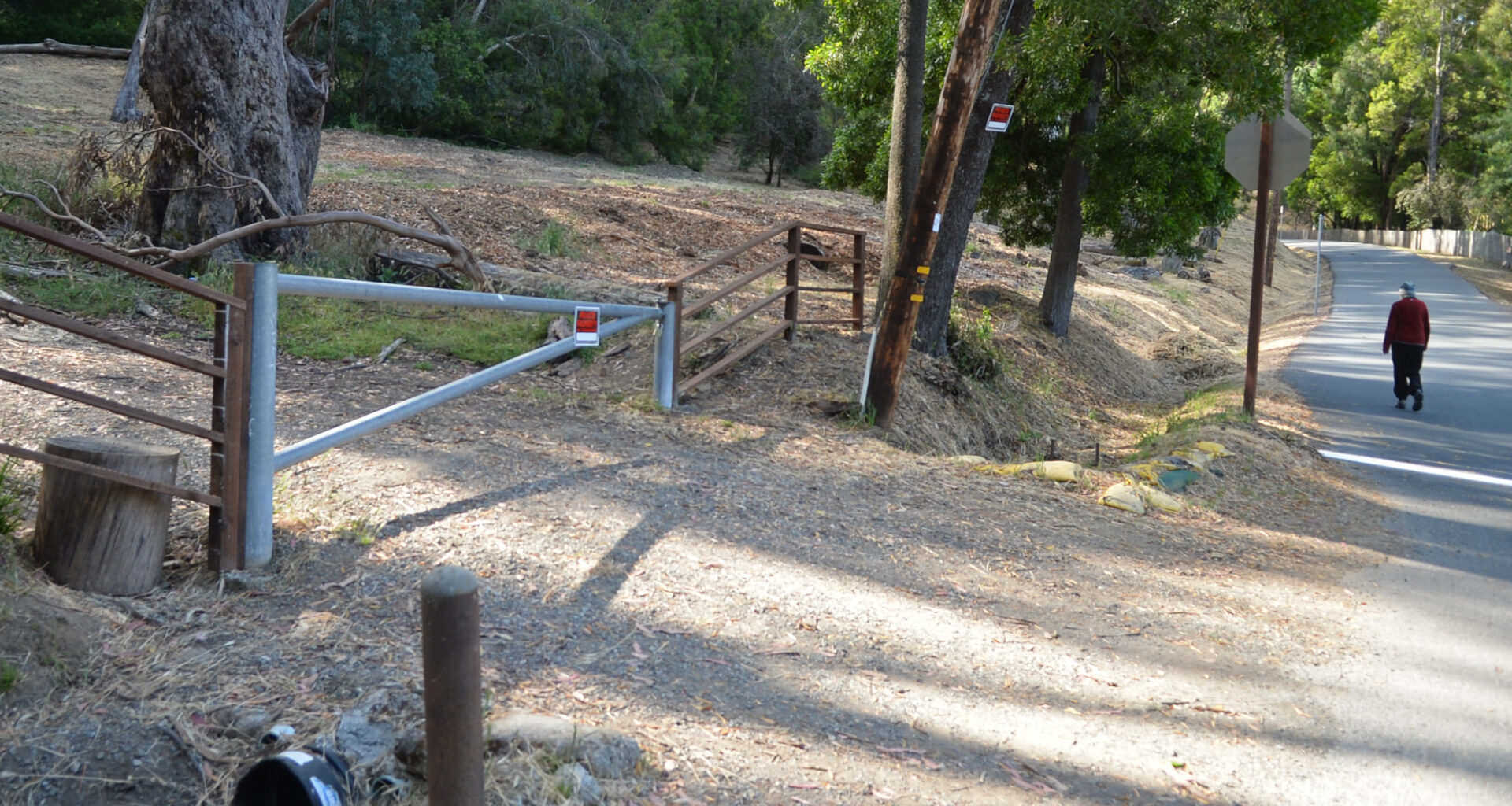
In its letter, the city notes that the project site is “heavily forested, significantly sloped and located in the city’s wildland urban interface.” The parcel is used as open space and is home to various plant and animal species, including special status species. The project proposes a substantial amount of grading and tree removal.
The city selected Environmental Science Associates to do the analysis and directed the developer last September to pay more than $742,000 in advance to cover the cost. The developer has not paid.
The developer has asserted that the project doesn’t need to be consistent with San Rafael standards because it qualifies for the “builder’s remedy.” The expression refers to the California Housing Accountability Act, which provides that if a city or county lacks a “substantially compliant” housing element, it can’t use its zoning or general plan standards to disapprove any housing project that meets certain affordability requirements.
Dominican Valley LLC is claiming the builder’s remedy based on the fact that its application was submitted on June 12, 2023 — 10 days before the city’s housing element was approved by the state.
In its response, the city wrote that there is a “lack of clarity” in state law regarding the builder’s remedy.
State law now specifies that only the California Department of Housing and Community Development or a court has the authority to determine whether a city’s housing element complies with state law. That law, however, didn’t come into effect until 2024. The San Rafael City Council adopted its housing element on May 18, 2023.
“Thus to avoid issuing an unnecessary determination that could incorrectly interpret the law, the city has declined to issue any formal determination stating whether the project qualifies for the builder’s remedy,” the city said.
The developer has also asserted that its project is not subject to the California Environmental Quality Act because it qualifies for ministerial approval. In his letter, O’Neill wrote that the project is eligible for ministerial review because it was designated for residential development in San Rafael’s previous two housing elements.
The city states that despite its inclusion in the housing elements, no ministerial processing requirements apply to the site because it was not rezoned for residential use.
Barbara Treat, a leader of Save Dominican Valley, a neighborhood group with more than 450 members, praised San Rafael’s letter.
“We thought it was very strong, incredibly detailed and compelling,” Treat said.
The letter included many of the points that Save Dominican Valley’s lawyer, Mark Wolfe, made in a May 26 missive to the city.
“The developer has some pretty important decisions to make,” Treat said. The company can sue the city, but that will be expensive, or it can pay the $742,000 to fund the environmental impact report, she said.
“Or he can sell to us and let us protect the land in perpetuity and maintain it as beautiful public open space,” Treat said.
Opponents of the project offered to pay the developer $4 million for the property in December.