
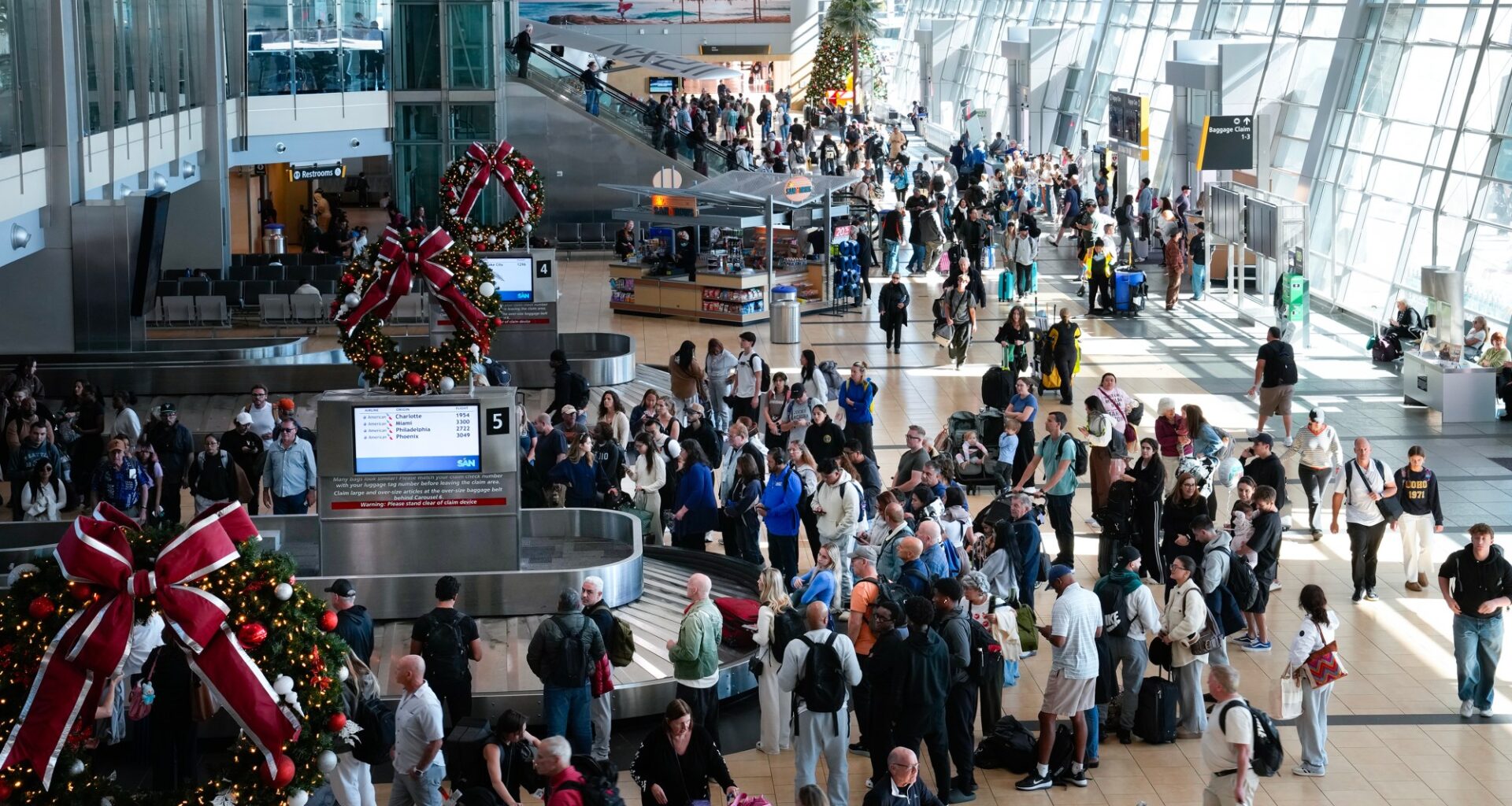
In the past year, most of the attention paid to the San Diego airport has focused on the new and expanded Terminal 1, which became operational last September. But there are some new improvements now in the works for Terminal 2 as well, key among them an updated baggage handling system designed to move luggage much more quickly and efficiently.
The San Diego Regional Airport Authority has agreed to spend more than $16.8 million to upgrage the baggage handling system in Terminal 2 East, although the work won’t begin until the first quarter of next year. It will then be phased in to allow for normal operations during the daytime, said airport spokesperson Nicole Hall. The project is expected to be completed within 12 to 16 months.
The project’s goal is to make the system more dependable for the airlines operating it.
As a first step, the old and outdated conveyor equipment will be removed and replaced with new technology that airport officials say “will enhance the performance of the system.”
New features of the redesigned baggage system will include high efficiency motors and equipment that will reduce energy consumption and cut down on equipment breakdowns. Old automatic tag readers will also be replaced. The result will be “faster conveyor speeds and less down time for repairs,” Hall said. She added that because passengers’ baggage will move through the system more quickly, it will mean “a higher level of airline dependability and customer satisfaction.”
None of the work that is being contemplated in the project will involve the baggage carousels themselves, Hall explained. The upgrade is focused instead on the back-of-house airline portion of the baggage system where 120 conveyors with associated controls will be replaced. The baggage system in Terminal 2 West was upgraded nearly a decade ago and is performing well, Hall said.
A much-improved conveyor system was also a key component of the new Terminal 1. In the terminal’s basement is a four-mile-long baggage belt that’s designed to be a far more fail-proof and well-run system compared to what was in the old building. Airport officials say it’s capable of processing as many as 4,000 bags an hour, double the previous capacity, and because it’s a “smart” system, it can read each baggage label and understand where the bags need to end up.
For the Terminal 2 project, the airport received bids from two different contractors, and both bids were lower than the airport engineer’s estimate of $19.8 million.