
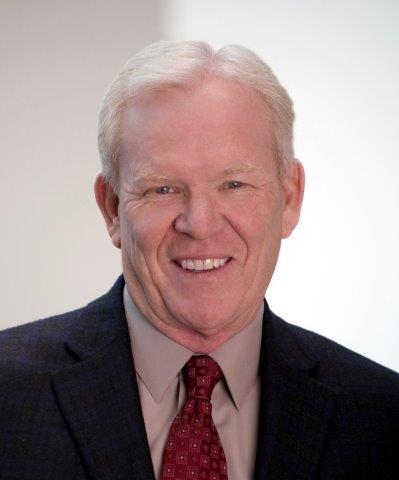
Editor’s Note: Bill Link is widely considered one of the founding fathers of Orange County’s thriving ophthalmology industry.
My parents instilled two important lessons in me when I was growing up on a farm in Indiana. We grew corn, wheat and beans and raised some pigs. As anyone who has worked on a farm knows, it’s hard work.
My father would say, “If it breaks, you have to get it fixed.” I still appreciate the experience because I learned how to work, take responsibility and fix things when they are broken.
When I was earning my master’s degree in mechanical engineering at Purdue University, I studied heat transfer in supersonic gas flow. One weekend when visiting my parents my mother asked: “Who will benefit from all that work and knowledge?”
This question puzzled me. I realized I did not have an answer!
That experience made me think differently. As my wife Marsha and I were driving back to the Purdue campus, we talked about the challenge my mother had made. Rather than be in a field studying heat transfer in outer space, maybe I could do something that would help people.
Veterinary Science and Engineering
I became interested in using my engineering skills to solve medical problems. I knew I needed to learn more about medicine, physiology and how the body works. Since Purdue didn’t have a medical school, I went to the dean of Purdue’s veterinary school to ask if I could be trained as a veterinarian while also getting a PhD in Mechanical Engineering. He graciously said yes. For my PhD project, I developed a new scalpel that would cut tissue without causing bleeding. To test and refine this new scalpel, I would drive to Indianapolis and do surgeries in the animal lab in a hospital managed by the Indiana University School of Medicine.
There, I built a relationship with Dr. John Glover, the head of the Department of Surgery. After I earned my PhD, Dr. Glover hired me as an Assistant Professor in his department.
While my initial career aspiration was to become a university professor of engineering, I entered an entirely new field that would eventually become known as biomedical engineering. Back in the late 1960s, it was a bit unusual.
Since I had access to the hospital and managed the animal lab, I started conducting research projects for multiple medical companies. It was a way that I could bring funding into the department of surgery. I would test sutures, skin transplants and even heart catheters.
I thus began to build relationships with these companies, including one in Orange County. I had been in the department of surgery for three years when American Hospital Supply Corp. made me a strong offer. My wife Marsha and I decided to give the private sector a try, and I left academia.
First Day on the Job
On my first day at my new job in Orange County, July 1, 1976, the big boss, Mr. Will Pierrie, was in a conference room with his team of about ten experienced men. I was the rookie at the table. About an hour into the meeting, Mr. Pierrie told us about a woman he had met who had an intraocular lens implanted into her eye during cataract surgery.
Her vision was great and she was very happy. Mr. Pierrie asked his team if anyone knew an ophthalmologist to call and learn more about these intraocular lenses. The room was quiet.
After a few moments, I raised my hand. That moment started my career in ophthalmology.
After researching and learning about the emerging new field of lens (IOL) implants, I was asked to lead a project inside of American Hospital to develop, build and commercialize IOLs. A team of about five seasoned people was formed and reported to me. It was an honor, but, due to my inexperience, it was also intimidating. I knew technology and surgery but didn’t know the business side. I didn’t know how to sell the product. I learned to listen to the customer. It was challenging and forced me to grow. Essentially, I got an on-the-job MBA.
We named this emerging business American Medical Optics, which became a leader in cataract surgery. We built it to $65 million in annual sales. In 1985, American Hospital Supply was acquired by Baxter Travenol and in 1986 AMO was spun out and acquired by Allergan where Gavin Herbert wanted to expand from pharmaceuticals to surgical products.
The Entrepreneurial Edge
I transitioned out of AMO before it was acquired by Allergan because I realized I was entrepreneurial. In 1987, Marsha and I founded Chiron Vision, with the support of Chiron Corporation, a biotech company based in the San Francisco Bay area. They had a pharmaceutical product, Epithelial Growth Factor (EGF), that we thought could help the cornea heal. We ran a clinical trial that unfortunately failed. This was a major setback. With the support of Chiron’s leadership, we pivoted to building an ophthalmic surgical business – a field we knew well.
Chiron Vision specialized in corneal refractive surgery, which made us the first corporate player to develop the LASIK market. We also got into IOLs, cataract surgery and ophthalmic lasers. Over a 12-year period we acquired seven companies and built Chiron Vision into a leader in the ophthalmic surgery field. We eventually sold the company to Bausch and Lomb in 1998.
Venture Capital
I did not have a plan for my next stage of business activity. To my surprise, a colleague suggested I try venture capital, saying I’d be good at it. I didn’t fully understand the industry at first, and I was unsure whether I would enjoy it. I was used to being a leader.
Then I realized I could make investments in and be on the boards of multiple companies. I transitioned from being a player to a coach. I became intrigued by looking for new things and supporting teams. I co-founded Versant Ventures in 1999 and eventually Flying-L-Partners in 2016.
One of my early investments was Glaukos, which had an exciting concept that eventually became known as MIGS, an acronym for Micro-Invasive Glaucoma Surgery. In other words, a tiny, beautiful micro-device would be placed inside the eye to lower the intraocular pressure and treat glaucoma. Initially, there was resistance, but we took it step by step and slowly built support among glaucoma leaders. Glaukos had no revenue from 1999 to 2015, which was difficult.
It was never a straight line; there were numerous setbacks and a couple of “near-death” experiences. That’s when we found out we could stick together. This year, Glaukos is expected to achieve revenue of $630 million and has a market cap of $9.1 billion (NYSE: GKOS).
Key Criteria for Investing
Over the decades, I’ve invested in 29 early-stage ophthalmic companies and co-founded one ophthalmic incubator. Total venture investment in these companies is more than $1 billion. Fourteen have been sold, five have gone public, one failed and one was licensed to a third party.
Eight are still active in clinical or early commercial stage. These investments have created approximately $15 billion in value, either by market cap or the sale price. The direct investments from Versant and Flying L Partners have achieved an average return of three to four times our investment.
I have four primary criteria I use when looking to invest:
1. Unmet need in a sizable market.
2. Technology or science that will address the unmet need.
3. A highly capable team.
4. Timeline to FDA approval/commercial stage and capital
required.
I have had the good fortune of working with several emerging entrepreneurs in these early-stage companies who have progressed to lead successful ophthalmic companies based in
Orange County including Glaukos, Tarsus Pharmaceuticals and RxSight. I love that Orange County has become a world leader in ophthalmology. It’s been a privilege to participate.