
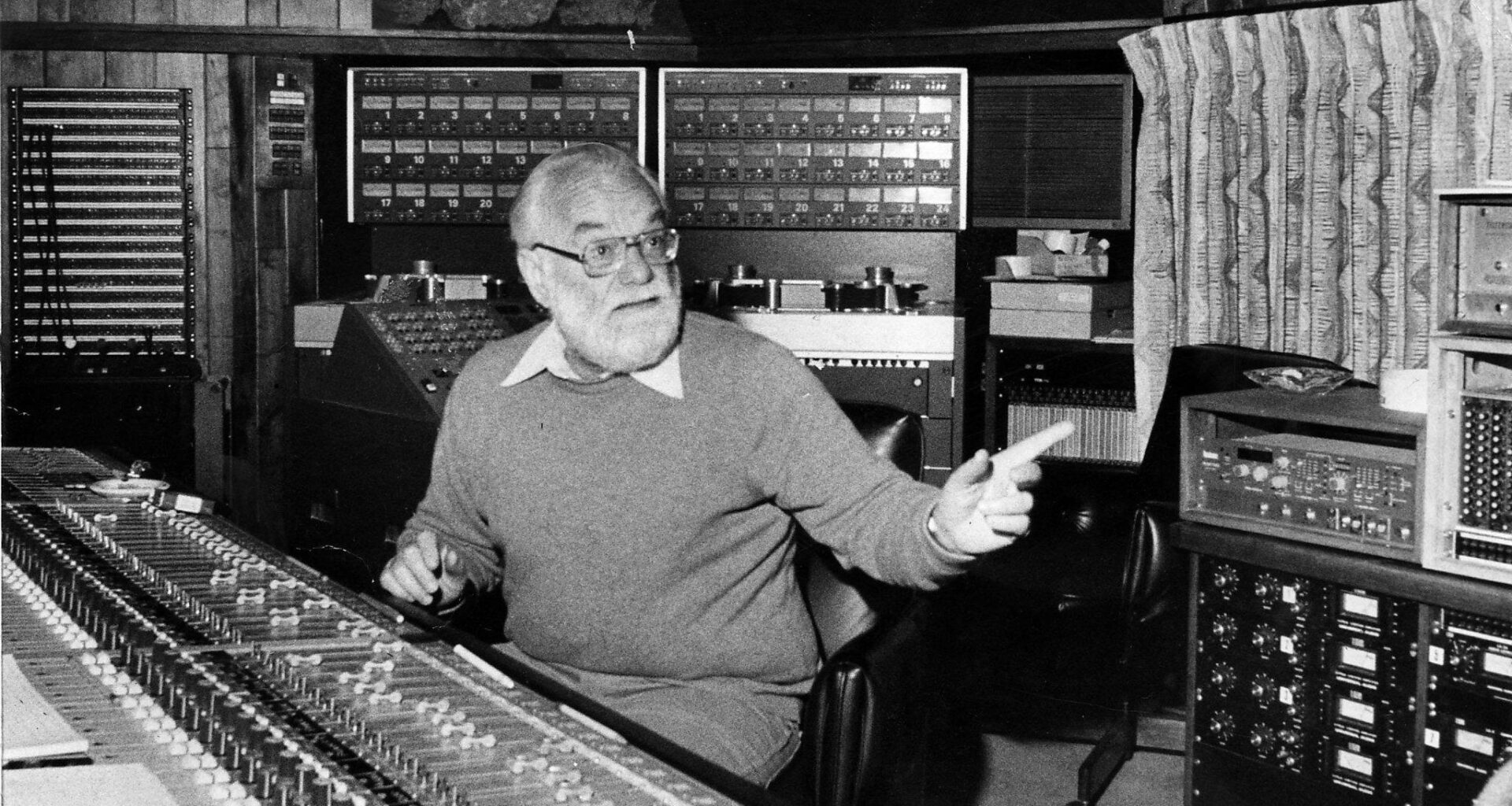
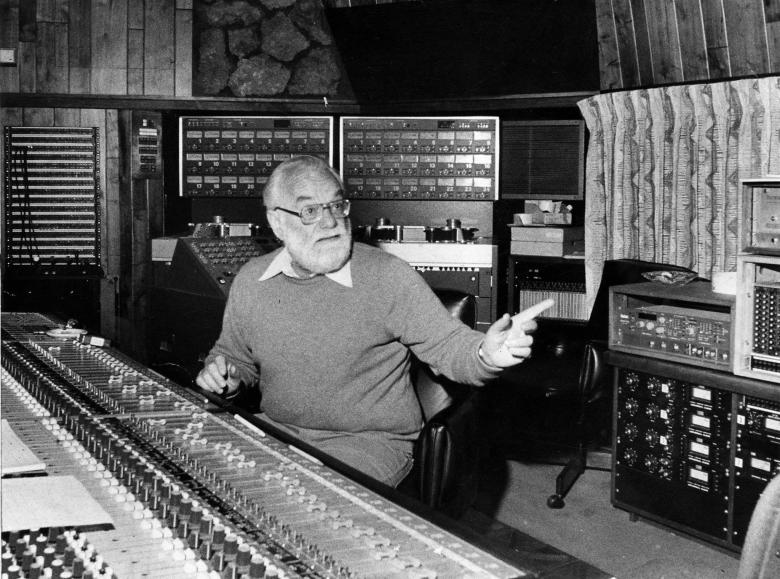
 Saul Zaentz at work in Fantasy Studios. Courtesy: BAMPFA
Few film producers were better at balancing art and commerce than Saul Zaentz, who died in 2014 at age 92.
With money flowing into the Fantasy Records coffers courtesy of Credence Clearwater Revival’s brief but hit-laden reign from 1968-71, Zaentz and several partners created a boutique production company in West Berkeley responsible for a glittering roster of films. As popular with audiences as they were acclaimed by critics, “One Flew Over the Cuckoo’s Nest,” “Amadeus” and “The English Patient” racked up major ticket sales along with Oscars.
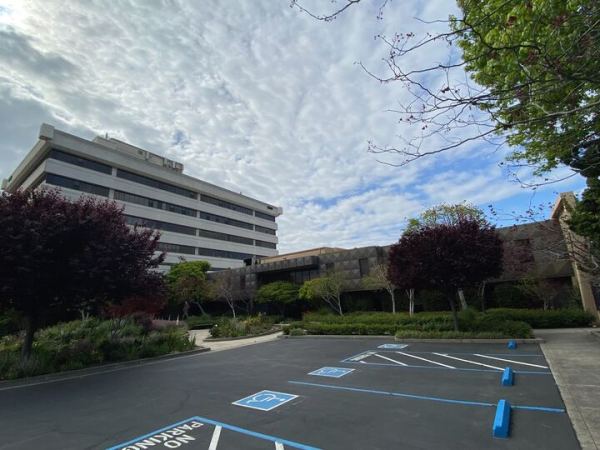
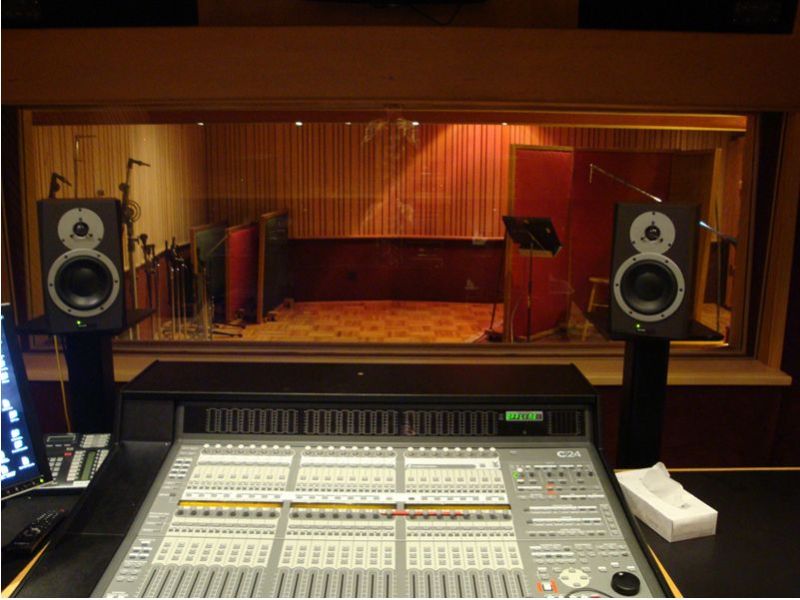
But there’s another side to Zaentz’s love of film that had nothing to do with the bottom line. In a region brimming with passionate and often innovative documentary filmmakers, Zaentz turned the Fantasy Building into a buzzing hive of production. The presence of Zaentz’s world-class Fantasy Studios, which closed in 2018, meant that a film’s post-production could take place entirely in-house.
While there are still filmmakers at work in the Fantasy building at Tenth and Parker streets, “Made In Berkeley: The House That Zaentz Built” highlights the output of the building’s golden age. Presented at BAMPFA in partnership with the Berkeley Film Foundation, the program runs Aug. 1-30 and includes many filmmakers in conversation before the screenings, starting with the doc that inspired the series, “Vivien’s Wild Ride.”
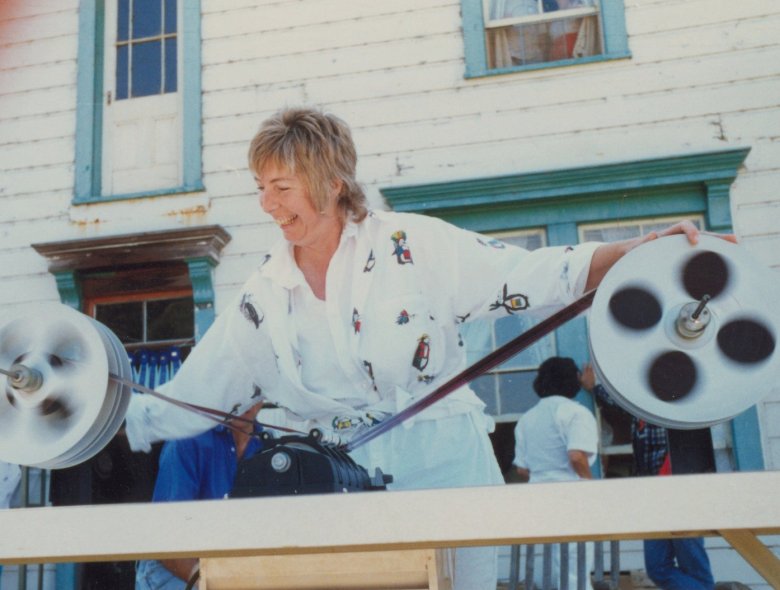 Vivien Hillgrove’s “Vivien’s Wild Ride” (2025). Courtesy: BAMPFA
A first-person film written, directed and co-edited by Vivien Hillgrove, it’s an intimate and exuberantly creative portrait of the award-winning editor as she loses her sight (with a gorgeous score by Berkeley composer Todd Boekelheide). Her story runs through both sides of the Fantasy building as Hillgrove worked on documentaries made there and on Zaentz feature productions like Philip Kaufman’s “The Unbearable Lightness of Being” (which Hillgrove also discusses before its Aug. 9 screening).
“Vivien’s Wild Ride” premiered last year at BAMPFA as part of the San Francisco International Film Festival. Curator Kate MacKay felt it offered a glimpse into a singular cinematic world that included Hillgrove’s work at Fantasy with Walter Murch, the legendary editor, writer and sound designer who won two of his three Academy Awards for “The English Patient.”
“It captured a real culture,” MacKay said, “and how different it was here than in Hollywood. It’s a really brilliant, personal, beautifully made movie.”
The series includes celebrated films like the late Marlon Riggs’s “Tongues Untied,” the groundbreaking 1989 poetic celebration of Black men loving Black men, and Vivian Kleiman’s deep dive into the world of queer comics, 2021’s “No Straight Lines.” Justine Shapiro, Carlos Bolado and B.Z. Goldberg’s 2001 portrait of Palestinian and Israeli children, “Promises,” is also on the program.
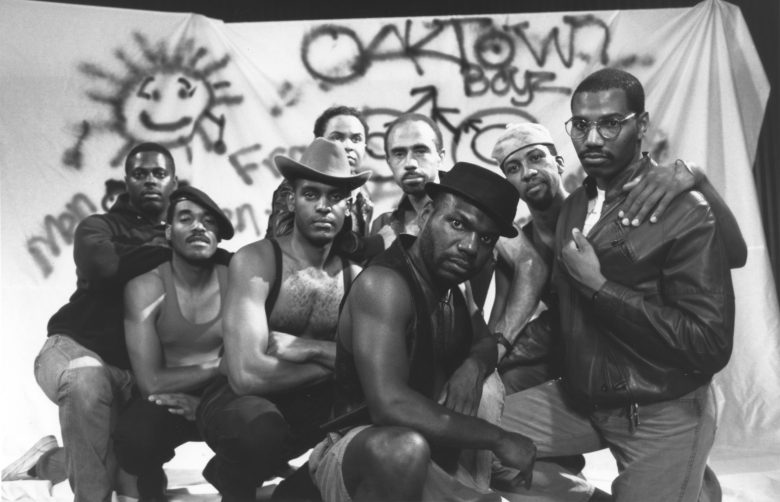 Marlon Riggs’s “Tongues Untied” (1989). Courtesy: BAMPFA
The series connects Fantasy’s deep history to the present scene via filmmakers still active in the Saul Zaentz Media Center, even while facing a harrowing landscape denuded of funding sources. Berkeley filmmaker Steven Okazaki, who’s represented by 2007’s devastating look at the atomic bombings of Hiroshima and Nagasaki, “White Light/Black Rain,” recalls the building in its heyday as a hive of creative chaos.
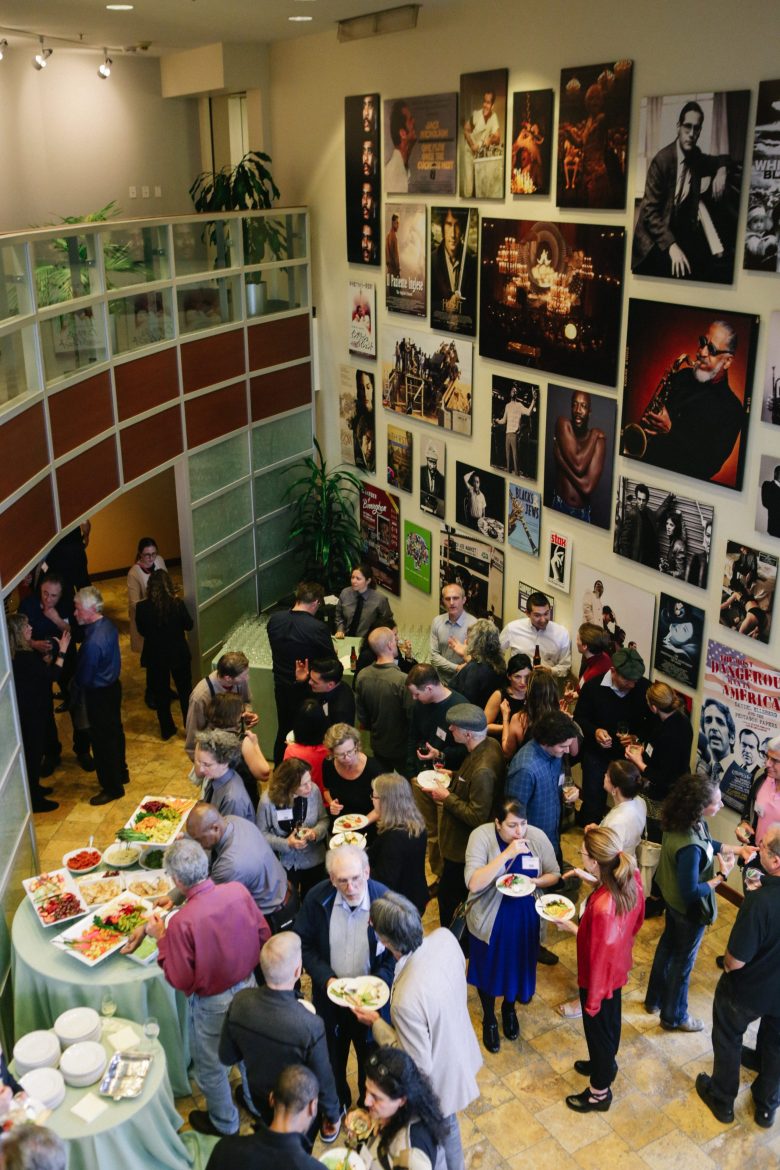 A reception in the lobby of the Fantasy building. Courtesy: BAMPFA
“Fantasy was run in a crazy Berkeley way then,” he said. “In the early 1980s I was editing in different rooms and ‘The Right Stuff’ was being cut and mixed there, mostly on the third floor, but all over the building. Someone would come in and say, ‘You’re moving, they want this floor.’ When I went to pay the rent, because I hadn’t gotten an invoice, they acted like I was hassling them. Sorry! I ended up not paying any rent for six months.”
The lax attitude about rent was a feature, not a bug for Zaentz when it came to documentarians. “Saul was politically and socially very liberal, and the documentary filmmakers dealt with a lot of issues he was in favor of,” explained Paul Zaentz, Saul’s nephew, an attorney who started on the music side of Fantasy. After a few years he went on to work for the film production company, ultimately co-producing Anthony Minghella’s “The Talented Mr. Ripley.”
Paul Zaentz helped pave the way for a wave of filmmakers to move into the Fantasy building in 1985 after a major rent increase in an Emeryville complex led to an exodus. It was already an important hub for documentary production, but the arrival of some two-dozen filmmakers, including Connie Field, Bill Jersey and Marlon Riggs, brought an unprecedented concentration of activity.
“The initial rents were about $100 a month, which probably didn’t pay for the security and power,” Zaentz recalled. “One of the decisions we made as a company was we couldn’t give money to individuals, because that would entail picking favorites. The company’s support was through rent, but we as individuals could give to films.”
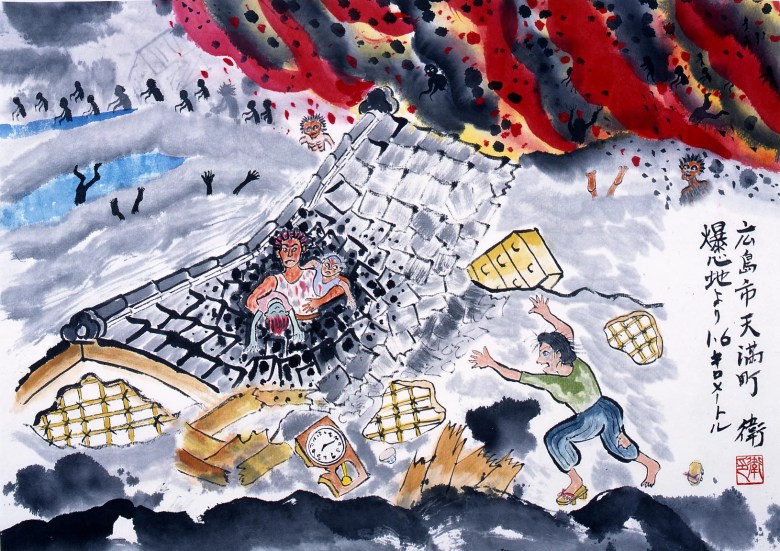 Steven Okazaki’s “White Light/Black Rain” (2007). Courtesy: BAMPFA
Kleiman was part of the Emeryville cohort that moved to Fantasy in 1985. She left the building after it was sold to Wareham Development in 2007 but ended up moving back about five years later and continues to make documentaries there (her latest, “A Grain of Truth,” premiered at the Sebastopol Film Festival in April).
She had met Riggs at the Emeryville center and went on to collaborate on his landmark films “Tongues Untied,” “Color Adjustment,” and “Black Is… Black Ain’t,” (which she completed after his death in 1994). While it’s easy to romanticize the Fantasy building milieu, Kleiman says the building was more of a diverse neighborhood than a unified scene.
“There was an experimental filmmaker who never talked to anyone and no one else talked to him,” Kleiman said. “But what happens here is amazing. One day Rick Goldsmith is screening down the hall and he needs a certain cable, and of course I have that cable. And vice versa. Someone has an intern and we see they’re great, and they end up working on someone else’s project.”
“Made In Berkeley” concludes on Aug. 30 with Denise Zmekhol’s 2023 film “Skin of Glass,” a thoughtful exploration of the evolving meaning of a São Paulo skyscraper designed by her architect father. It’s entirely fitting that the series ends with a disquisition into the way real estate shapes a society, because no factor has twisted Berkeley’s documentary scene more profoundly than rising rents.
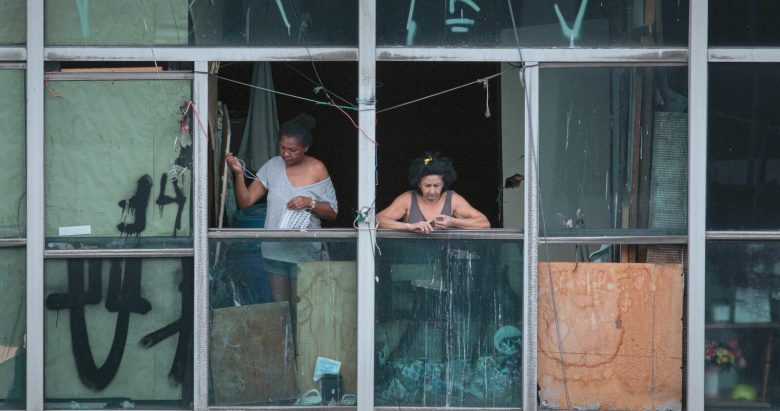 Denise Zmekhol’s “Skin of Glass” (2023). Courtesy: BAMPFA
Making a documentary has always been a herculean effort. It’s not unusual for a filmmaker to apply for dozens of grants while taking five or 10 years to raise funds to finish a feature-length project. When a Berkeley apartment rented for $150 in the late 1970s, making films was a navigable path for filmmakers not blessed with a trust fund. Zaentz not only subsidized filmmaking. By taking the documentary community under his wing at the Fantasy Building, he added a shot of glamor that could prove useful in a field known for gritty independence.
“It created this zeitgeist with its reputation,” Kleiman said. “Films at Fantasy were able to get loans to pay for productions because of the gravitas around Zaentz filmmaking. When I would tell a potential funder my office is here, they wanted to come and see the place. I’d invite them in at 5 p.m. to have a glass of wine and see some footage.”
Related stories
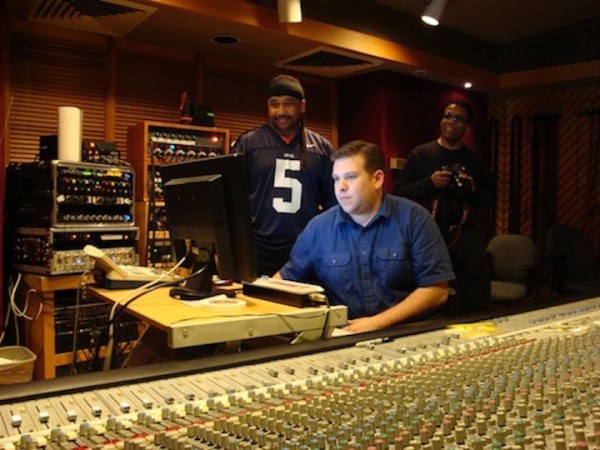
Fantasy Studios, internationally renowned film and music studio, to close its doors
July 29, 2018Oct. 4, 2022, 1:46 a.m.
April 26, 2024May 21, 2024, 2:16 p.m.
Berkeley’s Fantasy Studios closure came because of financial struggles
July 31, 2018Aug. 4, 2022, 1:18 p.m.
“*” indicates required fields