
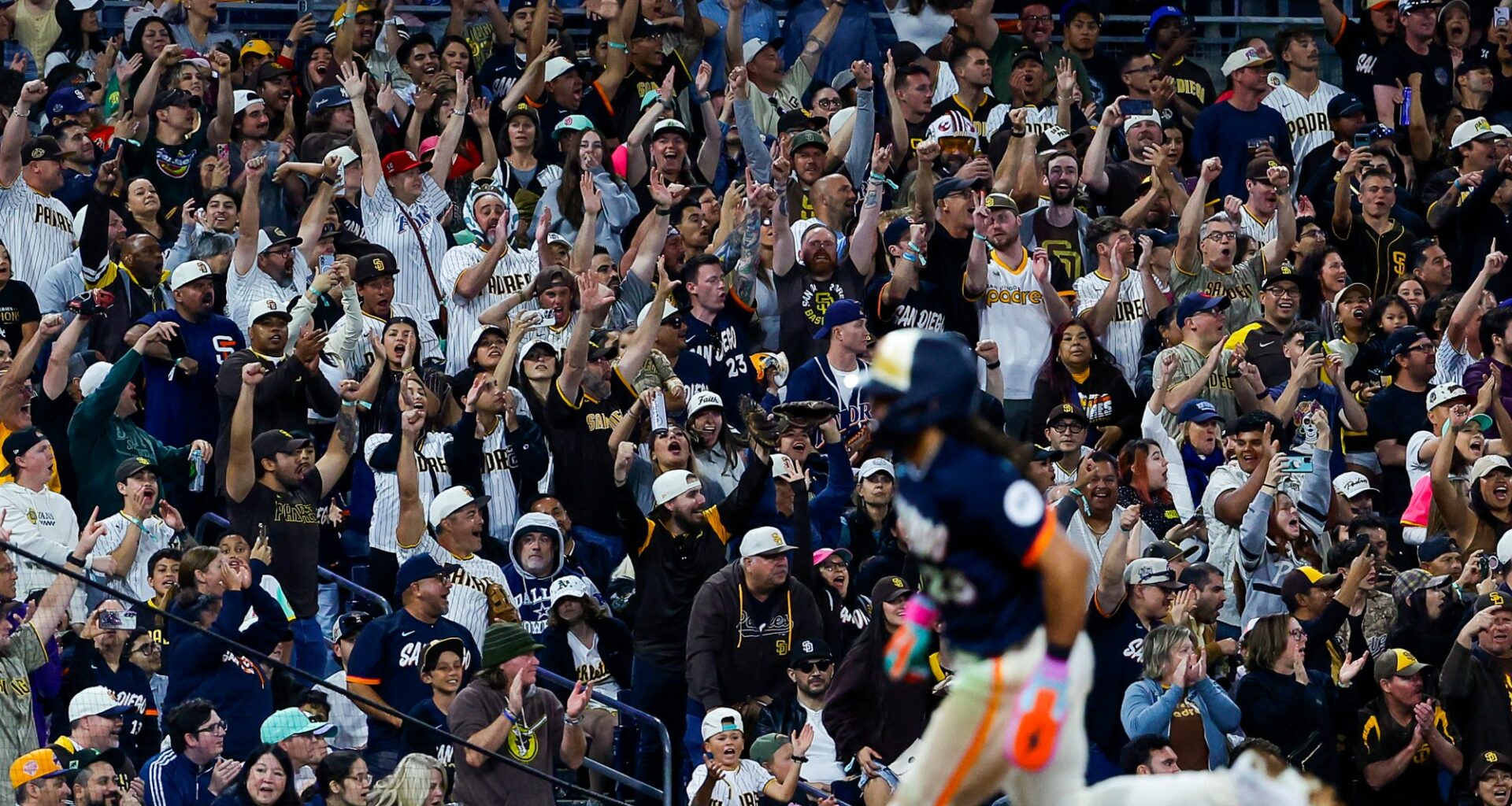
Peter Seidler often spoke of exploring “the art of the possible.”
OK, I’ll bite.
Is it possible that creative wheeler-dealer A.J. Preller’s ongoing efforts in the summer trade market, which will close on Monday afternoon, boost the heretofore mediocre Padres (53-53) into a monster that can win the 2026 World Series?
The task looks more like the art of the impossible.
Considering also that San Diego’s farm system sits last of the 30 as judged by former MLB scouts or executives with ESPN and The Athletic, the situation calls for Preller to exercise restraint if he decides to once again trade prospects for big leaguers.
It might help Preller if folks awaiting sign-off on their purchase of the Padres have committed to adding sizable salary money.
In fairness to those investors, headed by billionaires José E. Feliciano and Kwanza Jones, MLB’s approval of the $3.9 billion purchase isn’t expected before the trade deadline.
Anyway, the greater obstacle isn’t procedural; it’s baseball-driven.
Although upgrades may be worth pursuing, it would be imprudent to go large in the belief a trade-enhanced version of the Padres could win 13 postseason games.
Results in the East Village this week will affect Preller’s sell-or-buy calculus while also giving baseball’s hungriest fan base more reason to pay close attention.
The Padres will play the Rockies twice and the Giants four times.
When the deadline falls Monday, it’ll find the Padres in Phoenix.
San Diego’s opponent that night: a Diamondbacks squad that is 55-52 after a loss to the Pirates on Monday and tied with Pittsburgh atop a tight six-team race for the third and final National League wild-card spot. The Nationals and Cardinals also sit ahead of the Padres in the chase.
A.J. Preller’s creativity could come come into play again as Padres approach trade deadline
While FanGraphs.com gives the Padres a slender 15% chance to clinch a wild-card berth, I make Preller a prohibitive favorite to keep the whole industry on its toes ahead of the trade deadline.
Until the trade deadline passes, no one in MLB disregards the Rock Star GM.
Padres acquisition Matt Kemp hung that nickname on Preller a decade ago amid the rookie general manager’s flurry of moves that rocked the industry.
“You never know with A.J.,” is a phrase commonly uttered by scouts with other MLB teams and the beat reporters attempting to read the trade market.
Even Padres veteran players say they don’t trust their ability to forecast Preller’s move, regardless of the trade market dynamics.
“It’s A.J. — who knows?” Fernando Tatis Jr. said on July 12 as the Padres, then 48-48, went into the All-Star break.
“Obviously, the owner is a big part of it here,” Tatis added.
“But,” he reaffirmed, “it’s A.J. — anything can be in play.” He laughed and added: “Probably even me. No, I’m kidding.”
 San Diego Padres president of baseball operations A.J. Preller talks on the phone in the outfield before Game 2 of the MLB World Tour Mexico City Series at Alfredo Harp Helu Stadium on Sunday, April 26, 2026 in Mexico City, Mexico. (Meg McLaughlin / The San Diego Union-Tribune)
A debate can be had on whether Preller has been too trade-happy across his 12-year tenure, but that analysis shouldn’t be limited entirely to the team’s win-loss records, swoons and successes.
Preller’s zealous exploration of the art of the possible, supported often by aggressive spending, has boosted local and national interest in the Padres.
While a more conservative approach could’ve also succeeded on the field and at the gate, it’s clear that the Padres have attained consistent relevance in San Diego County and nationally. The small-market club has finished third, fifth, second, third and second in attendance since 2021; this season, the Padres trail only the Dodgers at the gate.
Another benefit to Preller’s hyperactive explorations in the trade market is this: The Padres’ front office has gathered more baseball intel on other teams in a decade-plus than other, more passive clubs.
In the spirit of the art of the possible, let’s assume the Padres avoid a face-plant on the field this week, that Preller truly expects pitchers Nick Pivetta, Joe Musgrove or both to return to competitive form this summer, and that he in fact decides to try to improve this team.
Again, I doubt it would be a great idea to trade Ethan Salas, 20. The Padres’ top prospect, Salas has a decent chance to become both a hitter and a catcher who’s league-average or better. Patience will be needed, but few MLB catchers meet those twin standards.
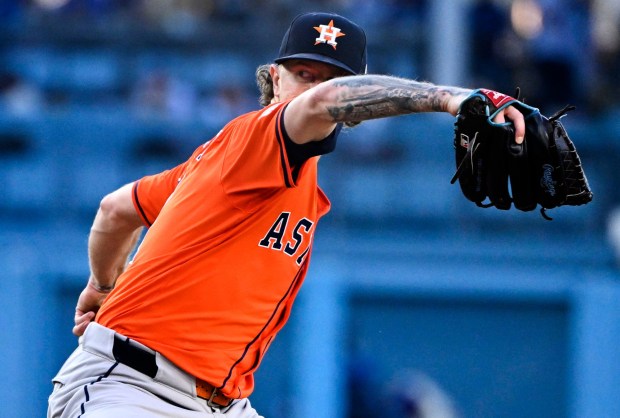 Josh Hader #71 of the Houston Astros throws to the plate against the Los Angeles Dodgers in the ninth inning during a baseball game at Dodger Stadium in Los Angeles on Saturday, July 5, 2025. (Photo by Keith Birmingham, Pasadena Star-News/ SCNG)
Worth considering, even if it’s an out-there scenario, is this move: effectively buy Astros closer Josh Hader.
That’s a long shot. Hader is guaranteed $19 million each of the next three years, holds no-trade powers and exited the Padres three years ago on not the best of terms.
How could the art of the possible crystallize in a Hader trade? New Padres ownership approves such an expense, concluding it’s better to improve the team by adding payroll than by trading Salas.
The Padres would have to give up minor league talent, but, in addition to retaining Salas, they’d add a top-tier closer.
A trio of Mason Miller, Adrian Morejón and Hader could shorten games against any team.
Other additions would be needed if Preller, the wild card of wild cards, indeed chooses to bolster a push for the club’s fourth wild-card berth in five years.
But such additions should be confined to change-of-scenery bargain pursuits. In recent years, Preller added veteran starting pitcher Martín Pérez for a rookie-ball fringe prospect and second baseman Luis Arraez and well-regarded reliever Jason Adam in separate deals for mid-tier prospects when the farm system was more well-regarded.
The art of the possible works both ways, meaning Preller should find out what Miller, Ty France, Morejón and others could bring in trade if the Padres were to drop numerous games this week.
A decade ago, the young GM sold starting pitcher James Shields to the credulous White Sox.
The return: a 17-year-old minor leaguer named Tatis.