
The Department of Homeland Security announced July 16 that it will be enforcing a new regulation limiting international students’ stays to four years. Exceptions are provided, but only with federal approval.
The policy goes into effect in September and applies to those holding F visas for nonimmigrant students or J visas for exchange students. For international students who are already enrolled and studying in the U.S., they will be transitioned to a new period of authorized stay Sept. 15.
The policy requires current students to remain only for the shorter of the following two periods: when their currently administered visa expires or four years from Sept. 15, not counting transitional days.
Additional provisions in the new policy prohibit graduate students from changing their educational objective during their study, while undergraduate students are permitted to do so after one year. Undergraduate students are also permitted to transfer schools after a year, whereas graduate students cannot without special permission from the Student and Exchange Visitor Program.
The DHS notes special permissions for graduate transfers will be exceptionally rare and likely only granted in the case of a natural disaster, school closure or a comparable circumstance.
“I had it understood, implied, in my mind that of course after bachelor’s, I would be free to apply also to a master’s school,” said international student and ASUC Senator Tigran Aghbalyan. “That’s what’s changed right now.”
Aghbalyan said he would have to apply for an extension of stay, pay for it and then he might get an extension on his visa.
Aghbalyan also hoped to do his Ph.D. in the U.S., though programs typically last more than four years — a duration which, under the new policy, would now always require federal permission.
“The University is deeply concerned with the new Department of Homeland Security policy as it significantly changes the way international students have studied in the U.S. for decades,” said Rachel Zaentz, spokesperson for the UC Office of the President, in a statement. “The prior Duration of Status rule provided international students and scholars with the time needed to complete their studies, conduct research, teach, train and work, provided they maintained their nonimmigrant status, in support of the country’s global competitiveness and innovation economy.”
The new policy replaces the previous precedent, established in 1978, of “Duration of Status,” which maintained that international students could stay in the U.S. so long as they were engaged in their academic program.
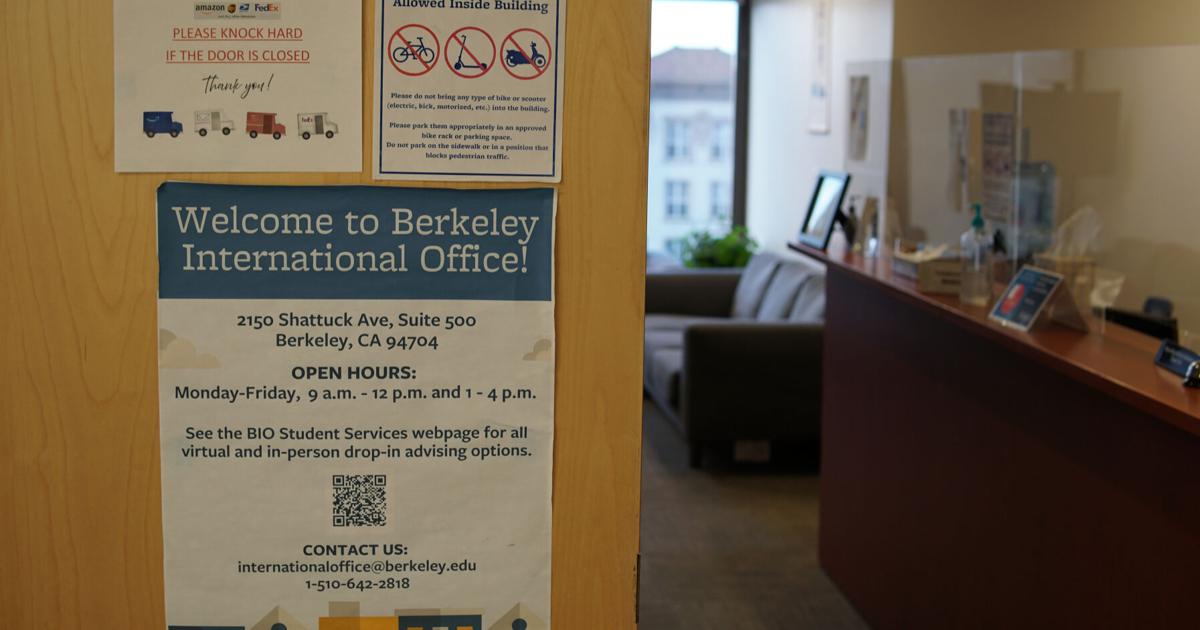
The Berkeley International Office will be holding its first in a series of webinars Wednesday at 3:30 p.m., intended for students studying with F and J classified visas.
“Overall, it’s very alarming,” Aghbalyan said. “It also reminded me of when Trump, during his campaign, would say, ‘Green cards to all international students who graduate.’ But then now, it’s ‘You got to go.’”