
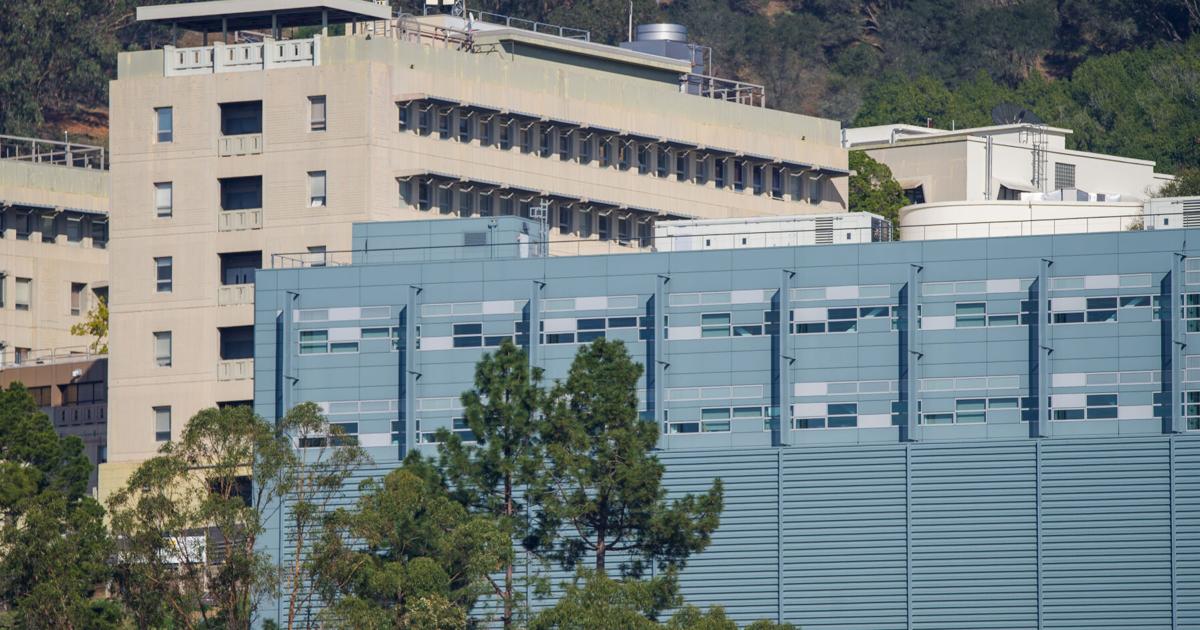
Twenty-three UC and Lawrence Berkeley National Laboratory projects were among those announced under the Department of Energy’s Genesis Mission, a national initiative towards “AI-driven scientific discovery.”
The DOE is committing more than $5 billion to the project, which spans national laboratories, academia and industry that would receive funding for the mission.
Genesis Mission-funded projects will “enable researchers to … refine new approaches to accelerating scientific discovery and breakthroughs,” according to Berkeley Lab spokesperson Jonathan Carter. Berkeley Lab contributions to the Genesis Mission will integrate AI with research into grid infrastructure, nuclear energy and more.
However, for some researchers, this funding comes at an odd time given cuts to other grants. In May, federal agencies admitted to terminating UC research grants through a keyword search in the ongoing Thakur v. Trump lawsuit filed on behalf of UC researchers. Five days before the funding announcement, a district court ruled against President Donald Trump’s administration for canceling active research grants in a separate lawsuit.
Daniel Kammen, a professor of energy at Johns Hopkins University who was previously a UC Berkeley professor in public policy and the Energy and Resources Group, expressed concerns about the unequal funding distribution across disciplines.
“The Genesis Project is so massively slanted toward … AI research and where the president actually has some personal financial interests,” Kammen said. “It’s a sad state of affairs.”
Kammen was previously selected as a U.S. science envoy for Trump’s first term and resigned from his position in 2017 citing Trump’s response to the Charlottesville “Unite the Right” rally.
The DOE’s emphasis on AI funding comes as part of the broader administration’s “AI action plan,” which cites a global race for AI development, and a mission to reap economic and military benefits. Last week, science and technology advisor Michael Kratsios released a report proposing a reduction in total university research funding alongside the push for increased AI funding.
Of the 278 projects awarded funding in the Genesis Mission, 151 are led by universities and 87 by national laboratories.Some researchers lean into AI implementation, where AI models can design research methods beyond human or conventional technological capabilities.
“For STEM, AI is not replacing physicists or scientists or grad students,”said Eric Ma, a UC Berkeley professor in physics and electrical engineering and computer sciences who was one of two UC Berkeley professors to receive funding, alongside chemistry professor John Hartwig. He added that anything built and set up by AI will not be the final product, and need to be “validated by high resolution simulations or experiments.”
Ma’s research group intends to develop two AI models to design ion traps for quantum computing in this project, ultimately hoping to optimize both performance and scalability with micro 3D printing.
According to Berkeley Lab spokesperson Carter, the initial timeline of this first phase is approximately six months.