
As a child, James Mackay watched his father struggle just to stand up. “You shouldn’t have eaten this or that,” his mother would nudge, assuming a poor diet and sloth prompted his pain.
She didn’t see the uric acid crystals growing in his joints. It wasn’t until his father died that Mackay learned he had gout.
Now Mackay, CEO of local biotech Crystalys, is in the final phase of testing a medication that could have treated his father’s chronic condition. The company’s flagship drug, dotinurad, was recently backed by a $133 million Series B raised last week. Seeing the small molecule’s success in Asian countries, the San Diego scientist is optimistic dotinurad will soon be available stateside.
More than 100,000 San Diegans live with gout — a type of arthritis caused by uric acid crystals building up in the joints and surrounding tissues.
Many people live with the chronic condition undiagnosed. It’s not until someone with gout suffers a flare-up so severe that they land in the emergency room where doctors tell them the actual diagnosis, Mackay said.
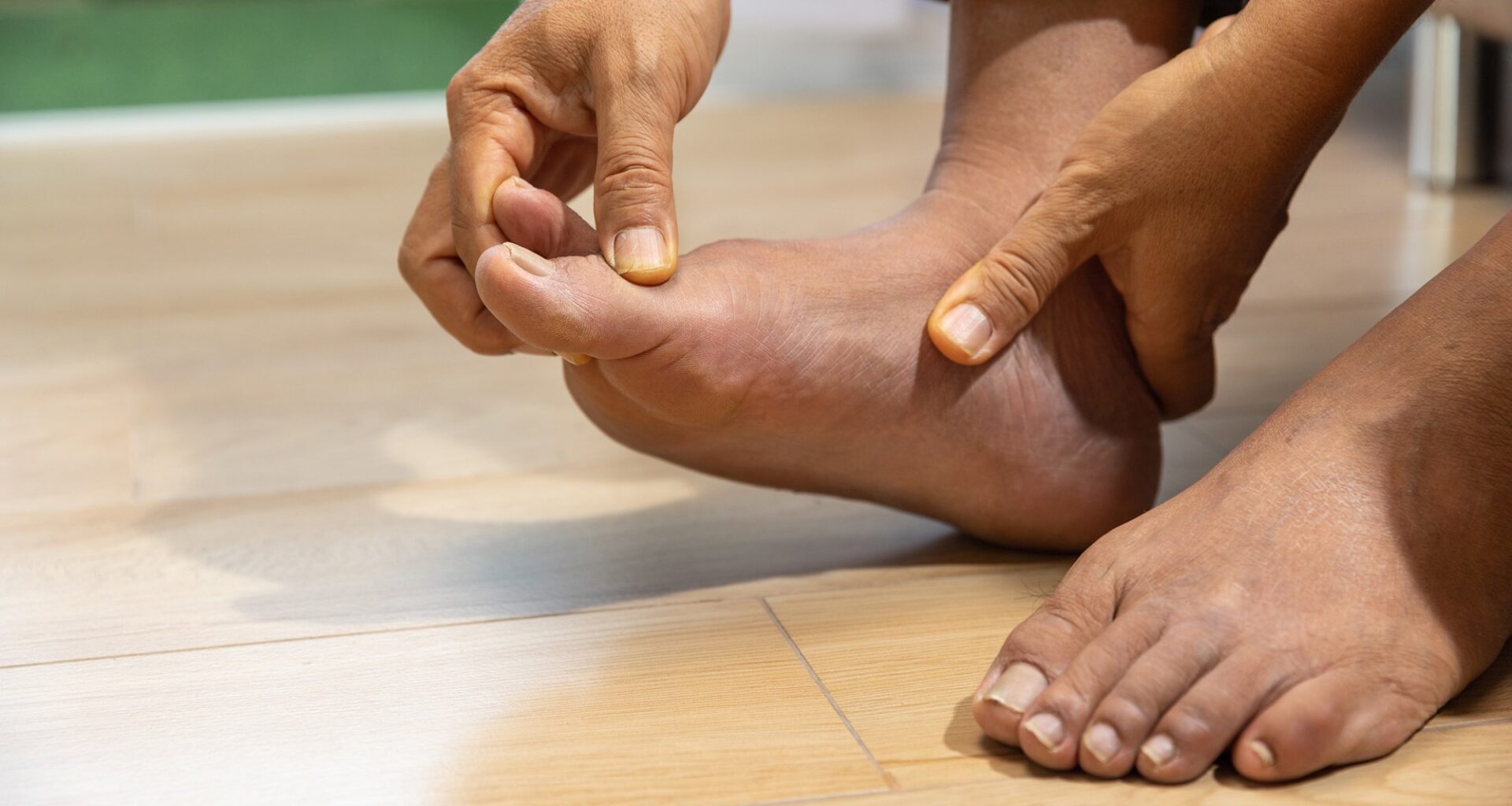
A flare-up feels like a sudden, intense wave of severe pain, said Arthur Kavanaugh, a rheumatologist and professor of medicine at the University of California San Diego. “It’s all of the cardinal signs of inflammation — hot, tender, swollen and not able to move,” he said, explaining how the condition most commonly appears in the big toe.
During one of these attacks, the light weight of a sock or bedsheet feels completely unbearable. “People will tell you it’s the worst pain that they’ve ever experienced in their life,” Mackay said.
Gout is caused by a buildup of uric acid in the body, Kavanaugh explained. Because of genetic differences, some people retain too much uric acid. Factors like obesity, high-purine diets — which consists of red meats and oily fish — alcohol and other health conditions can further raise uric acid and increase the risk of flares, he said.
It’s most commonly diagnosed in men over 60, though research shows that due to climbing rates of obesity and high blood pressure, more people are being diagnosed at a younger age.
In the short term, doctors treat gout flares with strong anti-inflammatory drugs, like aspirin, ibuprofen and steroids.
If the condition worsens, the main treatment for gout is allopurinol, a 60-year-old medication that is effective in only about half of gout patients — because it only addresses half of the problem, Mackay said.
Allopurinol works by limiting the production of uric acid, but “about 85% of gout patients are sick because their kidneys can’t excrete enough uric acid,” said Mackay.
Mackay believes Crystalys’ new drug, dotinurad, has the potential to be effective in all patients because it treats the core of the problem — helping your body get rid of the uric acid, not just lowering its production.
Before creating dotinurad, Mackay developed two other drugs that target gout. One was Zurampic, which was acquired by AstraZeneca for $1 billion but later taken off the market after safety concerns about serious kidney side effects.
“Sometimes you get toxicity that was not necessarily predicted. And so everything in medicine is a balance of the potential risk versus the potential benefit,” said Kavanaugh, when asked about Zurampic.
Other gout treatments, like Takeda Pharmaceutical’s febuxostat, brand name Uloric, received the highest warning label from the FDA, also known as a black-box label, for high cardiovascular complications, including death.
Now it’s discontinued. According to FDA records, Takeda ceased Uloric distribution in March.
Crystalys’ drug works differently. The small-molecule drug, taken orally, blocks URAT1, a protein that reabsorbs uric acid in the kidney, to help patients excrete the uric acid in their urine.
The new medication doesn’t have the toxicity liability his first drug, Zurampic, had, Mackay said. “It’s also 1,000 times more potent than the original molecule that we worked on,” he said.
Dotinurad was originally developed by Japanese company Fuji Yakuhin. The drug received regulatory approval in its home country in 2020. Today, the drug is commercially available in Japan, China, Taiwan, the Philippines and Thailand.
The Japanese company that discovered the drug sold the rights to Florida-based Urica Therapeutics. Crystalys then licensed the drug from Urica.
“Urica Therapeutics does hold an equity position in Crystalys Therapeutics and has a seat on the Crystalys Therapeutics board,” said Mackay.
Crystalys holds exclusive license rights for dotinurad in North America, Europe, Middle East and North Africa territories. The deal terms consist of low single-digit development milestones, low double-digit sales-related payments and double-digit tiered sales royalties, he said.
“Over 2.2 million patients have received the drug,” Mackay said. “So it has a very large and stable safety database.”
Mackay brought the data back to U.S. investors and decided to bring it through clinical trials stateside.
Given its success abroad, the FDA is allowing Crystalys to skip Phase 2 testing.
The FDA’s one requirement is some dose-ranging data within the Phase 3 program, so one of the trials will test both a 2 mg and a 4 mg dose. Across the studies, Crystalys is targeting enrollment of about 750 patients total. Mackay expects results in late 2027.
“It’s personal for me,” said Mackay. “There’s no better feeling than getting approval for a drug that you know is then going to help millions of patients.”