
By Nigel Duara, CalMatters
This story was originally published by CalMatters. Sign up for their newsletters.
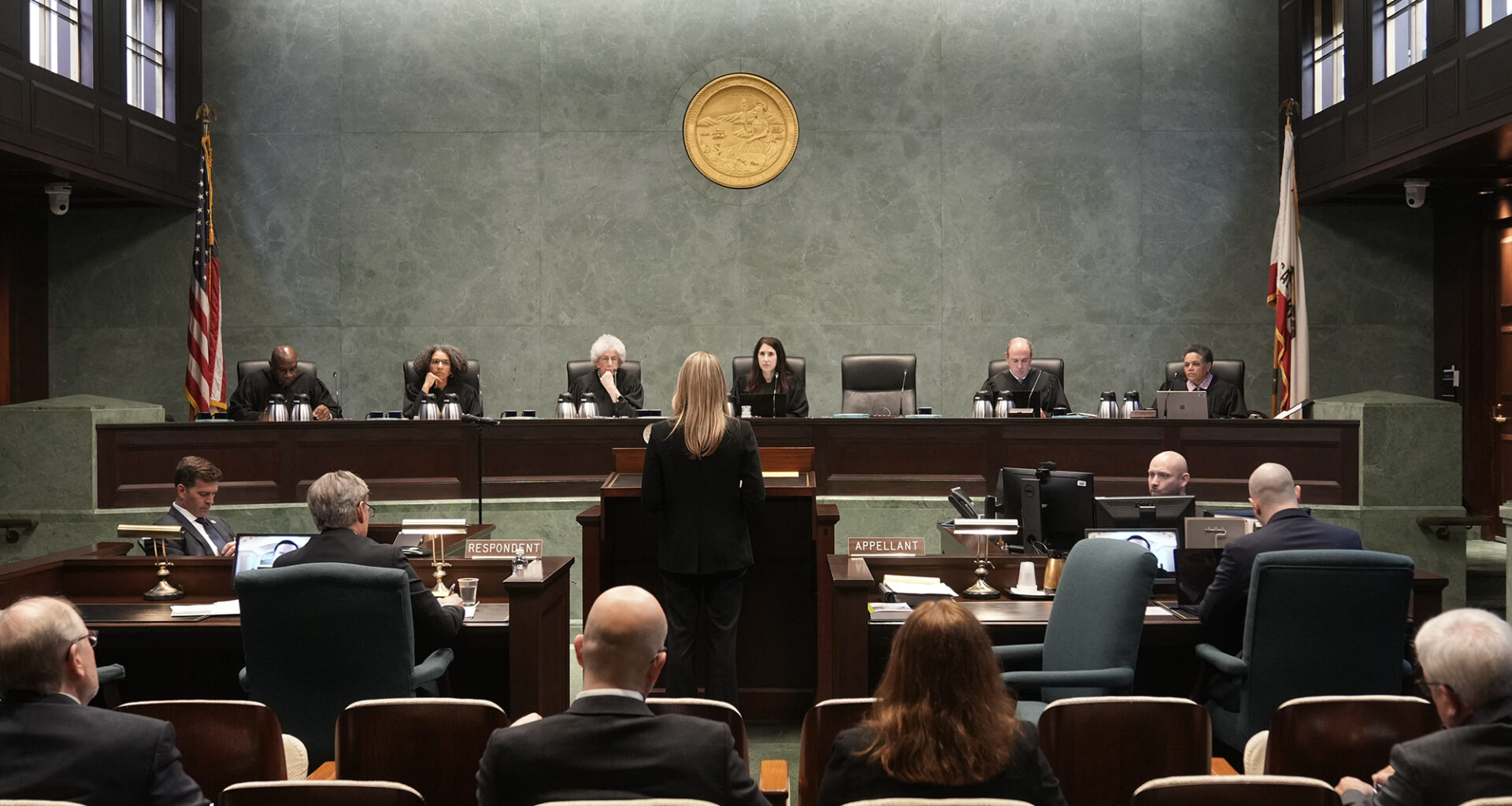
The California Supreme Court rejected a First Amendment challenge to a state law that protects the rights of gay and transgender people in nursing homes and forbids employees of those sites from using the wrong pronouns to address a resident or coworker.
The ruling, handed down today, held that violations of the LGBT Long-Term Care Residents’ Bill of Rights are not protected by the First Amendment because they relate to codes of conduct in what is effectively both a workplace and people’s homes.
“The pronouns provision constitutes a regulation of discriminatory conduct that incidentally affects speech,” the court ruled.
The opinion reversed an appeals court ruling that held provisions in the law relating to patient pronouns and names could impede on an employee’s freedom of speech. Five justices signed onto the main opinion; two signed onto a concurrence. There were no dissents.
The group challenging the 2017 law, Taking Offense, asserted in its lawsuit that the law mandating that long-term care facilities use people’s chosen pronouns amounts to “criminalizing and compelling speech content.”
Taking Offense described itself in court documents as a group opposing efforts “to coerce society to accept transgender fiction that a person can be whatever sex/gender s/he thinks s/he is, or chooses to be.”
The court ruled that the LGBT Long-Term Care Residents’ Bill of Rights “will be violated when willful and repeated misgendering has occurred in the presence of a resident, the resident hears or sees the misgendering, and the resident is harmed because the resident perceives that conduct to be abusive.”
The LGBT Long-Term Care Residents’ Bill of Rights is enforced by a section of California’s Health and Safety Code. Penalties can range from civil fines to criminal misdemeanor prosecutions — the potential for criminal penalties was a major element of Taking Offense’s argument. The court’s decision noted that other protections for long-term care facility residents have long carried both civil and criminal penalties.
“It seems apparent that the Legislature does not intend for such criminal penalties to be imposed except as a last resort, in the most egregious circumstances,” wrote the decision’s author, California Supreme Court Chief Justice Patricia Guerrero.
The opinion made comparisons to other free speech decisions with similar elements, such as the 1995 U.S. Supreme Court decision holding that the the Irish-American Gay, Lesbian and Bisexual Group of Boston could not force St. Patrick’s Day parade organizers to include them.
“By contrast, the present case does not involve any analogous creative product or expressive association,” Guerrero wrote, concluding that the California law is instead regulating people’s conduct.
This article was originally published on CalMatters and was republished under the Creative Commons Attribution-NonCommercial-NoDerivatives license.