
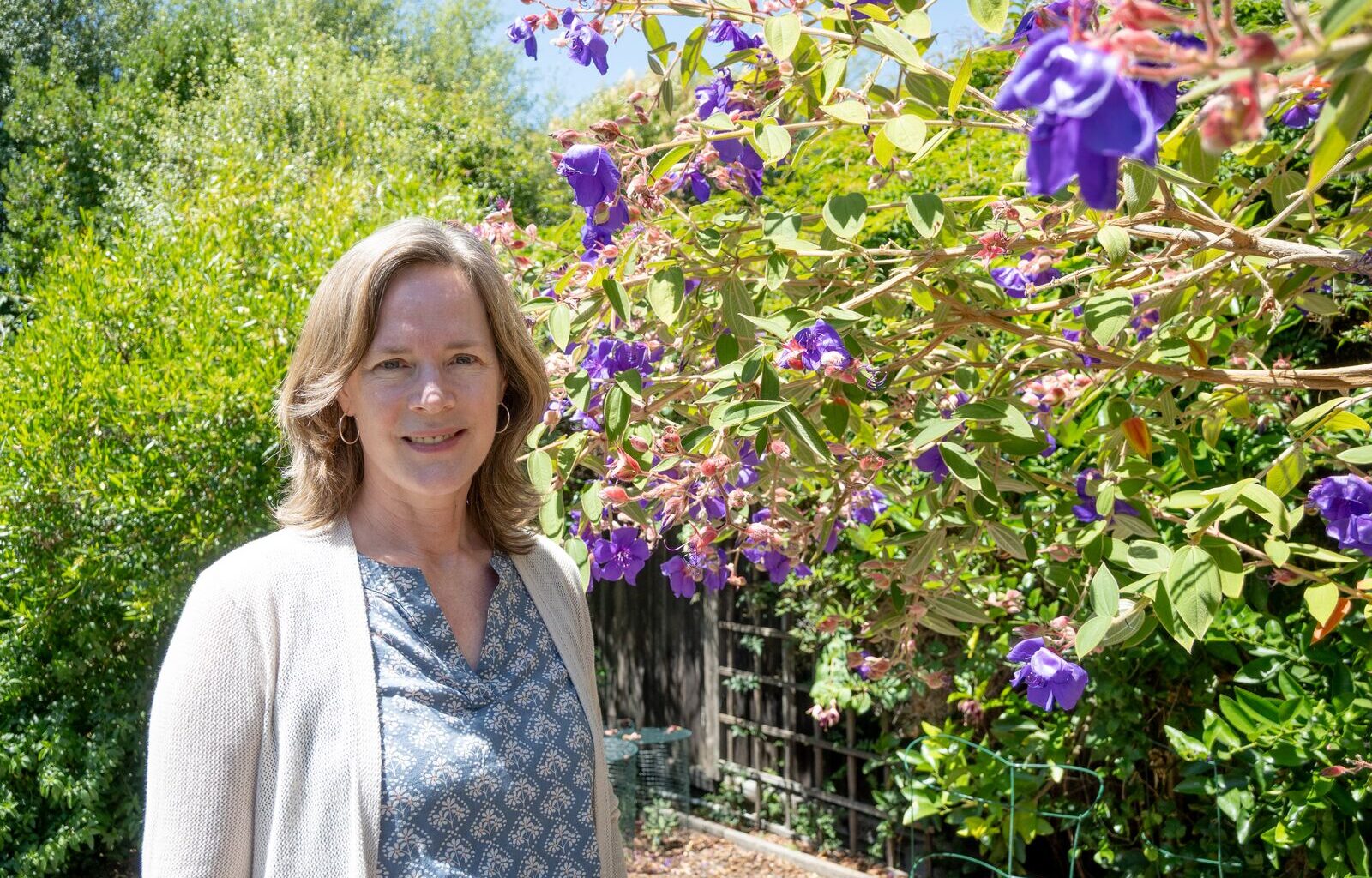
 Jennie Durant in the pollinator garden outside her Westbrae home on Tuesday. Credit: Hope Muñoz/Berkeleyside
In 2014, when Jennie Durant got permission from her North Berkeley landlord to raise a bee colony in a sideyard, she was hoping to learn more about the insects she was studying in her Ph.D. program at UC Berkeley in environmental science, policy and management. Even though the 20,000 bees in the colony would die from the varroa mite — a scourge many backyard beekeepers in Berkeley refuse to treat with a pesticide — the experience proved fruitful.
“Part of my motivation was to have the vocabulary and some background in beekeeping,” Durant said. “I knew I was going to be talking to commercial beekeepers.”
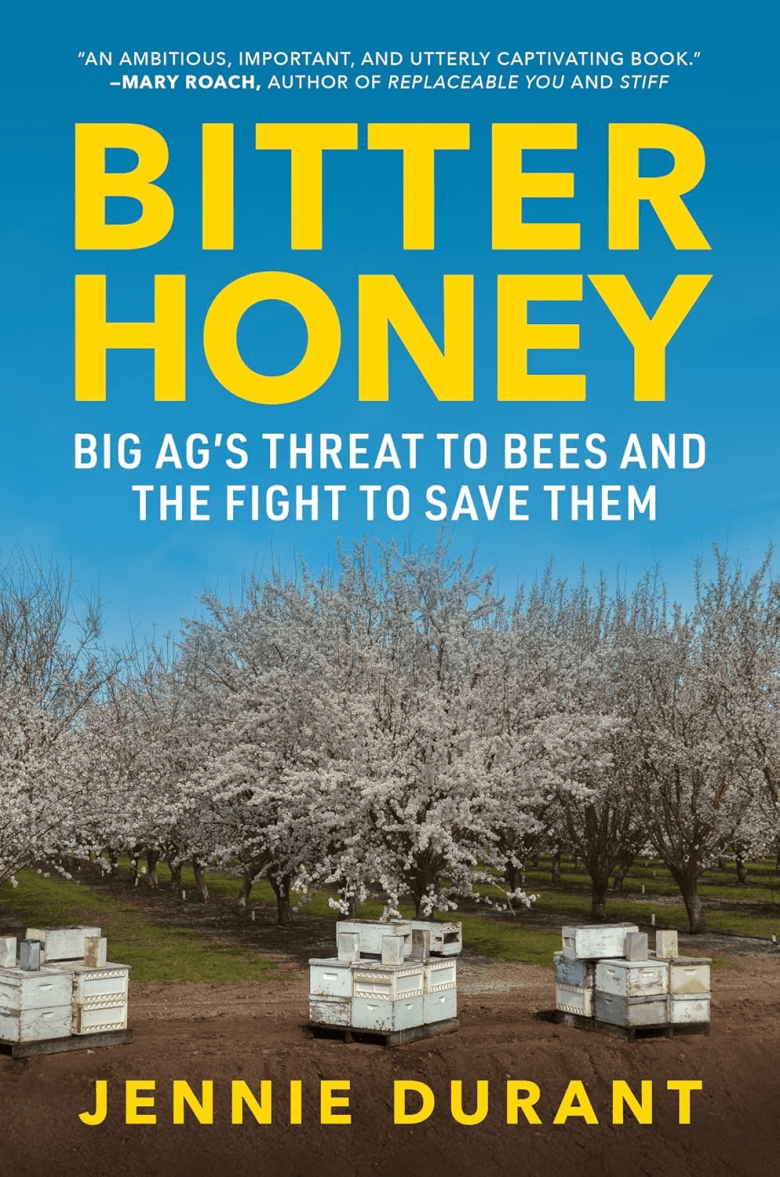
Her interviews with commercial beekeepers became integral to her research for her first book, “Bitter Honey: Big Ag’s Threat to Bees and the Fight to Save Them,” an investigation into how industrial farming poses a growing threat to America’s bees.
California’s almond crop in the Central Valley was the logical place to start. The valley produces more than 80% of the world’s almonds, after tripling the almond acreage from 400,000 in 1985 to 1.5 million acres in 2024. The largest managed pollination event in the world takes place there each February.
More acreage requires more bees, which are subjected to increased stresses. The almost 2 million bee colonies needed to pollinate 1.5 million acres of almonds creates “a lot of opportunity for the spread of mites and pathogens,” she said.
Bees are also being “pushed hard to be strong and robust” and pumped up with supplements and sugar water, Durrant said. And, though most farmers avoid pesticides, fungicides are often used on trees, sometimes in combination with other chemicals. Yet there is no research on how those combinations might affect bees.
“There’s just a lot we don’t know about what’s being applied and how toxic it is,” she said. “It can make bees sicker and more vulnerable.”
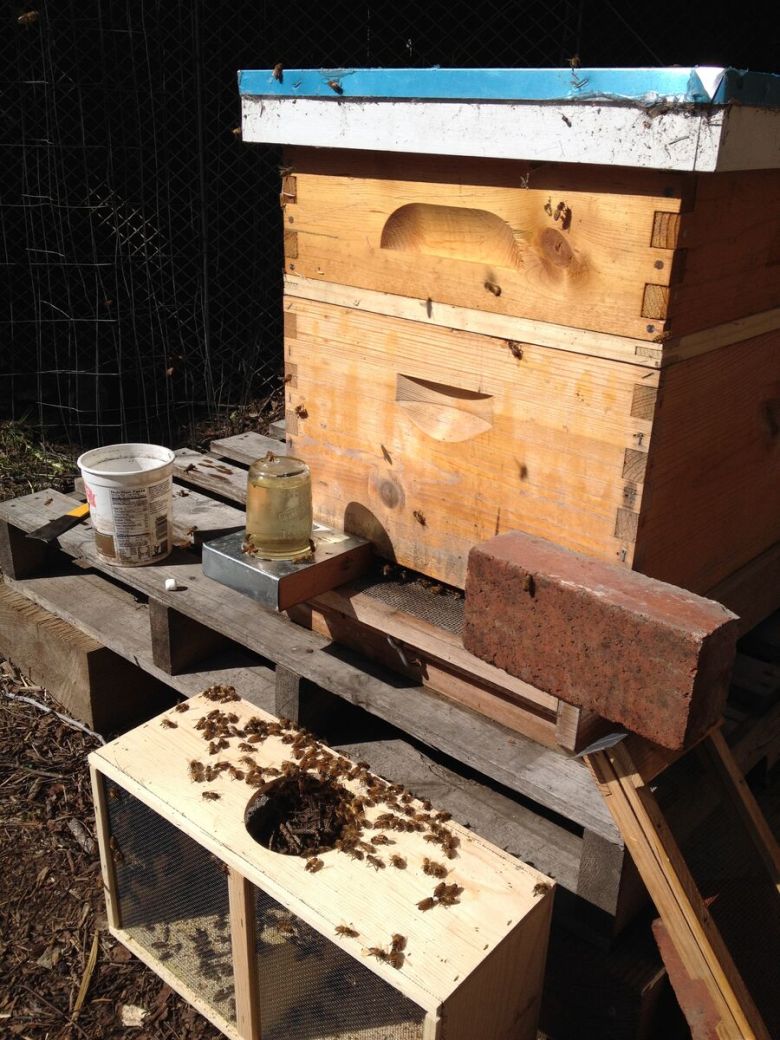 The 2014 beehive that Jennie Durant created in North Berkeley. Courtesy: Jennie Durant
While the Central Valley’s almond industry was an easy culprit to blame for the mysterious die-offs in bee populations of recent years, as Durant dug deeper, she discovered more factors at play. Among them are the varroa mite, “the biggest test to honey bees,” though they are barely controlled due to a lack of miticides on the market and the reluctance of backyard beekeepers to use any type of pesticide.
Agribusiness is also to blame. As big industrial farms became monocultures, which bloom once a year, they deprive bees of year-round blooms that occurred when farmers planted different crops year round. Bees are also losing the wild habitats around farms that are being pulled up as a bulwark against wildfires and invaders like wild boar, leaving bees without the wildflowers and grasses that were a food source.
Most fascinating to Durant is how everything is connected: commercial beekeeping links landscapes across the U.S. Farmers from the Central Valley to the Midwest are all reliant on the same batch of beekeepers who criss-cross the country to pollinate our fruits and vegetables.
Though the news out of bee country is not good, Durant offers hope to those who wonder what they can do: Avoid pesticide use in the home and garden and “create more habitat and forage for bees, even if it’s one pot of coyote mint on your balcony,” she said.
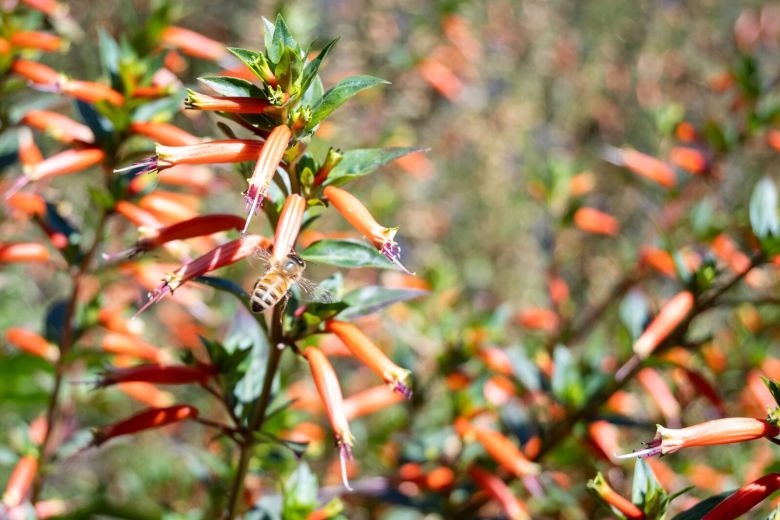 A bee lands on a firecracker plant in Durant’s pollinator garden. Credit: Hope Muñoz/Berkeleyside
In the backyard of her Westbrae home, where she now lives, she has a pollinator garden that contains California lilac, native sages, lavender, rosemary, blueberry, echinacea, coyote mint and yellow sticky monkey flower.
“There’s so much to be depressed about,” she said, “but gardens are hopeful things and we need all the hope we can get right now.”
“Bitter Honey: Big Ag’s Threat to Bees and the Fight to Save Them” by Jennie Durant. Island Press, 233 pages, $30.
“*” indicates required fields