
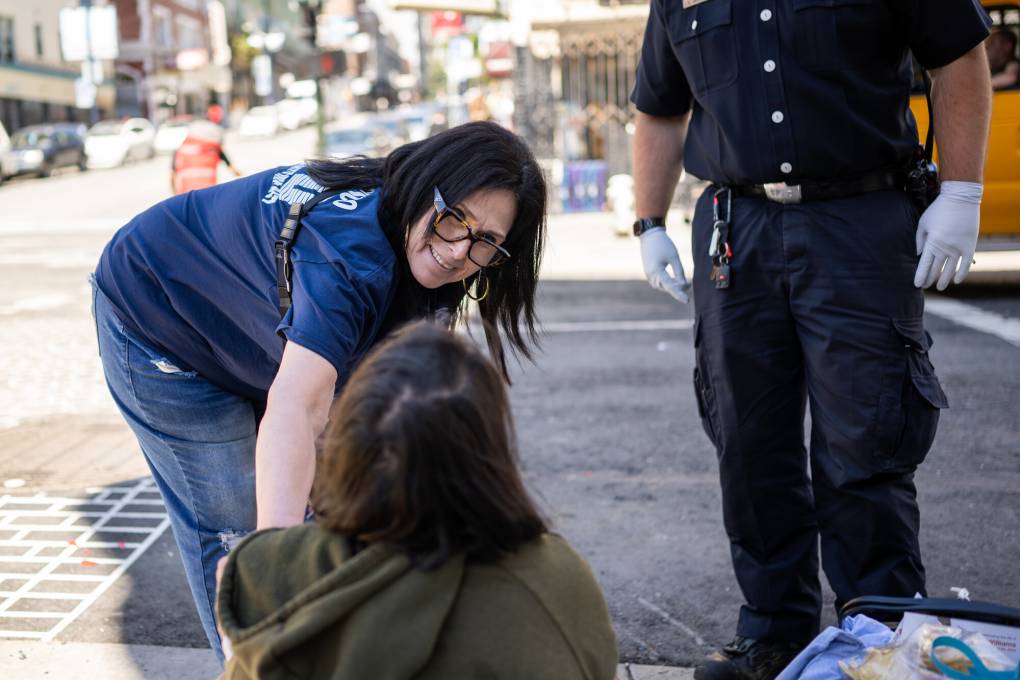
Advocates say the decision is a regressive step in the city’s approach to mental and behavioral health crises.
Jul 29, 2026
Updated 9:44 am PT
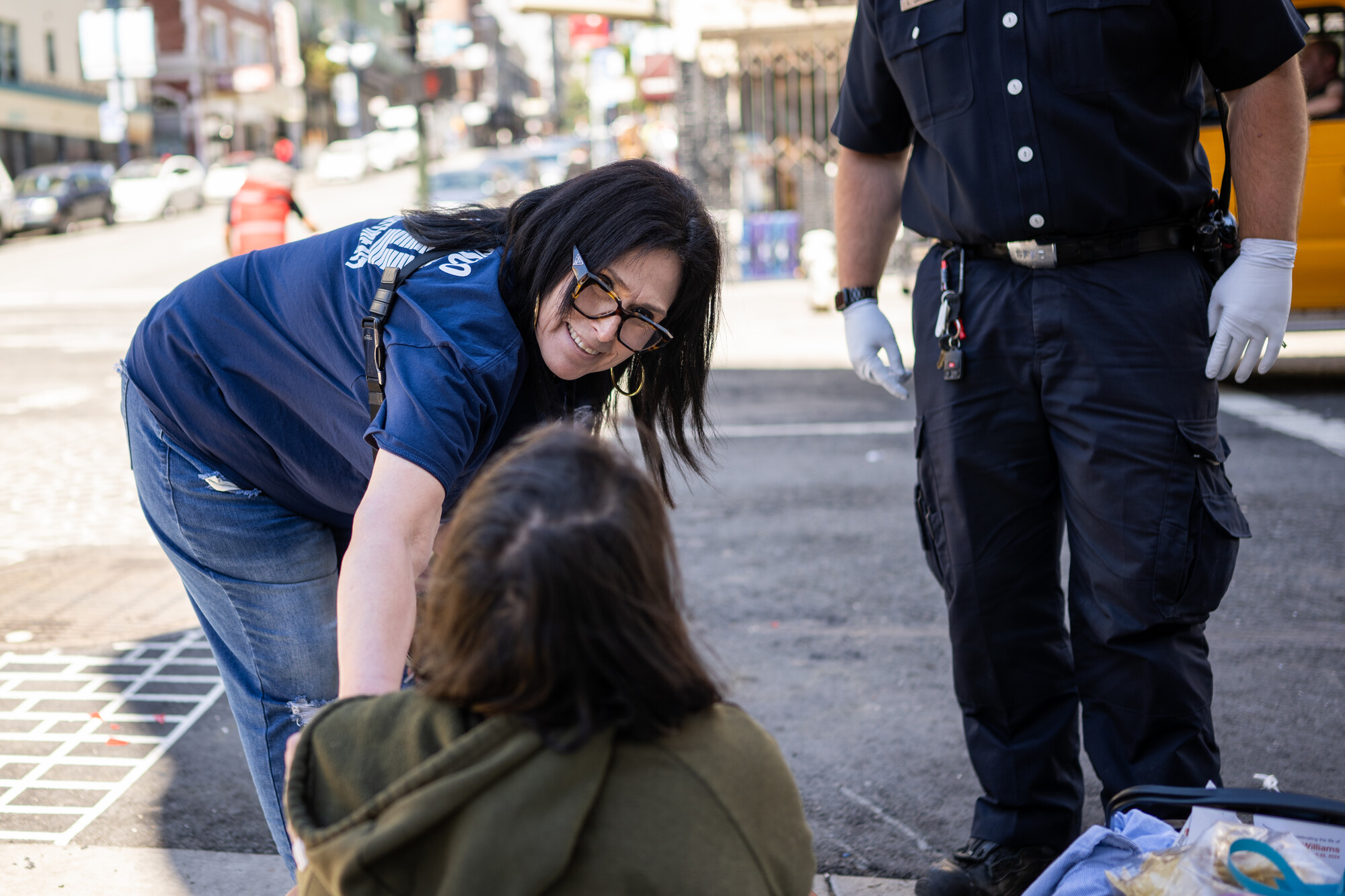
Counselor Chantel Hernandez-Wood (left) and paramedic Isaac James, members of the Street Overdose Response Team, speak with a woman sitting in the Tenderloin in San Francisco on Sept. 3, 2024. (Beth LaBerge/KQED)
After losing her job because of substance abuse, Chantel Hernandez-Wood was living on the streets of San Francisco when she saw a red van parked nearby one day in 2022. It was the city’s former Street Overdose Response Team, and she flagged them down for help.
Equipped with a peer counselor trained to connect with people in crisis, the crew drove her to a recovery center, where she received medication to assist with alcohol withdrawal and entered a 90-day recovery program. While there, she decided she wanted to do the same kind of work as the people who came to her rescue.
“It felt like I meant something to someone. They went above and beyond to help get me off the streets,” Hernandez-Wood told KQED. “I thought, ‘I’d love to do that, I want to give back.’”
After successfully finishing the recovery program, Hernandez-Wood completed training to become a certified peer support specialist, learning techniques to engage with vulnerable populations and navigate social services. She started working at the nonprofit Glide, helping people who struggle with drug use, went on to work on the city’s Street Overdose Response Team, and later stepped into her current role as a peer responder on the Street Crisis Response Team. Peer responders currently pair with fire department paramedics to respond to some calls together.
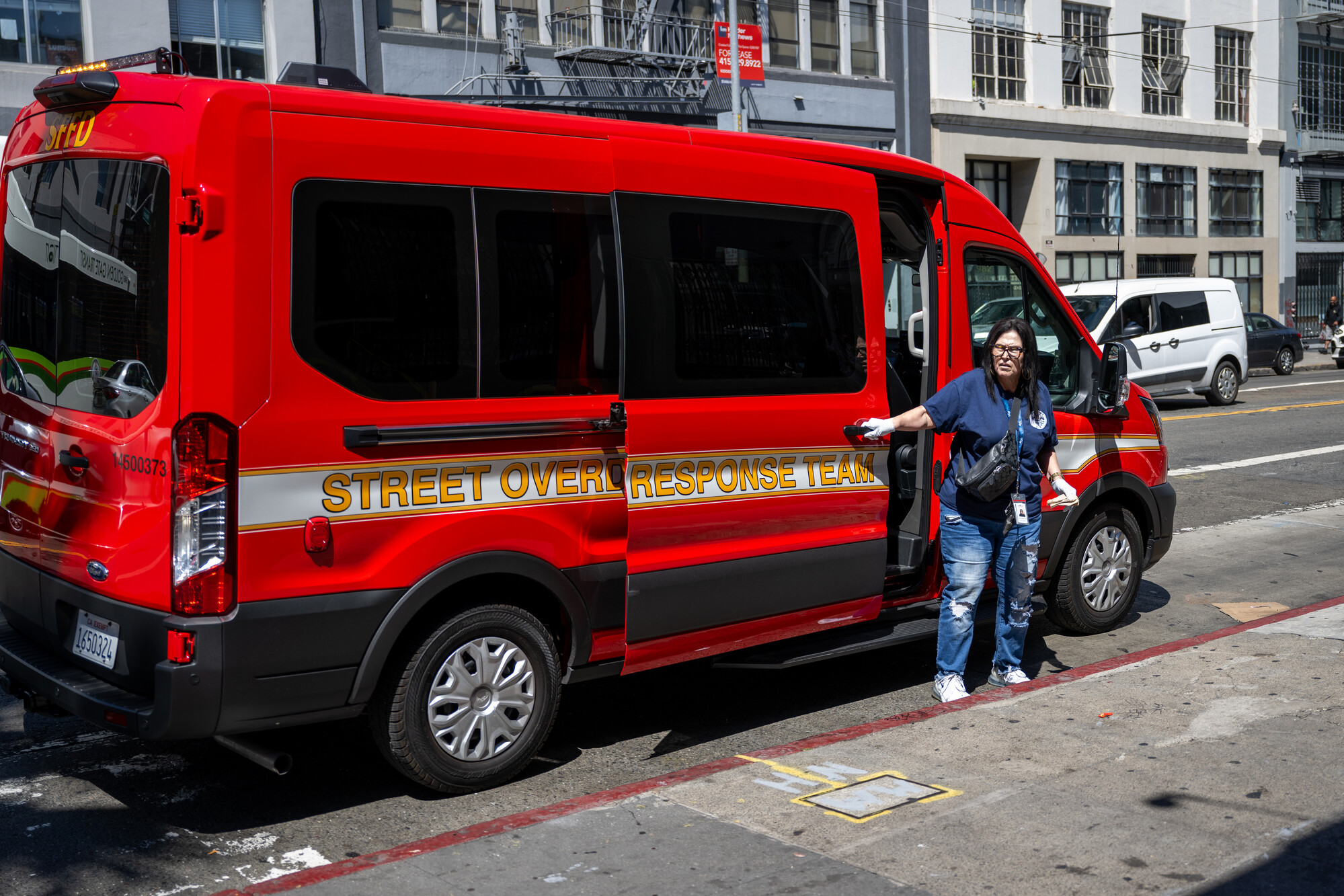 Counselor Chantel Hernandez-Wood, member of the Street Overdose Response Team, gets supplies from her van after speaking with two people sitting on the street in the South of Market neighborhood in San Francisco on Sept. 3, 2024.
“It was so surreal, because I was working on the same type of team that helped me when I needed help the most,” she said.
But now, San Francisco is quietly shifting its emergency response networks and the roles that peers with lived experience have within them. The fire department is planning to remove peer specialists from its 911 response this summer, setting off alarms for peer advocates who say the decision is a regressive step in the city’s approach to mental and behavioral health emergencies.
“It’s just an incredible disservice to the community,” Hernandez-Wood said. “I feel blindsided.”
Fire department officials said the move to pull peers off of the Street Crisis Response Team came after “careful consideration,” and cited challenges with scheduling that made picking up the peer responders before calls difficult.
“This decision was not made lightly and reflects the evolving needs and direction of crisis response within the larger 911 system,” a spokesperson for the fire department said in an email. “We believe that by working together within the Street Response framework, SFFD can ensure those we serve continue to receive the appropriate response.”
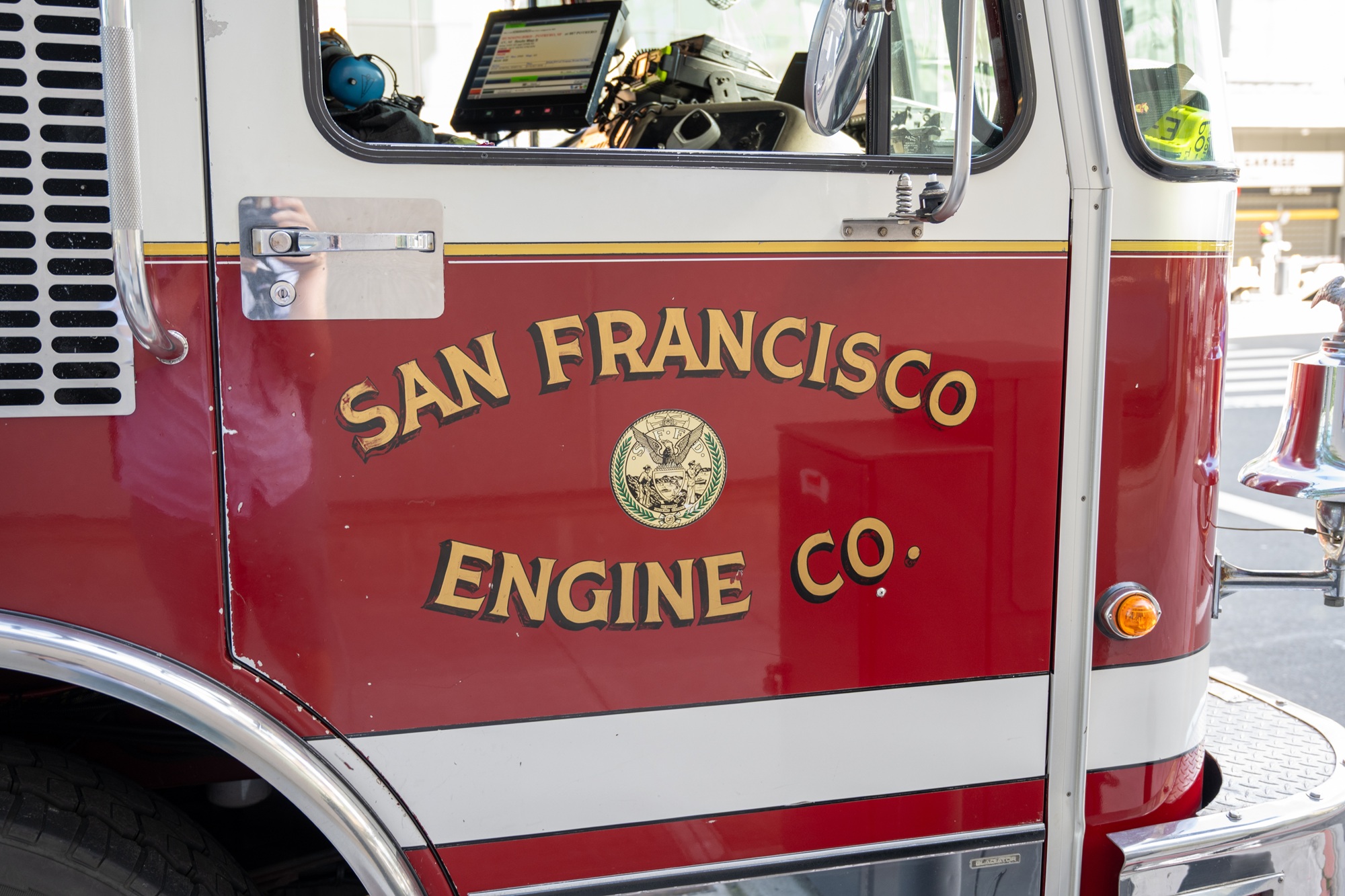 A San Francisco fire engine on March 25, 2026.
But the novel approach presented challenges.
According to the report, “911 dispatchers are stretched thin and struggle with the scripted protocols they must use to assess call eligibility, in particular because those protocols may not always resolve the calls they receive. There still is some confusion among frontline workers about responsibilities of each at the scene of an incident. And many community members and some call takers are disappointed that alternative responses are not solving complex social problems.”
The San Francisco Fire Department has meanwhile been developing its Community Paramedicine team, whose members have training in trauma-informed care and resource navigation, to more appropriately respond to people struggling with substance use, mental health crises, homelessness and other behavioral health challenges.
The community paramedics have more training in emergency medicine, and they arrive in uniform and steel-toed boots, unlike the peer specialists, who work in regular street clothes, a small but important detail that can signal a more relatable helper for some 911 callers.
The last day on the Street Crisis Response rigs for peer responders, who say their lived experience is central to their expertise, is Aug. 14.
Amelia Harmon, who works with peer responders on the Street Crisis Response Team, has been advocating to keep the positions within the fire department at public health and law enforcement commission meetings, as well as urging city supervisors to step in to reverse the decision.