
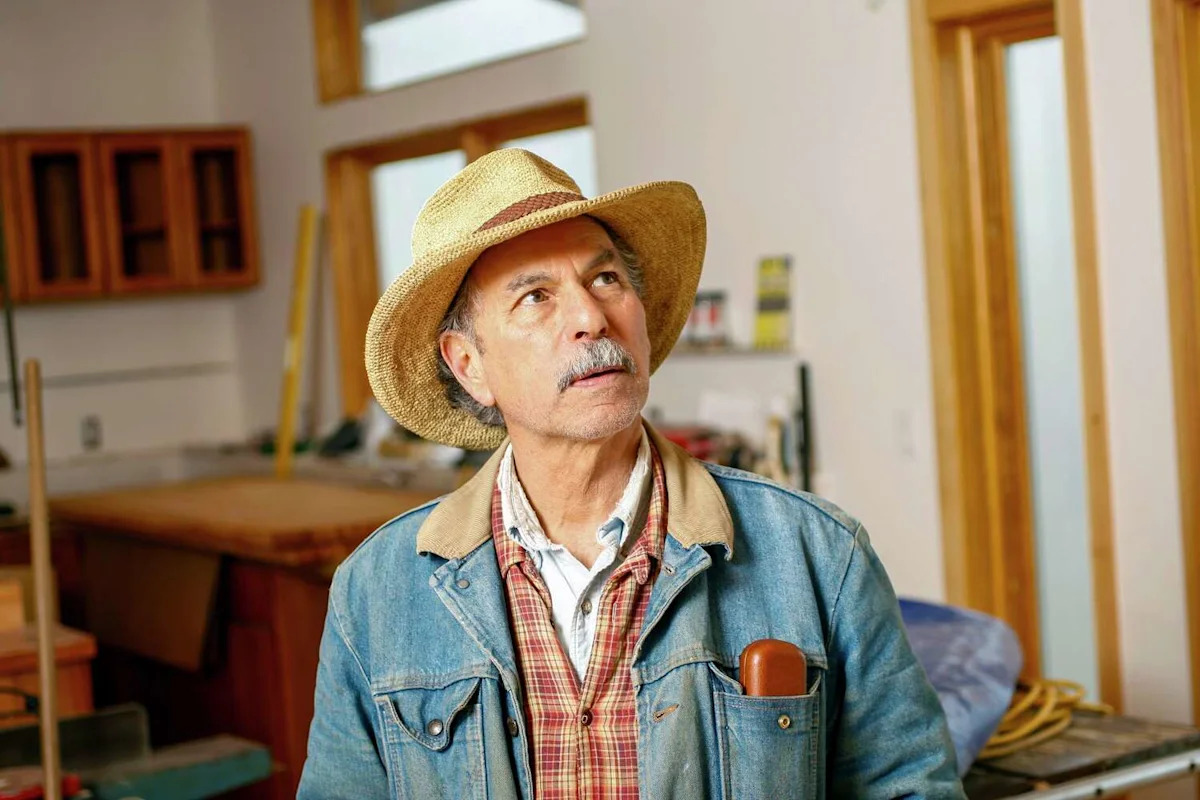
David Hirsch, a pioneer of California’s rugged Sonoma Coast wine region, died Tuesday. He was 81.
Hirsch founded what became one of America’s most regarded Pinot Noir and Chardonnay vineyards at a time when the foggy Sonoma Coast was widely believed to be too extreme for viticulture. For more than three decades, Hirsch Vineyards has supplied grapes to a trio of California wine titans – Williams Selyem, Kistler and Littorai – which helped catapult the remote wine region to global acclaim.
“It has been one of the greatest honors of my life to work with him and be imbued with the spirit and vision he brought to this place,” Jasmine Hirsch, Hirsch’s daughter and Hirsch Vineyard’s winemaker, said in an email. “I will endeavor to remind myself every day of the lessons he taught me and to care for this land that he loved.”
Born September 7, 1944, Hirsch grew up in the Bronx. He received a scholarship to attend Columbia University, but dropped out after a year. From there, he hitchhiked across the county, spent time in Alaska as a railway worker and later worked on boats in Duluth, Minnesota. He first developed a passion for wine in the 1960s, when he settled in the Santa Cruz Mountains.
In the ’70s, while working as a wholesaler in the garment industry, Hirsch frequently traveled to Paris. During those trips, he’d take the train to Burgundy, where he “fell in love with Pinot Noir, but also with a lifestyle that interconnected food, wine and farming,” Jasmine Hirsch said. “He was a self-taught wine lover and gourmand, and his enjoyment of food and wine had an authenticity and intensity that was contagious.”
In 1978, Hirsch purchased a 1,000-acre sheep ranch near Fort Ross and Cazadero, three miles from the Pacific Ocean, for $425,000. He did not initially intend to plant vines. He bought the land in what is now the Fort Ross-Seaview AVA and the West Sonoma Coast AVA, “so he could hear himself think,” Jasmine Hirsch said. On the advice of his friend and viticulturist Jim Beauregard, he planted one acre of Pinot Noir and two acres of Riesling in 1980. At the time, only a handful of others had dared to plant vines in the region. “Though it may have been dumb luck that Hirsch settled here, his neighborhood has grown up to be the Gold Coast for California Pinot Noir: Flowers, Marcassin, Martinelli’s famous Blue Slide Ridge were all planted nearby,” former Chronicle wine editor John Bonne wrote in 2009.

David Hirsch, seen in his foggy vineyard in 2009. (Craig Lee/S.F. Chronicle)
In the late ’80s, Hirsch left the garment industry to pursue farming full time. He planted 44 acres at the ranch between 1990 and 1997, then another 27 acres between 2002 and 2003. Less than a mile from the San Andreas Fault, the resulting variations in soil type throughout the property are so dramatic that Hirsch divided the vineyard into more than 60 individual parcels, each requiring its own farming regimen. Hirsch referred to this as “earthquake terroir,” Jasmine Hirsch said.
Hirsch began selling fruit to Kistler, Williams Selyem and Littorai in 1994, which brought world-renown to the site and the Sonoma Coast as a whole. Thirty-three harvests later, all three wineries continue to purchase fruit from the vineyard. In 2002, Hirsch decided to build a winery on the ranch “to become a better farmer,” Jasmine Hirsch said. The idea was to be able to taste each of his blocks, “to provide a lens into the vineyard.” But building a winery would prove even more difficult than planting vineyards. There was no public water or septic, limited power, and only dirt roads leading up to it. Hirsch built a 10-mile power line in order to connect to PG&E. “Carving a vineyard, home and winery out of this place required a person of great vision, determination and fearlessness,” Jasmine Hirsch said. Those wines, bottled under Hirsch’s eponymous label, evolved into a full-fledged winery now regarded in the same company as its vineyard clients for a fresh, elegant and restrained wine style that’s increasingly in vogue.
“We made such incredible wines,” Ross Cobb, founder of Sonoma Coast winery Cobb Wines and Hirsch’s winemaker from 2010-2015, said. “All of us were legitimized early on with David’s incredible impact on grape growing, winemaking and branding of the West Sonoma Coast.”

Hirsch Vineyards the “Bohan Dillon” Sonoma Coast Pinot Noir. (Esther Mobley / The Chronicle)
Cobb, who lived at the vineyard with his family while working for Hirsch, described him as “brilliant, extremely intense and strong-headed.” Hirsch, who often donned a Borsalino hat, had a “1960s, 1970s New York vibe in the way he dressed and talked” and was “very old school and old world when thinking about grape growing,” Cobb said. He didn’t like any manipulation to the vine, and spent a lot of time conducting important viticulture research on soil, plant material and biodynamics.
Hirsch was a devout Zen Buddhist. He began converting his vineyard to biodynamic farming in 2011 and in 2014, while building compost piles, he was in a severe tractor accident. The accident left him paralyzed with other critical injuries, but he eventually returned to work in the vineyard, utilizing an ATV with hand controls. “He planted five new acres of vineyards, which will give us fruit for the first time next year,” Jasmine Hirsch, who took over as the Hirsch winemaker in 2019, said.
Hirsch is survived by his wife Marie, his children Jessica, Jasmine and Joseph, and his siblings Adam, Betty, Susan and Daniel.
Subscribe
There’s more to San Francisco with the Chronicle. Subscribe today for just 25¢.
This article originally published at A pioneer of one of California’s most revered wine regions has died.