
Reality Check is a Fresno Bee series holding those in power to account and shining a light on their decisions. Have a tip? Email tips@fresnobee.com.
City officials say they want to put guardrails on the funding of a controversial 9,000-acre mega development in southeast Fresno — but critics say the new proposal is rushed and poorly designed.
On Friday, Fresno City Council President Nelson Esparza introduced a proposal for a ballot measure known as “No Debt on Development Act,” which he said would place “guardrails” on the Southeast Development Area, which is Fresno Mayor Jerry Dyer’s plan to expand the city to the south and east through annexation, a project that could add up to 45,000 new homes to the city.
The “No Debt on Development Act” will ask voters to prohibit the city of Fresno from spending general fund tax revenues or incurring bond debt to pay for infrastructure capital improvements, operating and maintenance expenses for development within the SEDA, except for a 2,000 acre section of the project known as the “South SEDA Plan Area.” The resolution language for the proposal was made available on Monday morning.
South SEDA is smaller portion of the overall project and Dyer’s priority for development. It consists of about 1,963 acres, 469 of which would be used to build 4,800 residential units, with the rest for flexible research and advanced manufacturing. Dyer estimates that it would cost around $90 million in upfront costs to develop the necessary infrastructure for South SEDA, an amount he said the city could tolerate.
But critics say the ballot measure proposal doesn’t make sense, with one calling it a “contradictory and confusing mess.”
In a letter sent Tuesday to top Fresno officials, Patience Milrod, attorney for the Central Labor Council and the nonprofit Regenerate California Innovation — groups opposed to the SEDA — detailed several concerns with the proposed ballot measure.
“Certainly the public, and you, the policymakers, need more time to fully assess this proposal,” Milrod said in the July 28 letter.
One of the main concerns is that the proposal’s guardrails are not clear or strong enough. “It appears the measure does not live up to its hype: in particular, it allows Fresnans’ taxes and fees to flow into SEDA rather than funding only Fresno infrastructure and services,” Milrod said.
2026.07.28 Council Pres Esparza by Melissa Montalvo
In response to the letter, Esparza, the ballot measure’s sponsor, said “this measure wasn’t intended to win over staunch opponents.”
“It was designed to protect the city’s long-term finances, and it accomplishes just that,” he said.
Esparza said in a press conference Friday that his legislation would prohibit the city from incurring debt for infrastructure, and bans waiving development impact fees, “ensuring that developers are truly responsible for the cost of building out our city’s fringes.”
“Although growth in our city is important, how we grow should be done in a responsible and a fiscally solvent manner. Fresno residents should know that City Hall will leave no existing neighborhood behind,” Esparza said
District 6 Councilmember Nick Richardson also showed some skepticism about the rushed proposals.
“It’s going to be an interesting conversation from the dais to see what the intent of this was,” he told The Bee on Wednesday afternoon.
“Because it’s confusing whether the intent of it is to kill SEDA based on limiting funding sources, or if it’s to expedite SEDA by allowing an expansion of funding sources available for South SEDA,” Richardson said.
Fresno City Council will vote Thursday to put the proposal in front of voters on the Nov. 3 general election ballot. The ballot measure is one of four proposed ballot initiatives that the Council will vote on tomorrow. Political science experts and democracy watchdogs say ballot measures should have been introduced months in advance for voters and Council to have time to review and debate the items.
It will cost $600,000 to place the four measures on the ballot, according to the Fresno County Clerk/Registrar of Voters.
What does the SEDA ballot proposal say?
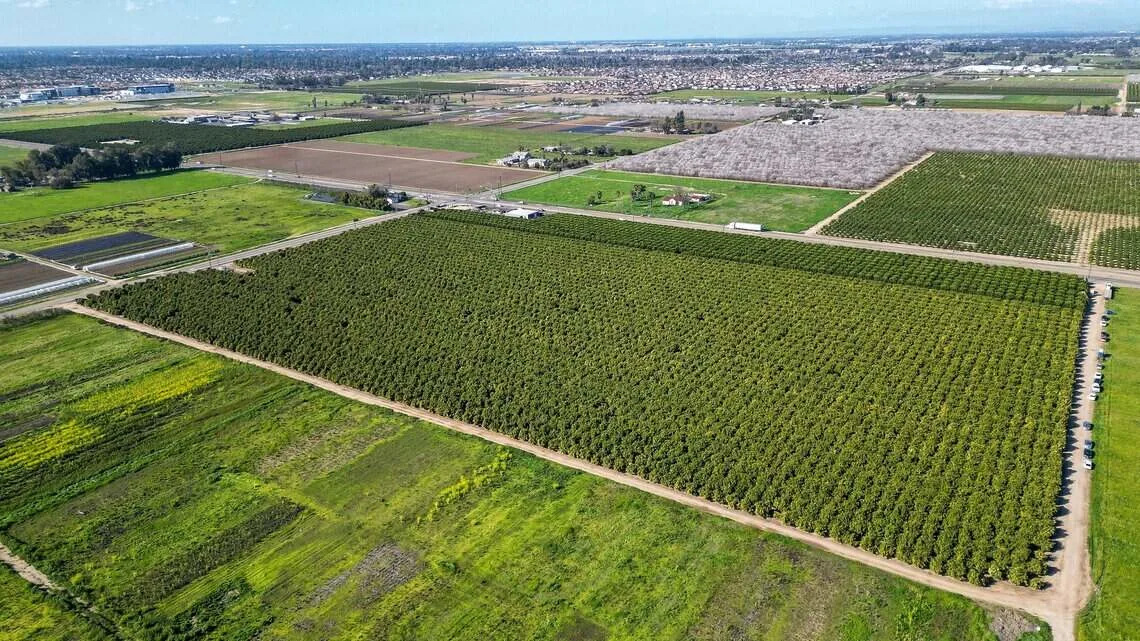
Mostly agricultural land is visible looking south from Temperance and Jensen avenues in rural Fresno County on Thursday, Feb. 12, 2026. The land is part of the Southeast Development Area, or SEDA, a 9,000-acre swath of unincorporated Fresno County land where Fresno Mayor Jerry Dyer and his administration are proposing the development of 45,000 homes.
Critics say the language of the proposed ballot measure would allow the city to take on debt to fund SEDA, potentially putting taxpayers on the hook further down the road.
The fine print of the proposed ballot measure would not prohibit the issuance of debt payable solely from legally restricted, non-General Fund revenues, such as development impact fees, assessment district revenues, Community Facilities District special tax revenues, Infrastructure Financing District revenues, enterprise fund revenues, grants, or other revenue sources that do not obligate the General Fund.
An enterprise fund is a type of revenue source that is funded by ratepayers and is separate from the discretionary, general fund portion of the city’s budget. For example Fresno’s water and sewer systems are enterprise funds, funded by water and sewer fees from users. Under the proposal’s current language, Fresno’s water and sewer funds are eligible for SEDA financing.
Under the proposal, “Fresnans will continue to subsidize SEDA developers,” Milrod said.
What’s next for SEDA?
The Fresno City Planning Commission will vote on an environmental impact report on Aug. 19. If a majority of commissioners vote to recommend the plan, it could receive final approval as soon as the next scheduled City Council meeting, on Aug. 27.
The Fresno City Council was originally scheduled to approve the $4.3 billion proposed largescale expansion in December. Instead, Dyer pivoted and asked for direction from the council for the South SEDA Plan.
In a 5-2 vote, the council sent the plan back to the Dyer administration with a list of demands and potential revisions, including new studies on SEDA’s financial viability.
Exhibit J – South SEDA Map by Melissa Montalvo
Dyer weighs in
Despite being a key project for his administration, Dyer said he would not oppose the proposed ballot measure — but admitted it will have an impact.
“The item addresses many of the concerns that have been raised by opponents of SEDA in terms of preventing leapfrog development in our city,” Dyer said.
Dyer said if approved by the city council and voters, it would give the city more time “to prove the financial viability of the development of South SEDA, and the fact that it will not hinder the development of within the core.” With that, Dyer said, he hopes for city council support of the first phase.
“The agenda item may not be ideal, but if it allows us to achieve that priority, then it could be a good thing for the future city of Fresno,” Dyer said.
Fresno Bee Reporters Liliana Fannin and David Taub contributed to this story.