
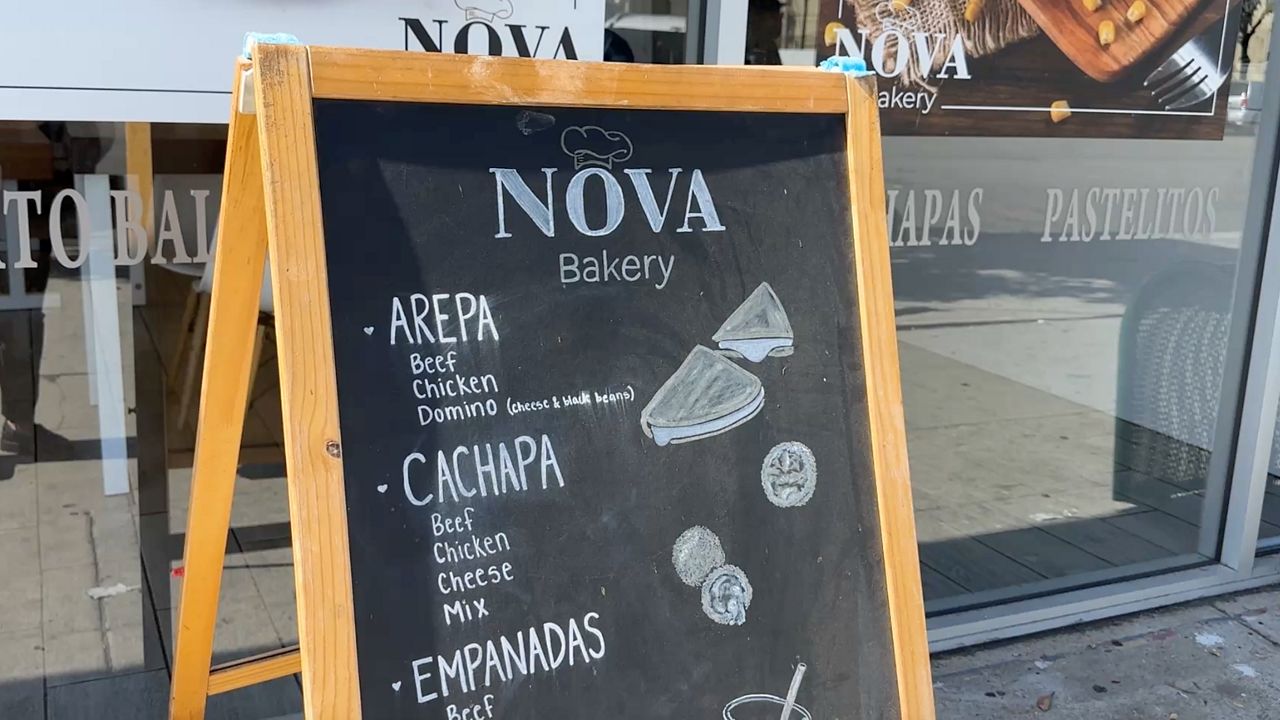
LONG BEACH, Calif. — Helping people discover the flavors of her home country, Venezuela, is a joy for Pierina Barboza, whose family opened Nova Bakery in Long Beach two years ago.
What You Need To Know
In October, the Supreme Court allowed the Trump administration to end the Temporary Protected Status of hundreds of thousands of Venezuelans under the federal law
For Venezuelans who received their TPS designation in 2021, they will lose their status on Nov. 7, 2025
Venezuelans who received their TPS designation in 2023 will lose their status in October 2026
Once that status expires, beneficiaries will return to whatever immigration status they had prior to applying for the program
However, that joy is one she is fighting to keep as, like for many Venezuelas this year, has brought about a lot of uncertainty about their future in the country.
In May, the Trump administration ended the TPS or Temporary Protected Status program, which allows immigration from certain countries to be in the U.S. legally and provides them with employment authorization.
The program is contingent upon their own countries not being safe to return to, for example because of a civil war posing a serious threat to personal safety, environmental disasters, an epidemic or extraordinary conditions.
Earlier this year, the Secretary of Homeland Security, Kristi Noem, deemed Venezuela no longer meets the conditions for this designation.
The decision ended up in court, and after much litigation, in October the Supreme Court cleared the way for the Trump administration to end the TPS program for Venezuelans.
According to the federal government, there are about 600,000 Venezuelan nationals under this type of protection; among those was Barboza’s family.
“My family and I applied and got TPS in 2021, and we were super happy and grateful to the administration then for offering that status to Venezuelans so we could all work and contribute,” said Barboza.
But she adds things have taken a turn since, as because of the program’s termination, Venezuelans who like her family, had their status approved in 2021 will lose that protection after Nov. 7.
For Venezuelans who have a TPS case from 2023, their status is expected to end in October of 2026.
When the protections expire, people’s status will return to whatever they had prior to applying for TPS.
For Barboza and her family, that means they will return to their asylum status as that is how they first came to the country in 2016.
“Thank God my family and I have that asylum case still open, so we are able to continue being here under asylum legally and keep working legally as well,” said Barboza.
She explained they never stopped paying the asylum fees, but that she and her family are still awaiting a court date to know what happens with that open case, keeping them again in a state of limbo.
“So we don’t know what is going to happen tomorrow, will we have to leave? Will we be able to stay?” said Barboza.
Still, she knows not everyone is as fortunate to have a back-up status to fall back on.
“I know people who got here just a couple of years ago, got their TPS, began working and contributing but are now losing their status, losing their jobs as a result, and are unemployed and financially struggling,” said Pierina.
The economic impact is expected to take a toll on the country. A recent Center for Migration Studies report found that TPS holders have higher levels of labor force participation and lower unemployment rates than their non-TPS counterparts. Losing their status will leave many undocumented, and experts say this will lead to lower wages, people closing bank accounts and retirement accounts out of fear of deportation and potential increases in foreclosures across metropolitan areas.
Beyond the financial domino effect, the uncertainty brings chaos for those who do not have an asylum case, employer sponsorship, or are married to a U.S. citizen to have an opportunity for acquiring status, said immigration attorney at Quiroga Law Office, Hector Quiroga.
“If they don’t have any other claim, they would become undocumented. They would stop this and they would have no other lawful means to stay,” said Quiroga.
He said in years past these cases would get appealed and go through the court system, but that is not what he is seeing this time around.
“Now, the government seems to be issuing notices to all those individuals to leave the United States as soon as possible,” said Quiroga.
For now, Barboza is thinking about her community in Venezuela and those here, saying the repercussions of this termination will affect both countries.
“Many people can be left without a meal to eat, without a home, and it’s super sad, but I have a lot of faith that soon things will turn around for my Venezuelan brothers and sisters and my family,” said Barboza.
Venezuela is not the only country seeing its TPS status revoked. Back in July, Secretary Noem also ended the protected status for Afghanistan.
Those with TPS from Haiti have until February of next year as well before their status expires. And countries like Nepal, Honduras and Nicaragua are also set to end.