
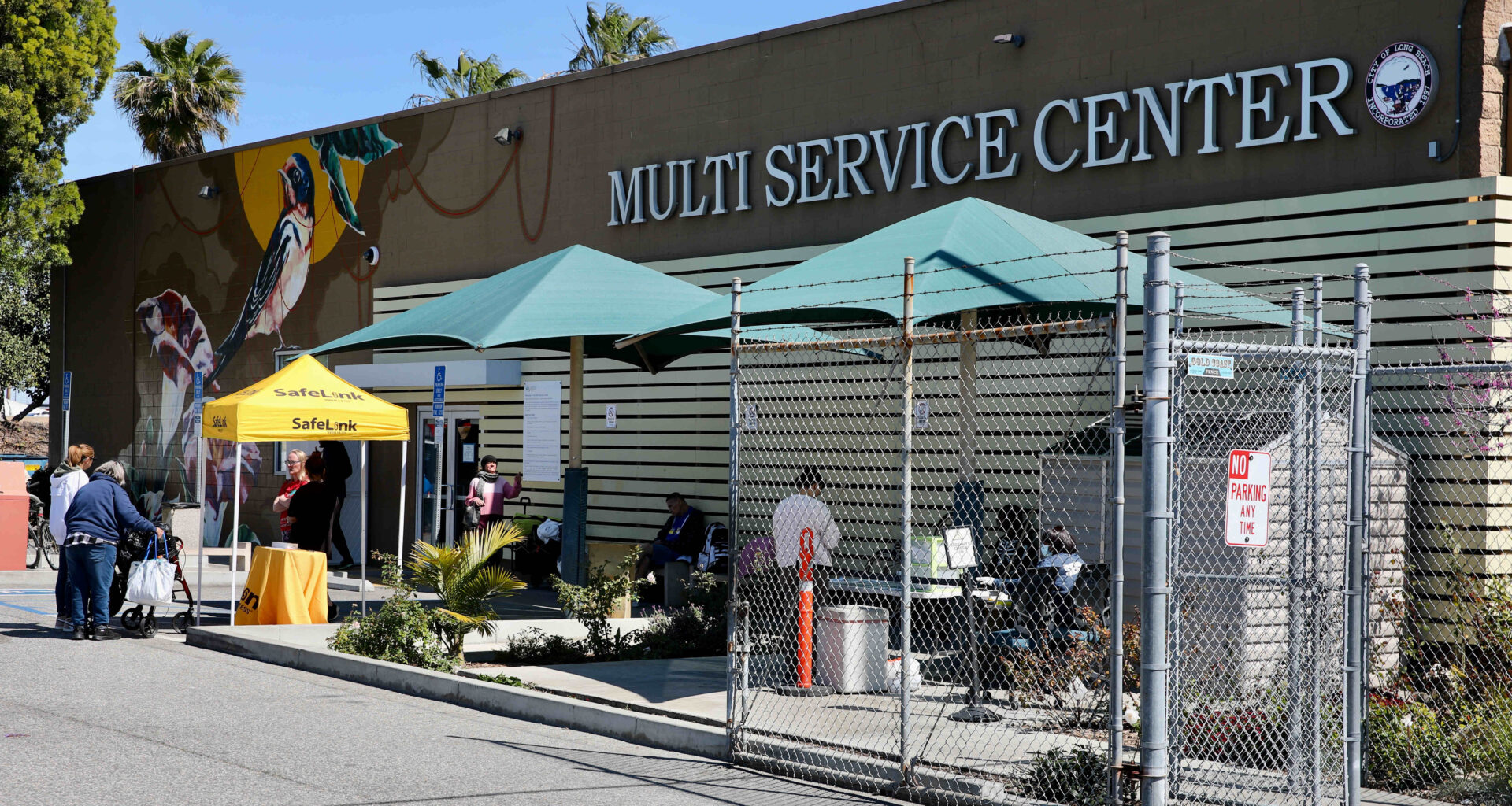
Long Beach has launched a new rental subsidy program aimed at preventing older adults from becoming homeless.
Dubbed the Older Adult Shallow Subsidy Program, the initiative will provide rental assistance to older adults on fixed incomes, the city said in a Wednesday, July 29, announcement. The program was initially announced in April as part of Upstream LB, the city’s strategy to prevent homelessness before it occurs.
Long Beach’s homeless population increased 3.7% this year compared to 2025, according to the results of its annual point-in-time tally of people who lack permanent shelter, which was conducted in January. The results of the tally were released on July 20.
Though homelessness increased this year, city officials touted several positive trends in the data, including a 15.4% increase in people staying in shelters and a decline in the amount of unsheltered homeless people to 69.4% — the lowest level recorded in the past four years.
The majority of Long Beach’s homeless population consists of working-age adults, according to the data. The count showed a slight decrease in adults over 65 who are homeless, down to 324 this year compared to 343 in 2025, according to the report.
But older adults with low or fixed incomes are especially vulnerable to losing their housing, according to the city, as the cost-of-living and housing costs continue to rise.
“Older adults living on fixed incomes are increasingly vulnerable to housing instability as rents continue to rise across the region,” Mayor Rex Richardson said in the announcement. “This program reflects our commitment to preventing homelessness before it happens by helping older adults remain safely housed while connecting them to long-term housing and supportive services.”
The Older Adult Shallow Subsidy Program will provide eligible participants with around $400 to $500 a month in rental assistance, the city said. Participants will also receive “light-touch case management,” the press release said, such as quarterly check-ins to help participants access supportive services and other resources as needed.
Those eligible for the program include:
Households with at least one member who is 62 or older, or 55 and older with a disability.
People living in non-subsidized rental housing in Long Beach.
Those with a household income at or below 50% of the Area Median Income ($58,000 for 1 person household; $66,650 for a two-person household, and so on).
People who are severely rent burdened, which means spending 70% or more of household income on rent.
Those with the ability to pay rent with the program’s assistance.
The program, according to the city, will prioritize applicants whose existing rental assistance or housing subsidy has expired or will expire within the next 60 days.
“Additional prioritization factors,” the city said, “may include urgency of eviction risk, disabling conditions, fixed-income status, prior experiences of homelessness and other vulnerabilities.”
Those eligible for the program could receive up to $12,000 in assistance over a two-year period, and the program is expected to serve around 150 households, the city said.
The program has about $1.8 million in funding, 75% of which comes from state resources secured with the help of state Sen. Lena Gonzalez, D-Long Beach, the city said, with additional funding from Los Angeles County’s Measure A and state Homeless Housing, Assistance, and Prevention grant funds.
“Preventing homelessness requires upstream solutions that stabilize households before they enter crisis,” health department Director Alison King said. “This program will provide meaningful support to older adults facing severe rent burden while helping connect them to long-term housing stability and supportive services.”
Applications will be open until slots are filled, according to the city. Applications can be made online or in-person, and are available in English, Spanish, Khmer and Tagalog.
To apply online or find more information about how to apply in-person, visit longbeach.gov/olderadultrent.