
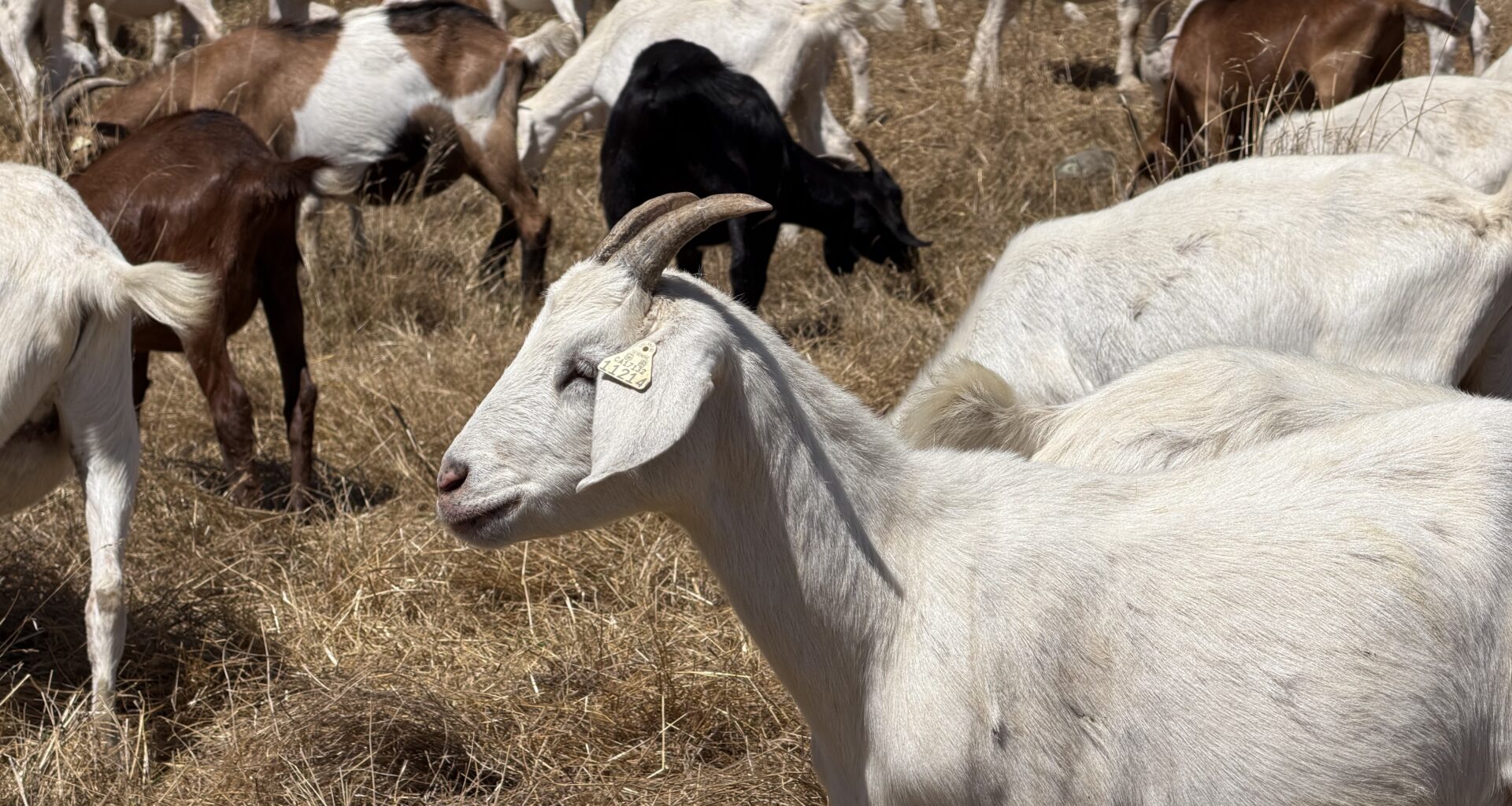
In a field of brush just North of Auburn, California in the Sierra Nevada foothills, a bunch of goats graze under the hot afternoon sun. While goats are notorious for wanting to eat just about anything, it turns out this makes them a strong resource for removing dense and flammable brush in wildfire-prone areas.
These goats in Auburn munch on behalf of Western Grazers, a company based out of Northern California that rents the animals out for wildfire mitigation.
But grazing companies warn they could soon go out of business. As of July 1, they are required to pay their herders for overtime. According to an estimate by the California Farm Bureau, a single goat herder could get paid around $240,000 a year under the new regulations.
Many grazing companies are criticizing organized labor advocates for the change.
“They’re messing with the livelihoods of us, they’re messing with the livelihood of the herders, and they’re messing with the safety of the general public who’s not going to get the fire abatement using goats,” said Tim Arrowsmith, owner of Western Grazers.
If he does go out of business, Arrowsmith says he’ll have no choice but to send his animals to market, meaning it’s likely they would end up in slaughterhouses.
“They don’t all go to retirement communities like, you know, people want to think that these goats are going to live this wonderful life afterwards. They’re not. It’s over,” Arrowsmith added.
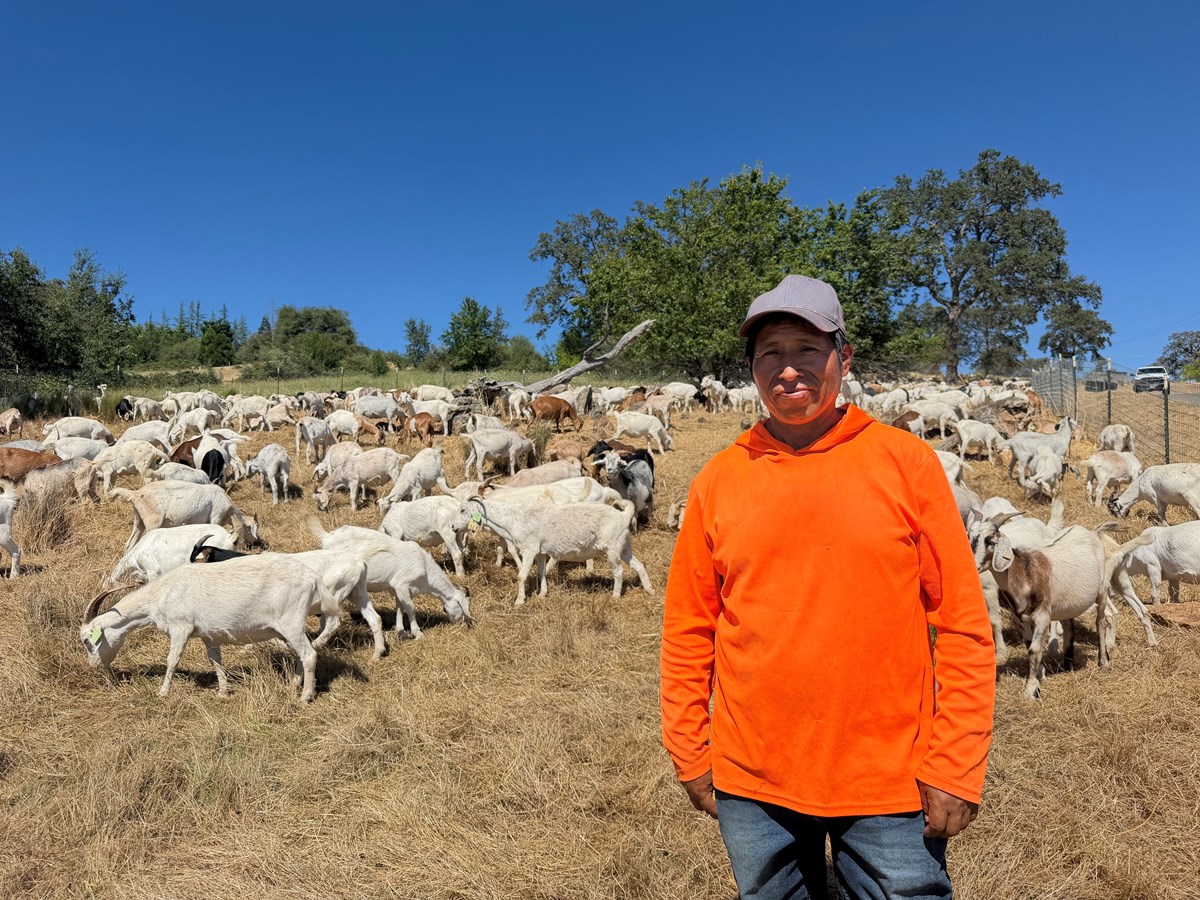 Edward Casio Valentin, a goat herder from Peru who works for Western Grazers, tends to goats and herding dogs near Auburn, CA. July 17, 2026.Laura Fitzgerald/CapRadio
Arrowsmith employs a handful of herders. These men move the goats around, protect them from predators, build fences, and care for herding dogs. They live out of trailers alongside the goats, often in isolated areas.
These workers are also typically from Peru or Mexico and come here on H2A visas for work. Arrowsmith says he pays each herder around $60,000 a year, in addition to providing supplies like groceries, clothing, and a vehicle.
“It’s a big job for these guys,” Arrowsmith said. “They make, I don’t know how many times wages that what they could make in Peru if they could find a job. And there’s no Americans that want this job.”
Herders’ pay is structured around an eight hour work day. But according to California’s agricultural overtime law established in Assembly Bill 1066, they would need to be paid for 24/7 labor.
“They can’t charge their clients enough to be able to afford that,” said Bryan Little, Chief Operating Officer of the California Farm Bureau. “The result is going to be that there are going to be few, if any, sheep or goats for wildfire fuel control if we can’t get this situation resolved somehow.”
Contrary to goat herders, those who herd sheep are exempt from overtime pay. In fact, herders will often oversee sheep and goats simultaneously. For this reason, farm advocates say there should be pay parity for goat and sheep herders. Labor advocates argue both should receive overtime protections.
The California Farm Bureau has successfully negotiated overtime exemptions for goat herders in recent legislative sessions. Now that the latest exemption expired this month, they are trying to do so once again.
Little argues grazing companies shouldn’t have to pay their laborers for 24/7 labor since they typically work eight hour days.
“They can’t necessarily go to the grocery store or go to the movies or whatever the case might be, but they’re also not working,” said Little.
But that’s not how employee advocates see it.
“You can sleep a little on call and you get a different pay structure when you’re on call, but you’re still working,” said Lorena Gonzalez-Fletcher, president of the California Federation of Labor Unions.
Gonzalez-Fletcher authored the authored Assembly Bill 1066 as an Assemblymember in 2016, which established an overtime pay structure for agricultural workers.
She says herders working on behalf of grazing companies are vulnerable and solely reliant on their employers
“They are isolated in a trailer without human contact watching goats. They have no path to citizenship, they have no other life,” said Gonzalez-Fletcher.
Many goat herders also speak Spanish, or indigenous languages that California doesn’t have traditional translation services for.
Ultimately, the California Federation of Labor Unions consistently opposes overtime exemptions for workers, even if that theoretically means goat herders would have to be paid around $240,000 a year.
“If any of us were asked to work 24/7, 365 days a year and be on call every minute of every day, I would assume that we would think that that’s a reasonable pay structure. If anything it might be a little low,” Gonzalez-Fletcher added.
It’s a point that some lawmakers seem to agree with in the State Capitol, where organized labor wields tremendous power.
The California Farm Bureau fought for another exemption from the law earlier this summer, but weren’t able to secure one before lawmakers left for their summer recess. And a legislative effort led by two Republicans representing parts of Northern California to exempt goat herders from overtime failed without receiving a committee hearing in 2024.
“California is a proud leader in pay equity. Since the passage of the federal Fair Labor Standards Act in 1938, farm workers have been denied overtime pay,” Democratic Assemblymember and Assembly Labor Committee Chair Liz Ortega said in a statement.
“In 2016, California adopted a phase-in farm worker overtime law. That phase-in period was completed in 2025. Proposals to begin repealing that law by exempting portions of the agricultural workforce are unfair and unwarranted.”
Grazing companies and the California Farm Bureau have vowed to continue lobbying for an exemption through a budget trailer bill during the final month of session.
Editor’s note: CapRadio got in touch with a goat herder, but was unable to conduct a full interview due to a language barrier. When CapRadio asked the employer, Western Grazers, for the opportunity to return with a translator, the company requested to approve a transcript of the interview if access was allowed. CapRadio does not allow sources to review interviews ahead of publication and declined this offer.