
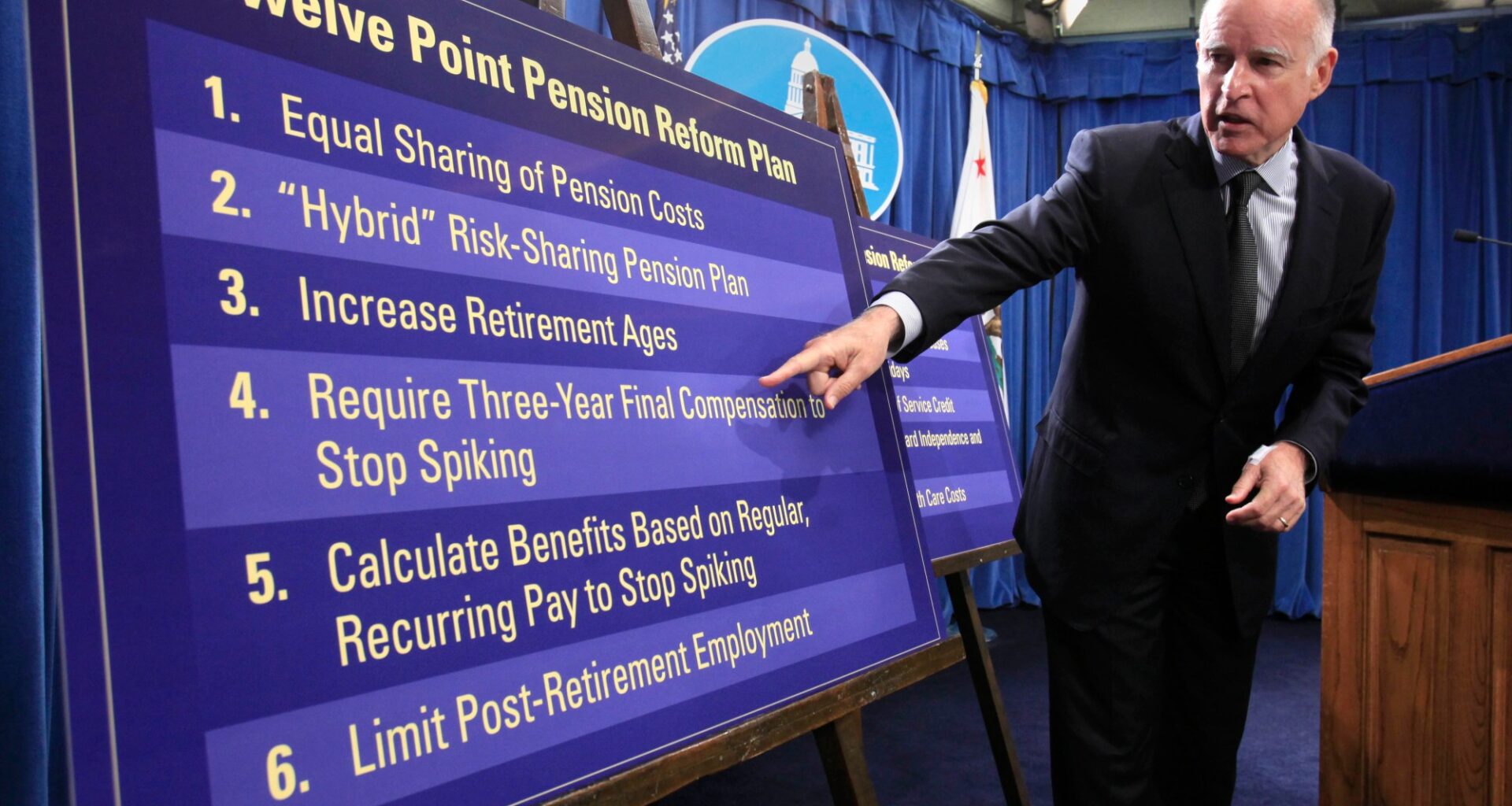
Jerry Brown’s reputation as the best governor California has had this century isn’t just based on his relative tightfistedness and the value of his constant reminders that the state’s revenue roller coaster goes down as well as up. His 2012 pension reform measure insulated local governments and the state from the grim consequences of having to constantly seek higher taxes and/or reduced services because of the burgeoning costs of retirement benefits for their former employees.
That’s why it was a big deal this week when the California Supreme Court unanimously rejected a lawsuit from Ventura County retirees. They alleged rules in the reform that were meant to prevent late-career pension spiking through use of banked vacation hours were vague and should be interpreted in a way that allowed retirees to get millions of dollars more in cumulative payments from Ventura County.
The ruling was applauded by leaders in the four counties with nearly 5 million residents who filed an amicus brief in the case warning of fiscal chaos if this provision of Brown’s very helpful fix was weakened.
Unfortunately for the 39 million Californians in all 58 of the state’s counties, the state high court can’t protect them from the vastly worse fiscal chaos the Legislature seems poised to create. A bill introduced at the behest of government unions by Assemblymember Tina McKinnor, D-Inglewood, would kill Brown’s most important reform — the requirement that public employees must pay at least 50% of the “normal cost” of their pension benefits. It also would raise the hard cap on annual pension payments to $280,000, an increase of nearly $100,000, and allow police and firefighters to retire at 55, not the present 57.
Given that many state lawmakers were previously local officials whose governments benefitted from Brown’s reform, one might assume that AB 1383 would be DOA. Instead, it passed the Assembly in January on a bipartisan 70-2 vote and won initial 5-0 approval from the Senate Standing Committee on Labor, Public Employment and Retirement in June.
Unless the bill is vetoed by Gov. Gavin Newsom, government unions will soon be able to use collective bargaining to shift even more of the cost of their members’ retirement benefits to taxpayers with few or no such benefits. Who would the unions be bargaining with? As local residents are painfully aware, in many cases, it will be the politicians whom they helped elect.
In 2012, Brown fought against this rigged game and somehow prevailed. But in 2026, no Democratic and far too few GOP state lawmakers have stood up for responsible governance. As a result, their constituents should prepare for the worst.