
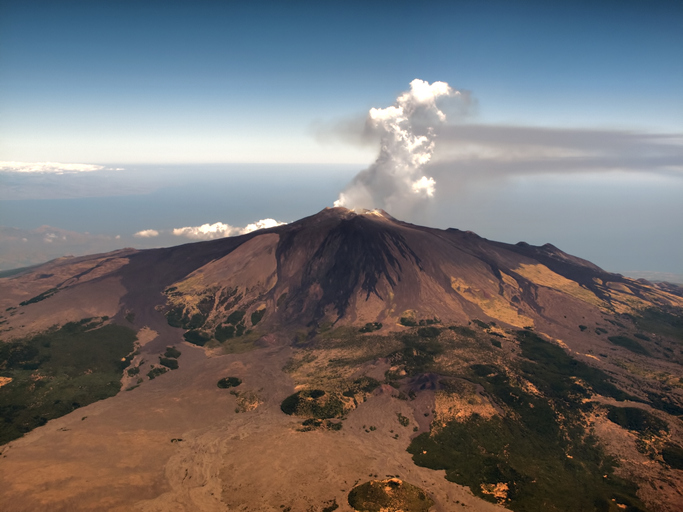
Aerial view of volcanic activity on top of Mount Etna, largest and most active volcano in Europe, with central crater spewing ash and smoke on clear blue sky.
“Reading is just a vacation you pay less for, with an agenda you have no control over.”
No vacation plans this year, but a lot of reading time and here’s what’s cookin’:
“The Nuremberg Raid” by Martin Middlebrooks (1974) Kind of a minor WW2 classic where the British historian gives us a general overview of RAF strategies from the war’s beginning, and then uses one particular night raid on a major German target as a microcosm of the air war in general. Full of specific detail and characters you will come to know. If you’re a buff, seek this one out.
“10 LB Penalty” by Dick Francis (1997) For an author who loves and writes about horse-racing, there’s not much of it here, but instead a sleekly-plotted story of a young man, whose racing career was wrecked by false allegations, estranged from his rich, powerful father, who reunites with him when Dad runs for Parliament and is the target of attacks. the brunt of which are born by the son.
“The Sicilian” by Mario Puzo (1983) Not billed as such, this is more-or-less the sequel to Puzo’s most famous book. We hook up with Michael Corleone, in exile on Sicily, with charismatic, Robin Hood-like Turi Guiliano, as Michael is nearing the end of his time away from America and is asked to save Guiliano. As beloved as “The Godfather” is as a book and movie, it’s pretty incredible that most of its fans have no idea about “The Sicilian; it didn’t help that it came out so long after the original book and the first two movies. You will read it fast and hate to see it end.
“Rough Justice” by Jack Higgins (2008) Early Higgins is still my favorite Higgins, but these later “Sean Dillon” novels are a light, fun read for fans of antiterror and espionage. The actions spans Kosovo to Beirut, Britain to Russia to America, and we meet Major Harry Miller, a man after Dillon’s own heart. The Dillon universe of characters is the basis for several 2000s novels, and all of them a good read.
“The Tin Man” by Dale Brown (1998) A bit of a departure for the author’s “McLanahan” series, as the futuristic military tech shows up late in this story, and is a little too contrived. Also, are we capable of accepting a terror plot centered around taking down….Sacramento? Anything can happen, I guess.
“Fire in the Snow” by Hammond Innes (1947) One of the best authors you may never have heard of, Innes was a journalist with distinguished RAF service in WW2 who wrote novels prolifically over half a century, many drawing on his varied travels, and often featuring protagonists who are ordinary men forced to do much more than they thought themselves capable. In this, he reminds me a lot of Helen MacInnes, whose characters are very similar. In “Fire”, a broke journalist accepts a job on a movie script and must travel to down-on-its-heels Italian ski resort bristling with intrigue and shady characters.
“Therapy Nation” by Jonathan Alpert (2026) Is more (and more and more) mental health care improving our mental health, as a nation? Asked and answered by a psychotherapist who believes that we are poorly served by both the quantity and, in some cases, the quality of the counseling. When he joined us on the 7/28/26 episode of “The Jack Show”, we talked about the phenomenon of therapist urging patients to “break up” with relatives and friends who voted for Trump, to the detriment of both sides, and, ultimately, to a civil society.
As always, if you read of these, let me know what you think. And keep in touch with me at [email protected]
More about: