
Want to up the number of trains BART can run between Oakland and San Francisco? That takes juice. And lots of it.
“This substation plus the new station at Civic Center brought up our power by 20 percent,” explained Gordon Wong, BART’s principal electrical engineer, during a press tour of the new substation at Montgomery BART.
BART is currently installing an advanced train control system that will allow it to run 30 trains per hour through the Transbay Tube, up from its current capacity of 24. But controlling the trains is one thing—it also requires more electrical power to move the heavy trains, especially during acceleration. And that means more transformers to convert AC power to DC for the train’s motors. To provide that power, BART repurposed part of a hallway on Montgomery’s concourse and expanded one of its electrical rooms. Thousands of BART riders walk past these rooms every day, unaware of the modern electrical hardware and engineers who together make their commutes possible.
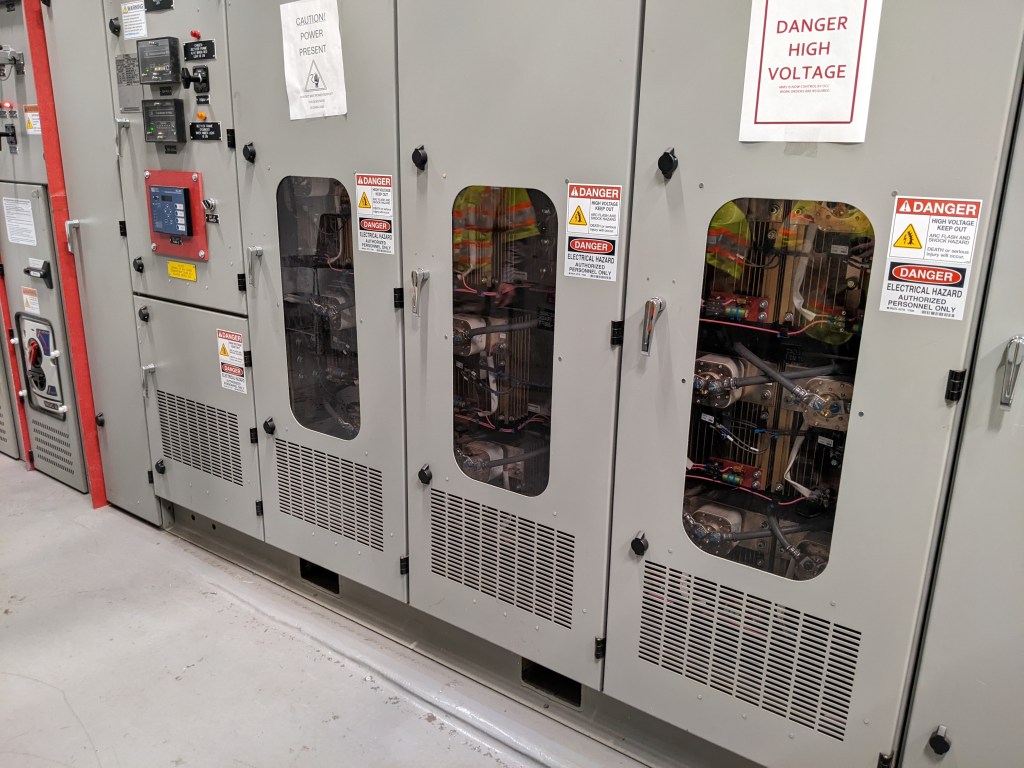 Banks of rectifiers convert PG&E’s AC power to DC power for the third rail. Photo: Streetsblog/Rudick
More from BART:
The substation project is part of BART’s ongoing investment to modernize its traction power system. New substations improve the reliability and resiliency of the rail network by increasing redundancy, allowing power to be supplied from multiple locations if another substation is taken out of service for maintenance or an unexpected outage. This added flexibility helps minimize service disruptions, strengthens the overall electrical network, and supports reliable train operations for decades to come.
This comes as BART’s ridership has been increasing and passenger on-time performance has been on the rise. In the latest quarter, BART’s passenger on-time performance rate was 94.4%, the best result in more than 10 years outside of the COVID period.
BART currently has 136 Traction Power Facilities. The construction of three new substations is expected to start construction in the next year (one in Richmond, one in Concord, and one in Oakland).
High-voltage AC current is distributed around the system (thus the 136 power facilities). At each facility, it’s converted to 1,000 volts DC, which is what’s used by the trains.
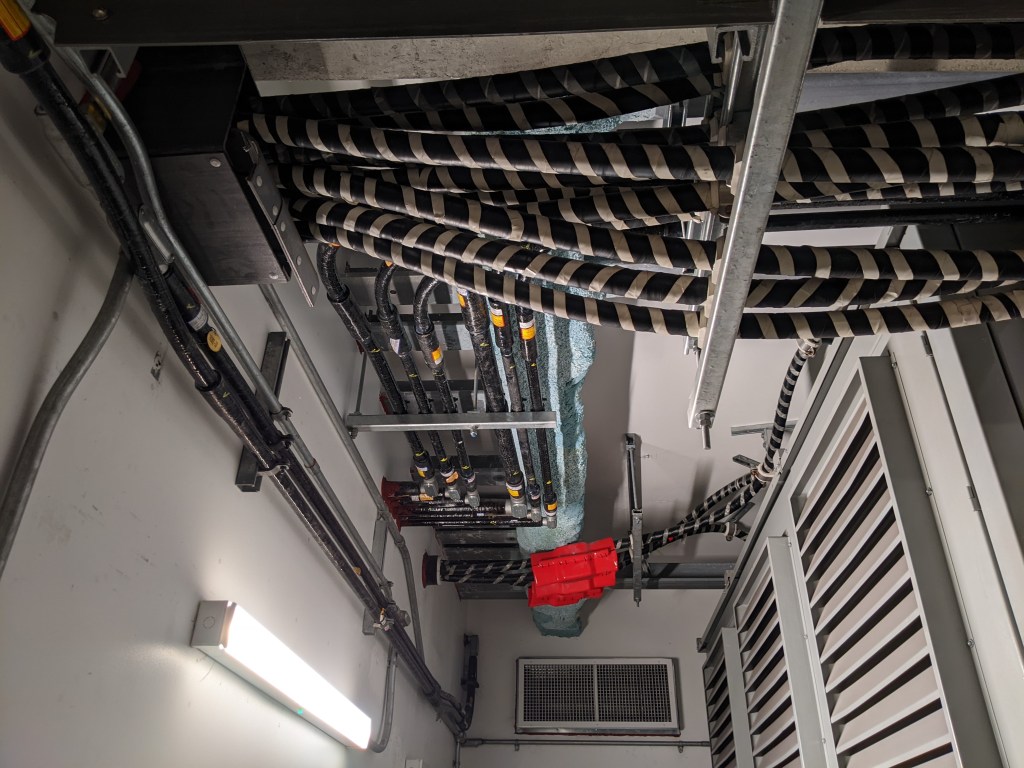 Photo: Streetsblog/Rudick
These electrical improvements resulted from the passage of Measure RR in 2016.
So for readers who walk past these rooms every day, now they know what’s housed in them. More pictures below.
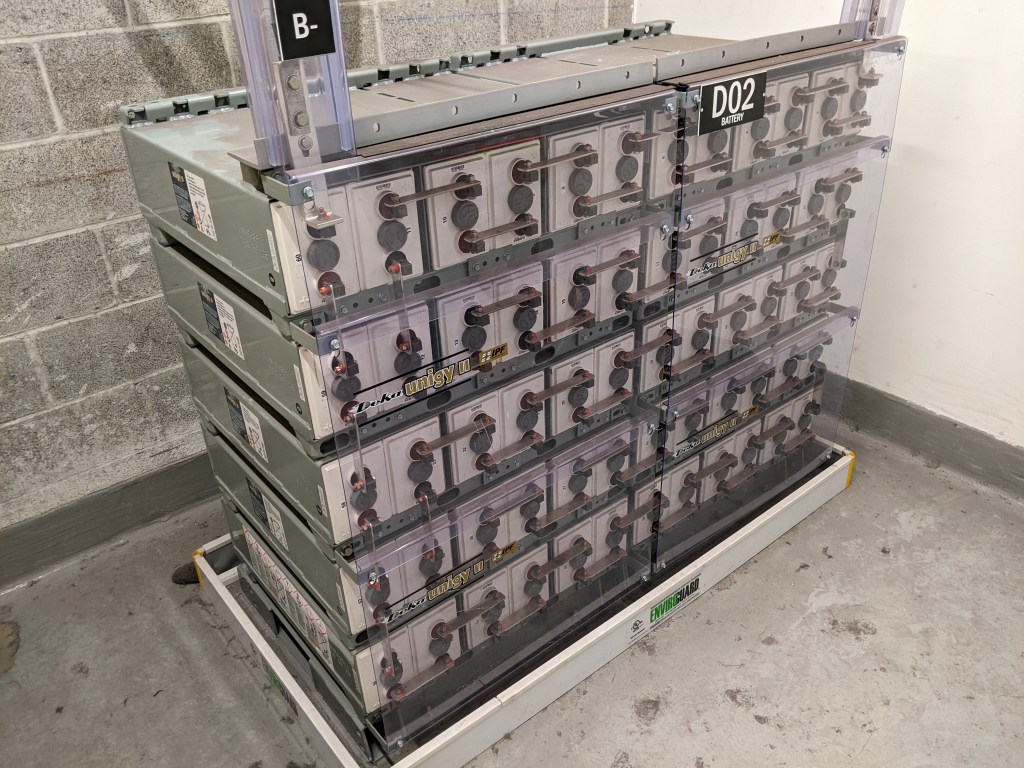 Batteries help ensure that computer control systems will operate if power is lost. Photo: Streetsblog/Rudick
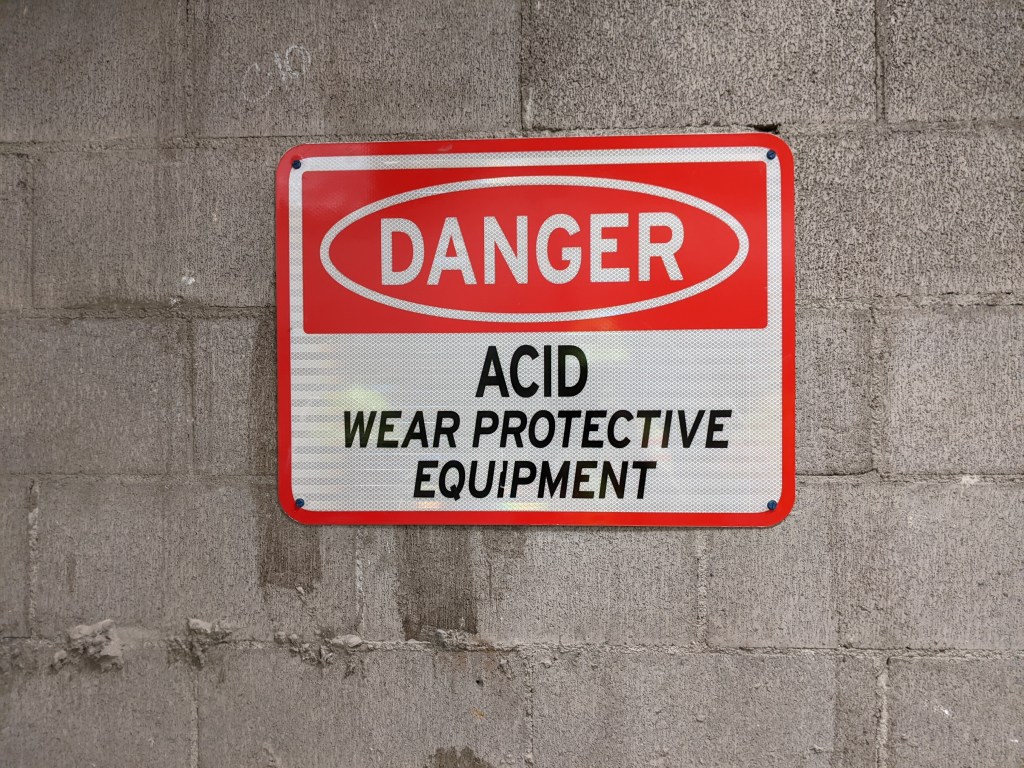 Also, do NOT go in this area without a qualified tour guide. Otherwise, you may never come out. Photo: Streetsblog/Rudick
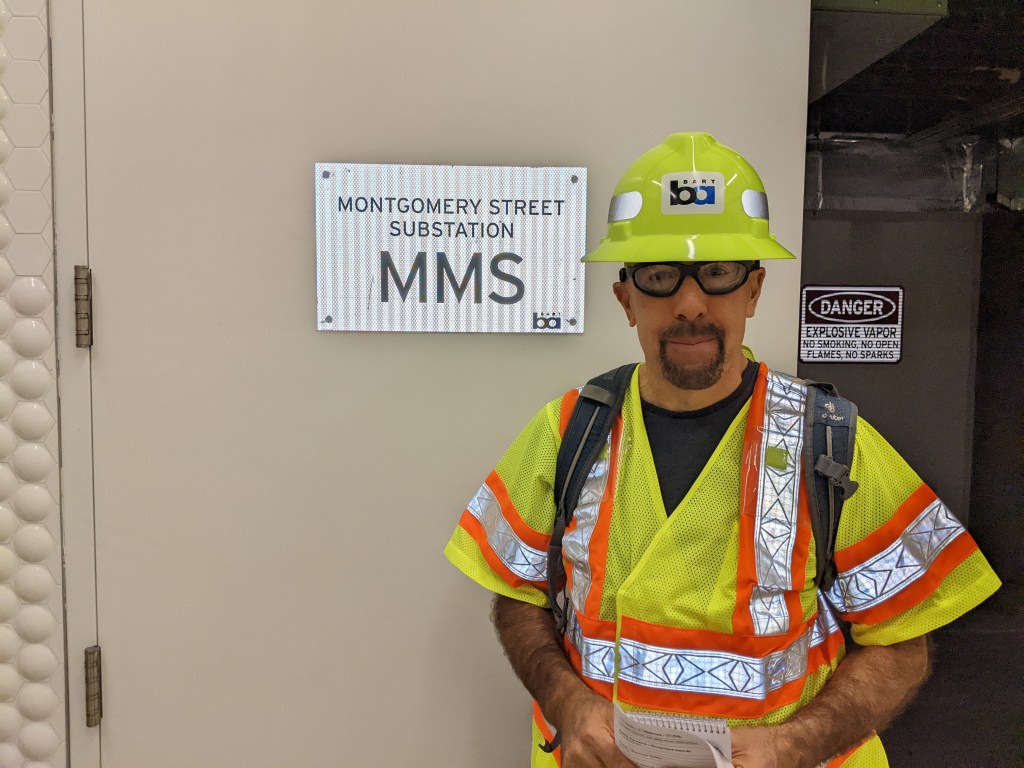 Streetsblog editor Roger Rudick. Photo: Streetsblog/Rudick