
For The Union-Tribune
Sunshine and water are essential for people to survive and stay healthy, and they are just as important for roses. Together, sunlight and water are the foundation of rose health and make photosynthesis possible. Yet in summer, the sun that powers growth can also intensify heat stress, increase water loss, and encourage pest populations to thrive and reproduce quickly.
Understanding how these factors work together helps rosarians make better choices about planting, watering, soil care and summer maintenance.
Sunlight: The rose’s power source
Where a rose is planted matters. Roses generally perform best with at least six hours of direct sun each day. Morning sun is valuable in hot climates because it supports growth while reducing the intensity of afternoon heat. Some rose varieties tolerate partial shade, but roses grown in shade produce fewer flowers and are more vulnerable to disease.
Sunlight powers photosynthesis, the process by which rose leaves use light to combine carbon dioxide from the air with water from the roots to make sugar. That sugar builds stems, leaves and roots, and it provides the energy the plant needs to grow and bloom.
Fertilizers, compost and worm castings support rose health by supplying essential nutrients, but they are only part of the plant’s growth equation. Much of a rose’s structure is built from carbon, oxygen and hydrogen gathered from air and water. That is why adequate sunlight, healthy leaves and steady moisture are as important as good nutrition.
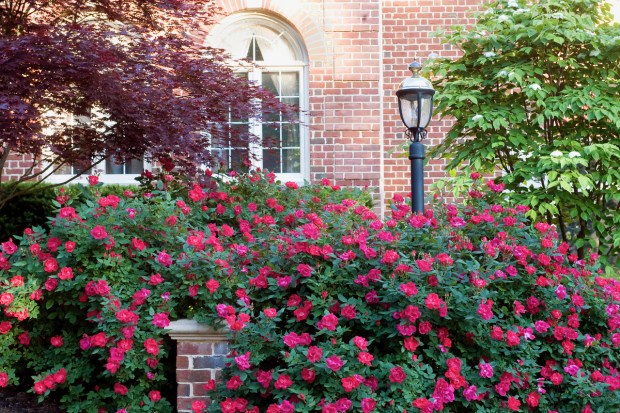 Many of Bill Radler’s ‘Knock Out’ roses are known for their drought resistance. This is ‘Double Knock Out.’ (Star Roses)
Water: The partner to sunlight
Water lets roses put sunlight’s energy to work. It moves nutrients through the plant, keeps stems and leaves firm, and supports transpiration, the release of water vapor through leaf openings called stomata. Transpiration helps cool the plant and pulls water upward from the roots, but when soil moisture is limited, roses close their stomata to conserve water. This protective response also slows photosynthesis, reducing growth and flowering, especially during hot, dry or windy weather.
Water deeply
Light, daily sprinklings may seem helpful, but they encourage shallow roots near the soil surface, where heat and evaporation dry the soil quickly. Deep watering long enough to moisten the entire root zone encourages plants’ roots to grow downward. Roses with deeper roots are better able to handle heat, drought and water restrictions.
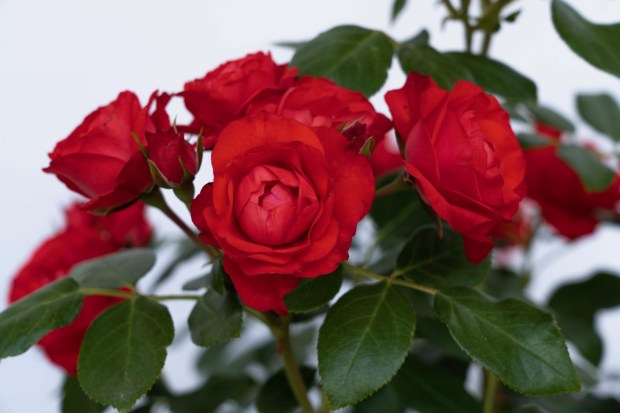 The ‘Brick House’ Series of roses are outstanding roses with great resilience. ‘Brick House Orange’ has received the American Rose Trials for Sustainability (ARTS) award. ‘Brick House Red’ and Brick House Pink’ have been trialed and tested by UC Davis for water efficiency and have been awarded the UC Davis Blue Ribbon for exceptional low water performance. (Star Roses)
A soil probe can help show how deeply water has penetrated. Water when the soil is dry more than two inches below the surface. Water more frequently during hot or windy weather and do not wait for obvious stress such as drooping leaves or wilted blooms. If a plant shows stress, water immediately.
Morning is usually the best time to water. During especially hot or windy weather, showering foliage with water can help cool leaves, and strong sprays of water can help control spider mites and aphids. Time application of water to avoid leaving foliage wet overnight. Contrary to myth, watering during warm weather does not scorch leaves; drought is a far more common cause of leaf scorch.
Summer heat and rose stress
The famous song tells us, “Summertime and the livin’ is easy.” For roses and rosarians, however, summer can be challenging. Prolonged temperatures above 90 degrees make gardeners work harder and can push roses into heat stress. Blooms may be fewer, smaller, faded, crisped or less fragrant. Leaves may yellow, wilt, bronze, scorch, dry or drop. Growth may slow or stop entirely as the plant shifts from active growth to survival.
During extreme heat, roses may enter quiescence, a temporary pause in growth that helps them conserve water and stored energy. Stomata remain closed longer, metabolic activity slows, and some roses may shed leaves to reduce water loss through transpiration. These responses can look alarming, but they are often survival strategies. Damage becomes more serious when heat lasts long enough for the plant to exhaust its reserves.
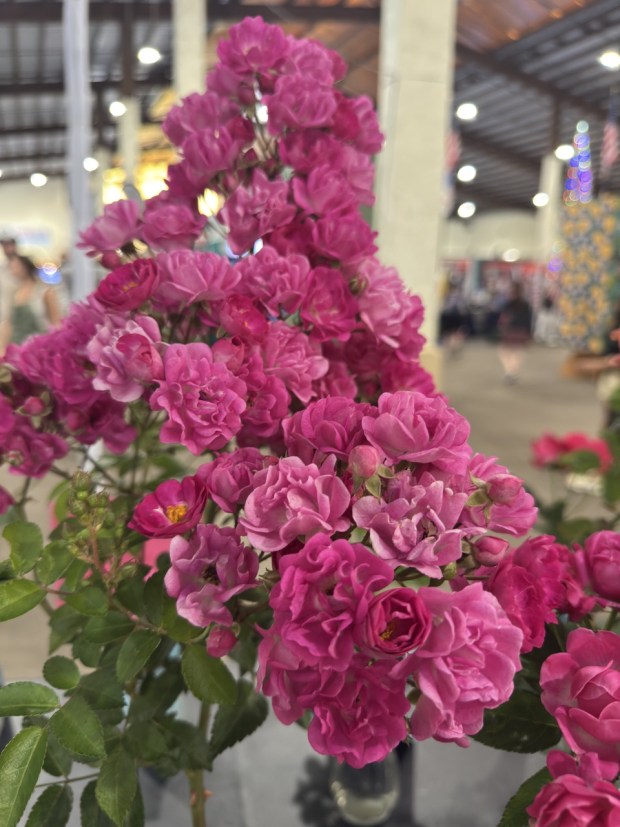 ‘Pretty Polly Pink’ is a polyantha rose bred by Dr. David Zlesak. Both ‘Pretty Polly Pink’ and ‘Pretty Polly White’ have earned the Blue Ribbon award from the UC Davis Landscape Plant Irrigation Trials for their exceptional performance on low water. ‘Pretty Polly Pink’,‘Pretty Polly White’ and “Pretty Polly Lavender’ have all received the ARTS (American Rose Trials for Sustainability) award. (Rita Perwich)
Helping roses through hot weather
• Protect the roots: Several inches of organic mulch help retain moisture and keep soil temperatures cooler. Roses take up water most efficiently when soil temperatures are moderate, so mulch is one of the simplest summer protections.
• Irrigate more often: During heat waves, add one or two irrigation cycles per week, then use a soil probe to confirm moisture has reached the root zone.
• Build healthy soil: Organic matter improves soil structure and helps it hold the right balance of water, nutrients, and air around the roots. A soil test can help to prevent the tendency to overfertilize, which can harm both soil and plants.
• Reduce competition: Nearby plants can compete for moisture, so give roses adequate space and keep weeds under control.
• Provide temporary shade: Shade cloth can help during extreme heat. Container roses (especially those on a plant caddy with wheels) can be moved out of the hottest afternoon sun when needed.
• Monitor containers and new plantings: Check containers daily in summer and water when the upper soil begins to dry. They may need daily watering during hot weather. Dark plastic pots can overheat roots; placing them inside decorative outer pots can help insulate them. Newly planted roses also need extra attention because their root systems are not yet established.
• Preserve foliage: In hot weather, avoid cutting long stems when deadheading or bringing blooms indoors. Leaves cool the plant, shade canes and soil, and continue to support photosynthesis. To preserve foliage, remove spent flowers at the peduncle.
• Avoid fertilizing and spraying: Do not fertilize or spray pesticides or fungicides during periods of extreme heat, regardless of whether the products are chemical or organic.
• Consider growing rose cultivars that have been tested and have attained the UC Davis Blue Ribbon award for best low-water plants. These cultivars include ‘Pretty Polly Pink,’ ‘Pretty Polly White,’ ‘Brick House Pink,’ ‘Kardinal Kolorscape,’ ‘Limoncello,’ ‘Icecap,’ ‘Pink Knock Out,’ ‘Double KnockOut,’ ‘Oso Easy Urban Legends’ and ‘White Drift.’
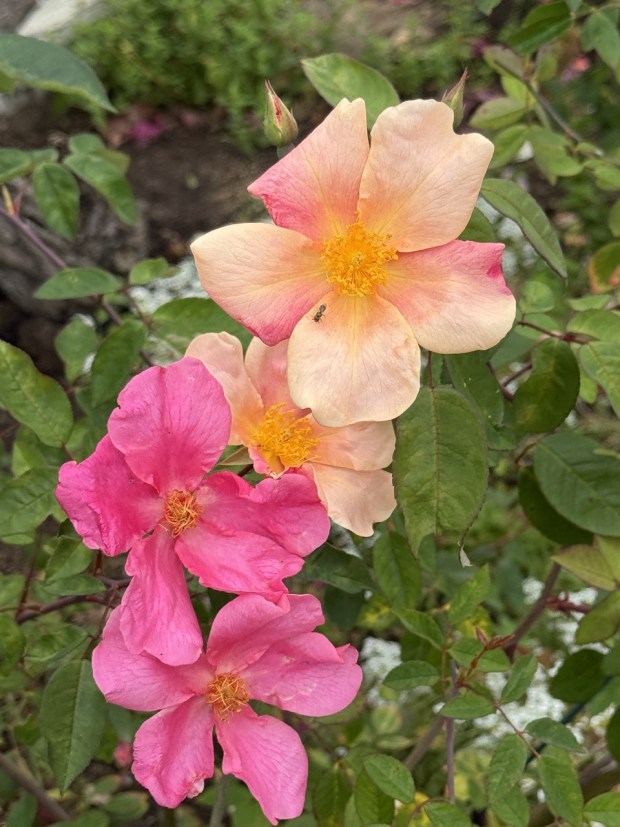 ‘Mutabilis’ also known as “The Butterfly Rose’ has been designated an Earth-Kind Rose by Texas A & M University for its extreme heat tolerance and drought resistance. (Rita Perwich)
Summer pest challenges
Heat does more than stress roses directly; it also creates favorable conditions for several summer pests. Grasshoppers, caterpillars, and rose slugs are some of the pests that challenge us in the summer garden, but the most troublesome summer pests are chilli thrips and spider mites.
Both thrive in hot weather and reproduce quickly. Spider mites are tiny, and chilli thrips are not visible to the naked eye, so it’s their damage that alerts gardeners to their presence.
Chilli thrips feed on tender new growth, causing leaves to curl and pucker. Dirty brown streaks appear on leaf undersides, buds become deformed, and blooms look distorted or scorched. In hot weather, chilli thrips can complete a generation in as little as 11 days. Monitor new growth for chilli thrips’ damage and remove suspicious growth promptly. During the hottest months, a useful mantra is: “if in doubt, take it out.”
Unlike chilli thrips, spider mites usually begin on lower leaves and move upward, leaving foliage dry, bronzed, speckled, brittle or webbed. Check leaf undersides frequently, and when spider mites are present, use repeated hard sprays of water to limit damage and interrupt their lifecycle. Removing damaged lower foliage can also help reduce populations.
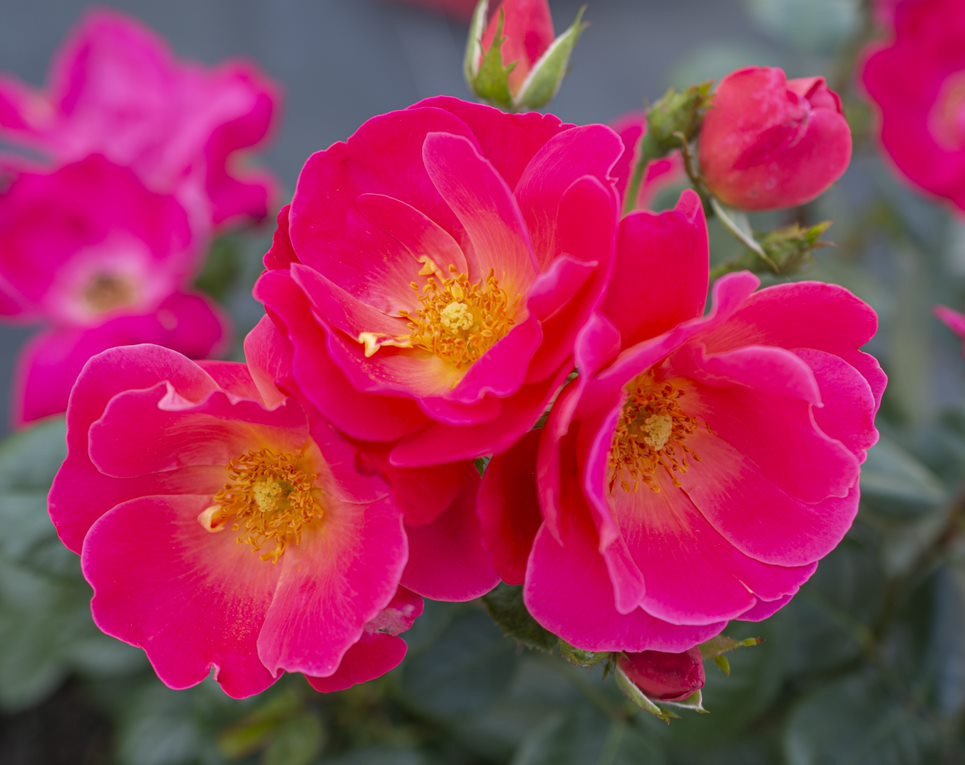
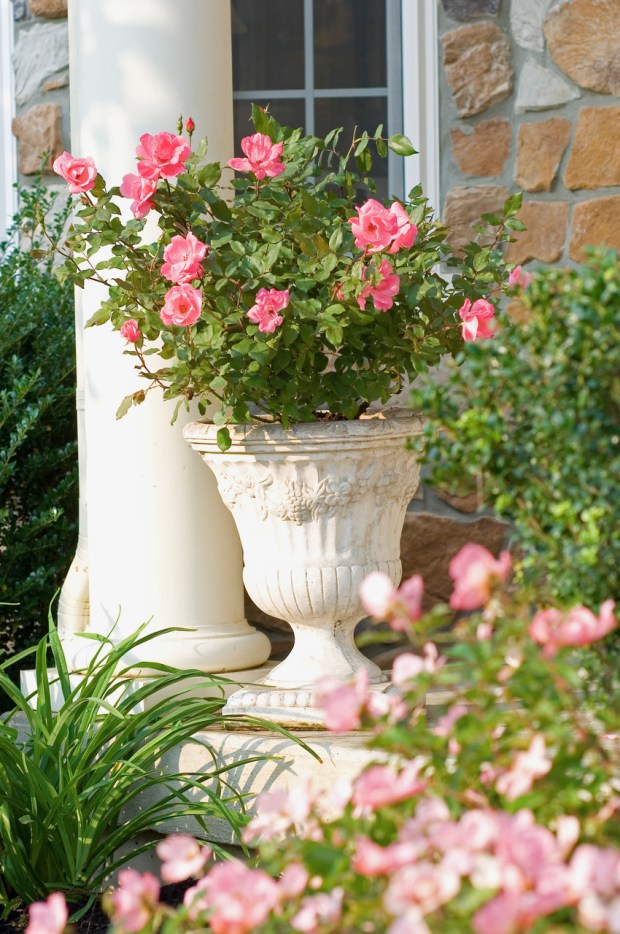 ‘Pink Knock Out’ has received the prestigious UC Davis Blue Ribbon award for its extreme water efficiency and abundant blooms. (Star Roses)
Summer survival
Summer can test both roses and gardeners. Roses may slow down in extreme heat, but with our steady support, close observation and timely action — watering deeply, preserving foliage, and monitoring pests early — they are better prepared to recover, grow, and bloom again when cooler weather returns. For gardeners, sun protection and hydration is essential especially in the summer, and the best time to garden is in the cooler hours of early morning and early evening.
Perwich is a Consulting Rosarian, UCCE Master Gardener and author of “Natural Rose Gardening: An Organic Guide to Amazing Blooms” (Chelsea Green Publishing). Available for pre-order now at penguinrandomhouse.com/books/827874/natural-rose-gardening-by-rita-perwich. For more information and advice, visit rose-harmony.com.