
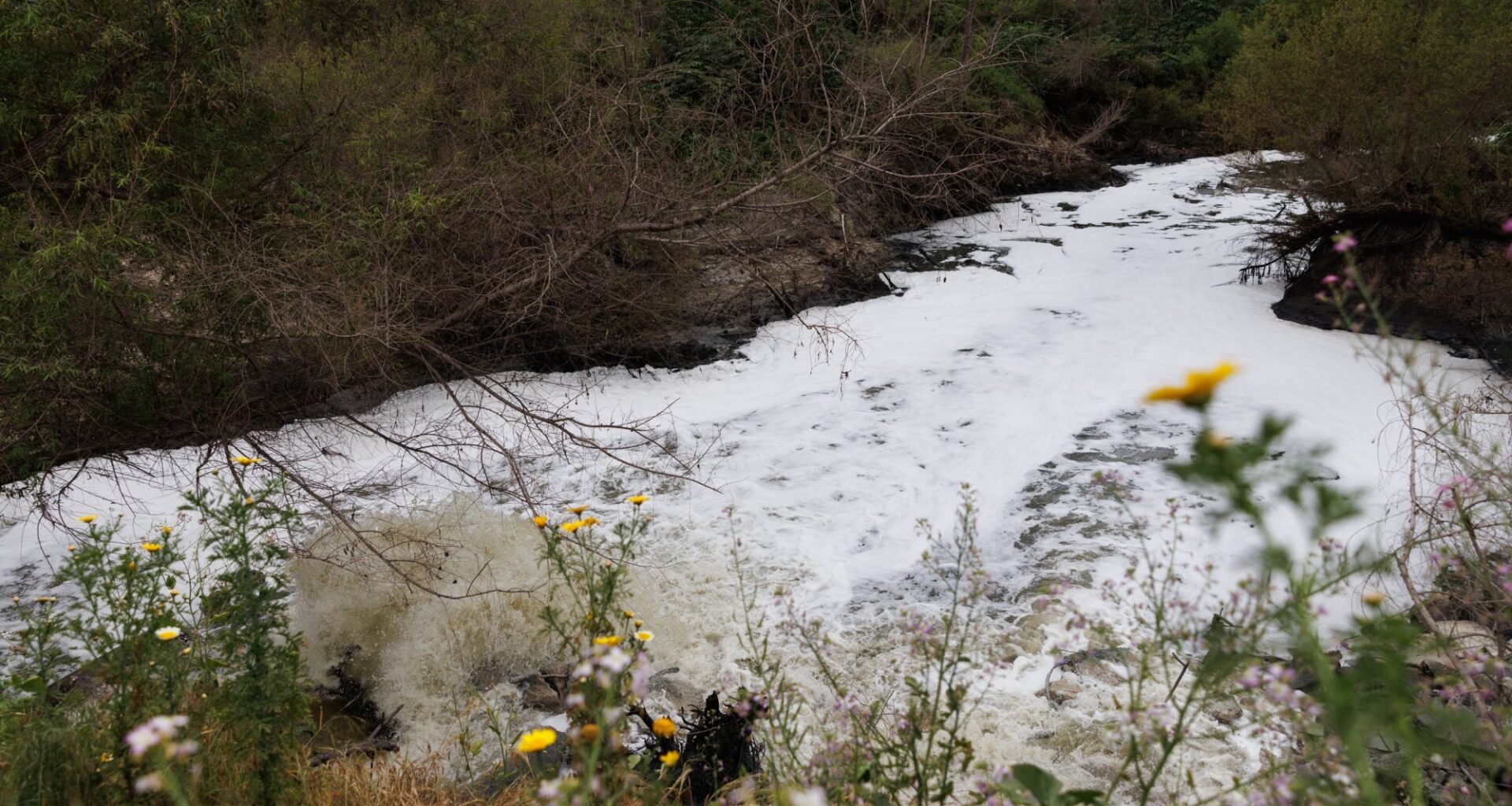
The fight to clean up border pollution has come a long way since the early 1960s, when people essentially passed the hat in Tijuana bars and restaurants to raise money for what was then seen as a remedy.
In recent years, some $650 million in U.S. federal money and $46 million from the state of California has been secured, along with commitments from Mexico, to substantially reduce the sewage and other toxic waste that flow from the Tijuana River into San Diego and the ocean off Imperial Beach.
Should all this reach its endgame, it would be a notable milestone for an effort that has seen many downs and ups over the better part of a century. Yet still more will be needed to create a permanent, ongoing operation to finally resolve the matter.
The cause has been enthusiastically embraced by the Trump administration through Environmental Protection Agency Administrator Lee Zelden, who in December announced the latest binational agreement aimed at further advancing plans to address the toxic flows.
However, the bipartisan cast of local officials who have worked hard on this issue for years and cheered this latest development were given pause when President Donald Trump declined to renew the United States-Mexico-Canada Agreement, which injected uncertainty into the delicate, politically-charged river dance.
The USMCA trade deal committed $300 million of the federal money currently targeted for Tijuana River Valley pollution.
San Diego leaders are seeking assurances that progress achieved through the pact won’t be lost. Switching to offense, several officials have said no new trade deal should be signed unless it includes a permanent solution to stopping the Tijuana River pollution.
In that, their view appears to be somewhat parallel to Trump’s larger trade goals of getting more for the U.S. out of a new pact. Though Trump had negotiated the USMCA during his first administration, he has come to criticize it as inadequate.
The decision not to renew the agreement started a 10-year clock before it expires.
The polluted flows out of Tijuana — and the toxic gases they emit — have grown dramatically along with the city’s population and border maquiladora industry, the latter of which has been developed in part by U.S. interests. This has overwhelmed the city’s aging and balky sewer system for decades.
Several remedies have been attempted, on occasion resulting in significant, if temporary, improvement.
More than 60 years ago, when the border was a very different place, the remedy — of sorts — was to put chlorine in the wastewater before it was sent into the international outfall. Sometimes Mexican officials resisted spending tens of thousands of dollars to do that.
San Diego County’s public health officer threatened to declare a pubic health emergency and keep San Diegans away from — or from crossing — the border. That got everybody’s attention.
Not wanting to lose their American customers, proprietors of bars, restaurants and other businesses along Avenida Revolución helped raise money to pay for the chlorine.
The idea of shutting down the border or restricting crossings to force a sewage solution has come around every so often, even in modern times. But the problem is so much more complex these days — and the economies of Tijuana and San Diego so intertwined — it’s not realistic because of the pain it would cause north of the border, let alone to the south.
In 1994, Vice President Al Gore attended the groundbreaking of the existing South Bay International Boundary Water Treatment Plant. Rep. Bob Filner presented him with red boxing gloves for “delivering a knockout blow to Tijuana sewage in this river valley.”
Alas, that fix eventually proved to be inadequate. Much of the money now targeted for addressing the problem is for expanding and upgrading the plant.
EPA chief Zelden has called his latest plan a “100% solution to permanently and urgently end the crisis.”
Many have applauded the plan, though a bit cautiously, including historian Marco Antonio Samaniego of the Autonomous University of Baja California. He served on an advisory committee for the International Boundary and Water Commission.
“I think it’s a good thing that they’ve signed another agreement,” he told the Times of San Diego. “What they are proposing in engineering terms is significant.”
But he didn’t see it as a permanent solution.
“Politicians always claim that their agreements will resolve everything. I’ve heard that about the Tijuana River for decades,” he said. “They have always made important steps, but never sufficient ones. Urban problems are much more accelerated than the speed of diplomacy. It’s one step among many.”
San Diego elected officials for years have largely been united in seeking money and binational resolve to address the problem. When the USMCA was thrust into limbo, that brought another round of attention to the border.
County Supervisor Paloma Aguirre, whose district includes Imperial Beach, has been among the most outspoken leaders in efforts to keep the pressure on the federal and state government and Mexico.
At a recent news conference, she called the pollution detrimental to the local economy and “the biggest environmental and public health emergency in the Western hemisphere.”
“If the USMCA is to continue shaping our economic future, it must first stop undermining it,” Aguirre said, according to KPBS, adding that “until that truth is reflected in the USMCA, it should not be extended.”
Rep. Scott Peters, D-San Diego, and others also have argued for using trade negotiations as leverage to secure a lasting solution, but urged that gains be protected.
“It’s essential that Mexico is held to its commitments under the USMCA to ensure lasting progress for our region,” Peters said in a statement. “And if we walk away, we risk undoing hard-won progress and leave San Diego exposed to more pollution and economic setbacks.”
It’s hard to predict whether the USMCA situation will ultimately bolster or hinder the generations-long effort to clean up the Tijuana River Valley.
But given the recent progress, it’s hard not to see that continuing — in fits and starts, just as it always has.
What they said
CNN’s “Facts First.”
“‘Remember that?’ Trump again asks Americans to remember something that never happened.”