
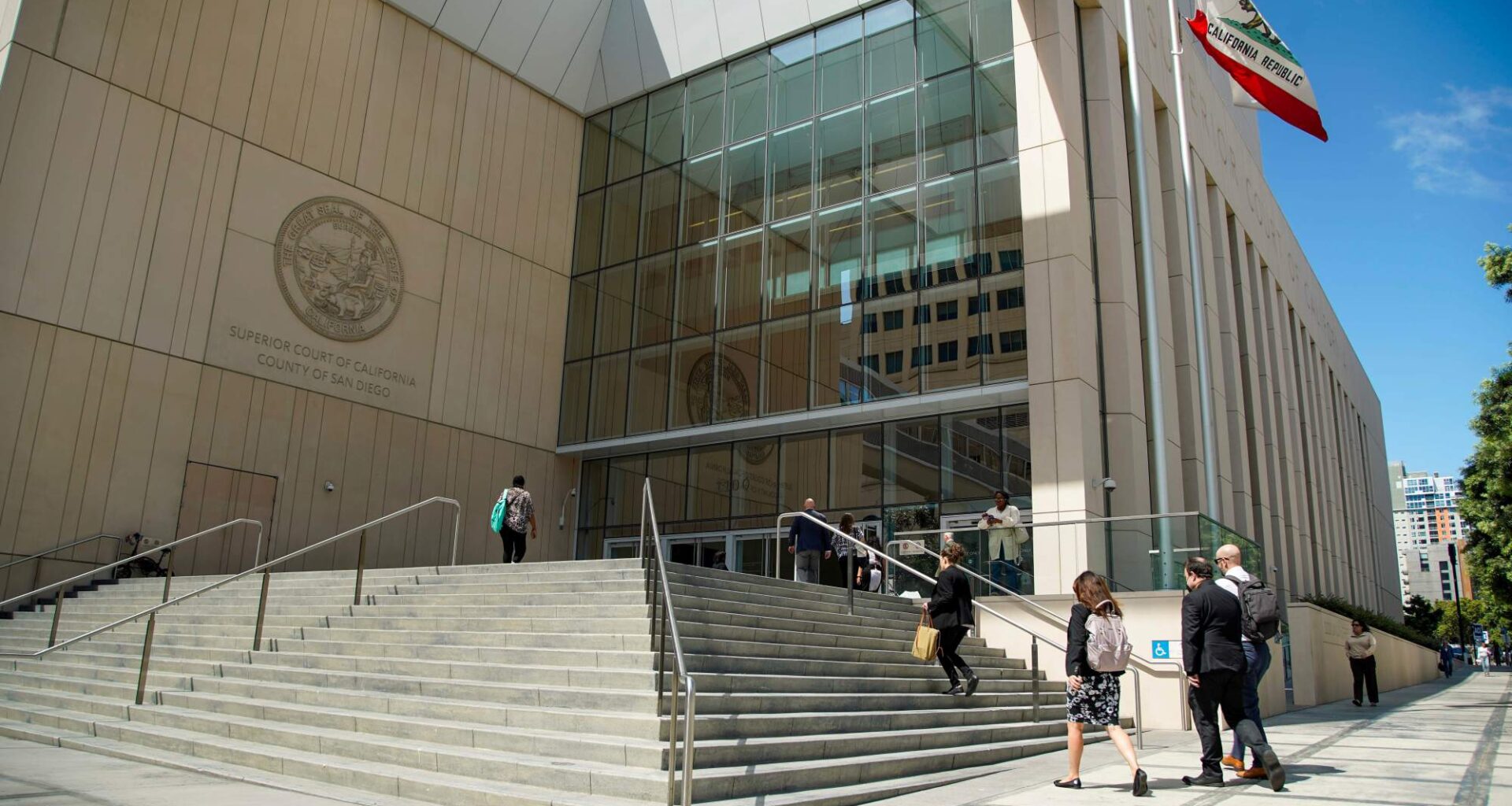
Months before the San Diego Superior Court told the Juvenile Justice Commission that it was revoking its administrative support, court officials sought to rewrite the volunteer panel’s bylaws to weaken its authority, newly released documents show.
Among other changes, the court planned to stop the commission from advising state and local officials about juvenile court operations. It also tried to keep the volunteer board from releasing public findings and promoting policies without the court’s permission.
The bylaw revisions were suggested to the Juvenile Justice Commission in January 2025, records show — seven months before Superior Court officials announced they were withdrawing funding and other administrative support from the commission.
Court officials say their move to withdraw support from the commission was aimed at preserving the court’s neutrality, given it routinely adjudicates legal cases involving young people who enter the juvenile justice system.
But commission Chair Caitlin Radigan said the court’s actions are interfering with the commission’s ability to provide independent oversight of the juvenile justice system, including of the court itself.
She released a trove of documents last week that detail the court’s decision to rewrite the bylaws and subsequently suspend its formal support of the commission, an independent oversight board that is mandated by state law.
The proposed revisions were not well received by Radigan or the commission at large.
“The farther we move away from connection to community and modeling to citizens what oversight and accountability looks like, the less we are able to achieve that mission of ‘acting as the public’s conscience,’” Radigan responded to the court in March 2025, records show.
The San Diego Union-Tribune reported two weeks ago that the Juvenile Justice Commission is in jeopardy of going out of business due to the Superior Court decision to withdraw support.
The independent oversight body is charged with monitoring the juvenile court and juvenile justice programs operated by the San Diego County Probation Department. It also inspects the county facilities that house juvenile offenders and produces reports on its findings.
The commission is now made up of 10 volunteers, including people who experienced the juvenile justice system themselves as youths. Much of its work is done confidentially, but its reports and other findings traditionally have been posted for the public and the youth-advocacy community.
The dispute between commissioners and court officials comes as the state Attorney General’s Office is investigating the San Diego County Probation Department for allegations of civil rights violations.
It also comes as the county is defending hundreds of civil lawsuits filed by former foster youth and juvenile hall detainees who say they were sexually assaulted while in custody years ago.
San Diego Superior Court officials stopped posting commission meeting materials and inspection reports on their website on July 1, leaving those who want to monitor the juvenile court, youth detention facilities, group homes or other programs in the dark.
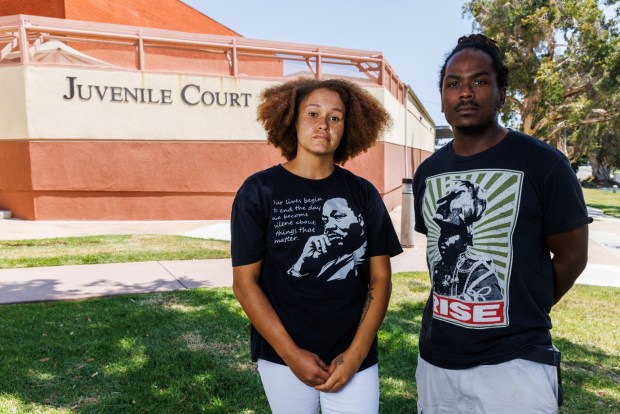 Caitlin Radigan, chair of the county Juvenile Justice Commission, and vice chair Aaron Adkins pose outside outside Juvenile Court in San Diego on July 18, 2026. (Kristian Carreon / The San Diego Union-Tribune)
Commissioners told the Union-Tribune last month that they planned to resign en masse next month, when the liability insurance policy that protects them from civil lawsuits is set to lapse.
“This is not primarily a dispute about the commission,” Radigan told the Union-Tribune. “It is a story about how a public institution exercised its authority over a legislatively created oversight body.
“The court made the decision,” she said. “The commission didn’t decide to create this controversy.”
Judge Michael S. Groch took over as the Superior Court presiding judge Jan. 1. He was not in charge when the court decided to stop providing staff and other services to the Juvenile Justice Commission, but he has not responded to requests to discuss the issues.
A court spokesperson said the commission rejected the proposed changes in June 2025, saying it needed to retain autonomy over reports and public statements. Commissioners also insisted on preserving their authority to publish findings without court approval and engage the public without “excessive gatekeeping,” spokesperson Emily Cox said by email.
“JJC would not accept the level of oversight the court considered necessary to ensure ethical compliance,” she said. “Without such oversight, materials posted on the court’s website or issued publicly could create the inaccurate impression that the court endorsed the JJC’s findings, recommendations or policy positions.”
Cox said the court would be jeopardizing its own ethical standards if it did not act.
“It also created potential liability exposure if inaccurate or defamatory material were published and, most importantly, risked the compromising of the court’s obligation to remain fair, neutral and impartial on policy issues subject to oversight by local government entities,” she said.
Independent oversight of juvenile courts and juvenile justice programs, generally run by county probation departments, is codified in state law.
But the Welfare and Institutions Code sections that govern the volunteer oversight boards gives California’s counties broad discretion in determining how to set up and administer the individual bodies.
In San Diego County, the Juvenile Justice Commission was operated as a county program until 2014, when the Superior Court agreed to take over the responsibility at the county’s request.
For the past dozen years, the court has hosted commission materials on its website, provided office and other support services and paid the cost of liability insurance that protects volunteer commissioners in case they are sued for service-related claims.
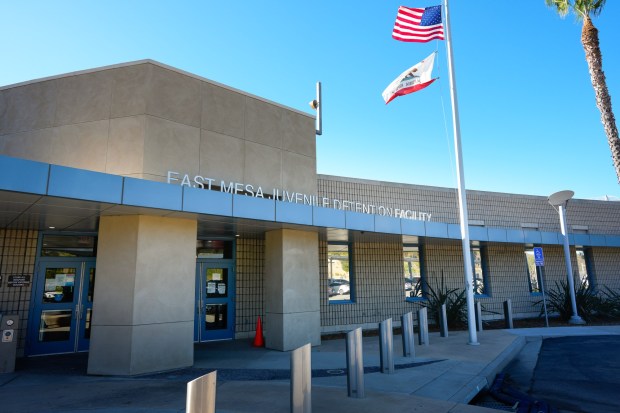 The main visitors entrance to the East Mesa Juvenile Detention Facility in San Diego. (Nelvin C. Cepeda / The San Diego Union-Tribune)
Cox said the Superior Court evaluated the status quo and came away convinced that the commission was legally an arm of San Diego County. It secured an independent legal opinion confirming its determination, she said.
“Based on the statutory framework and the court’s legal analysis, along with the legal analysis provided by the legal services office of the Judicial Council, the court concluded that JJC is a county entity,” she said.
Even so, a rival legal opinion written by San Diego County’s top lawyer in 2015 reached a different conclusion.
“For the reasons detailed below, I conclude that the JJC is an adjunct of the Superior Court of the state of California and that the county does not have the legal obligation to provide the JJC and/or its members with defense and indemnification in the event a civil action was filed,” then-County Counsel Thomas Montgomery wrote.
“While there may have been some indicia of an employment relationship many years ago, those factors no longer exist and full responsibility for the JJC rests with the state of California,” he said.
According to a recent report by the Children’s Advocacy Institute at the University of San Diego, there is little consistency across California about which entity — the courts or the county — should oversee the oversight boards.
“The law establishing how juvenile justice commissions should be governed and overseen is not explicitly clear,” the November 2025 analysis said. “Thus, it is difficult to ascertain whether any given commission … is actually operating in compliance with what the law intends.”
The Children’s Advocacy Institute study found that 17 of the state’s 58 counties operate juvenile justice commissions administered by the courts, while 22 are overseen by counties. Supervision of the commissions in 18 counties are unclear, it said.
One California county — Los Angeles — meets the state mandate by running a probation commission.
Nonetheless, researchers said legislators generally locate oversight authorities outside the control of the agencies being monitored, in order to avoid potential conflicts of interest.
“Civil grand juries, for example, have long been required to ‘inquire into the condition and management of the public prisons’ within counties,” the report said. “They are independent of the agencies they review and function under the auspices of the superior court.”
The work of the San Diego County Juvenile Justice Commission has already been curtailed by the dispute with the Superior Court.
Meeting agendas, board minutes and even the names of commissioners themselves are no longer available on the court website. The annual reports from facility inspections also are not visible to the public, although commissioners said they are working to find an alternative.
San Diego County declined to comment on the commission’s latest disclosures.
“There’s nothing new to add,” county spokesperson Tammy Glenn said by email. “Thanks for checking in.”
Last month, Glenn said county officials were working with the court to reach a new agreement.