
Today’s column is the sixth in a series about the birds and animals that visit Secret Spring, a remote waterhole in the oak and pine forest of Palomar Mountain.
When I began taking wildlife photos at Secret Spring, I had no plans of becoming a family photographer.
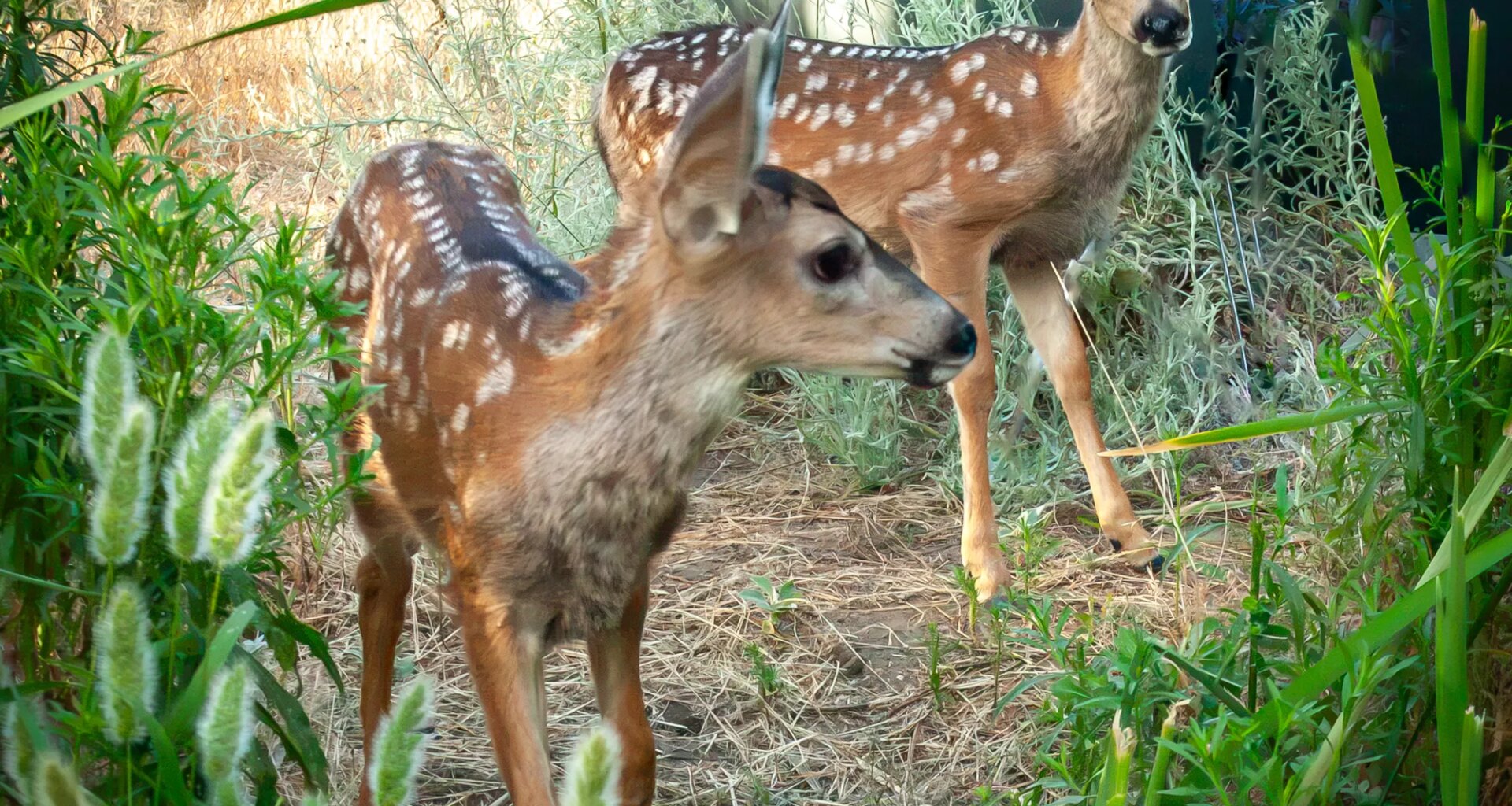
But the Deer family, including Buck, Doe and their two adorable youngsters, became regular visitors to my forest “photo studio.”
For nearly a year now, a remote, motion-triggered camera has been watching and recording wildlife activity at this tiny waterhole tucked into a cluster of oak and pine trees on Palomar Mountain.
This small waterhole has no official name, but I call it Secret Spring because it’s hidden from view and off the beaten path.
It’s not a flowing creek, but a perennial pool formed by the overflow from a distant spring-fed water tank that has created a micro wetland with reeds, frogs, miner’s lettuce and other water-loving plants.
The small pool, not much bigger than a manhole cover, provides life-sustaining water for dragonflies, bees, butterflies, visiting birds, and mammals ranging from the local gray squirrels to mountain lions.
Many of these forest creatures are daily or nightly visitors. Some are unscheduled, while the Southern mule deer are frequent, but random visitors.
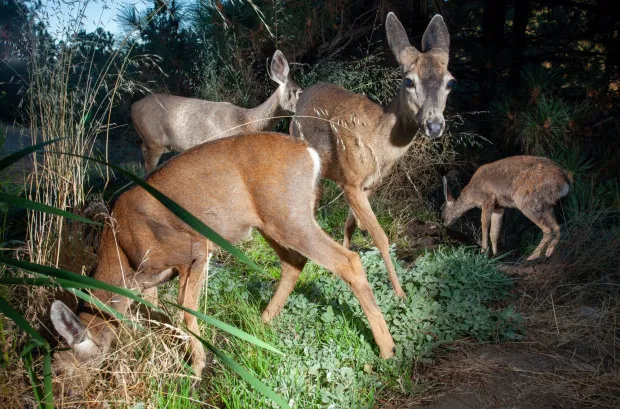 A family of deer crowds around the Secret Spring. (Ernie Cowan / For The San Diego Union-Tribune)
As summer temperatures have risen and other waterholes have likely dried up, perennial Secret Spring has seen an increase in activity.
I make weekly trips to the spring to change batteries and camera cards, and sometimes just to sit for a time and blend with nature.
Soon, the animals forget you are there and return to their normal routines.
It’s always a journey filled with anticipation and excitement to see what gifts nature brought in the form of beautiful animal images.
The camera is not a low-quality, infrared trail camera, but a sophisticated digital camera in a waterproof housing that fires when triggered by animal movement. The system includes two electronic flash units, connected wirelessly and activated when animals come to drink.
Like anyone who has hiked in our wild areas, I am always thrilled at the sight of a deer, often seen lounging in the shadows of a spreading live oak tree, or grazing at sunrise in a summer meadow.
We are fortunate they can be found from the urban canyons of coastal cities to the desert fringes of Anza-Borrego.
Where there is water, there will be deer.
As I began to collect images of wildlife visitors at Secret Spring, the female doe deer most often came to drink or were spotted lounging in the shade of nearby oak trees.
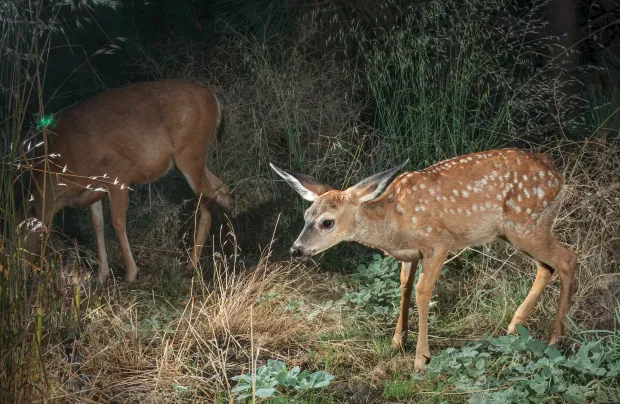 A doe and her spotted fawn arrive to drink. (Ernie Cowan / For The San Diego Union-Tribune)
Sometimes they would be accompanied by young bucks, but that changed in late spring and early summer when the more elusive mature bucks and newborn, spotted fawns joined the family group.
It’s always a thrill to open the camera box and begin toggling through digital images.
Then it popped up.
Looking right at the camera was a spotted fawn surrounded by a cluster of rabbitfoot grass glowing in the early morning sunlight.
It was a perfect portrait.
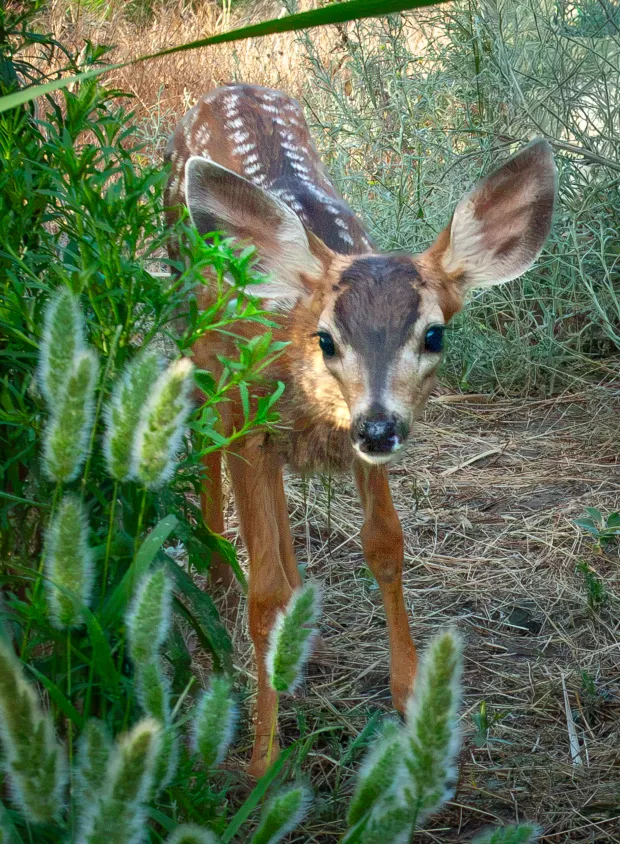 A curious fawn with its camouflage spots approaches the spring. (Ernie Cowan / For The San Diego Union-Tribune)
As I continued to look through the images, I was even more excited to see there was a second spotted fawn who came to drink and lingered for quite some time as the camera continued to click away.
Mule deer fawns in Southern California are typically born in late spring and early summer, and the family, including the spotted fawns, began showing up on camera at Secret Spring in mid-July.
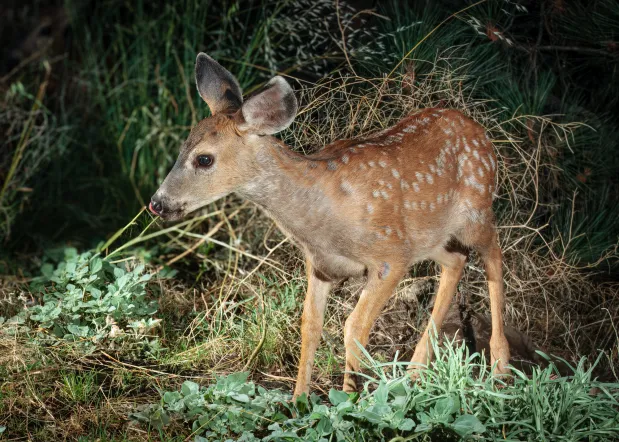 A curious fawn with its camouflage spots approaches the spring. (Ernie Cowan / For The San Diego Union-Tribune)
Mom, dad and the kids seemed to enjoy their visits, which had no regular schedule. They came at night, early mornings or evenings and even during the middle of the day. They would linger at the tiny pool of water before melting off into the deeper woods.
While there are several species of mule deer, the Southern mule deer is found from Orange and San Diego counties and south into Baja California.
They have a darker coat than other mule deer species, a dark stripe along the back, and of course the huge, mule-like ears.
They stand about 3.5 feet at the shoulder and females weigh up to 165 pounds, while mature males can weigh over 250 pounds.
In natural environments the mule deer can live about 11 years, but up to 20 years in protected locations.
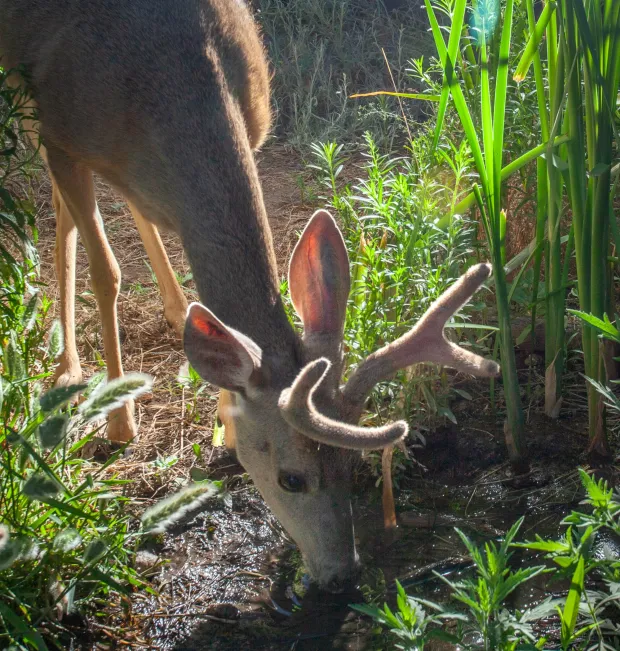 The velvet on the growing antlers of the buck glows as the first rays of morning sun arrive at Secret Spring. (Ernie Cowan / For The San Diego Union-Tribune)
One of the joys of backcountry travel is encountering feeding deer that might be feasting on the tender shoots or fresh leaves of chaparral, acorns, wild berries or the grasses in mountain meadows.
Typically, deer are very alert to noise or movement because their natural predators include mountain lions, bobcats, coyotes and even golden eagles that will target young fawns.
Places like Palomar Mountain and Cuyamaca Rancho state parks are ideal for seeing mule deer as they often come into open meadows in early mornings or late afternoons to feed.
Next in our Secret Spring series you will meet the mountain lion, North America’s apex predator.
Cowan is a freelance columnist. Email ernie@packtrain.com or visit erniecowan.substack.com.