
California has the fifth-highest number of missing and murdered indigenous people (MMIP) cases in the United States. A new task force in Sacramento is hoping to turn the tide and solve cold cases.The Round Valley Reservation has been at the heart of Yuki territory since time began. Tucked away in Mendocino County is the small town of Covelo, which some residents say has seen brighter days.It’s where 23-year-old Khadijah Britton, a member of the Round Valley Tribes, was kidnapped on Feb. 8, 2018. The Mendocino County Sheriff’s Office said she was last seen at a home in Covelo while being forced into a car at gunpoint by her ex-boyfriend, Negie Fallis.”There’s violence, people stalking each other, and you’ve just got to watch your back,” said Lydia Hostler, Khadijah’s grandmother.For Khadijah’s grandparents, the community’s silence speaks volumes.”They all know him, and nothing,” said Ronnie Hostler, Khadijah’s grandfather. “She’s still missing, even though all those resources know what he did.”The Mendocino County Sheriff’s Office says Fallis is considered a person of interest, but hasn’t been charged with her disappearance.Khadijah’s presence is all over Covelo, on buildings and banners. It’s a grave reminder of a silent crisis.That’s why Wilton Rancheria Chairman Jesus Tarango is spearheading the new Missing and Murdered Indigenous Persons Task Force in Sacramento.”We’ve known about MMIP ever since contact. It’s been happening to our people since that first contact, the exploitation of our women and our men, and boys and girls,” Tarango said. “This didn’t start last year, this has been going on for a long time.”The Sacramento County District Attorney’s Office is joining the task force.”When I see the history in this country in terms of the distrust between tribal people and law enforcement, I want to bridge that gap,” Sacramento County District Attorney Thien Ho said. “We have dedicated an attorney, an investigator, and a victim advocate.”The DA’s office is also offering access to the crime lab’s state-of-the-art DNA technology. They hope advancements in science could reveal old secrets.”Science always remembers and it never forgets,” Ho said.Sacramento County Sheriff Jim Cooper is also joining the task force, offering homicide detectives with decades of experience.”We’re fortunate here in Sacramento. We have good relationships. I’ll be honest, a lot of jurisdictions have zero relationship,” Cooper said. “Here, we can come together for a common cause and try to solve some of these old cases. Some are 10, 20, even 30 years old.”Despite years of searching Round Valley, Khadijah’s body has never been found.”I want justice. That’s my main goal now,” said Khadijah’s grandfather.Outside of Covelo, there’s a tree covered in red dresses. It’s a symbol of the missing and murdered indigenous women still out there today, and the countless cases in California, still waiting to be solved.”I’m getting more desperate now,” Khadijah’s grandfather said. “Time’s not on my side.”At least 20 MMIP cases are recorded yearly in Northern California, but due to limitations in reporting, the actual number is suspected to be significantly higher. At least 84% of Native American women, and 82% of Native American men, will experience some type of violence in their lifetime.A 2016 study by the National Institute of Justice (NIJ) found that more than four in five American Indian and Alaska Native women (84.3%) have experienced violence in their lifetime, including 56.1% who have experienced sexual violence.MMIP cases are at least seven times less likely to be solved than any other group. Native women are victims of murder at rates more than 10 times the national average.Governor Gavin Newsom has signed several bills into law to address the MMIP crisis. Learn more about them in the infographic below. See more coverage of top California stories here | Download our app | Subscribe to our morning newsletter | Find us on YouTube here and subscribe to our channel
California has the fifth-highest number of missing and murdered indigenous people (MMIP) cases in the United States. A new task force in Sacramento is hoping to turn the tide and solve cold cases.
The Round Valley Reservation has been at the heart of Yuki territory since time began. Tucked away in Mendocino County is the small town of Covelo, which some residents say has seen brighter days.
It’s where 23-year-old Khadijah Britton, a member of the Round Valley Tribes, was kidnapped on Feb. 8, 2018.
The Mendocino County Sheriff’s Office said she was last seen at a home in Covelo while being forced into a car at gunpoint by her ex-boyfriend, Negie Fallis.
“There’s violence, people stalking each other, and you’ve just got to watch your back,” said Lydia Hostler, Khadijah’s grandmother.
For Khadijah’s grandparents, the community’s silence speaks volumes.
“They all know him, and nothing,” said Ronnie Hostler, Khadijah’s grandfather. “She’s still missing, even though all those resources know what he did.”
The Mendocino County Sheriff’s Office says Fallis is considered a person of interest, but hasn’t been charged with her disappearance.
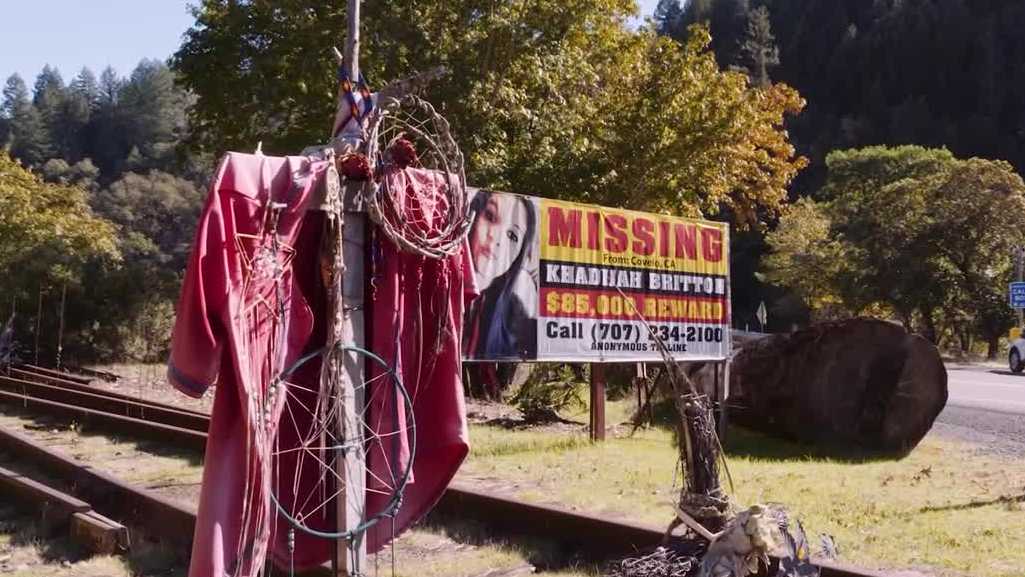
Khadijah’s presence is all over Covelo, on buildings and banners. It’s a grave reminder of a silent crisis.
That’s why Wilton Rancheria Chairman Jesus Tarango is spearheading the new Missing and Murdered Indigenous Persons Task Force in Sacramento.
“We’ve known about MMIP ever since contact. It’s been happening to our people since that first contact, the exploitation of our women and our men, and boys and girls,” Tarango said. “This didn’t start last year, this has been going on for a long time.”
The Sacramento County District Attorney’s Office is joining the task force.
“When I see the history in this country in terms of the distrust between tribal people and law enforcement, I want to bridge that gap,” Sacramento County District Attorney Thien Ho said. “We have dedicated an attorney, an investigator, and a victim advocate.”
The DA’s office is also offering access to the crime lab’s state-of-the-art DNA technology. They hope advancements in science could reveal old secrets.
“Science always remembers and it never forgets,” Ho said.
Sacramento County Sheriff Jim Cooper is also joining the task force, offering homicide detectives with decades of experience.
“We’re fortunate here in Sacramento. We have good relationships. I’ll be honest, a lot of jurisdictions have zero relationship,” Cooper said. “Here, we can come together for a common cause and try to solve some of these old cases. Some are 10, 20, even 30 years old.”
Despite years of searching Round Valley, Khadijah’s body has never been found.
“I want justice. That’s my main goal now,” said Khadijah’s grandfather.
Outside of Covelo, there’s a tree covered in red dresses. It’s a symbol of the missing and murdered indigenous women still out there today, and the countless cases in California, still waiting to be solved.
“I’m getting more desperate now,” Khadijah’s grandfather said. “Time’s not on my side.”
At least 20 MMIP cases are recorded yearly in Northern California, but due to limitations in reporting, the actual number is suspected to be significantly higher. At least 84% of Native American women, and 82% of Native American men, will experience some type of violence in their lifetime.
A 2016 study by the National Institute of Justice (NIJ) found that more than four in five American Indian and Alaska Native women (84.3%) have experienced violence in their lifetime, including 56.1% who have experienced sexual violence.
MMIP cases are at least seven times less likely to be solved than any other group. Native women are victims of murder at rates more than 10 times the national average.
Governor Gavin Newsom has signed several bills into law to address the MMIP crisis. Learn more about them in the infographic below.
See more coverage of top California stories here | Download our app | Subscribe to our morning newsletter | Find us on YouTube here and subscribe to our channel