
 gettyimages.com / San Francisco Chronicle/Hearst Newspapers
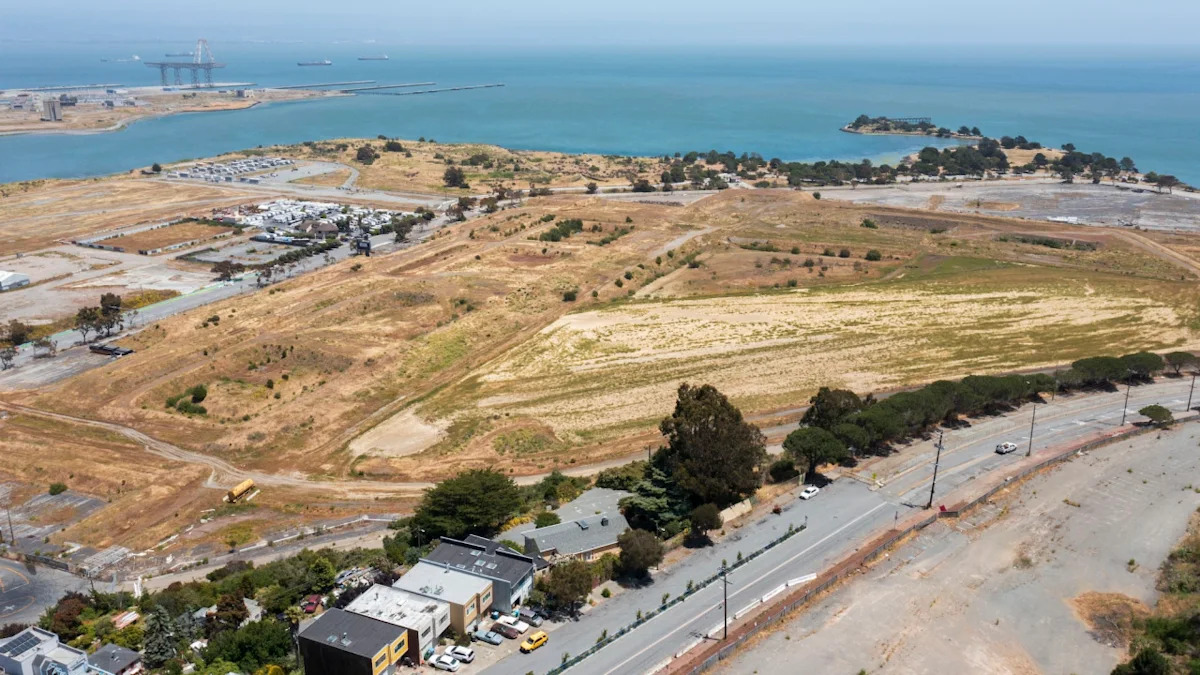
A California developer is about to break ground on transforming the site of San Francisco’s once infamous Candlestick Park into a new neighborhood filled with 7,200 shops, offices, parks, and homes.
Five Point will begin the first phase of a 270-acre community that will be called Candlestick, an ode to the former home of the NFL’s 49ers and MLB’s Giants, according to the Wall Street Journal.
Must Read
Since being demolished in 2015, Candlestick Park and the surrounding land has been unused. Meanwhile, the San Francisco metro area’s housing deficit grew to roughly 130,000 homes in 2024, according to Zillow data cited by the publication.
Five Point expects to spend $130 million on phase one, which will focus on infrastructure such as building roads and setting up utilities. The developer will be reimbursed for early expenditures via property tax revenue expected to be generated by the project in the future.
“It has been a long time, but I think this is Candlestick’s moment,” said Suheil Totah, Senior Vice President at Five Point, in a Wall Street Journal interview.
Five Point is excited about the project for multiple reasons. For one, it is encouraged by the city’s economic recovery that is largely credited to the city’s AI boom. There’s also an upward trend in office leasing that’s bringing more workers back to the city.
Candlestick neighborhood still years away
Candlestick will sit beside a historically industrial neighborhood in San Francisco. The Wall Street Journal reports that residents have generally embraced redevelopment that promises to bring more affordable housing and jobs with it.
But that will take time.
“It requires somebody to invest in infrastructure long before there is any return on investment,” John Rahaim, San Francisco’s Planning Director from 2008 to 2020, told the Wall Street Journal.
Like any other real estate development, it can also be changed or outright abandoned if market conditions change. Five Point knows this first-hand. The developer was originally planning on developing Candlestick as a shopping mall a decade ago before online shopping surged in popularity. After scrapping that plan, development was again paused due to the pandemic.
The Candlestick project now faces new risks. For example, while apartment rents have jumped more than 10% over the past year, and vacancy has fallen under 4% (both good news for developers), the condo market is lagging behind in its recovery, as prices sit below pandemic highs, the Wall Street Journal reports.
Candlestick will also sit about five miles south of where businesses currently set up shop. So stakeholders are banking on companies wanting to lease office space there.
Read More: Forget Florida — this is why these two unexpected states are the new retirement hot spots
America’s affordable housing problem
San Francisco is in dire need of affordable housing, but so are many cities and counties across the country. The deficit is credited to underdevelopment following the Great Recession and surging demand from millennials looking to buy their first homes.
This not only drives home prices up, but has a major impact on the U.S. in the form of lost jobs and economic output, according to the U.S. Chamber of Commerce. And what ensues is a divide between those who can and cannot afford a home.
San Francisco is among the top 10 U.S. cities with the largest housing shortages, according to a study by Janover, a commercial real estate loan marketplace. An estimated 4,000 new housing units would need to be built each year to close the gap.
The top five cities with the highest housing shortages are New York City, Dallas-Fort Worth, Houston, Los Angeles, and Washington D.C. Combined these cities would need to bring 57,000 new units to market each year to meet demand over time.
This article originally appeared on Moneywise.com under the title: San Francisco pours $130 million into turning Candlestick Park into 7,200 homes as rents jump 10% and vacancies drop
This article provides information only and should not be construed as advice. It is provided without warranty of any kind.