
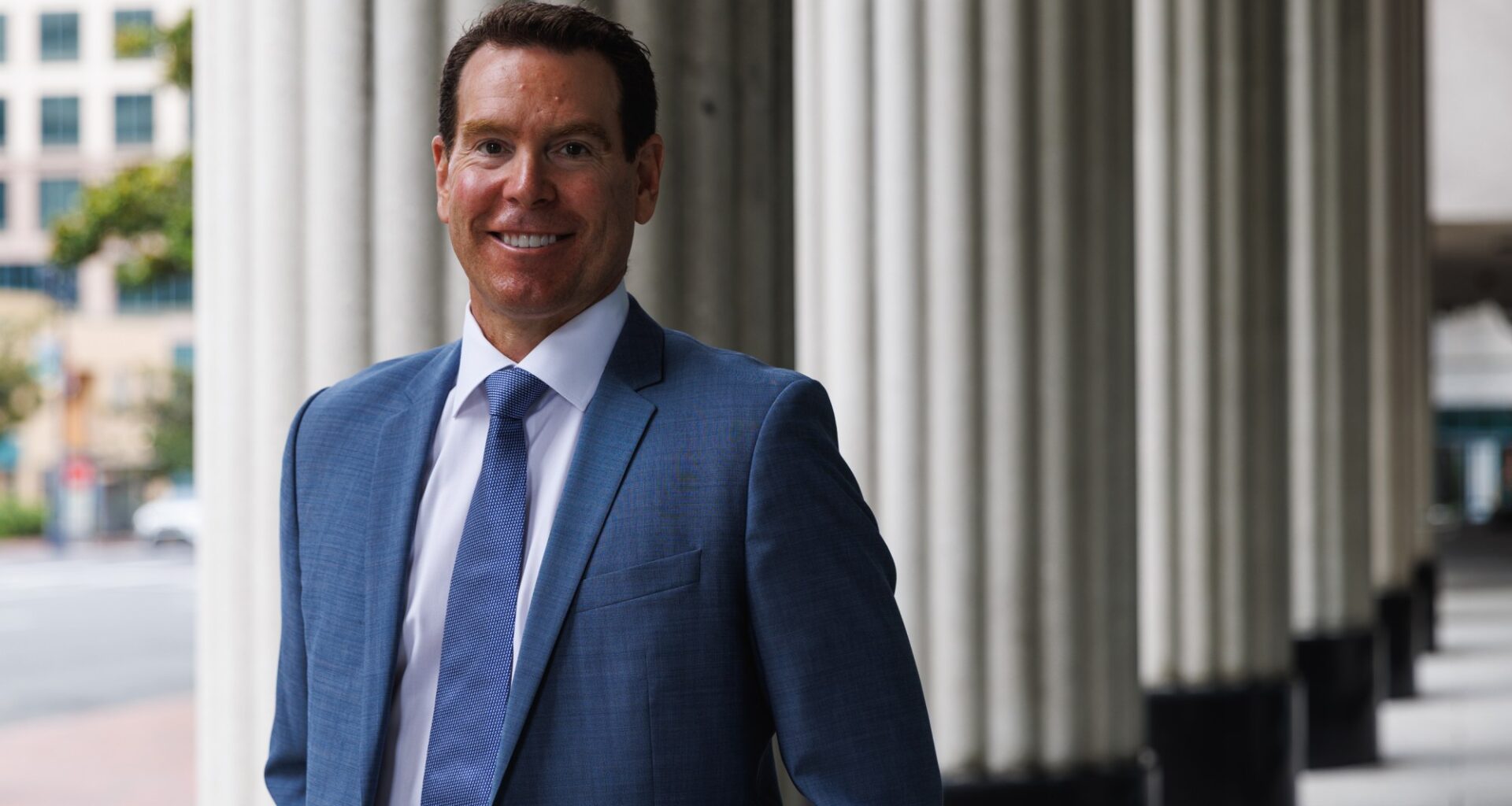
Crimes that endanger San Diego County’s biodiversity, wildlife and environment, such as illegal possession of lobster, killing deer outside of season and dumping medical waste improperly, are overseen by one deputy district attorney: Michael McCann.
Some cases, though, are more extreme. McCann, who grew up in San Diego, was named 2025 Wildlife Prosecutor of the Year in June by the California Fish and Game Commission and the state Department of Fish and Wildlife for his work on a two-year investigation into exotic animal trafficking in exchange for weapons and drugs out of Chula Vista.
After he graduated from the University of San Diego in political science, he worked at a civil law firm before attending California Western School of Law. For the past nine years, he’s been working as the District Attorney’s Office’s lone environmental crimes prosecutor in the Economic Crimes division.
This conversation has been edited for clarity and brevity.
Q: Were you always interested in this kind of work — environmental protection?
A: I didn’t really even know that our D.A.’s Office did stuff like this when I started 20 years ago. … I worked in the family protection division — domestic violence, child abuse — and then I went to the narcotics division, so I did a Mexican drug cartel case where people were bringing drugs across the border, then went to the gang prosecution division to the environmental unit. … At the time, I was just starting to have a family. Candidly, (environmental protection) — it’s not as chaotic. I had Thanksgiving holidays that were interrupted due to domestic violence cases … Those don’t happen in environmental crimes.
Q: This award you won is for a two-year-long investigation into exotic animal trafficking, including snapping turtles, Gila monsters and pit vipers. You led the charge of securing search warrants and helping a team of investigators. How did the case start?
A: This person was showing pictures of these animals, and then talking about potentially selling them (on social media). … That’s the main way that this case came about. … He was meeting with various people in other counties, throughout San Diego. He was essentially trading these venomous, protected reptiles for guns, drugs, things like that (from Mexico).
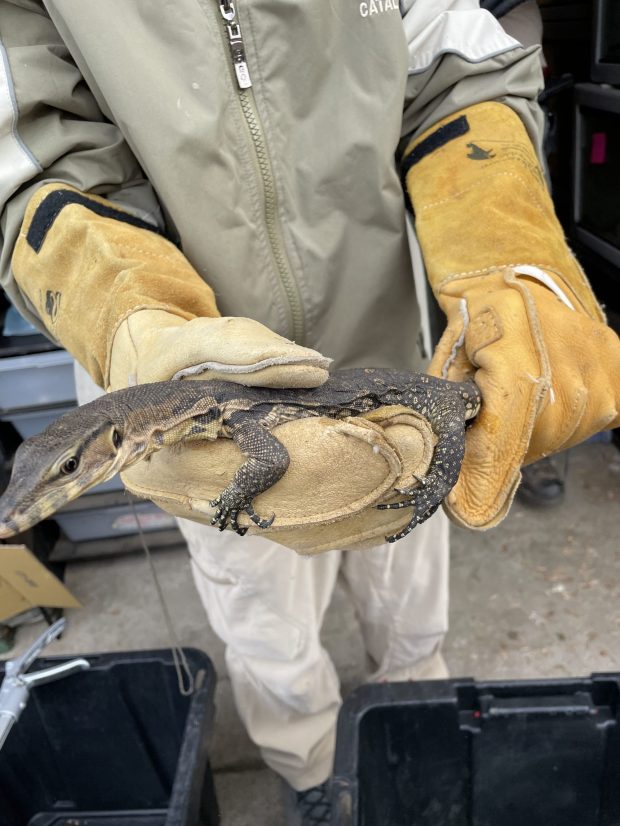 A reptile that was part of a two-year investigation into exotic animal trafficking in Chula Vista. (Lt. Garrett Smittle / California Department of Fish and Wildlife)
Q: What drives people to collect and trade exotic wildlife? Has social media made it easier for people to do so?
A: My understanding is that for a lot of these people, it becomes almost like a hobby, that they actually take care of the animals. But it’s also kind of like this cool status symbol. … They put pictures of themselves up on social media with a gun and a snake … it’s been sort of glorified. … People’s ability to communicate anonymously via social media and then pay either through web apps, like Venmo or Zelle, makes it easier.
Q: What are the most common wildlife crimes in California that you handle? How many prosecutions are roughly filed per year?
A: On average, we’re talking 10 cases a year, with a small deviation at the most. … The main (crime) would be the illegal possession, such as the lobster — like taking too many, or taking them during the wrong time of year, not filling out the proper documentation … and then … if you kill a deer outside of season, or in a place where you’re not supposed to be shooting deer.
Q: How often would you say these crimes are because of a lack of knowledge of the law?
A: Constantly. We try to do a decent amount of outreach and educational stuff. You know, we work with businesses. They do signage, and we’re aware (a lack of knowledge) happens … I’d say it’s ignorance is bliss. … I mean, in my experience, the hunters we prosecute are aware of the regulations and choose creative ways to avoid them, like get an archery tag during deer season but use a rifle instead (which is harder tag to obtain from Fish and Wildlife).
Q: Tell me about the difference between cases handled at the state and federal level. When do you take it versus the U.S. Attorney’s Office?
A: It really depends on the agency that does the primary investigation. On the state side, I want to say 99% of the crimes are misdemeanors. … The federal side has much more significant penalties … you could technically go to prison; federal crimes potentially have harsher sentences. … You get people that come across the border, and they bring monkeys or a tiger. … If you get caught at the border, that’s going to be investigated by the U.S. Customs and Border Protection, which is under the umbrella of the Department of Homeland Security; they’re probably going to send that case to the U.S. Attorney’s Office. … On the state side … the penalties are not as strong.
Q: What’s that process like of deciding who takes the case?
A: We have our own task force — it’s the San Diego County Environmental Protection Task Force, and the U.S. attorney is part of it. The D.A.’s Office, the city attorney, we have the local regulators, we have California Fish and Wildlife, we have U.S. Fish and Wildlife, we have Homeland Security. And once a month, we meet, and we talk about our cases. … then we decide who will be better situated to prosecute the case.
Q: What do penalties look like?
A: Every case we try to evaluate on its own, depending on the seriousness of the offense — what the injuries look like, whether it was malicious, intentional as compared to accidental, whether there’s a criminal history or not. If you go criminal, your options would be felony (punishable by prison for more than a year), misdemeanor (punishable by local jail for anything from one day to a year) and an infraction (punishable by a fine).
Q: What do you want the public to know about your work?
A: The main goal is just to keep and maintain San Diego as one of the most amazing outdoor places to live. … I think there is a public misunderstanding that some of our prosecutions are draconian — that it’s the government just picking on people, and that’s really not the case. There’s a reason why a fish has to be a certain length to be removed, or why you’re only supposed to take a certain number. … The biggest thing is that the goal is for everybody to be able to enjoy these recreational activities and to keep San Diego as nice as possible.