
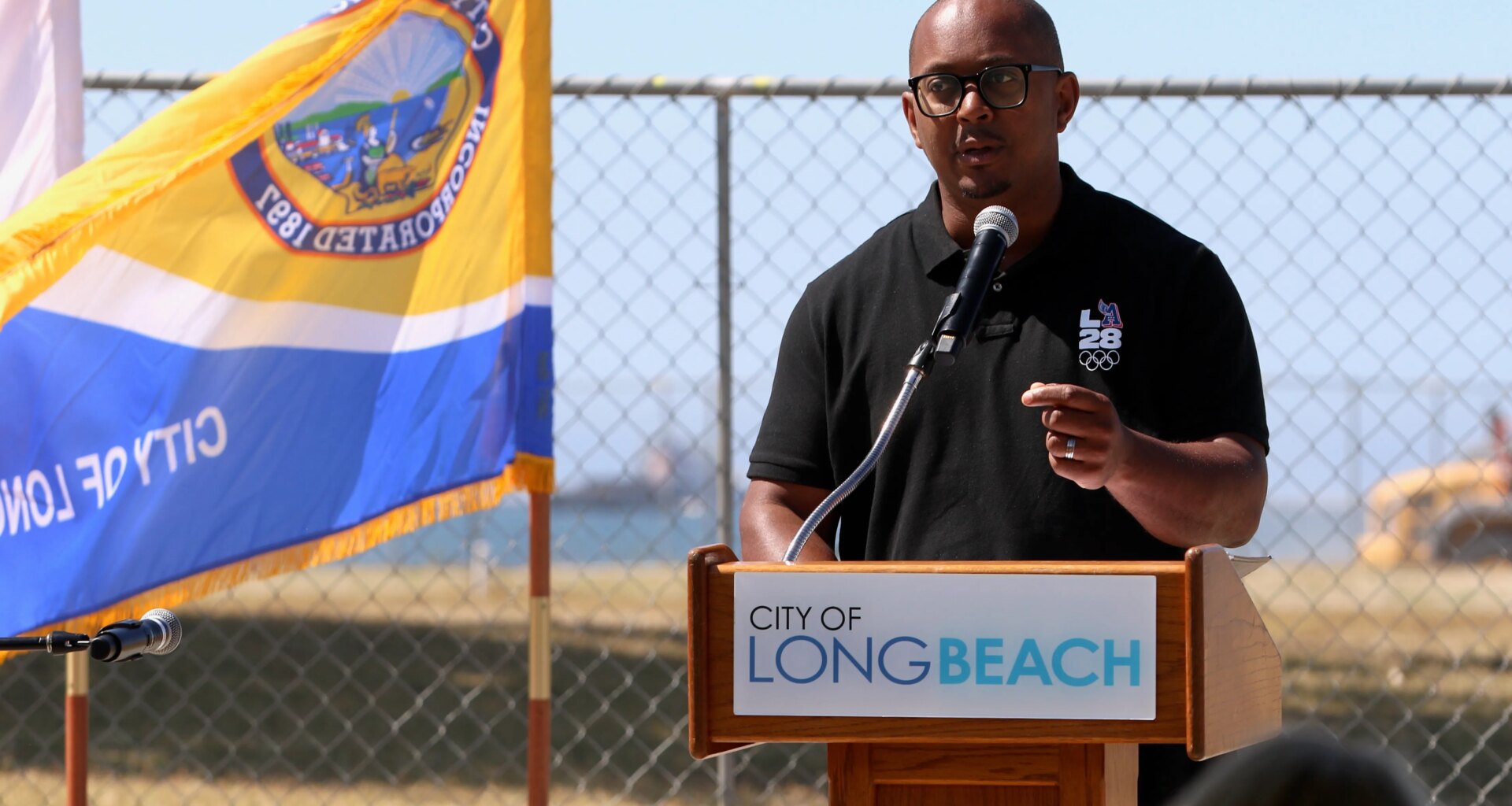
As Long Beach faces cuts to programming and staffing, Mayor Rex Richardson has recommended restoring some services and positions as part of the city’s proposed $4 billion budget for the upcoming fiscal year.
The city announced its proposed budget for the 2026-27 fiscal year, which begins Oct. 1, on Thursday, July 30. Structural budget pressures, rising costs and reductions in federal funding have created one of the most challenging fiscal environments Long Beach has faced in years, city officials said.
Richardson’s recommendations for the proposed budget, meanwhile, are organized around four priorities: protecting jobs and essential public safety services; preserving public health in the face of federal cuts; advancing mobility and safety for road users; and investing in neighborhoods.
To pay for these recommendations, the mayor has identified different funding sources, including one-time savings of about $1.6 million freed up by the uncontested June municipal election. The city and Port of Long Beach have also made a cost-recovery adjustment, which will help restore some Fire Department services that would otherwise have been reduced.
Voter-approved Measure ER will provide up to $7-8 million for the health department, and through sustained advocacy, the state’s Homeless Housing Assistance and Prevention program was restored to $900,000 statewide in California’s budget, which will help Long Beach retain its homeless programs, according to last week’s presentation.
“Together, these resources allow us to make targeted restorations without walking away from the most difficult fiscal discipline required to balance the budget,” Richardson said during Thursday presentation. “These recommendations show a responsible path forward that protects residents today while continuing to prepare Long Beach for the future.”
Public safety remains the foundation of a thriving Long Beach, Richardson said in his recommendations. Over the past 3.5 years, the city has recruited and graduated around 235 police officers – cutting the vacancy rate in half. The proposed budget builds on that progress with $7 million in one-time Measure A funding for targeted investments to key restorations to patrol and emergency response coverage citywide.
The proposed budget also includes reductions that would be felt directly by residents – from fire engine closures to reduced patrol staffing. The mayor’s recommendations, though, make targeted investments to mitigate these reductions: eliminating the rotating fire engine closures across stations and restoring four patrol officer positions to strengthen coverage across the East, North, South and West Patrol Divisions.
Richardson’s recommendations prioritize resources toward maintaining emergency response and patrol coverage wherever possible, according to the presentation.
The recommendations, if enacted would also invest in youth development and restore vital violence prevention, and $1 million in immigration legal defense programs and services, according to the presentation, consistent with the city’s Advancing Peace and STRONG Beach summer youth violence prevention initiatives, recognizing that upstream violence prevention and community trust are essential for community safety.
“Community safety cannot only be defined by what happens after someone calls 9-1-1,” Richardson said during the presentation. “It also depends on whether young people have safe access to parks and spaces, trusted adults, meaningful programming, and pathways to opportunity. Investing in youth will always be a part of our public safety strategy.”
Recent federal reductions to healthcare and public health funding have shifted greater financial responsibility to state and local governments, such as Long Beach, placing essential community health services at risk, officials said. In Long Beach, federal funding cuts of $1.3 million eliminated vital community health and preventative care services, impacting thousands of residents.
The passage of L.A. County’s Measure ER provides an opportunity to help offset these reductions, Richardson said. That funding, under the mayor’s recommendations, would support essential public health services, including chronic disease prevention, disease surveillance, water safety and healthcare. Preliminary estimates indicate Long Beach could receive about $7-8 million, although final allocations and timing remain uncertain.
Given that uncertainty, Richardson has recommended a phased restoration plan developed with the Health and Human Services Department. Funding would be prioritized in four categories: restoring Health and Human Services reductions proposed in the city manager’s proposed budget; sustaining existing programs facing the loss of grant funding in fiscal year 2026-27; supporting new positions and program enhancements; andproviding grant match funding. Initial appropriations would restore the proposed reductions, with recommendations for remaining funds returning to the City Council once final allocations and the funding schedule are confirmed, according to the presentation.
As Long Beach continues growing and preparing to host the 2028 Olympic and Paralympic Games, meanwhile, ensuring safe, efficient and well-coordinated transportation and traffic infrastructure remains a priority, Richardson said. His recommendations look to strengthen Long Beach’s regional transportation partnerships while reaffirming and building on the FY27 proposed investments in traffic safety, signal operations and neighborhood traffic calming.
Richardson is a newly elected member on the Los Angeles County Metro Board, which helps make transportation a priority and focus. With the position comes funding to ensure dedicated oversight and coordination on transportation, he said.
This will also allow the city to actively improve its connectivity to the broader region, such as using $171,000 for a Metro-funded transportation deputy that would be tasked with intergovernmental relations, partnering on branding and planning efforts for the Public Works Department’s traffic and mobility programs, and helping secure additional outside funding.
Richardson’s recommendations would also restore recreation, library and cultural programming that was reduced in the city manager’s budget, and make targeted investments to keep public spaces safe, clean and welcoming for residents and visitors alike, according to the presentation. One of those investments includes about $1.5 million for median maintenance, such as weed abatement, water utility costs, irrigation repair, truck support, and fencing repair across the city’s medians and back lots.
This would also restore funding for Rancho Los Alamitos and Rancho Los Cerritos management fees, replacing the proposed funding source with the Measure B allocation and directing the Utilities Department to explore unrestricted revenue options for Ranchos utilities; it would also add $50,000 in structural funding in the general fund for the Library, Arts and Culture Department to support programming and materials.
“By adopting these recommendations, we can eliminate structural deficit, begin rebuilding our reserves, and put Long Beach on a path to its first sustained structural surplus in more than a decade,” Richardson said about the proposed FY27 budget and his recommendations. “That is the stability that our workforce, our residents, and our community deserve.”