
NEED TO KNOW
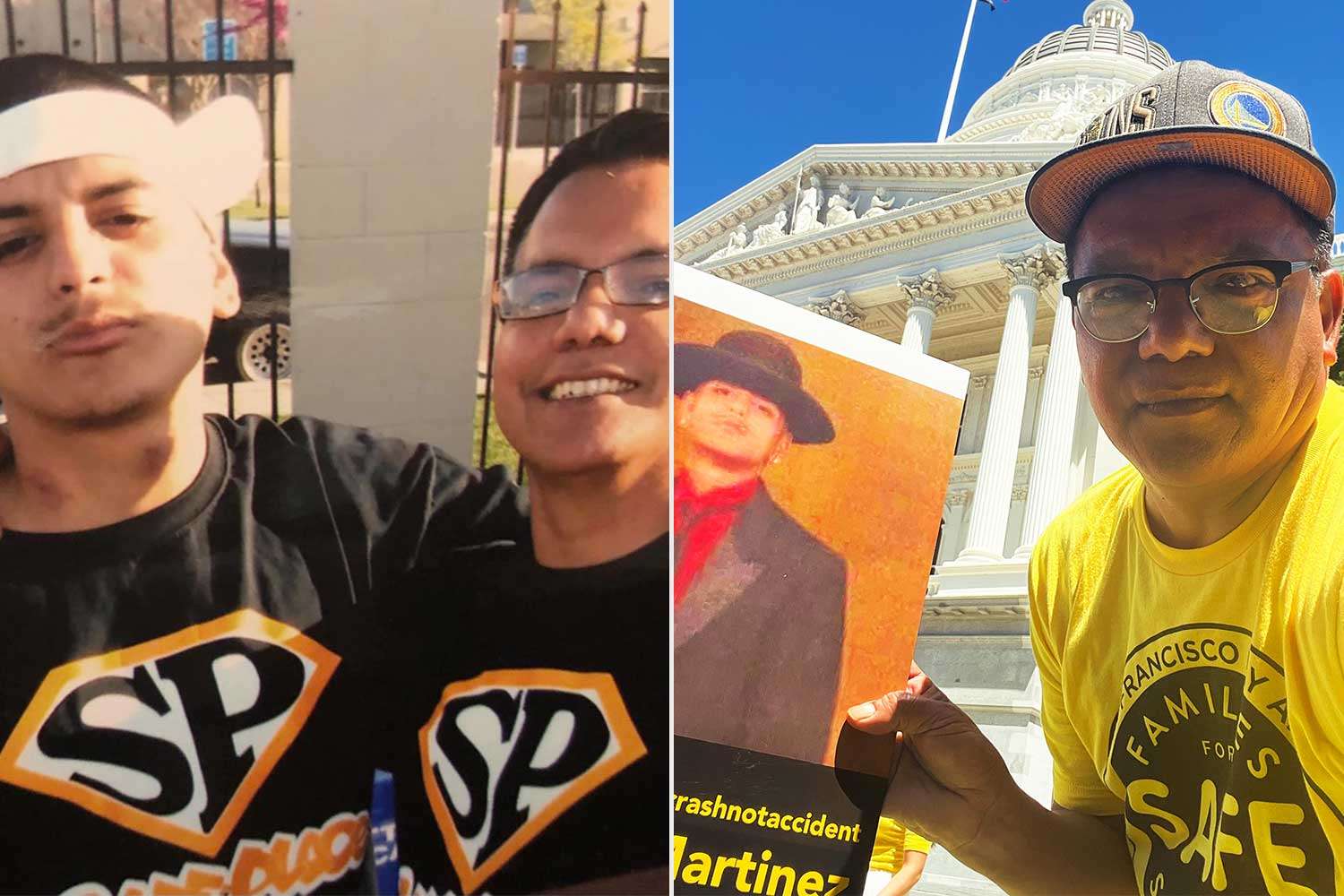
Joe Martinez’ son, Paul, was killed in 2013 by a speeding driver while crossing a street in his hometown of Fresno, Calif.Determined to help make the streets of Fresno less dangerous, the 59-year-old father became a tireless advocate for safer roads in his hometown and beyondFresno, according to outside analysts, is ranked as the seventh deadliest city in the nation for pedestrians
Twelve years have passed since the night Joe Martinez’s phone rang with news that every parent dreads: His 21-year-old son, Paul, had been hit by a car while crossing a street near his home in Fresno, Calif.
Less than two hours later, the father found himself standing in the emergency room at a local hospital, staring in disbelief at his son’s body, covered in a sheet.
“It looked like he was asleep,” Martinez recalls in this week’s issue of PEOPLE, “and all I wanted to do was wake him up and say, ‘Let’s go home.’ ”
Within two years the now-59-year-old father, who works as a consultant for nonprofits, began throwing himself into advocacy work, starting with Fresno — ranked by outside analysts as the seventh-deadliest U.S. city for pedestrians — and then focusing on the state and national levels. “Otherwise, my grief would have consumed me,” he says.
Martinez partnered with various advocacy groups, including Families for Safe Streets, which harness the grief and anger of survivors of crash victims to advocate for safer roads, to combat what he soon learned was an alarming trend.
Pedestrian deaths are near a four-decade high, up 48% from just 10 years ago, according to statistics from the Governors Highway Safety Association, even as fatalities have dropped in dozens of other developed countries in Asia, Europe and elsewhere, the Centers for Disease Control and Prevention found.
Take PEOPLE with you! Subscribe to PEOPLE magazine to get the latest details on celebrity news, exclusive royal updates, how-it-happened true crime stories and more — right to your mailbox.
Survivors of crash victims march during a 2023 day of remembrance for those killed in New York City.
Transportation Alternatives
The cause for the increase in these fatalities goes beyond driver distraction — such as phones and dashboard touch screens — and, according to the CDC, appears to be linked to the growing number of large, heavy vehicles like SUVs and to America’s penchant for complicated, high-speed roadways.
In the U.S. most traffic victims are killed in vehicles. But the rate of pedestrian deaths is increasing faster: In 2024, 7,148 pedestrians were killed by automobiles, and tens of thousands of victims required hospitalization.
“We prioritize driving and driving fast much more than pedestrians,” says Wes Marshall, a professor of civil engineering at the University of Colorado Denver. “The problem is solvable,” he says. “But it’s not going to be easy.”
And yet there are glimmers of hope —such as what has taken place in Hoboken, N.J. after the 2015 death of an 89-year-old resident who was fatally struck by a van while crossing a street in the city. The death proved to be a pivotal moment for then-city councilman Ravi Bhalla.
“It could have been avoided,” says Bhalla, who became the city’s mayor in 2017, “if we had taken some very basic measures.”
Pedestrian safety became his priority. And for the past eight years, after implementing changes like lowering speed limits and creating high-visibility crosswalks, the city hasn’t experienced a single traffic-related fatality, demonstrating a model for others.
“These are low-cost solutions,” Bhalla says, “that can make a huge difference.”
Martinez is guardedly optimistic that, despite the grim statistics in Fresno — where, on average, 25 pedestrians a year are killed — his hometown can one day replicate Hoboken’s success.
And he’s convinced that the simple upgrades made to his streets in recent years, like reflective strips placed around traffic lights, making them more visible, can help chip away at the death toll.
“My pain,” he says, “has become my purpose.”