
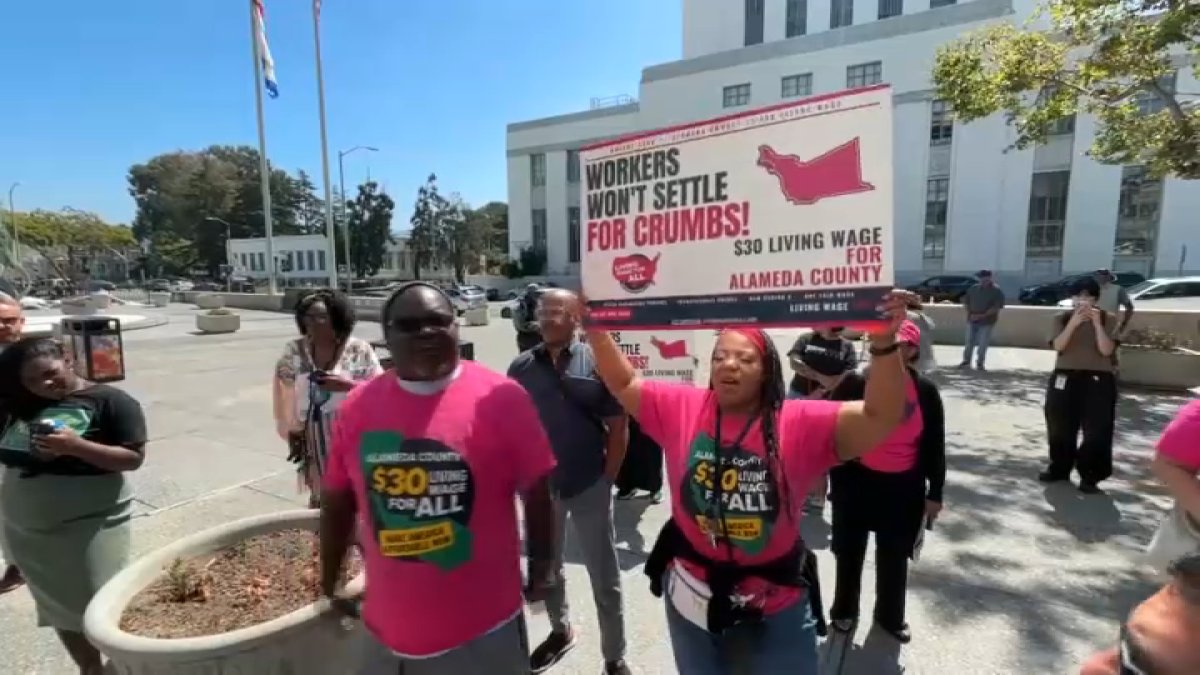
A proposal to raise the hourly minimum wage to a historic $30 will not appear on the November ballot for residents in unincorporated Alameda County after a contentious Board of Supervisors meeting ended in a vote to delay the measure.
The board voted 3-2 Tuesday night to pump the brakes on the proposal. Supervisors stated they want to take the process slower to determine if there are any potential unintended consequences and are now moving forward with an economic impact study.
The decision did not happen without loud debate. The vote prompted an immediate backlash from a large group of the public in attendance, who chanted, “Shame. Shame on you!” Unhappy attendees were briefly kicked out of the room following the vote.
Supervisors Lena Tam, Nate Miley, and Board President David Haubert voted in favor of the delay, while Supervisors Elisa Marquez and Nikki Fortunato Bas voted no.
A Phased Approach to $30 an Hour
If ultimately passed, the measure would nearly double Alameda County’s minimum wage in unincorporated areas using a phased approach. Larger employers would reach the $30 threshold by 2030, mid-sized businesses by 2035, and the smallest ones by 2037.
Debating the Economic Impact
Alameda County supervisors will consider a proposal Tuesday that would gradually raise the minimum wage to $30 an hour.
Opponents of placing the measure on the immediate ballot argued that even with the phased timeline, many businesses would not be able to hang on.
“I urge you to move forward with an economic impact study,” Jason Goldblatt, vice chair of the California Alliance of Family-Owned Businesses, told the board.
Edward Escobar of the Coalition for Community Engagement echoed the need for caution.
“It’s something that needed to be done. It goes without saying because you can’t make a rush to judgment on something that has severe impact on many communities across the board,” Escobar said.
Supporters Call Move a ‘Delay Tactic’
Proponents of the measure, who showed up passionately to the meeting, called the board’s decision a delay tactic. The county has already certified that the group collected approximately 117,000 signatures—enough to qualify for a ballot.
Micole Edwards, a supporter of the proposal, highlighted the desperate need for higher wages.
“I’m a resident of Acorn Project, the most notorious place in Oakland right now,” Edwards said. “If we just had enough. If we just had enough.”
Saru Jayaraman of One Fair Wage remained confident that the measure will eventually go to the voters and succeed.
“The only thing they can do is delay it and so we already won,” Jayaraman said. “It’s going to be on the ballot. It’s polling above 71%, it’s going to pass. The only question is when.”
Impact Limited to Unincorporated Areas
If passed, the measure would establish the highest minimum wage in the country, though its scope would be geographically limited.
“The important thing to keep in mind here though, this is unincorporated Alameda County,” KQED Politics Correspondent Guy Marzorati said. “You look at the cities in Alameda County: Oakland, Berkeley, they already have their minimum wages. This would not override that, but this would be really impactful for workers who are working in unincorporated parts of the county.”