
Oakland County will remain the one of the lone counties in southeast Michigan without a county-wide dedicated school millage after voters rejected the proposal by almost 7,000 votes out of over 332,000 votes cast.
The final totals were 169,832 no (51.1%) and 163,120 yes (48.9%) with over 36% total turnout in the county. All votes were counted by 9 a.m. Wednesday.
While over 44% of the total state student population have a dedicated school millage, Oakland will remain without as they figure out their next steps.
“We respect the election’s outcome and the will of Oakland County voters,” said Oakland ISD Superintendent Ken Gutman. “We appreciate everyone who took the time to participate in the democratic process and remain committed to supporting our local school districts and the students they serve.”
The proposal would have levied 1.5 mills over six years, generating over $130 million in its first year. Officials estimate the tax would have provided an average of $781 per pupil annually over the life of the millage to students enrolled in Oakland County public school districts, public school academies and charter schools.
If approved, the tax would have been collected countywide beginning December 2026 and distributed by the Oakland Intermediate School District on an equal per-pupil basis to all eligible public school districts and public school academies.
“My concern is with the people making the decisions about where our tax dollars go. Personally, I’m not concerned about paying an extra $800 a year if I knew that money was truly going to the right places and benefiting the people who deserve it most,” Oakland County resident Coly Bates said in a social media post on why she voted no. “I don’t have a problem investing in our schools. I have a problem with how my $800 is being managed now and whether additional money would be spent in a way that truly benefits our students, teachers, and paraprofessionals.”
The enhancement millage would have provided unrestricted funding that districts could use for salaries, capital improvements, equipment purchases or other educational needs.
“While I supported the millage, the electorate’s message is unambiguous: our district must work within its existing means,” said Walt Cook, a candidate running for Troy school board. “That mandate means tough choices lie ahead. How we navigate those decisions will define the future of our schools, and we owe it to our community to be deliberate, rigorous, and completely transparent.”
According to Oakland Schools, approximately 600,000 students — about 44% of Michigan’s public school enrollment — live in counties with similar enhancement millages, including Wayne, Macomb, Kent, Midland, Kalamazoo, Monroe, Muskegon and Ottawa counties. Existing countywide millages range from 0.085 mills in Kent County to 1.9 mills in Wayne County, which adopted its enhancement millage in 2016.
Macomb County voters approved a 1.9-mill regional enhancement millage in March 2020.
The Oakland County Republican party created MillageMadness.com, a website opposing the millage proposal, describing the proposal as a “$131 million tax grab.”. They were pleased with the outcome.
“Milliages are notoriously difficult to defeat and they are hardest of all to defeat in a low-turnout August primary,” Vance Patrick, chairman Oakland County Republican party, said in a statement.”Oakland County taxpayers just saved themselves $131 million a year. I could not be prouder of this organization.”
OTHER SCHOOL MILLAGE RESULTS
INDEPENDENCE TOWNSHIP
Independence Township voters turned down a proposal for a 0.32-mill property tax for four years to finance the school resource officers in the Clarkston Community School District through December 2029 by 57% – 43%.
Township officials estimate it would have generated $778,149 in its first year.
The proposal would have paid for officer wages, benefits, training, equipment, vehicles and related law enforcement costs.
Clarkston schools currently has four Oakland County Sheriff’s Office deputies serving as school resource officers. Three positions are jointly funded by Independence Township and the school district, while the fourth is shared with Springfield Township.
Historically, Independence Township paid about 74% of the cost, with the district covering the remainder. Following an increase in cost of sheriff’s service last year, the funding changed to a 50-50 split.
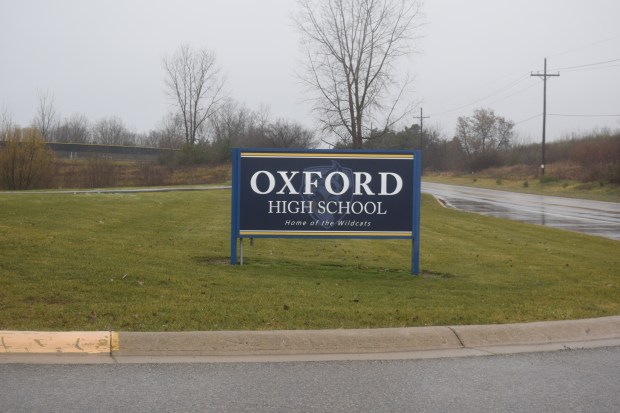 By only a few dozen votes, Oxford voters approved a school operating millage on Tuesday. A similar millage was turned down by voters last November.
Photo by Matt Fahr
Photo by Matt Fahr
Media News Group
OXFORD
By a margin of only 34 votes, Oxford voters approved a 10-year operating millage replacement and restoration after similar proposals were rejected in November 2025.
The proposal passed 4,220 yes (50.2%) to 4,186 no (49.8%)
The previous operating millage failed by a 52% no to 48% yes margin, while a proposed sinking fund was defeated 60% no to 40% yes.
The new operating millage replaces an expiring authorization and restores the district’s non-homestead operating millage to the full 18 mills required under Michigan’s school funding formula.
District officials estimated failure of the proposal would reduce the annual operating revenue by approximately $7 million.
NORTHVILLE
District voters approved a 10-year replacement operating millage on non-homestead property from 2027 through 2036.
It was approved by the widest margin of any school proposal on the ballot. It passed 2,434 yes (65.3%) to 1,287 no (34.6%) in Oakland County and 5,781 yes (69%) to 2,616 no (31%) in Wayne County.
The proposal replaces an expiring levy and allows the district to continue collecting the statutory 18 mills on businesses, rental properties and second homes – $18 on each $1,000 of taxable valuation.
District officials estimate the proposal will generate approximately $11.8 million annually, representing about 11.3% of the district’s operating budget.
WATERFORD
The Waterford school district will be faced with some tough choices after voters rejected a 10-year replacement, restoration and extension of the district’s non-homestead operating millage.
It failed 10,815 no (52%) to 9,948 no (48%).
The proposal would have generated $17.7 million annually, accounting for about 13% of Waterford’s operating budget.
The district has levied the operating millage since 1994, with three previous 10-year renewals.
Prior to the election Superintendent Adam Martin said restoring the full 18 mills would prevent future revenue losses.
“It’s a restoration of those full 18 mills,” Martin said. “We are at 17.6, which impacts our revenue by almost $400,000 this year. Next year as values increase, it will creep toward $500,000, which equates to four or five teachers.”