
On the first Tuesday in August, hundreds of Oakland neighborhoods temporarily close their streets to traffic for National Night Out. The annual block parties give neighbors a chance to gather over food and drinks while connecting with city leaders, police officers, and firefighters. This year, Oakland registered 175 block parties.
One of National Night Out’s primary goals is to strengthen neighborhood relationships and improve public safety.
This year’s event came at a time when Oakland’s seen significant improvements in public safety. The Oakland Police Department’s latest crime data shows violent crime — including homicides, rapes, assaults, and robberies — is down 18% compared with the same point last year. Most categories of property crime have also fallen by double-digit percentages over the past year.
The Oaklandside visited two gatherings — one in the Oakland Hills and one in West Oakland — to ask residents how their neighborhoods have changed, whether they feel safer, and what they’d still like to see from the city. Although some people disagreed about the city’s approaches to fighting crime, neighbors at both parties credited community connections for an increased sense of safety.
Hoover-Foster
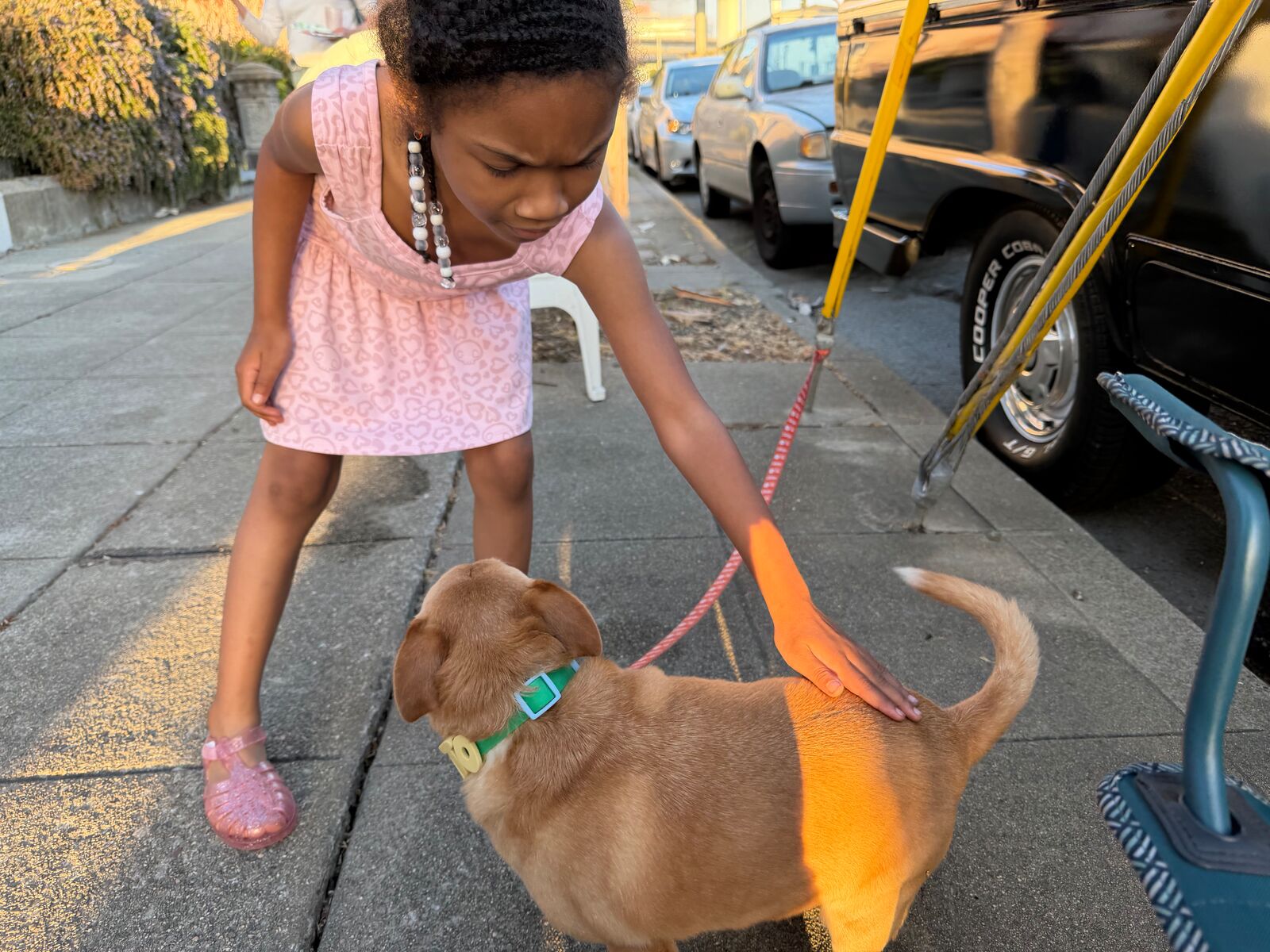 Jaylei, 5, pets her neighbor’s dog Panchito during National Night Out on Tuesday, Aug. 4, 2026. Credit: Roselyn Romero/The Oaklandside
On 34th Street, the neighborhood’s first National Night Out party was in full swing.
Kids rode dirt bikes up and down the block while barbecue smoke drifted through the air and Stevie Wonder’s “Sir Duke” played from a loudspeaker. Children crowded around Panchito, a friendly 14-year-old Chihuahua mix. He wasn’t the only animal attracting attention — at one point, a family walked out with a pet goat on a leash, drawing laughter from the crowd. About 50 neighbors attended.
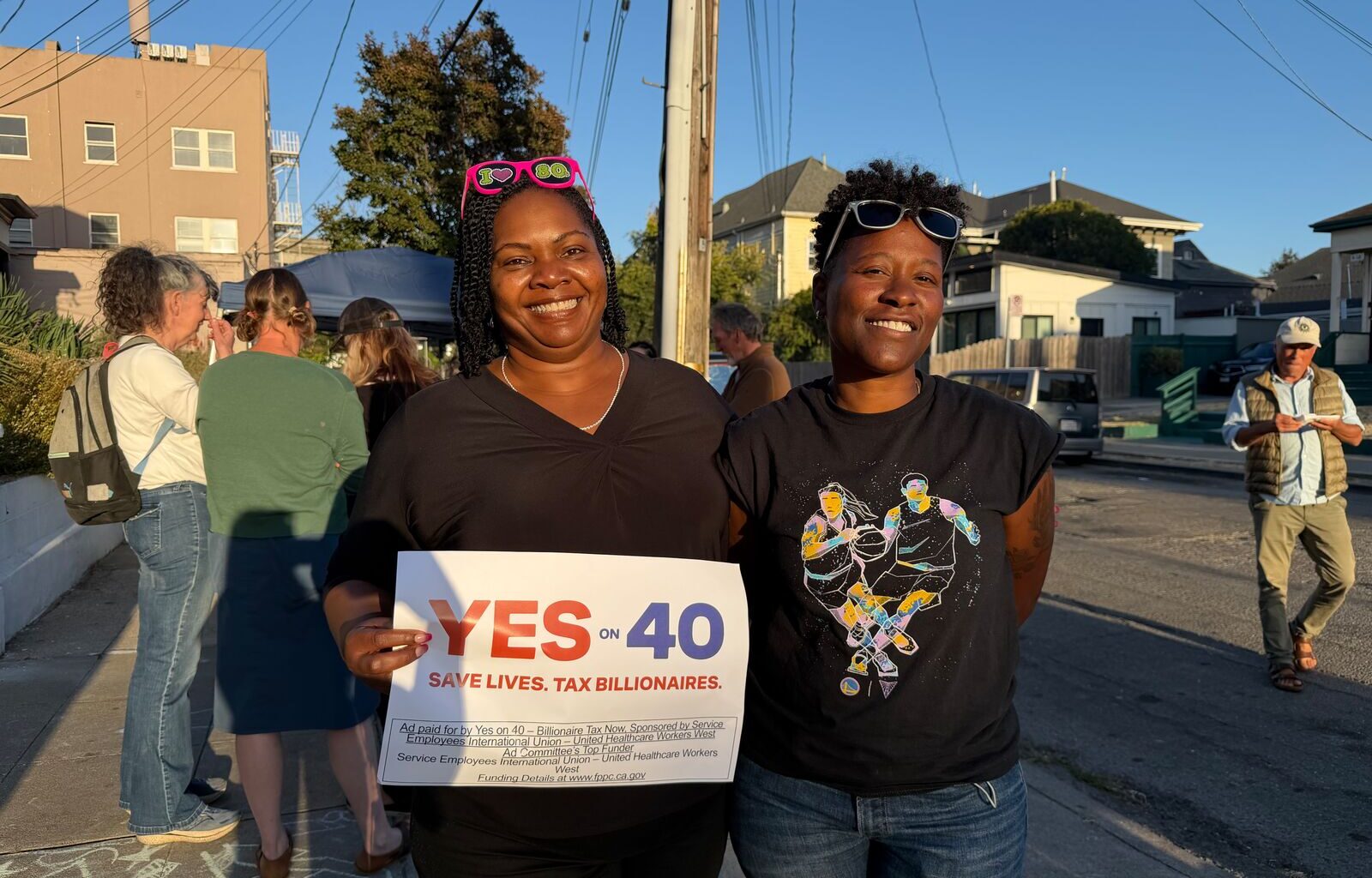
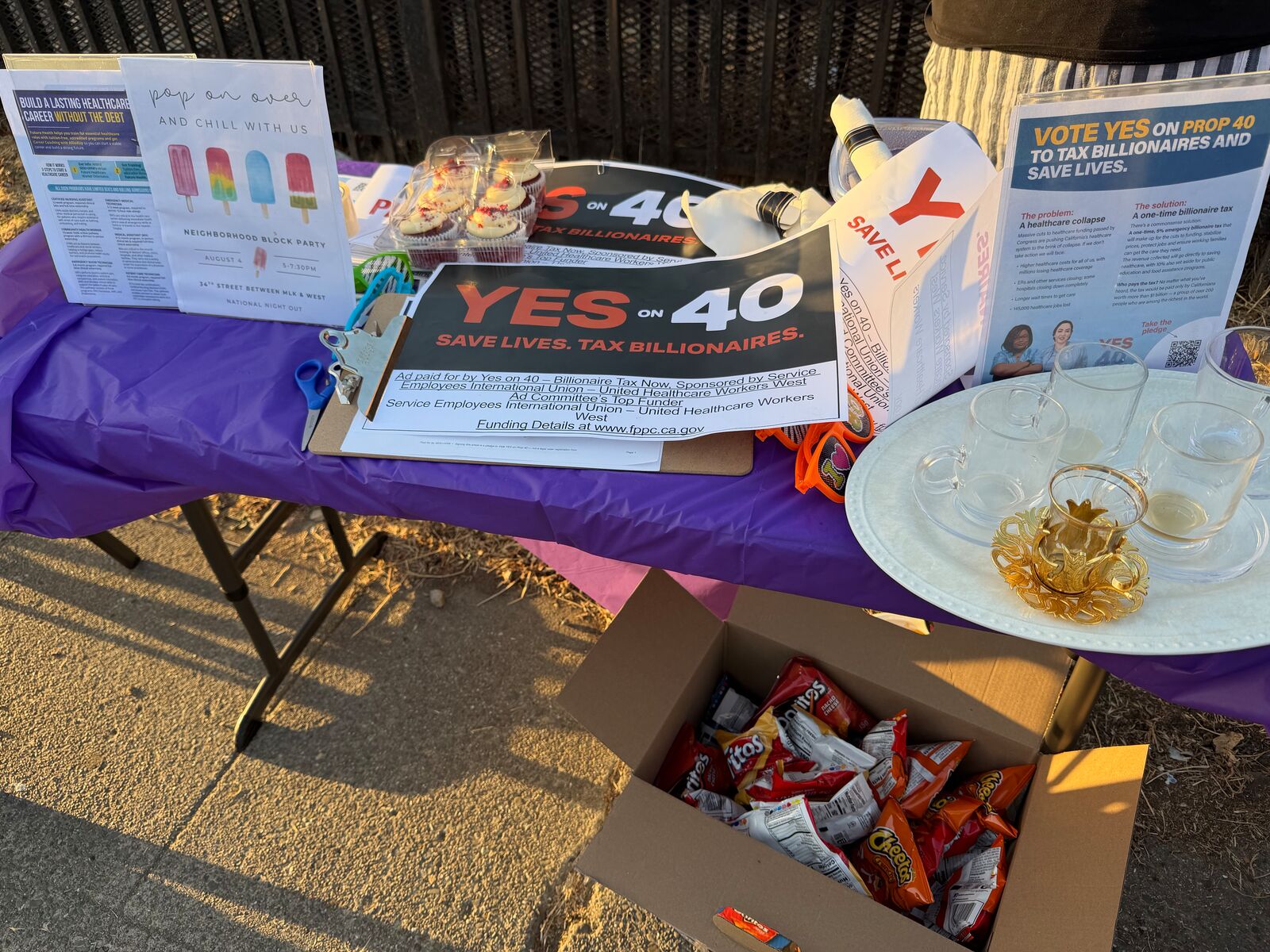 Eastman and her colleagues with the Service Employees International Union-United Healthcare Workers West, a union representing Kaiser Permanente employees, canvass during National Night Out. Credit: Roselyn Romero/The Oaklandside
Fay Eastman and Iowayna Peña organized for months to host the block party. They created flyers, knocked on every door, and collected neighbors’ email addresses to stay connected. Eastman hopes to launch a quarterly neighborhood newsletter.
“I love that our block is so multicultural — all ages, all backgrounds,” said Eastman, who has lived on 34th Street for 15 years.
She pointed to neighbors across the street — a Yemeni family that has lived on the block since 1994 — grilling food together. Many of the neighborhood’s other residents are Black families who have lived in West Oakland for generations.
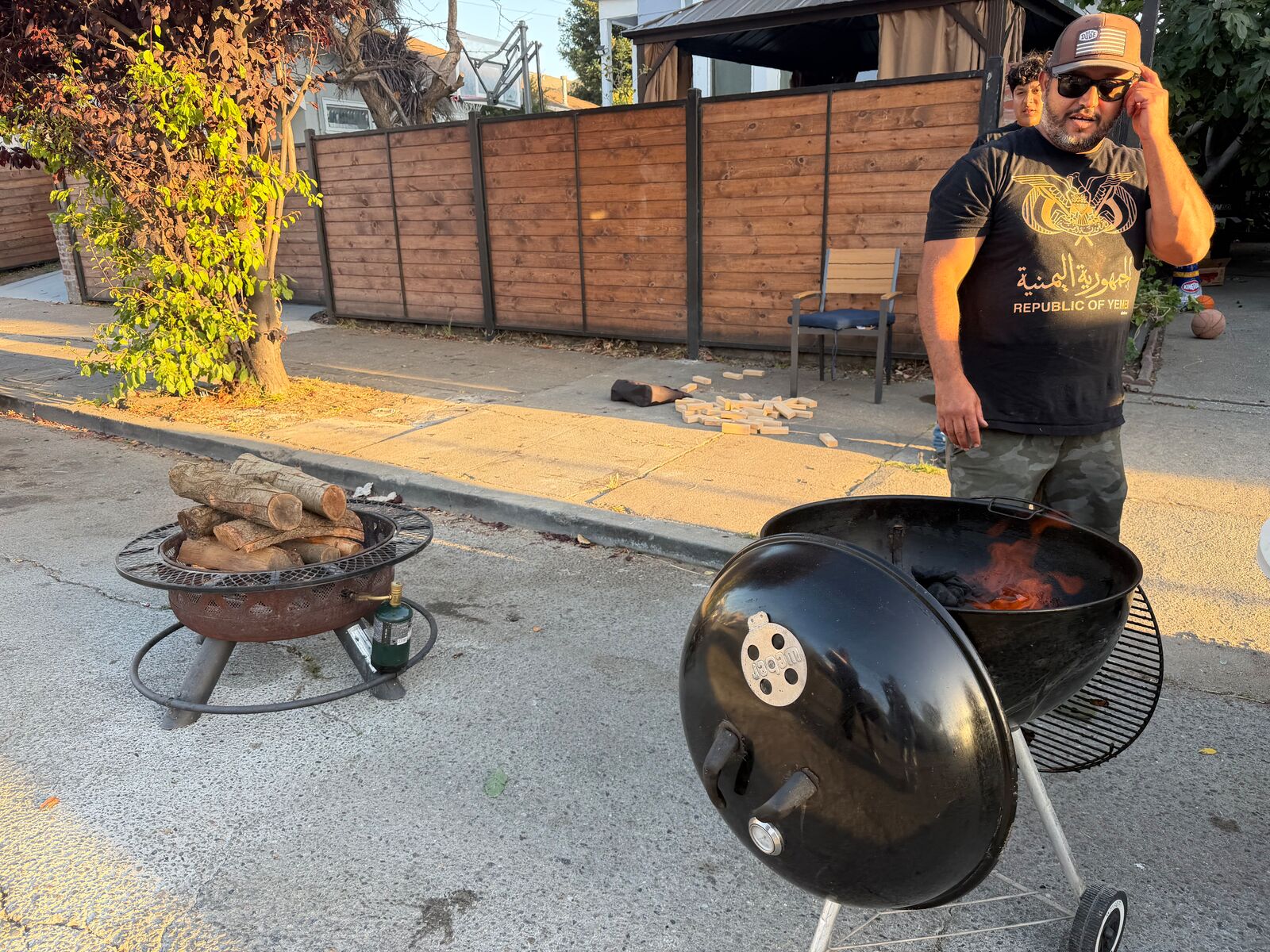 Mo, who has lived on 34th Street since 1994, starts up the grill for his block’s National Night Out party. Credit: Roselyn Romero/The Oaklandside
Peña, who has lived on the block for four years, hopes to see the neighborhood continue to grow. She envisions the overgrown, litter-strewn park at 34th Street and Martin Luther King Jr. Way becoming a community gathering space with a playground. She also wants to see more small businesses opening along MLK and existing shops thriving.
“We want to see a grocery store, a pharmacy, more retail, and a gym here,” Peña said. “There are a lot of homeowners and renters alike who want to help the city, but the city can do a better job of coming out and meeting us where we’re at.”
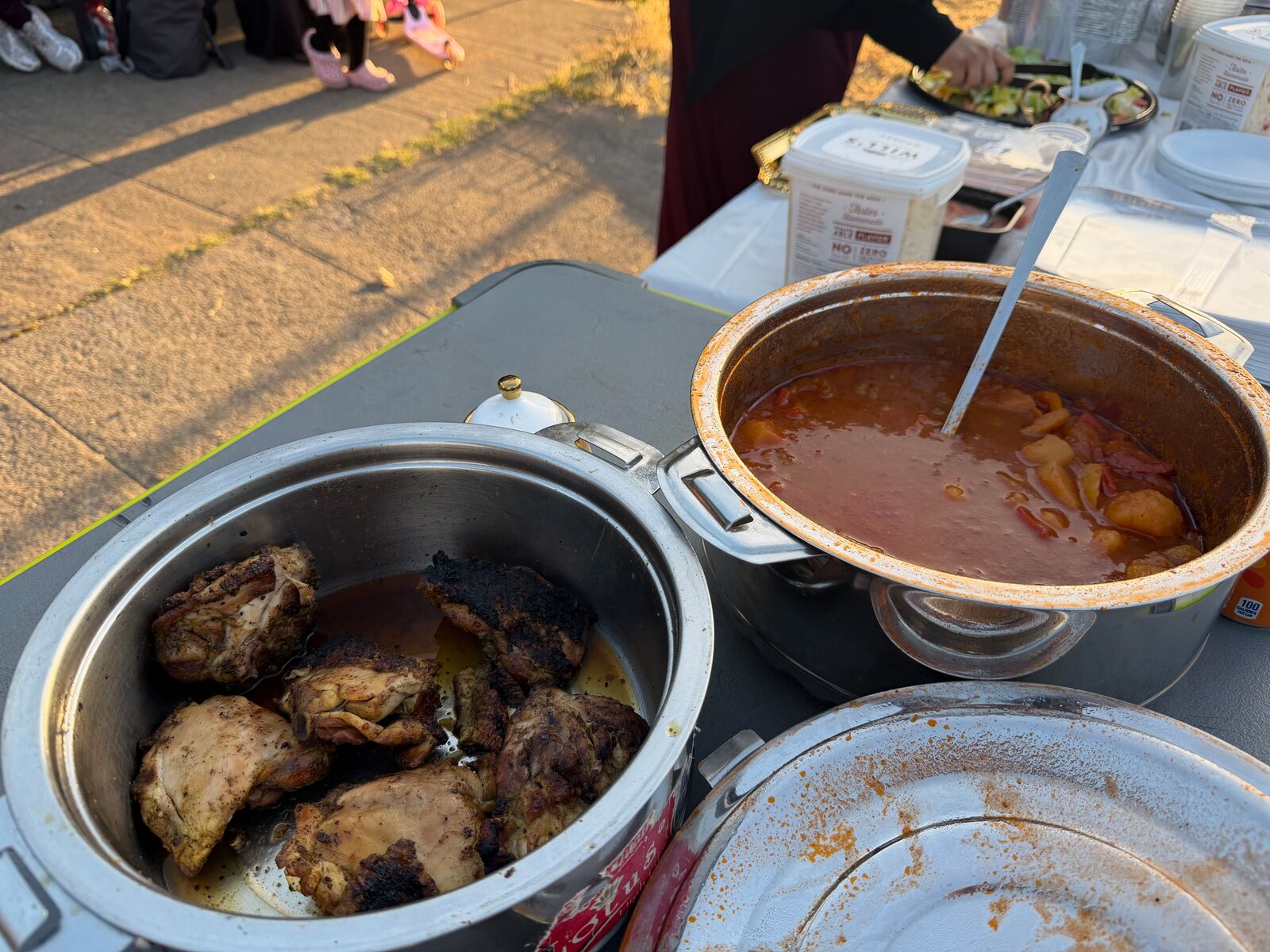 Families on 34th Street serve roasted chicken and veggie stew for National Night Out. Credit: Roselyn Romero/The Oaklandside
Eastman said the neighborhood once felt much more dangerous, particularly during the early months of the COVID-19 pandemic. A night-shift health care worker at Kaiser Permanente, she recalled coming home one day to find every car on her block with slashed tires. Car break-ins, commonly known as “bippings,” were also more frequent. When she first moved to the neighborhood, hearing gunshots at night wasn’t unusual, she said.
Today, Eastman and Peña say they feel much safer.
They credit stronger community engagement, along with programs like MACRO, Oakland’s non-police response for nonemergency and nonviolent calls. But they both oppose another way the city tries to tackle crime: Flock Safety cameras. They cited privacy and civil liberties concerns, and would like to see them removed.
“I know El Cerrito got theirs taken down. How can we do that here?” Eastman said.
“We are all craving community post-pandemic, so we’re finding each other, going outside, and talking to each other,” said Peña, a former San Francisco educator.
Lincoln Highlands
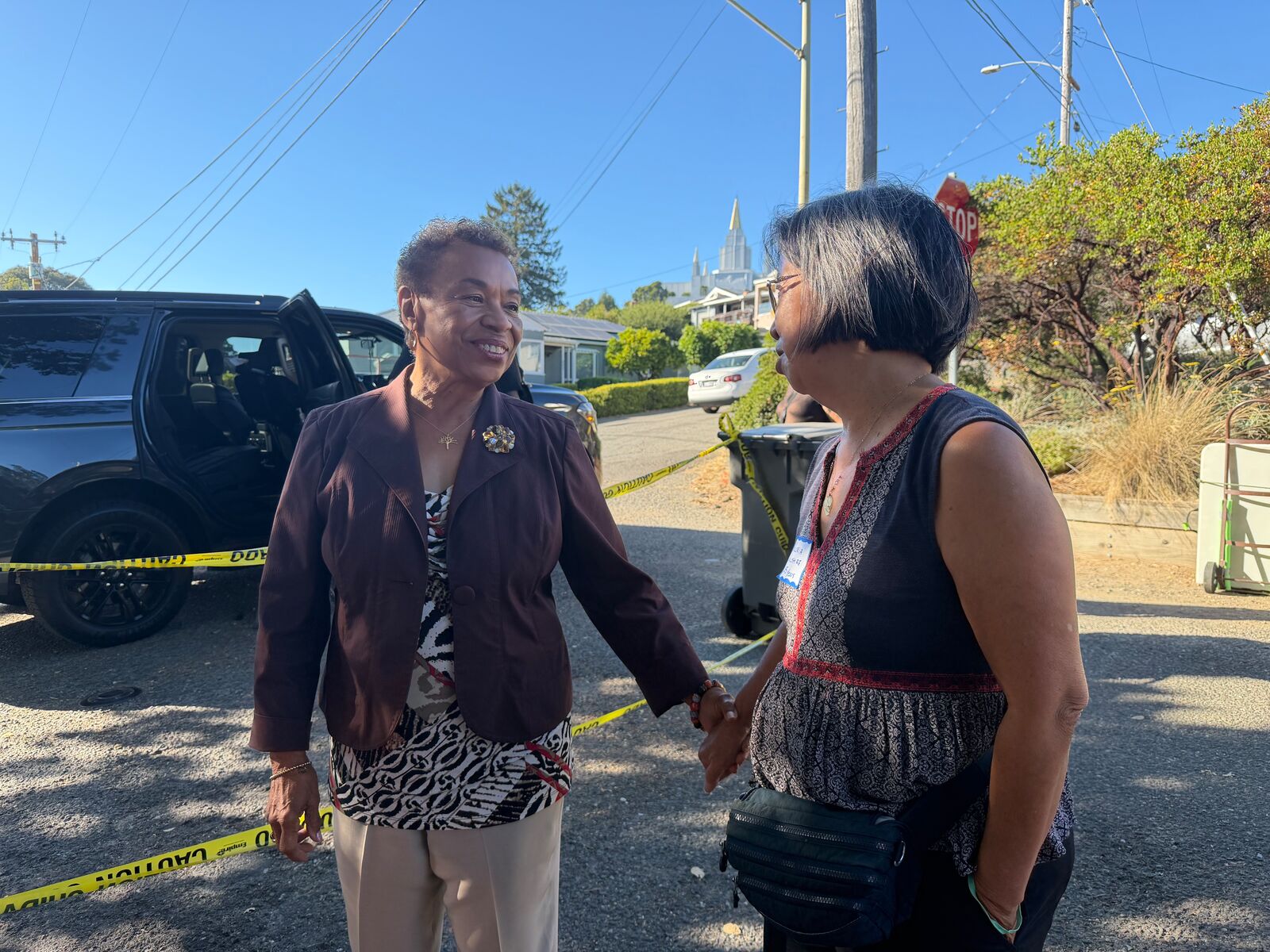 Oakland Mayor Barbara Lee chats with Gloria Saito, one of the organizers for Frye Street’s National Night Out party on Tuesday, Aug. 4, 2026. Credit: Roselyn Romero/The Oaklandside
On Frye Street, a short walk from Oakland’s Mormon temple, about 40 neighbors gathered for a lively potluck.
A small table held name tags, markers, and a neighborhood listserv sign-up sheet. Across the street, residents filled their plates with hot dogs, burgers, pasta salad, and chocolate chip cookies. A kids’ area featured bubble-blowing and an impromptu soccer game. Neighborhood dogs — including Jim Morrison, a 14-year-old rescue from the streets of Los Angeles — greeted one another while their owners chatted. At around 5:45 p.m., Mayor Barbara Lee stopped by to meet with residents.
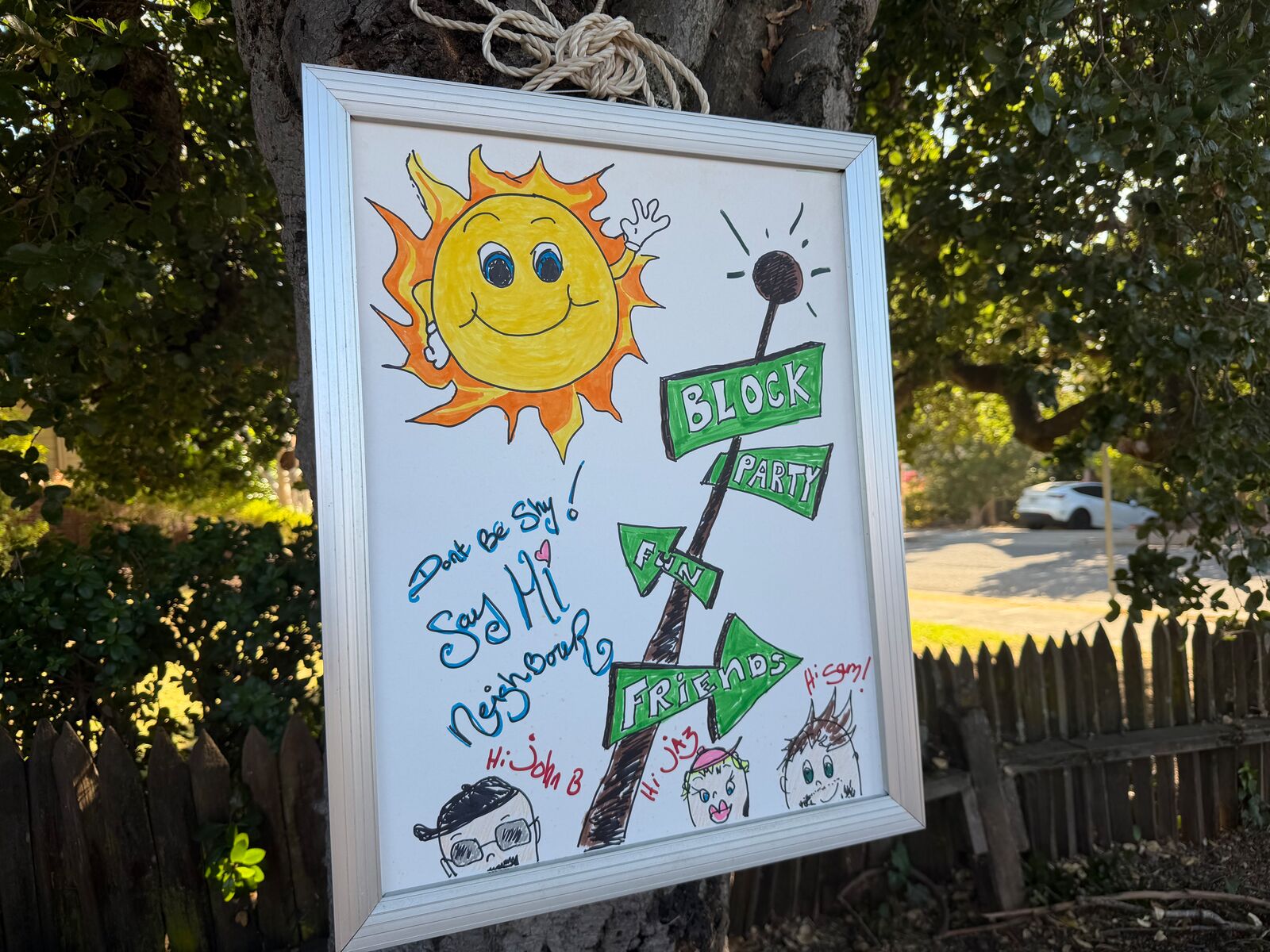 A sign welcomes neighbors to Frye Street’s National Night Out block party. Credit: Roselyn Romero/The Oaklandside
It was the third year Gloria Saito and her husband, Richard Otter, had organized the neighborhood’s National Night Out gathering. The couple has lived in Lincoln Highlands for 35 years.
“It’s the one time of the year where we bring everybody together,” said Saito, a former director of UC Berkeley’s counseling center.
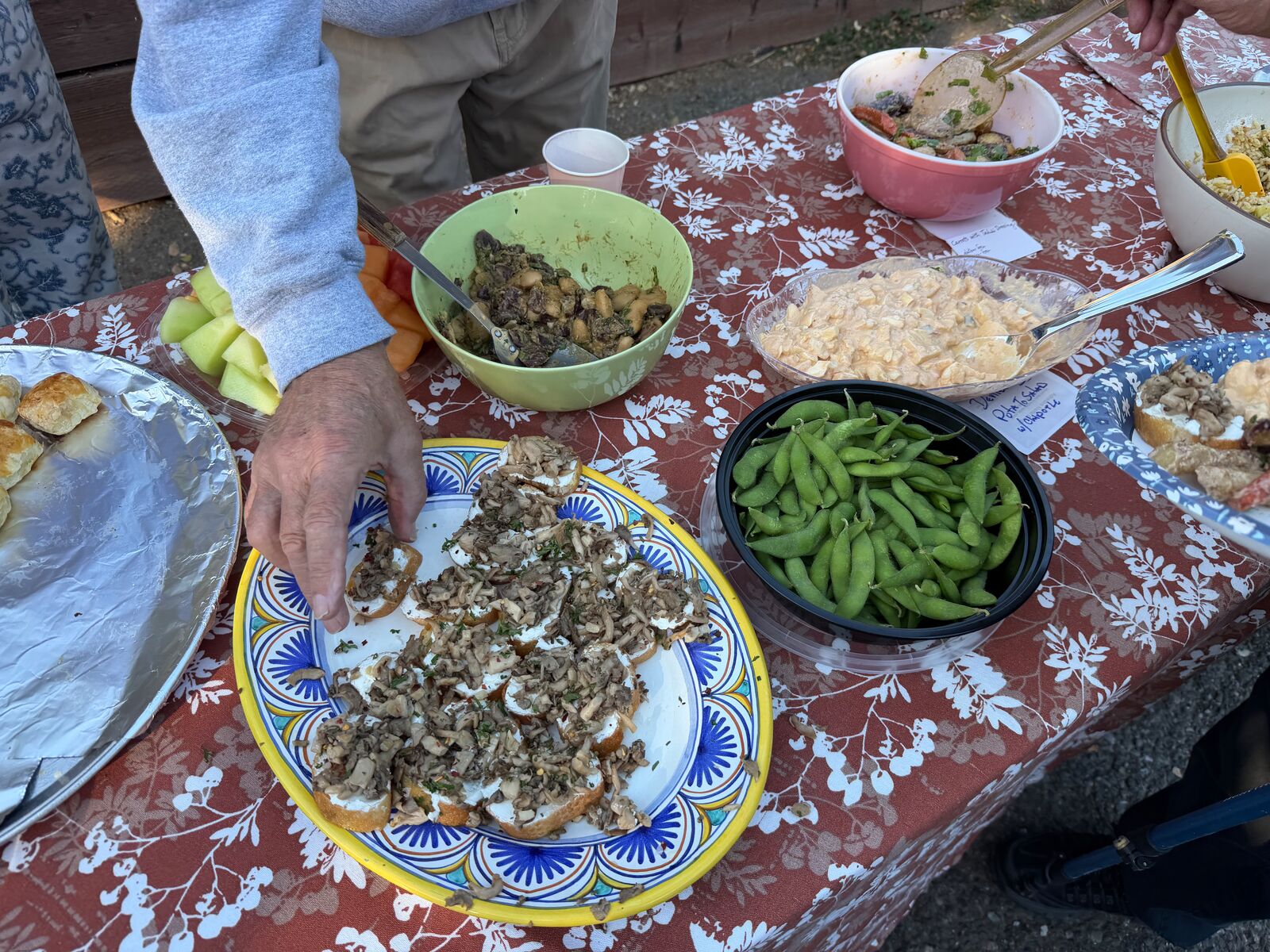 National Night Out attendees indulge in savory and sweet treats brought to Frye Street’s block party. Credit: Roselyn Romero/The Oaklandside
Although the neighborhood is generally quiet, Saito said residents have dealt with catalytic converter thefts and home break-ins, particularly during the COVID-19 pandemic.
Saito said she isn’t sure what’s driving the improvement in Oakland’s crime rates. On her block, however, she believes neighborhood design and strong social ties might be helping. She said she’d like to see more data on Oakland’s Flock Safety cameras but generally supports them as a crime deterrent.
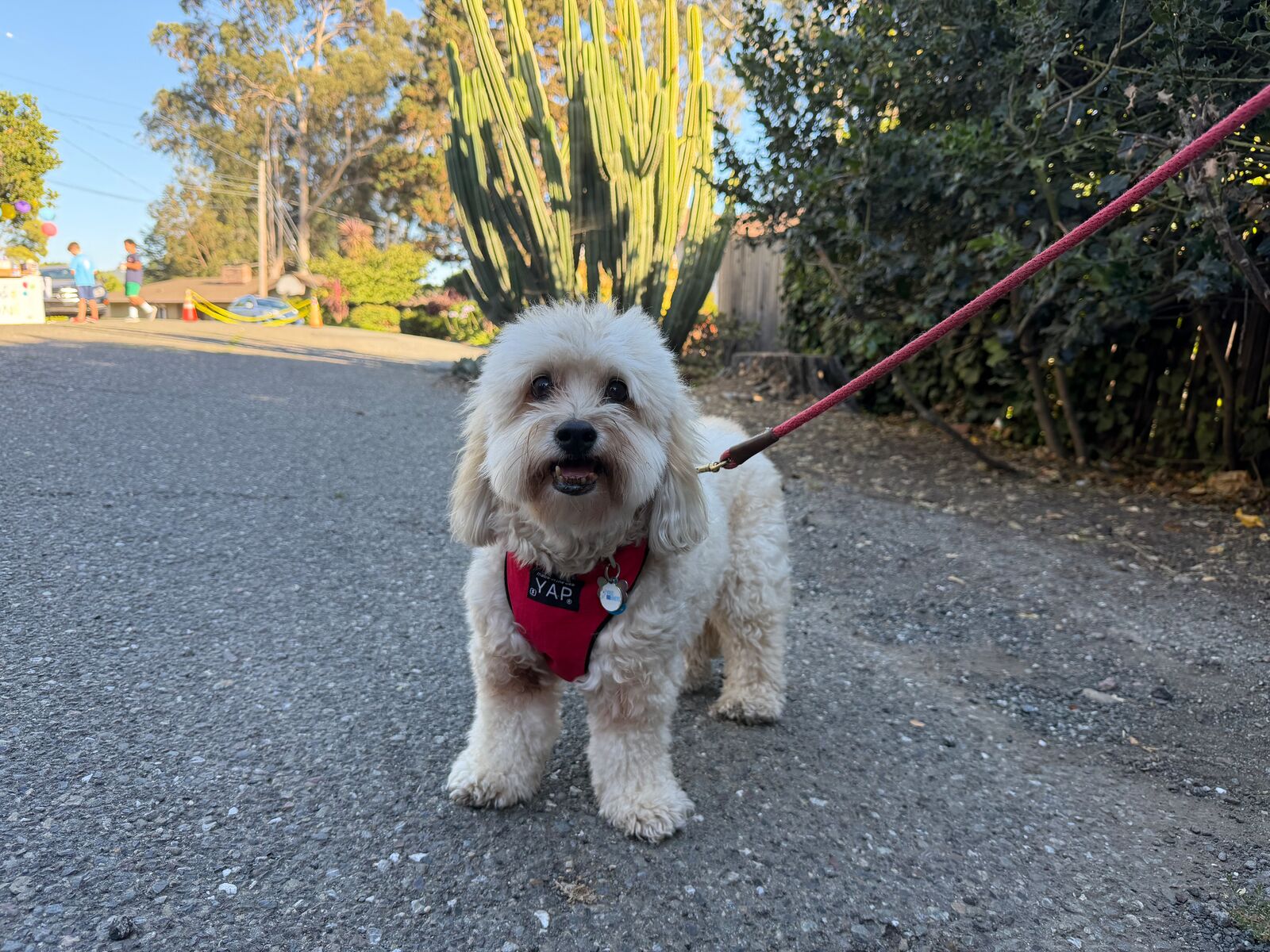 Jim Morrison, a 14-year-old dog, greets his neighbors on Frye Street during National Night Out. Credit: Roselyn Romero/The Oaklandside
“It helps when people are looking out for each other,” Saito added. “Whenever anything happens in the neighborhood, people will post it on the neighborhood listserv.”
“*” indicates required fields