
The Metropolitan Transportation Commission is far less visible than, say, the City Council, but it plays a substantial role in transforming communities: it distributes some $2 billion in transit-related funding each year across the Bay Area from sales and gas taxes, bridge tolls, and federal grants that result in new roadways, rail lines, and bike lanes.
For the next two weeks, the MTC is asking area residents to comment on two of its most important policy documents: its biannual Transportation Improvement Program plan and a related environmental analysis. For Oakland, the proposed plan includes $20 million for Grand Avenue Roadway Improvements, nearly $5 million for signal improvements on Fruitvale Avenue, and about $20 million for the construction of four bicycle boulevards in East Oakland. These projects are each designed to slow drivers, making it safer to walk, bike, and drive on major city roads.
While this review stage is “the culmination of earlier planning and funding decisions,” according to MTC spokesperson John Goodwin, it’s “not too late to comment on spending priorities or to raise concerns about specific projects.”
Most major planning and design decisions about Oakland roadways were made earlier through the regional transportation plan, known as Plan Bay Area 2050+, and through decisions made by city officials, including the Oakland Department of Transportation.
“People can use the public review period as an opportunity to learn about transportation projects that may be planned or underway in their communities,” Goodwin said. “If they want to learn more about a specific project or get involved in future planning and decision-making, they can contact the city, county, transit agency or other project sponsor responsible for that project.”
The first draft available for public review is the 2027 Transportation Improvement Program, which sets funding priorities and, upon completion, will be incorporated into the agency’s Plan Bay Area 2050+ regional development plan. The program funds local travel infrastructure, including roadways, railways, and even sidewalks and other pedestrian areas.
$1.3 billion for improvements in Alameda County
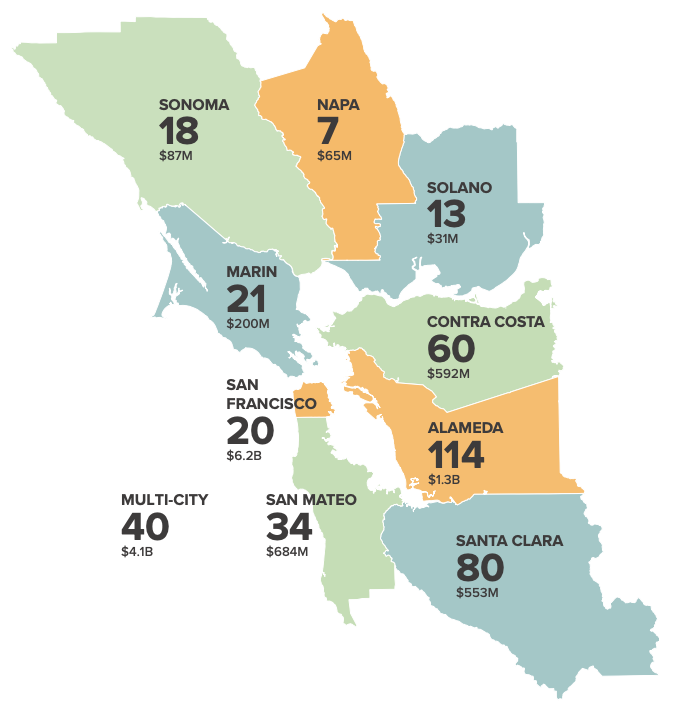 Alameda County is one of the biggest beneficiaries of regional transportation funding. Source: Courtesy Metropolitan Transportation Commission
The first draft available for public review is the 2027 Transportation Improvement Program, which sets funding priorities and, upon completion, will be incorporated into the agency’s Plan Bay Area 2050+ regional development plan. The program funds local travel infrastructure, including roadways, railways, and even sidewalks and other pedestrian areas.
According to the MTC, more than 400 projects are set to receive funding from 2027 to 2030, at a cost of about $13.8 billion, including $1.3 billion for 114 projects in Alameda County. Oakland residents are invited to comment on “any aspect” of the documents, including funding priorities, Goodwin said.
A helpful map of all the projects for the TIP is available on the agency’s ArcGIS Online map, including each project’s cost.
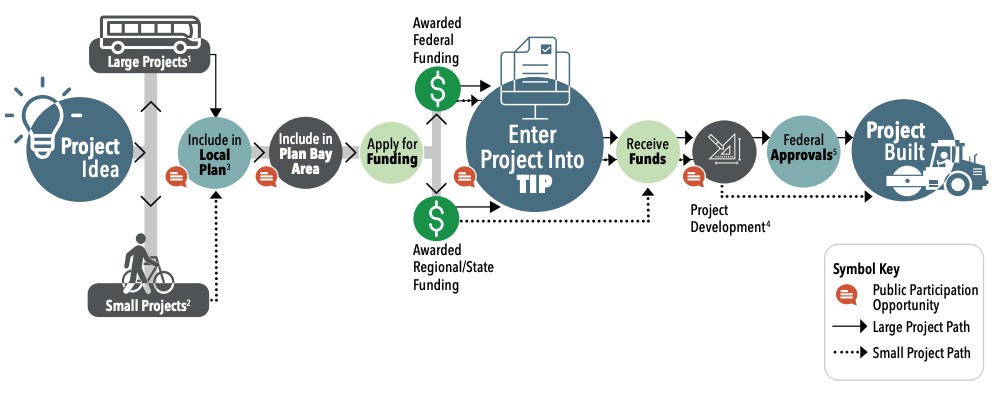 A map showing how infrastructure projects fit into the regional funding system by starting locally and ending up as part of a larger plan. Source: Courtesy Metropolitan Transportation Commission
The MTC has also published a draft of all the projects it intends to fund, including those in Oakland, in its expansive project list document. There, people can find even more granular data, including how much of the $5 million for the new Fruitvale Avenue bus-priority traffic signals project is coming from sales tax revenues (about $1.7 million).
According to an MTC fact sheet, which is also available in Spanish and Chinese, only specific projects are eligible for federal funds.
Once the commission reviews and incorporates comments later in August, the 2027 TIP is expected to be adopted by the MTC in September 2026, followed by federal approval in December. Area residents have until 5 p.m. on August 13 to provide comments.
An air quality analysis
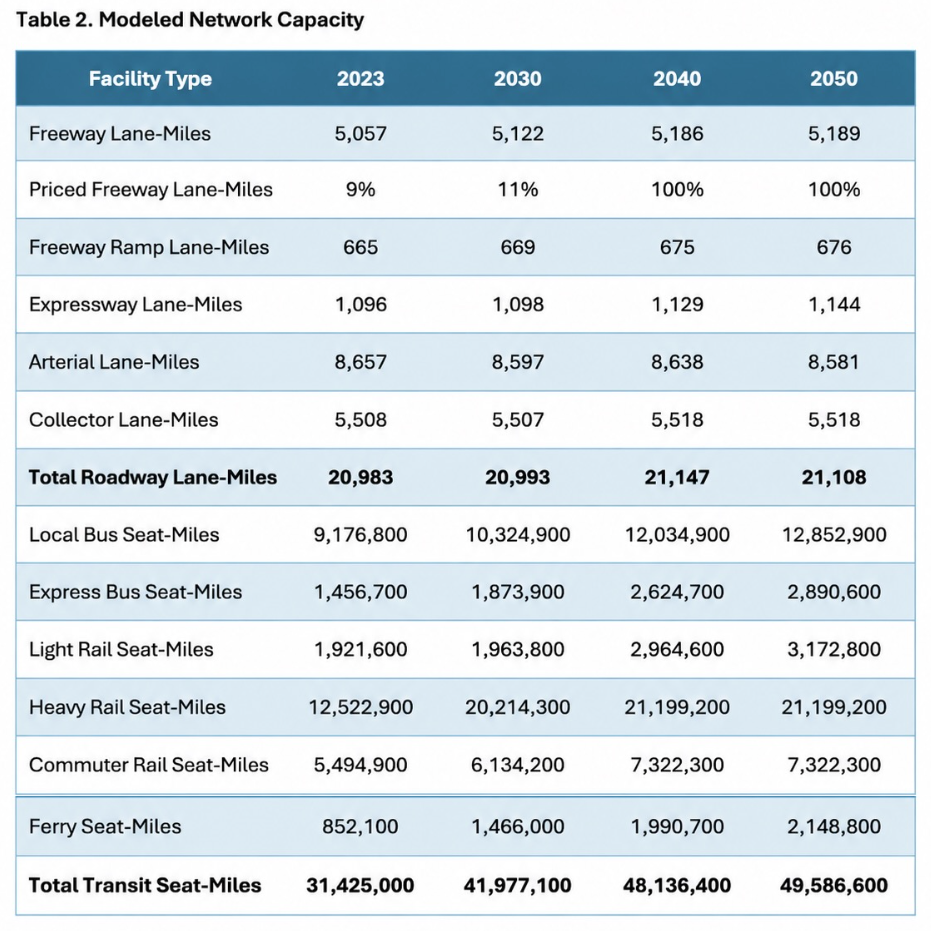 Commuter transit mileage expectation in the Bay Area, according to the Metropolitan Transportation Commission air quality analysis. Credit: Courtesy Metropolitan Transportation Commission
The other draft open for public comment is the Transportation-Air Quality Conformity Report, which details emissions projections, including particulate emissions, for major Bay Area infrastructure projects over the next 20 to 25 years. These projects include the construction of an expressway on Highway 101 in Santa Clara County; the widening of a highway in Fremont; and improvements to AC Transit bus service between Oakland and Richmond.
According to the air quality draft report, travel activity forecasts through 2050 were generated by applying Environmental Protection Agency models to emissions data collected from November 2025 to May 2026. The draft report concludes that based on those models, all development expected to be funded by the MTC through 2050 meets acceptable ground-level ozone and particulate levels.
One interesting table in the report shows how much more commuter-transit mileage is expected to grow by 2050 than road miles for vehicle drivers. Between 2030 and 2050, only 125 miles of roadway lane-miles will be added, while more than 18 million transit-seat miles will be added through rail, buses, and ferries. (A transit seat mile, a standard measure of transit capacity, is a bus, train, or ferry seat that travels a mile.) Clearly, large-capacity transit is the immediate future for the Bay Area at least until the middle of the century.
Bay Area residents who wish to comment on the environmental analysis must do so by August 13, 2026.
All comments for both drafts should be submitted to the MTC here, at the bottom of the page, via email to info@bayareametro.gov, or by regular mail to the Metropolitan Transportation Commission at 375 Beale Street, Suite 800, San Francisco, CA 94105, attention: Public Information Office — 2027 TIP.
The MTC says it will also accept in-person comments at its next Programming and Allocations Committee meeting on Wednesday, August 12, 2026, at 9:45 am, in the Bay Area Metro Center, first floor board room, 375 Beale Street, in San Francisco.
“*” indicates required fields