
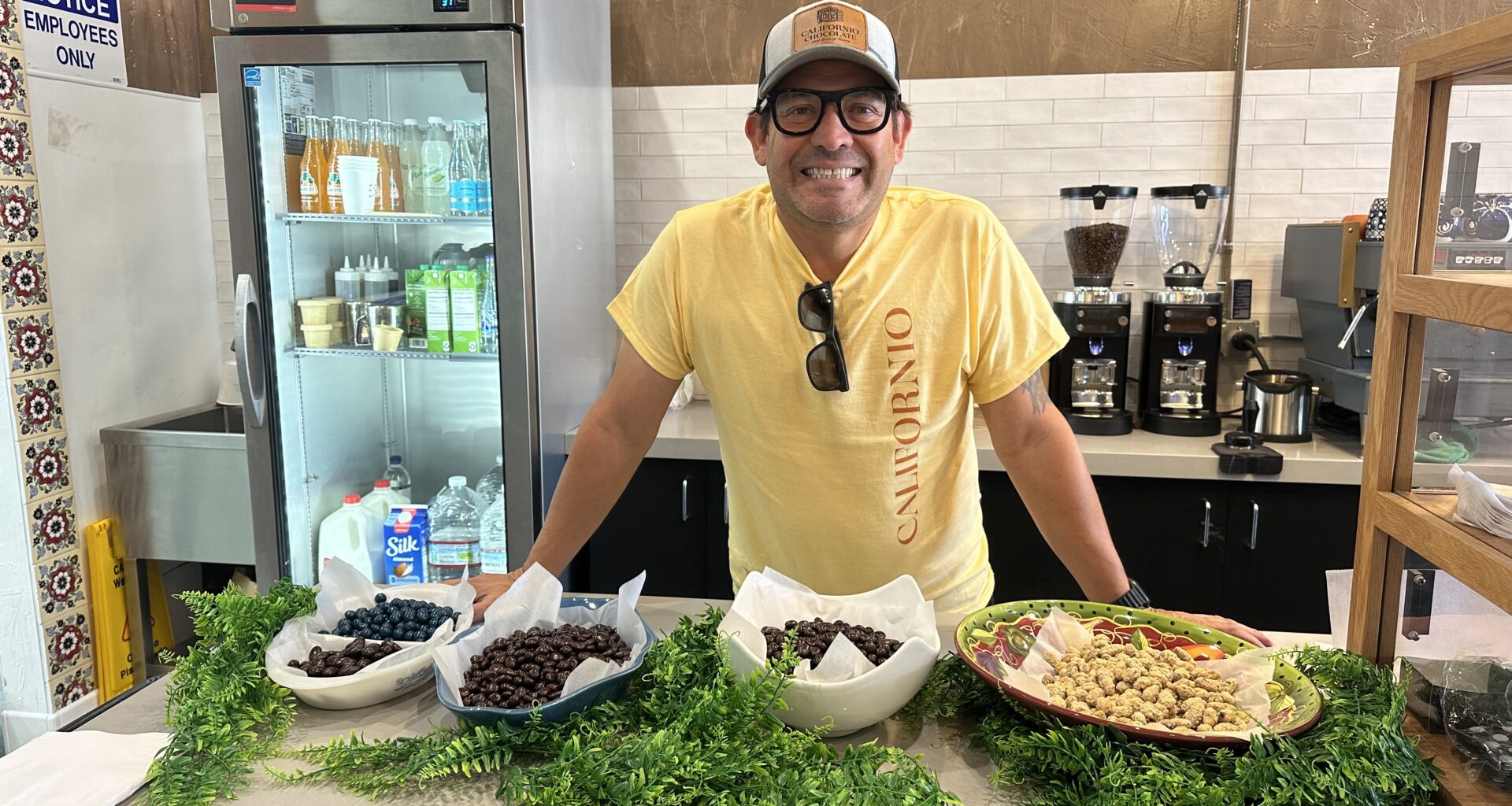
Californio Chocolate, a new shop in the Zaferia District specializing in Mexican chocolate, passed its final inspection on Monday, Aug. 3, and will soft open this weekend, owner and chocolatier Eduardo Ponce said in a phone interview.
The retail storefront and production space, 3708 E. Anaheim St., will sell Ponce’s chocolate bars, host tastings, and share the cultural history behind Mexican cacao.
I stopped in on Sunday and was able to buy some rich chocolate-covered espresso beans.

Californio Chocolate, a new shop in the Zaferia District specializing in Mexican chocolate, will have a soft opening this weekend. (Photo by Jo Murray, Grunion Gazette/SCNG)

Eduardo Ponce is the owner and chocolatier of Californio Chocolate, a new shop in the Zaferia District. (Photo by Jo Murray, Grunion Gazette/SCNG)

Eduardo Ponce is the owner and chocolatier of Californio Chocolate, a new shop in the Zaferia District. (Photo by Jo Murray, Grunion Gazette/SCNG)
Show Caption
1 of 3
Californio Chocolate, a new shop in the Zaferia District specializing in Mexican chocolate, will have a soft opening this weekend. (Photo by Jo Murray, Grunion Gazette/SCNG)
Customers can taste many types of specialty Mexican chocolate bars, including vanilla, Jamaica, espresso, 75% dark and milk, as well as chocolate-covered blueberries and cranberries..
Ponce is still working on a schedule of opening times — but as your drive on Anaheim Street, if the two chandeliers in the front window are on, he’s there.
9PHO
9Pholb, a new pho restaurant, is operating out of Tarantella on Fourth for to-go orders only.
The eatery soft opened on Monday, Aug. 3, at Italian restaurant Tarantella, 2120 E. Fourth St., in Retro Row. Tarantella is a full-service Italian restaurant that offers pastas, entrées and a wine-forward dinner menu.
Women Who Whiskey
Last week, I attended an event hosted by Women Who Whiskey, a group known for its creativity.
The group partnered with Christy Caldwell, owner of The Ordinarie, and Willett’s West Coast Market manager Aaron Miller to transform The Ordinarie into the Bar at Willett, featuring signature cocktails, special pours and Willett’s well-known egg salad sandwich.
Personally, I enjoyed seeing Caldwell bus tables, serve guests and check every detail. His passion as an owner is what makes The Ordinarie such a beloved downtown Long Beach restaurant.
Women Who Whiskey was founded in October 2019 by Long Beach resident Stacey Smith-Clark, former vice president of the Los Angeles chapter. The Long Beach chapter was created as a welcoming space for women to explore whiskey without the traditional male-dominated “mansplaining.” It is part of the global Women Who Whiskey network, which began in New York in 2012 and now includes 25 chapters worldwide.
Membership and events are open to all genders. For information, go to womenwhowhiskey.club.
Long Beach Restaurant Association
Last week, I asked Lisa West from the LBRA to query some of the area restaurant owners about the costs of doing business in today’s climate.
“Behind every great meal is a small business owner juggling inspection, permits, payroll, regulations, rising costs, staffing challenges, and countless invoices,” one member texted her, “all while trying to create a place where we celebrate birthdays, anniversaries, first dates and family dinners.”
West reminded me of a number of points during our discussion.
A typical independent restaurant in Long Beach doesn’t just serve food, but also answers to a surprising number of agencies and vendors, including Long Beach for its business license and annual business license tax.
The Health and Human Services Department also charges for food facility permits, inspections, food safety compliance and health permit renewals. Inspection frequency depends on the restaurant’s risk level, with higher-risk operations receiving more inspections.
The California Department of Alcoholic Beverage Control, meanwhile, oversees licensing, renewals, employee training requirements and compliance wherever alcohol is served.
The Building and Fire departments handle inspections, occupancy requirements, hood systems, suppression systems, and any remodeling or equipment changes.
Restaurants also have to deal with state and federal agencies when it comes to payroll taxes, sales tax reporting, unemployment insurance, workers’ compensation and labor law compliance.
Then there are the bills.
An average full-service restaurant may receive 15 to 25 different recurring bills every month.
And that’s before the unexpected expenses — an oven breaks, refrigeration fails, plumbing backs up or food costs suddenly increase.
“The next time you enjoy a meal out, remember that you’re not just supporting a restaurant,” West texted me. “You’re supporting a dream that works incredibly hard to stay alive.”