
When Gilbert Gong was a child, he spent many afternoons playing at Lincoln Square in Chinatown after going to Chinese school.
Now, more than 50 years later, Gong, who grew up to become the Lincoln Recreation Center’s director, stands in front of the aging building, reflecting on the past, with a hopeful eye toward the future.
The rec center, nearly 50 years old, will soon be torn down and rebuilt as a two-story facility nearly triple its current size. It will include classrooms for afterschool and summer programs, indoor basketball courts, and lots more.
And innovatively, the recreation center will also serve as a “resilience hub” — a place where neighbors can go during climate emergencies such as wildfires, power shutoffs, and earthquakes. It will be outfitted with solar panels, battery storage, refrigerators for neighbors to keep their medication, and other features.
The city broke ground last week on the new rec center and hub — which is funded through a mix of local, state, and federal funds and private contributions — but it took decades of advocacy from community organizations, residents, and volunteers to see the new vision become a reality.
“For me, it’s a full circle,” Gong told Oaklandside just after the groundbreaking ceremonies on July 30. “The park cared for me and took care of me as a child, and I’m trying to reciprocate that here as best as possible for as many people as possible.”
The park has long been due for investment
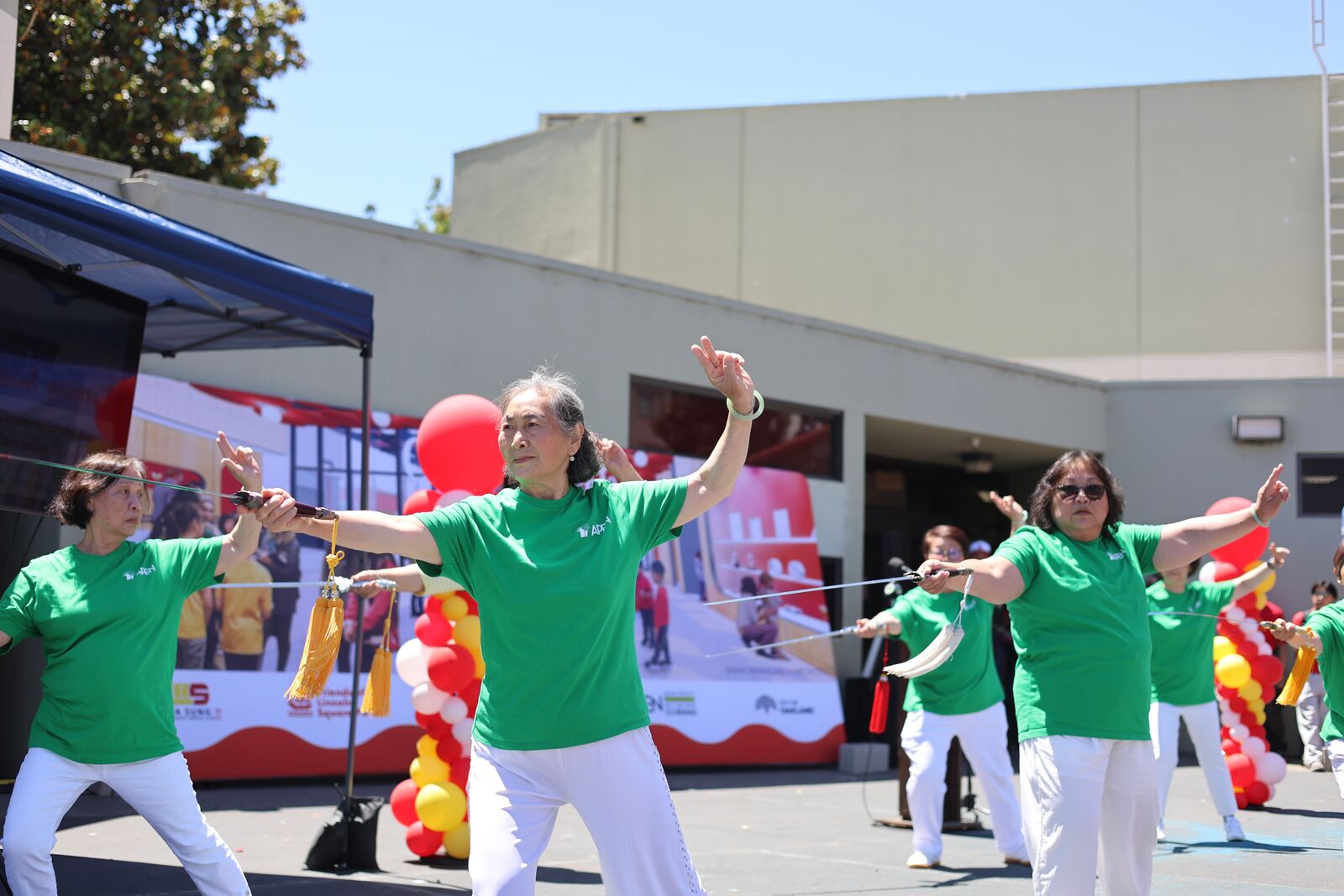 A group performs during the groundbreaking ceremony of the Lincoln Recreation Center on July 30, 2026. Credit: Momo Chang for The Oaklandside
When Gong started working at this thriving neighborhood center more than 25 years ago as director, the building had already reached its capacity. Seniors used it for tai chi, line dancing, and table tennis. Children at the adjacent Lincoln Elementary School used it for after-school programs and basketball. Each day, 2,000 people would come through the doors and take part in education, games, crafts, exercise, sports, and more. Programming the space was like solving a jigsaw puzzle.
Gong said there had been numerous leaks in the roof. There were only four bathroom stalls. The electric wiring was old.
“You’d plug two things into an outlet, and blow a fuse,” he said. The facility’s heating system had been broken for several years, and there was also no air conditioning.
When the indoor and outdoor basketball courts became worn out, the Warriors and Kevin Durant foundations resanded and refloored them. Those were well and good as temporary fixes, Gong said, but, “the building has served its time.”
‘A Collective Response’
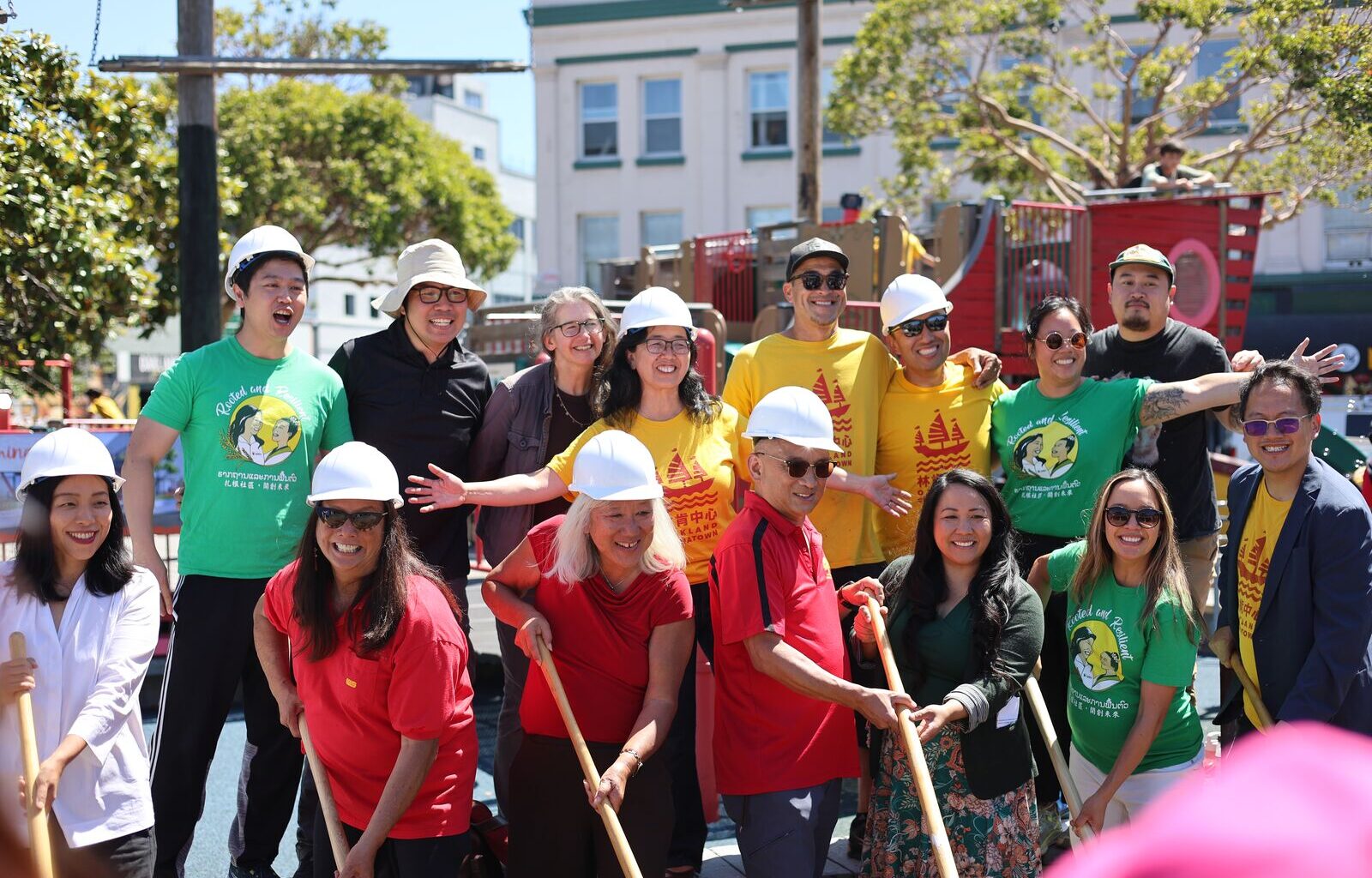
At last week’s groundbreaking ceremony, a crowd gathered to celebrate. Children from the summer program, politicos who have been involved with this effort for years, and many local parents, elders, Chinatown community members, and nonprofit leaders were all in a merry mood.
“The City’s investment reflects our commitment to building stronger, healthier, and more resilient communities across the Town,” said Mayor Barbara Lee.
To those gathered, Lee described her personal connection to Chinatown: her aunt and uncle were landlords on 8th Street, and she would hang out in the neighborhood as a child. She has also long represented Chinatown as a public servant, including her nearly 27-year career in Congress.
What led to the rec center’s redevelopment was a long process of community advocacy.
“It wasn’t one group or one person; it was a collective response,” said Tiffany Eng, co-founder and campaign co-chair of the nonprofit Friends of Lincoln Square Park.
When Pat Kernighan was on the City Council in 2007, she put Lincoln Rec Center on her list of priority sites for investment, though the council’s budgets didn’t set aside any dedicated funding.
Friends of Lincoln Square Park was formed in 2016 to focus on fundraising and advocacy for the new rec center.
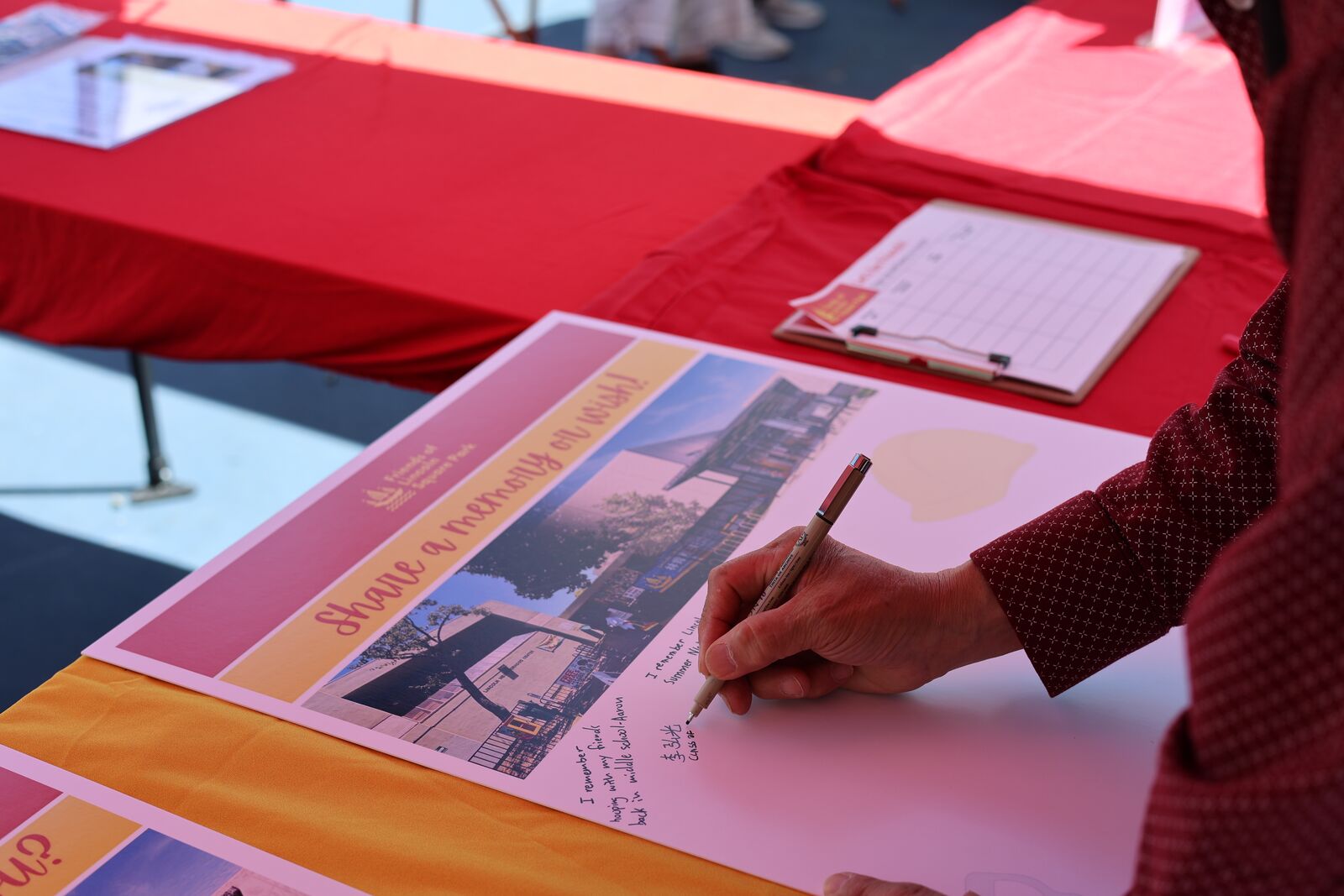 A person writes about a memory of the Lincoln Recreation Center during the groundbreaking ceremony for the new center’s development in Oakland on July 30, 2026. Credit: Momo Chang for The Oaklandside
In 2019, the Lincoln Recreation Center was the highest-ranked parks and rec project among the city’s priorities for capital improvement. The building was already dilapidated, and residents and users had been talking about a new center for decades. Their advocacy to the city helped convince Oakland to move forward.
Nikki Fortunato Bas, the District 2 rep on the City Council in 2019, helped allocate $1.7 million initially from the voter-approved bond measure, Measure KK. That kickstarted a larger fundraising process.
Eng’s family has been visiting the park for five generations. As a member of the community advisory group for the downtown plan, which held meetings with Chinatown residents, she wanted to learn more about what was happening at Lincoln. Years ago, she started combing through the city’s transcripts from public meetings to learn more about the rec center. Eng, who has a background as a city planner, learned that talks about a new center were at least 30 years old.
She remembers thinking, “let’s get this thing done.”
It was clear to her, after reading transcripts, that “this was just going to be a plan that was going to sit on the shelf.” Due to what she calls “naive ambition,” she worked with Gong and a coalition of others to continue advocating for a new center.
In the meantime, Lincoln Summer Nights debuted in 2016 as a way to gather community members at the park.
At the same time, new apartments and housing were being built in downtown, with no new public parks or open space. Some buildings had rooftop gardens. But Eng and others wanted to see neighbors getting to know each other.
“We can’t invite the new people from the condos to have yoga classes or pilates because they will push out the tai chi people,” she said. “But if they only do yoga on their rooftop patios, there’s no way to cultivate community.”
In partnership with city staff and the public works department, Friends of Lincoln Square Park and the Asian Pacific Environmental Network helped write grants. They were able to win two large state grants totalling $20 million: one from Proposition 68’s parks grant and a resiliency hub grant. Additional funding includes voter-approved Measure U funding, a $2 million federal earmark, and contributions from the community.
It wasn’t easy. Eng said they applied to a state parks bond grant, Proposition 68’s “California Drought, Water, Parks, Climate, Coastal Protection, and Outdoor Access for All Act,” three times before they received an $8.5 million grant in 2021. In total, the project has raised over $34 million from public funding, plus other grants and private donations.
The city’s first municipally-run resilience hub and a model for the country
While Oakland has other climate resilience hubs at churches, the Lincoln Square addition is the first at a city-run site. It’s part of the city’s equitable climate action plan. The city plans to create two more hubs in public spaces.
The building’s design started taking form in 2017, when the community self-funded a feasibility study. Tightly bound by the single city block the entire park sits on, Chinatown residents landed on the idea of building up.
The two-story building was designed by Oakland-based Shah Kawasaki Architects, who also designed other public spaces in Oakland, including the Golden Gate Recreation Center and Studio One Art Center’s rehabilitation. The firm is also working on Coliseum College Preparatory Academy’s redesign.
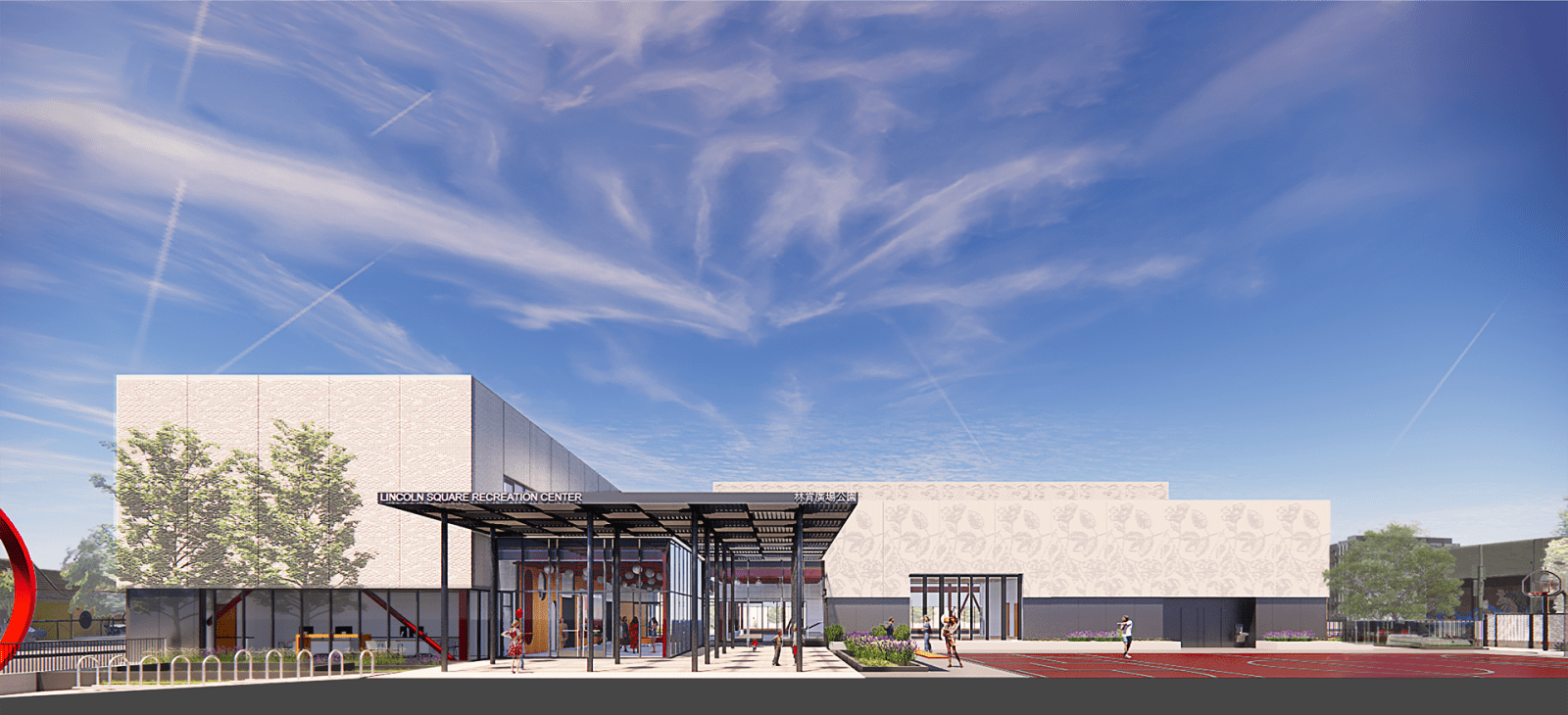 An artist rendering of the new Lincoln Rec Center, which is slated to open in 2028. Credit: Courtesy of Shah Kawasaki Architects
The Asian Pacific Environmental Network, a nonprofit, has been organizing in Oakland Chinatown for over two decades. In more recent years, they have worked with their mostly senior members to define climate resilience. It was while working together with Friends of Lincoln Square Park that they decided to incorporate a resiliency hub into the new rec center.
“A lot of households don’t have the individual means, or are left out of the emergency planning processes, or don’t have other trusted sites,” said Shina Robinson, resilience project director at APEN. “We wanted to make sure it was being rebuilt for generations to come.”
APEN and other organizations conducted workshops and asked Chinatown community members about their priorities. Some seniors wanted refrigeration for their medication in case power went out. Many wanted cleaner air during wildfires.
“We used that to keep pushing for those things in the design process,” said Robinson, who worked closely with the city’s sustainability office.
The new building will have rooftop solar panels; a rooftop garden; shower stalls in case people need to reside there overnight during emergencies; batteries for people to charge cell phones in case of emergencies; electric appliances, including a water heater and a commercial kitchen; and a MERV 13 HVAC air filtration system to have clean air during wildfires. The new building is designed to be its own microgrid or “island,” allowing it to run independently for a few days in case of a prolonged power outage.
Twenty new trees will be planted for shade and for health benefits, Robinson said. Another resiliency feature is digital monitors showing air quality, solar output, and how the resiliency infrastructure is performing. In addition, the center will host multilingual emergency preparedness trainings.
“I’ve gotten other calls and talked to other parks about how this might be a model for how [other communities] can replicate the effort,” Eng said.
The center has always been a place where people felt safe during emergencies. During the 1989 Loma Prieta Earthquake, residents stayed inside the rec center because they were worried about aftershocks in their apartments, said Eng.
“There’s this idea of Lincoln as a safe haven in good times and bad times,” Eng said.
Lincoln Rec Center and resilience hub expected to reopen in summer 2028
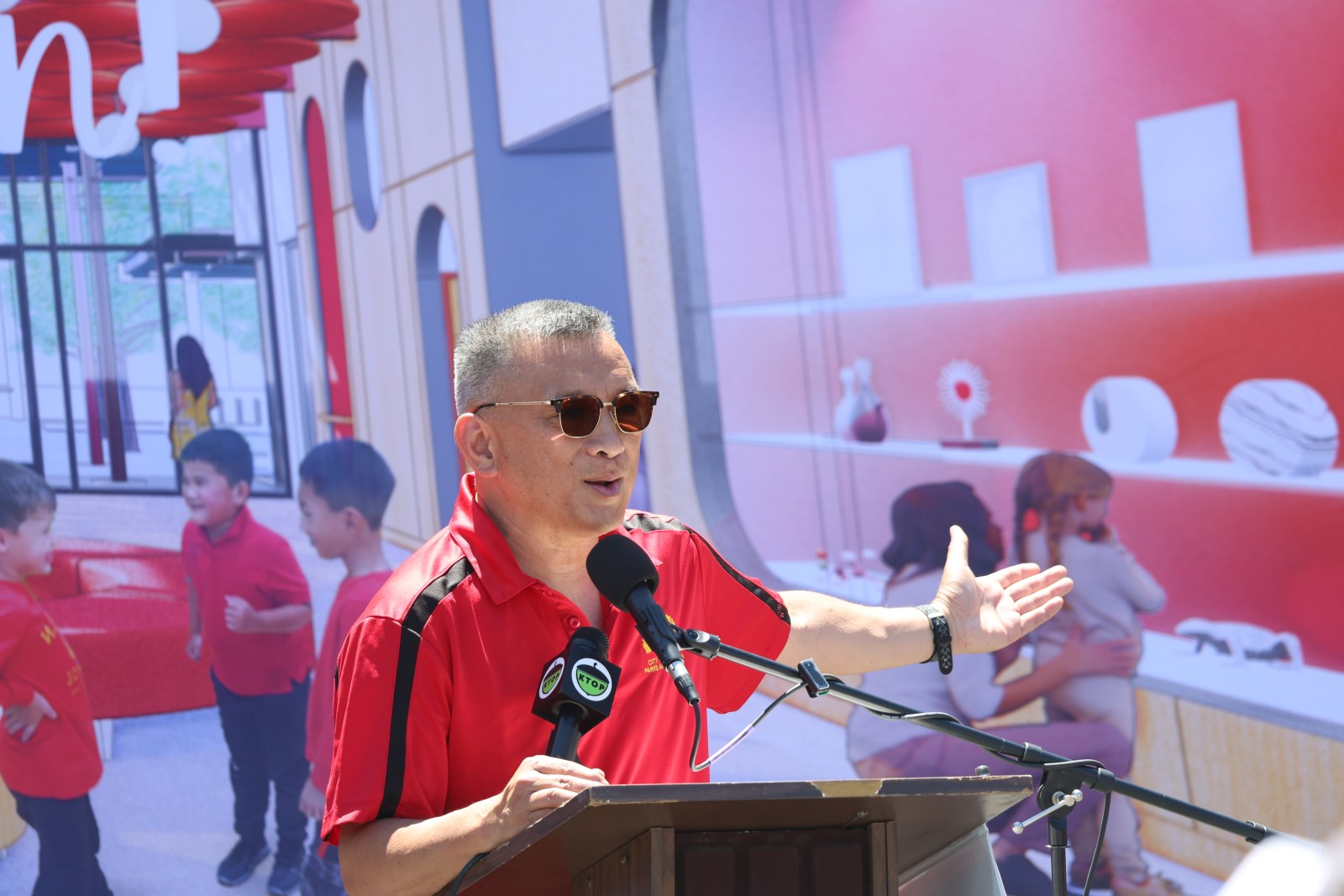 Gilbert Gong speaks to communitymembers about the importance of the Lincoln Recreation Center during a groundbreaking ceremony on July 30, 20206. Credit: Momo Chang for The Oaklandside
The center is currently closed to the public while under reconstruction. Led by the city’s public works team and SJ Amoroso Construction, workers will demolish the old building this month. The anticipated timeline is 18 months to complete the new building and repave the outdoor space, with a reopening around summer 2028.
There’s been some apprehension about the lengthy closure from community members who have relied on the center’s programs and classes as a way to socialize, Gong said.
“They’ve expressed a little fear with us being closed for a while, that they might not have access to the resources.” Many of the center’s users are elders or immigrants who live in Chinatown and rely on the space for exercise and social activities.
For now, Gong has been working with other nearby organizations to host some of the classes, including Oakland Asian Cultural Center and the Malonga Casquelourd Center for the Arts. Gong said he’s still working on finding space for some programs.
“We want that social resilience to keep being built even during construction,” he said.
Gong said the various classes and groups have had farewell gatherings. The outdoor basketball courts will also be closed during construction. One group of 35-plus adult basketball players recently gathered. “The guys have come to use this as their bonding space,” Gong said.
The smaller basketball courts, the junk boat play structure, and the original, brick building clubhouse will remain open during most of the construction period.
Everyone involved in this decades-long advocacy process is excited about the future of the neighborhood.
“You won’t recognize it,” Gong said about the new building. The gym will be double in size. The new building will total over 22,000 square feet. (The old building is about 7,500 square feet.)
One resident, Feng Ying Zhou, told Oaklandside in Cantonese through an interpreter that she thinks the new center will be meaningful for the community. She lives in Oakland and remembers the smoke and red sky from recent wildfires, and became involved in the community process as a member of APEN.
“It’s a very huge impact on us,” Zhou said. “It will benefit everyone in the community in Oakland.”
Gong said they will continue to fundraise to build an endowment to ensure the park remains accessible to all, with programming for all ages.
For him, the climate and environmental features are great, but building a community goes hand-in-hand.
“Everything we do is about resiliency. It’s about building up people,” Gong said. “The people part, along with the environmental aspect, is what the whole resiliency picture is all about.”
“*” indicates required fields