From Vallejo to Newark: Hard Knock Radio Explores How Community Leaders Are Building a Culture of Peace
On this edition of Hard Knock Radio, host Davey D welcomed three respected voices committed to ending community violence: Miami Da Most, Vallejo community leader and founder of Honey Buns for the Homeless Ones, Rudy Corpuz, founder and executive director of United Playaz, and Hakim Green, educator, activist, and member of the legendary Hip Hop group Channel Live. Together, they discussed the upcoming Ceasefire Vallejo 707 Day initiative while exploring how mentorship, Hip Hop culture,
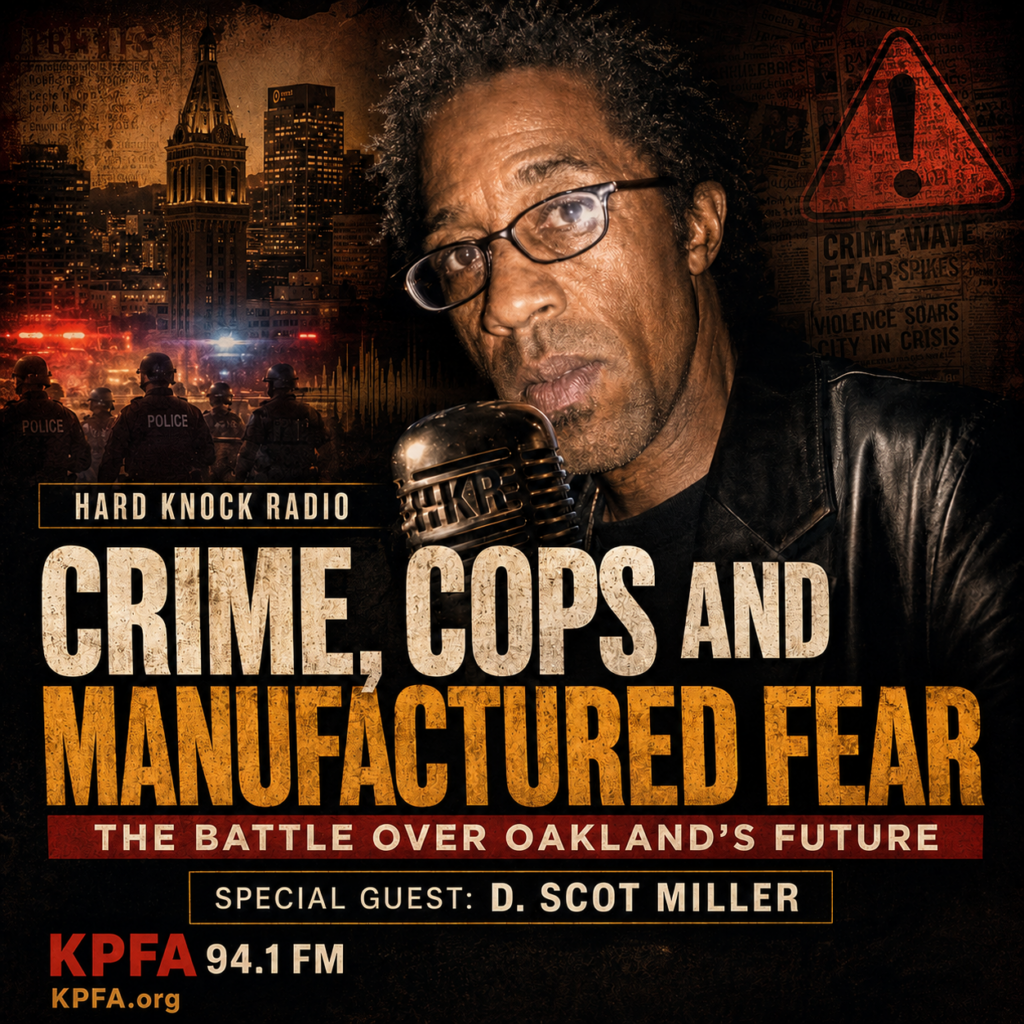
“Journalism is not about arguing with liars all day. It is about holding and maintaining the truth,” journalist D. Scot Miller told host Davey D during a wide-ranging conversation on Hard Knock Radio about media consolidation, political disinformation and the battle over Oakland’s future.
Miller, an award-winning writer, former managing editor of the East Bay Express and co-host of Doomloop Dispatch, argued that too many reporters have become “stenographers” who repeat press releases instead of investigating who created a narrative, who benefits from it and why a media outlet is promoting it. “My job is to get ahead of the story,” Miller explained. “My job is not to trail the story.”
Davey D connected this decline in independent journalism to changes he witnessed in the music industry, where access to artists, concerts and advertising was frequently tied to favorable coverage. Both described how media consolidation transformed news organizations into promotional arms for corporate interests. What executives once called “synergy,” Miller said, was actually “compliance.”
The conversation then turned to political misinformation and the campaigns targeting progressive politics in Oakland. Miller argued that well-financed interests have used websites, public relations firms, social media and sensational crime coverage to create perceptions that do not always match available evidence. These narratives can have real consequences, Davey noted, because public policy and funding decisions are often based on perception, whether accurate or manufactured.
Miller urged journalists to rebuild strong, locally rooted institutions. Drawing upon Kwame Ture’s distinction between mobilizing and organizing, he said community journalism should not be obsessed with reaching the largest possible audience. It should help residents understand their own neighborhoods, preserve historical memory and challenge false claims with documented facts.
That approach is especially important as Oakland considers another police contract, Miller said. He encouraged residents to examine police spending, oversight, overtime and measurable accountability rather than accept fear-based narratives about crime.
For Miller, journalism must function as a “North Star.” Its purpose is not to become popular or win endless online debates, but to establish a trustworthy public record. “My job is to preserve the truth until you can come to it,” he said. “My job is not to influence you.”