

For roughly two decades, children who crossed the border without a parent or guardian have been eligible for legal representation as they navigate immigration courts.
The legal network is organized by the nonprofit Acacia Center for Justice, and has been funded by Congressionally-appropriated money.
This resource is now in jeopardy after the federal contract for these services expired on July 31. Acacia said the move puts 20,000 unaccompanied minors at risk of not having independent legal representation.
Federal officials extended a bridge contract to the nonprofit to temporarily maintain the services, but Acacia said earlier this week it would not accept it.
The nonprofit claimed the new contract “would have required legal service providers to turn over confidential client information” that could be used for deportations.
Now, a group of current and former prosecutors — including one in the Capital City — are trying to rally support to keep these services going.
The letter
State Assemblymember Maggy Krell is no stranger to confronting the federal government on immigration issues.
The Sacramento Democrat and former prosecutor filed Freedom of Information Act requests and a federal lawsuit in June 2025 demanding information after immigration detentions at the John E. Moss Federal Building in downtown Sacramento led to a lockdown and protest.
She also has personal experience representing immigrant children — including those who were wrongly classified as “unaccompanied.”
“Back in 2018, during Trump’s first administration, there was a five-year-old boy that crossed the Rio Grande with his mom; they were forcibly separated and he was classified as an unaccompanied minor,” Krell told Insight Host Vicki Gonzalez.
“When I think about that little boy sitting in a courtroom at five years old, all by himself with no one to look out for his rights and the government going against him, I really shudder,” she added. “That’s just not a way we should ever treat a child regardless of where they’re born and how they got into our country.”
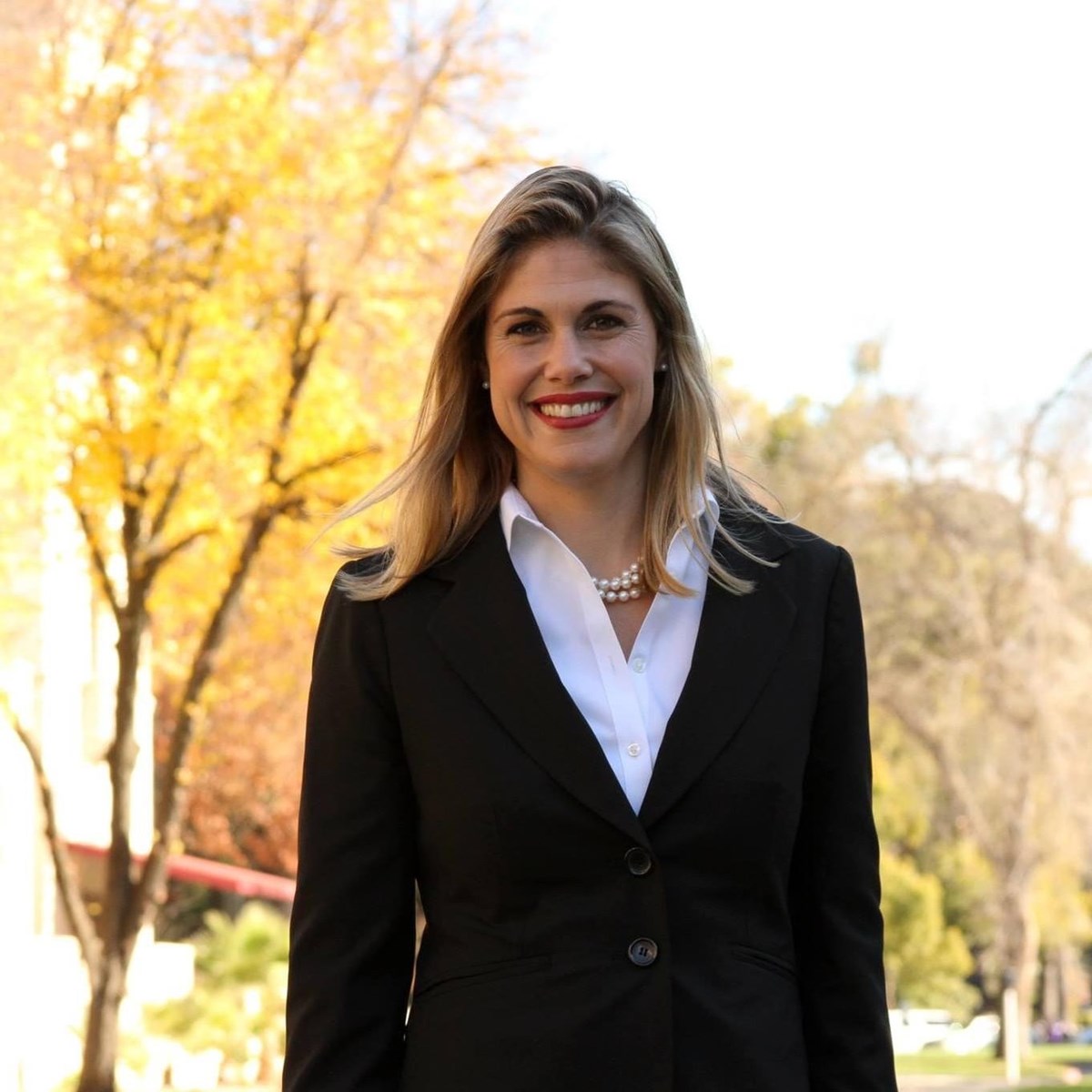 Sacramento Assemblymember Maggy Krell.Courtesy of Maggy Krell
Krell helped lead a national effort to send an open letter to Health and Human Services Secretary Robert F. Kennedy Jr. and Homeland Security Secretary Markwayne Mullin.
Its signatories include the current District Attorneys of San Joaquin, Sutter, Glenn, Alpine and Santa Barbara counties, along with current and former prosecutors in Michigan, Texas and New York. Krell said the letter’s goal is straightforward.
“We want them to stop deporting crime victims who have U and T visas pending, and also stop targeting vulnerable children and stripping them of legal protections,” she explained, referring to special statuses for victims of abuse and trafficking.
Krell said these recipients have been allowed to stay in the country because they are cooperating with law enforcement and assisting with investigations.
“As a former prosecutor, we’ve all had times where a witness or or a victim doesn’t show up for court; it should never be because the federal government has detained them and sent them thousands of miles away,” she said.
“That doesn’t just undermine public safety for that victim; it completely undermines public safety for everyone, and it sends the message to the trafficker [or] criminal that they can get away with that.”
Krell said the current network of legal providers that represent unaccompanied minors is “stretched really thin,” and presents a dilemma for attorneys who have legal obligations to fulfill, regardless of compensation.
“It puts these attorneys in a difficult ethical situation where they will continue to represent these children as they should, but they won’t be able to support their own families — they won’t be getting paid,” Krell said.
In a statement to CapRadio, HHS said its Office of Refugee Resettlement (ORR) “works to ensure the safety, well-being, and appropriate care of all children in its custody” and remains “fully compliant with its legal and regulatory obligations and does not act in any way that could dissuade a child from seeking appropriate legal relief.”
The department said it is “fully funding legal representation” at a reported level of $20 million per month, but added “approximately 60% of unaccompanied children continue to appear in immigration court without an attorney.”
“The government has every right to know which children in its custody are receiving the legal representation that the American taxpayer is paying for,” HHS wrote. “Demanding basic accountability is not unreasonable; it is a minimum standard.”
Krell said she agrees with providing accountability for the use of taxpayer money, but said federal officials should not tie it to the privacy of a child. “Schools comply with privacy laws, health systems comply with privacy laws, our criminal justice system complies with privacy laws,” Krell said.
“The idea that the federal government should be able to just rip open these files and know about these kids, some of whom are babies, that’s not part of our legal framework.”
A system in chaos
Bilal Askaryar is the Communications Director for the Acacia Center for Justice. He said the second Trump administration has been a “wild ride” and a “roller coaster” for the nonprofit.
“We have been under attack since the very beginning… DOJ came after us really hard for a while,” Askaryar said. He said Acacia was highlighted on the Justice Department’s website of “purported claims to prevent fraud and abuse,” and received several stop work orders on their unaccompanied children’s program.
“This has been a really clear pattern of attacks on accompanied children driven from the highest levels of this administration,” he said.
But the relationship hasn’t always been this way. Askaryar said the nonprofit’s relationship with the Office of Refugee Resettlement was “historically quite good,” adding that the nonprofit “met or exceeded” metrics and deliverables outlined in their federal funding contract.
Askaryar said ripple effects from the contract’s expiration are already playing out. Acacia says the federal government owes it and the legal network more than $65 million for counsel that has already been provided. Some of its nonprofit legal partners have found other sources of funding, while others have had to shut down.
Askaryar said the legal representation system itself has also been “in chaos.” He said some children have appeared in court with lawyers that are part of Acacia’s network, but other people have come before the judge claiming to be “friends of the court” to speak on the minor’s behalf instead.
“We don’t know who those people are but we think they’ve received some kind of guidance from ORR to show up for these kids, and the judges don’t know what to do,” Askaryar explained.
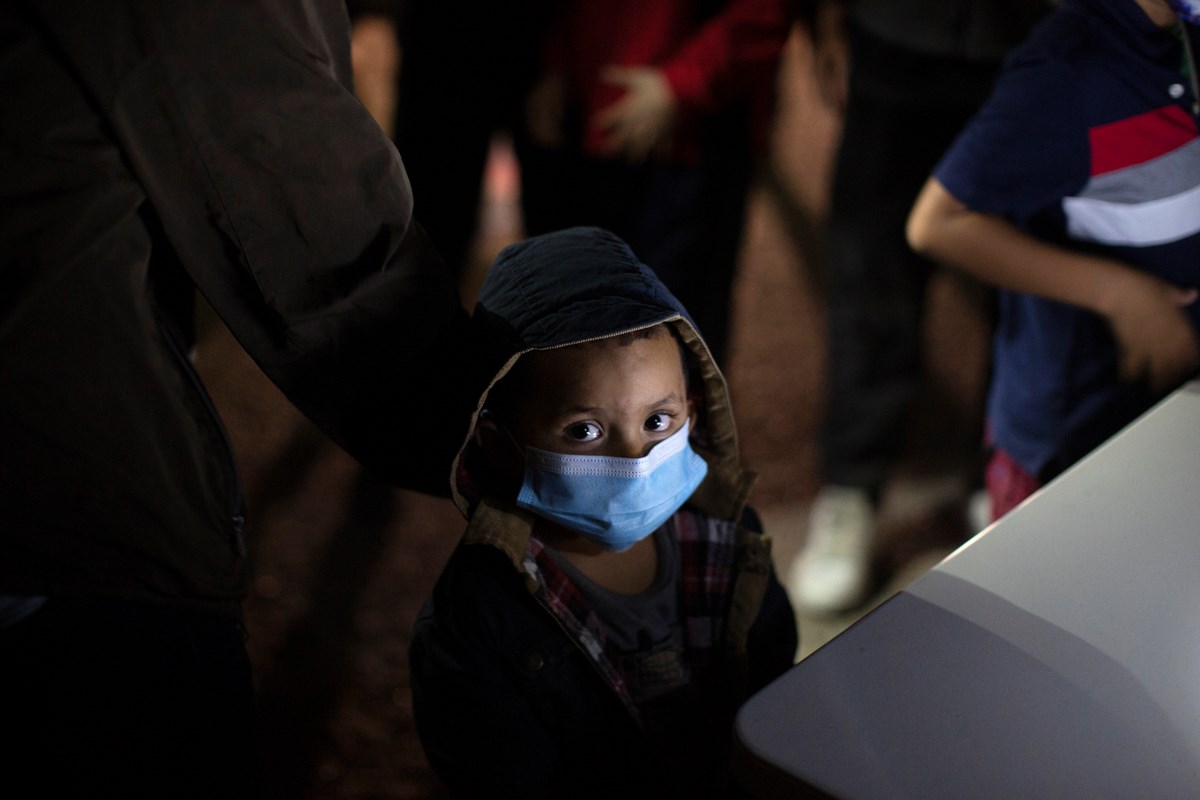 An unaccompanied minor looks up as he waits to answer questions from a U.S. Border Patrol agent at an intake site after he was smuggled on an inflatable raft across the Rio Grande river in Roma, Texas, Wednesday, March 24, 2021.AP Photo/Dario Lopez-Mills
When asked about HHS’s statement around accountability, Askaryar called it a “complete smokescreen.” He said Acacia has continued to provide all information required under the contract. “We hand over 1,200 pages of receipts every month,” he said.
Askaryar said ORR wants to get “private sensitive information about our clients that they have no legal right to, and also wouldn’t help them understand our work any better.” He said the information federal officials are demanding have never been required, and is neither part of the contract nor laws mandated by Congress.
Askaryar said the situation has caught the attention of some members of Congress, who have sent letters of support to Acacia or are calling for ORR to correct “misstatements” about the information the agency is demanding. He called on the American public to bring the issue up with their representatives.
He also said the letter from Krell and other prosecutors sends its own message.
We live in a time where human trafficking is a part of the zeitgeist, unfortunately,” Askaryar said. “If we want to be really serious about protecting kids from trafficking, then we should listen to these prosecutors who say that these protections are one of the strongest tools in our toolbox.”
Follow us for more stories like this
CapRadio provides a trusted source of news because of you. As a nonprofit organization, donations from people like you sustain the journalism that allows us to discover stories that are important to our audience. If you believe in what we do and support our mission, please donate today.