
On the California water front, the news always seems to be bad. On July 31, the U.S. Bureau of Reclamation announced the state would receive 12% less water from the Colorado River over the next two years. Given that the river supplies about one-third of the water used in Southern California, this looks like a huge headache. The severity of the problem was underlined Thursday when the water level at Lake Mead — the massive reservoir created by the construction of the Hoover Dam across the river in the 1930s — reached an all-time low.
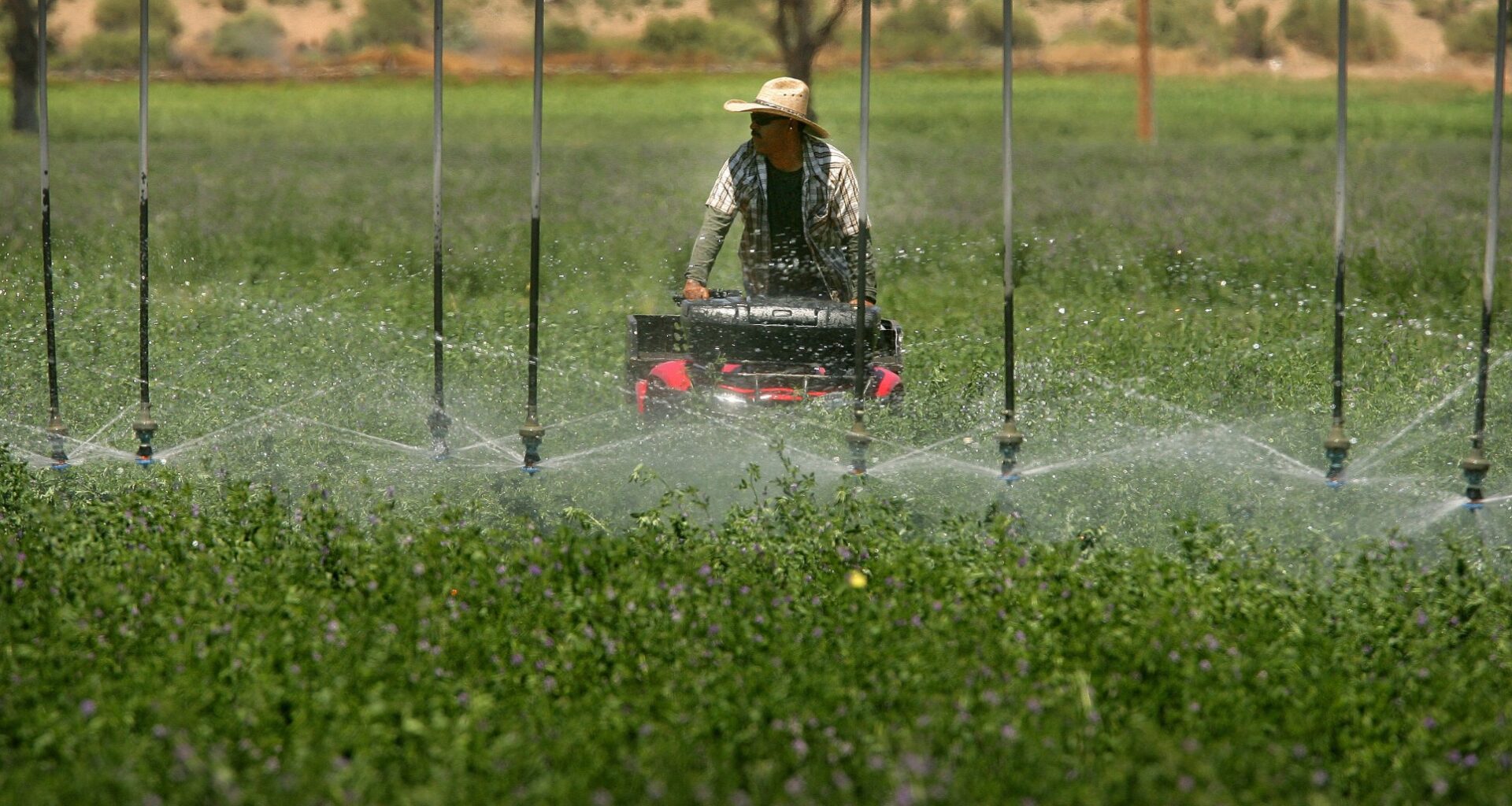
But a straightforward policy change could sharply limit the severity of a water crisis — one that would negatively affect a relative handful of Californians. It’s banning the use of state water supplies to grow alfalfa and other types of hay that are exported for use as animal feed. While a majority of these crops stay here to feed the state’s massive domestic livestock industry, about 30% are exported, in particular to Asian nations. In effect, alfalfa growers are now exporting as much as 70 billion gallons of water a year from drought-ridden California to the rest of the world in the form of alfalfa. That’s about 214,000 acre-feet of water — nearly half of the 440,000 acre-feet of water that the state stands to lose the next two years under the new Colorado River allocation formula.
An alfalfa export ban is not a new idea. National Geographic explored it in a 2014 report that focused on the incredulity of water-policy experts that the hot, dry U.S. Southwest exported so many water-intensive crops to nations without water shortages. That same year, a commentary in The New York Times pointedly noted that “a single plant is leading California’s water consumption. Unfortunately, it’s a plant that’s not generally cultivated for humans: alfalfa. Grown on over a million acres in California, alfalfa sucks up more water than any other crop in the state.”
But this advocacy has never translated into federal and state efforts to curb exports from the state’s 2,600-plus alfalfa farms. The 12% cut in Colorado River supplies should at least get the debate going.
And one fact may make selling this policy much easier than expected: Alfalfa is used to feed methane-belching cows, who are a significant source of greenhouse gas emissions.
Making alfalfa farmers use some of their land for other crops wouldn’t just ease the California water crunch. It would be good for the climate.