
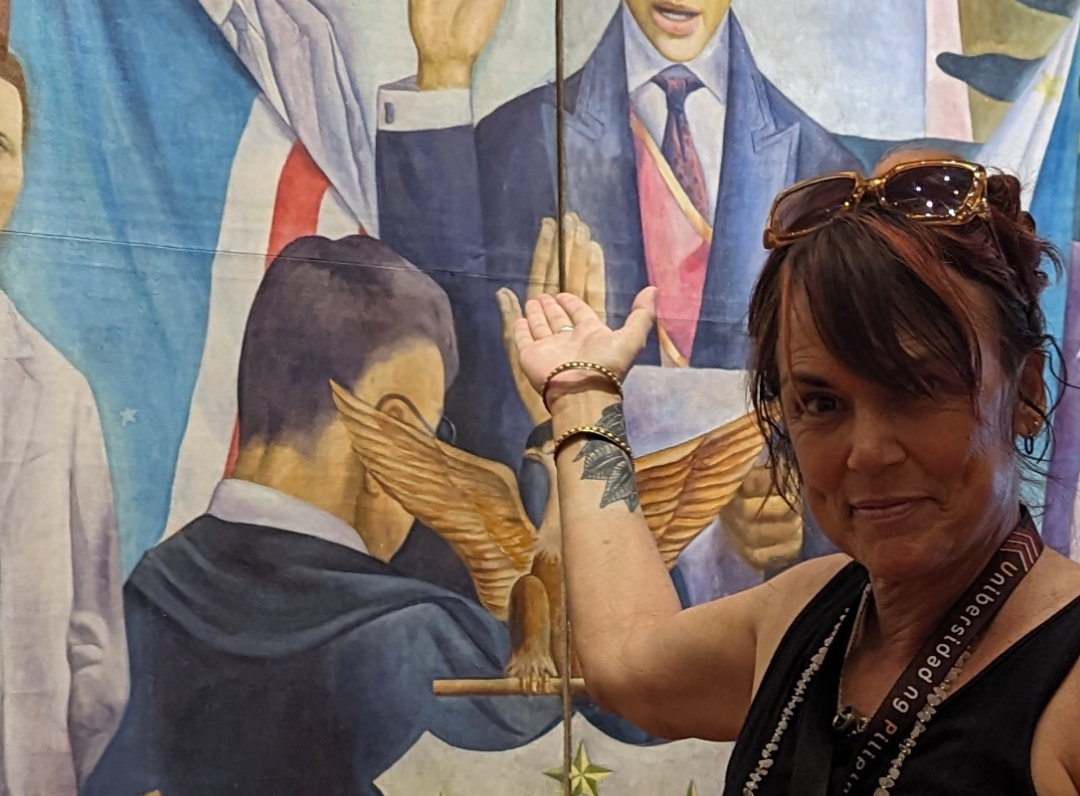
Working for the Office of Legal Counsel in the California Department of Toxic Substances Control, Pantoja gains perspective and confidence while helping protect public health and the environment.
By Andrew Cohen
Our annual Summer Work Series features Berkeley Law students reflecting on their current job. These first-person accounts detail career-advancing work and skill building in many legal areas, often through opportunities gained in partnership with the Career Development Office.
Over 40 when she began her academic journey, Kimmy Pantoja went from community college to UC Berkeley to Berkeley Law. As a law student, she won the Prosser Prize last year in her Comparative Equality Class and again this year in her Climate Change & the Law class.
On track to receive three certificates of specialization when she graduates — Social Justice & Public Interest, Environmental Law & Policy, and International & Comparative Law — she has also been active in Berkeley Law’s Peer Wellness Coalition, Climate Migration & Displacement Project, and Ecology Law Quarterly journal.
Below, Pantoja describes the challenge of impostor syndrome, overcoming obstacles, and how her summer internship with the California Department of Toxic Substances Control has deepened her commitment to protect our oceans and reduce toxic waste.
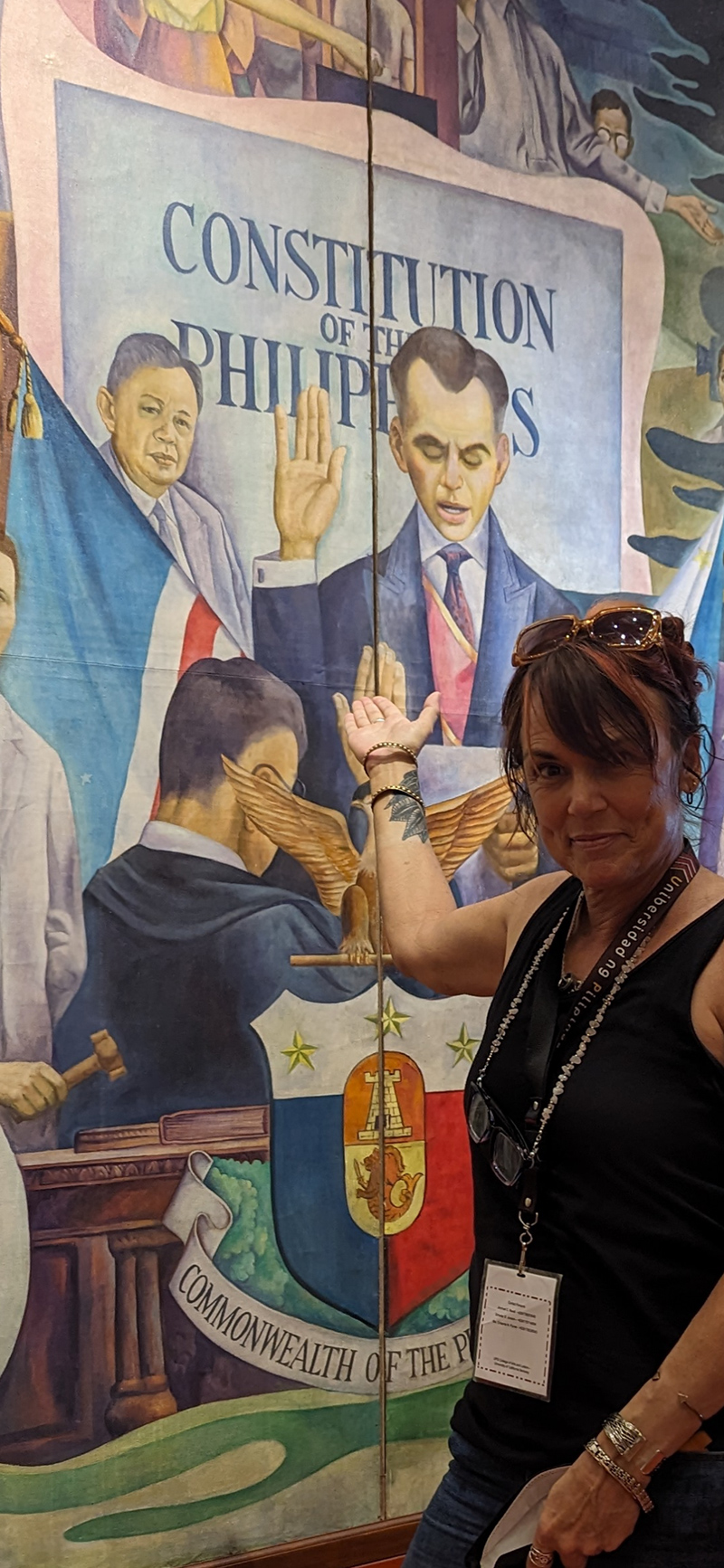 Rising 3L Kimmy Pantoja stands next to a massive mural charting centuries of Filipino resistance at the National Museum of Fine Arts in the Philippines, where she spent time studying as a UC Berkeley undergrad.
In undergrad, I had the privilege of studying at Berkeley under Professor Nazune Menka, whose class on decolonizing led me to secure funding to study in the Philippines — a place where an organizer is imprisoned, disappeared, and/or killed.
As I learned from passionate union organizers, as well as agricultural and Indigenous activists, I held onto the knowledge that colonial destruction lives in the depth of the broken relationship between people and the land. I knew that I wanted to participate in healing that relationship, and that the law is one mechanism for doing so. Whether legislation or litigation, I wanted the power to heal.
I came directly from undergraduate studies to Berkeley Law. Here I joined the Climate Displacement & Migration Project, where, under the supervision of the Human Rights Center, we explored international protections for cultural heritage in the face of climate change and published our findings.
In my research and writing I have explored a wide range of legal questions, from victims’ rights to international environmental and human rights law. All essential to my path.
Environmental law centers on the best available science, but within state agencies, those scientists are right down the hall. Working alongside some of the field’s most brilliant attorneys and scientists has changed how I think about state agencies and administrative procedure.
My internship with the California Department of Toxic Substances Control (DTSC), Office of Legal Counsel, has placed me in a unique position. I get to experience the state from inside an agency. I was so excited by this work that I chose to extend my summer internship into the fall.
Here, I have the opportunity to learn from and assist attorneys navigating administrative law, permitting decisions, administrative hearings for cost recovery efforts that make polluters pay, and land use covenants involving toxic substances and remediation efforts — all to protect public health and the environment.
Eye on the oceans
My future lies in protecting our oceans from extraction and advancing the social change necessary to address the environmental impacts of everyday activities that create toxic waste, including our need for clean energy.
The energy transition is essential, but it is also creating demand for more extraction, including deep-sea mining and the toxic harms associated with mining industries and their impacts on ocean life. Learning how to utilize the law to balance these competing interests without reproducing the same patterns of degradation and harm that shaped the fossil fuel industry is my life mission.
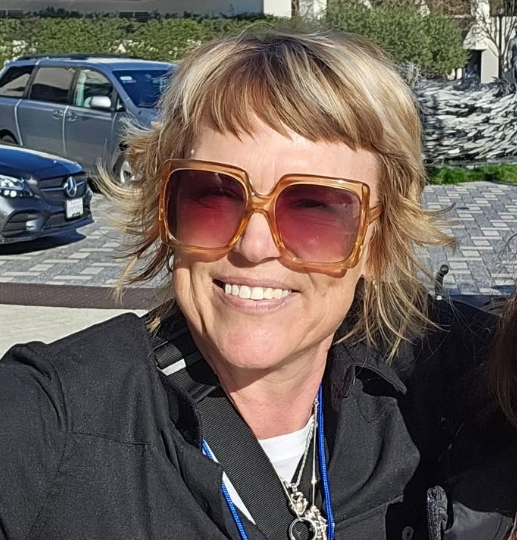 Pantoja takes a break during an oceans law conference in Monterey, where three decades earlier she earned her scuba diving certification.
Working with DTSC has given me the opportunity to observe these competing priorities in action, see what works, and hopefully one day help improve what does not. In the process, I have also learned what it looks like when an organization invests in future attorneys. DTSC’s summer internship program is designed to build future attorneys that benefit the entire industry.
As a survivor and formerly unhoused mother of two, I did not begin my academic career until I was 46 years old. And I couldn’t move forward if I continued carrying the battles of my former life.
So instead of being the baggage I carried, they became the force I wield. And now, with my daughter studying marine science and my son obsessed with astrophysics, I hope that one day we can caretake our oceans together and that the legacy we leave behind will be one of caring more and consuming less.
For some of us, law school can feel like entering an alternate universe, and what I wanted most from my summer internship was to let go of the aching weight of impostor syndrome. So this summer I unapologetically claimed my right to be in this legal space.
I share this for those who struggle with impostor syndrome, for those who put their whole hearts into what they do, and for those searching for spaces where their energy, perspective, and heart are valued. You matter.