
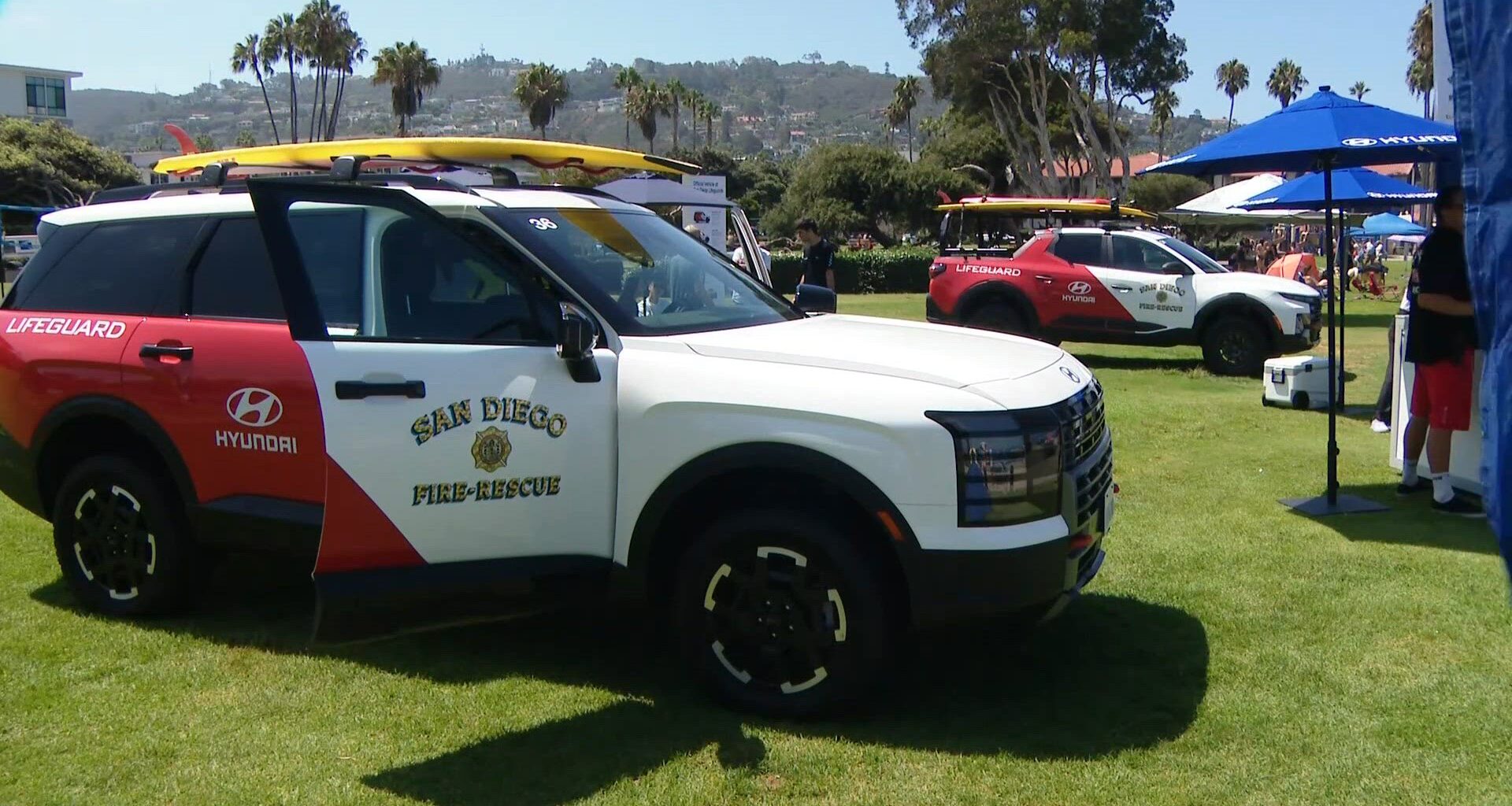
San Diego lifeguards say rip currents drove most of this summer’s rescues, as a new Hyundai-donated vehicle fleet joins the effort to keep swimmers safe.
SAN DIEGO — Calmer waters greeted swimmers at La Jolla Shores this week, but San Diego lifeguards say the relief won’t last long.
“The swell has dropped a little bit. We have some more swells coming, but when that wave energy gets increased, the rip currents start pulling a little bit more,” said San Diego Fire-Rescue Lifeguard Chief James Gartland.

This story continues below.
Gartland says it’s been a banner summer for water rescues, and rip currents are behind the vast majority of them.
“We’ve been extremely busy,” Gartland said, citing hundreds of rescues in a single weekend. About 90% of those rescues involved swimmers caught in a rip current, he said.
“We spend all day moving people out of rip currents, doing preventive action,” Gartland said.
Marla Fry, of Blossom Valley, brought her grandchildren to La Jolla Shores this week before school starts next week. She said a warning from another grandmother changed where she set up for the day.
“When I first got here, there was a grandma, and she told me that her 9-year-old grandson got caught in a rip current. She said, ‘Beware,'” Fry said.
Fry originally planned to stay on the north end of the beach, near where she saw surfers in the water, but lifeguards recommended she move.
“Fortunately, the lifeguards told us to come down here, and I feel much better. I’m calmer,” Fry said.
Gartland says rip currents are notoriously difficult to track, which is why lifeguards recommend swimmers check in with a tower before entering the water.
“Those rip currents move up and down the beaches. They are very difficult to predict, and they are not constant. They are not always doing the same thing,” Gartland said.
Lifeguards are also getting help from a new vehicle fleet, courtesy of a five-year, $4 million marketing partnership with Hyundai that comes at no cost to the city. The fleet includes 18 Santa Cruz trucks, 12 Palisade XRT SUVs and two Ioniq 5 electric vehicles.
“Our equipment and vehicles are our partners,” Gartland said.
“It’s just a different type of technology that Hyundai has. They’re all-wheel-drive technology that moves torque around to different tires to make sure they operate safely in the sand,” Gartland said.