
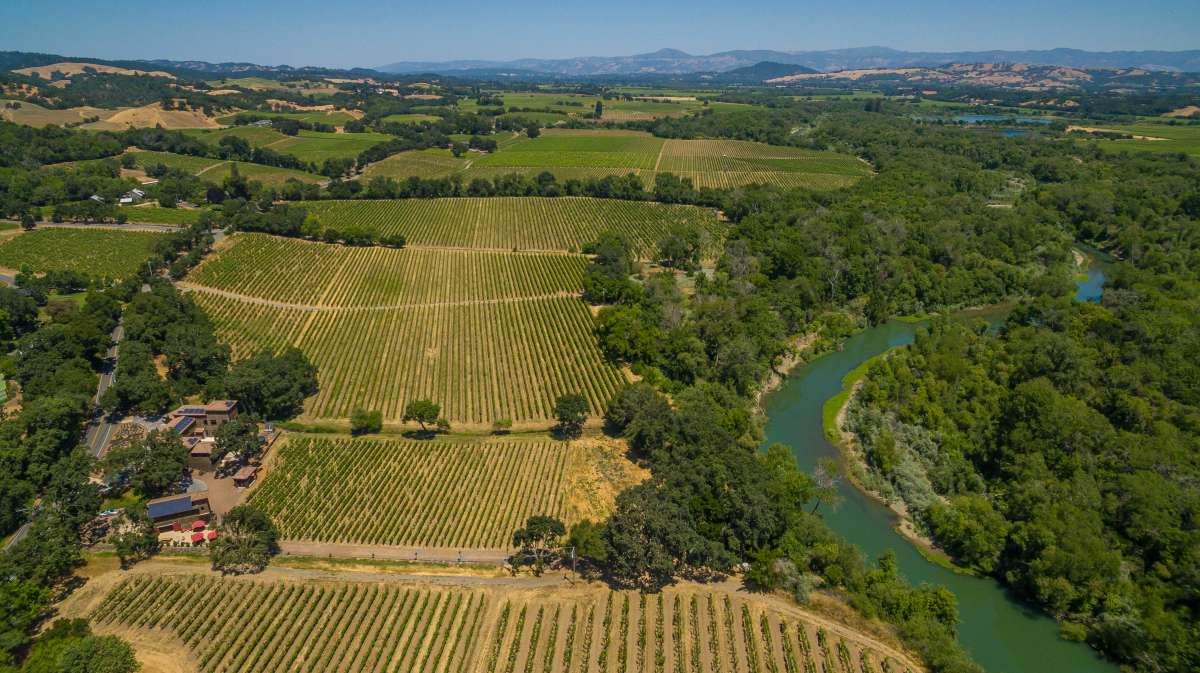
A California appellate court this week ruled Sonoma County failed to comply with the state’s bedrock environmental law when officials in 2023 amended the local ordinance regulating approval of new well permits outside city limits.
The ruling means the county will likely have to devote closer study to the impact of its amended ordinance on imperiled species like salmon and steelhead trout in the Russian River watershed.
The ruling, from the First District Court of Appeals, comes two years after a Sonoma County judge, in a lawsuit filed by the nonprofit groups Russian Riverkeeper and California Coastkeeper Alliance, rejected the county’s claim that the ordinance was exempt from the state’s environmental review process. The lower court ordered the county halt nonemergency well permits until it conducted an environmental review.
But the appellate court decision was not a total loss for Sonoma County.
Russian Riverkeeper and Coastkeeper Alliance also argued the county had violated the common law public trust doctrine, which requires local governments to protect certain waterways for public uses, including commerce, recreation, navigation and species habitat. The appellate court’s three-justice panel reversed the lower court’s decision on those grounds, concluding the conservation group failed to “satisfy their burden of showing Sonoma’s public trust analysis was arbitrary, capricious, or entirely lacking in evidentiary support …”
The county’s legal team applauded that portion of the court’s decision, characterizing the ruling as an endorsement of its adoption process and victory for “stakeholders across the state.”
“The Court of Appeal found no merit whatsoever in the plaintiffs’ main argument that the County’s extensive process in developing the well ordinance failed to meet the procedural and substantive requirements of this judicial doctrine,” Sonoma County Counsel Josh Myers said in a written statement.
Don McEnhill, deputy director of Russian Riverkeeper, called the appellate ruling a “a split decision — neither side had total victory.”
He noted the appeals court flatly rejected the county’s claim that its well ordinance changes were not subject to mandatory study under to California Environmental Quality Act.
“They absolutely said, ‘No, you do not come anywhere close to having a project that was exempt from CEQA.’ So we definitely, hands down, won on that,” McEnhill said.
KENT PORTER/ PD
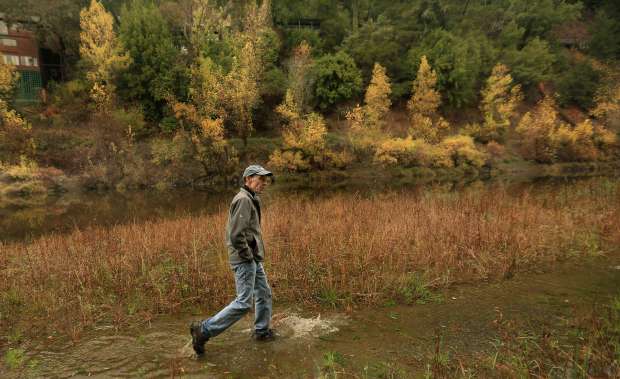
Don McEnhill of Russian Riverkeeper walks along the soggy shoreline of the Russian River in Hacienda near Forestville, on Nov. 20, 2014. (KENT PORTER/ PD)
The Aug. 4 decision is the latest development in a yearslong battle with environmental advocates that’s thrown the county’s ability to issue new well permits into legal limbo. Sonoma County has more than 45,000 known water wells outside city limits, making it the biggest per capita well water user of any county in the state, according to the appellate court ruling.
Those wells supply water for agriculture, residential, commercial and industrial users in unincorporated areas of the county. Between 2017 and 2022, the county issued an average of 320 water well permits each year.
The effect of those wells on surface water supplies, including stream flows for fish and other wildlife, has come under greater scrutiny over the past decade.
The county’s amended ordinance was meant to guide the planning department in evaluating applications for new wells and their potential impact on the county’s major rivers and feeder streams, including the Russian River, Petaluma River and Sonoma Creek.
Chad Surmick / The Press Democrat
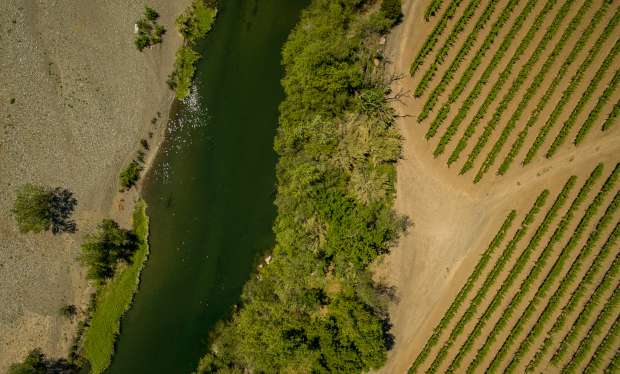
The Russian River flows just south of the Geyserville bridge at Highway 128 in an ever growing dry riverbed, the state water board is scheduled to vote on revised framework for curtailments on Russian River diversions likely to be imposed later this year as well as on a voluntary water sharing. May 12, 2022. (Chad Surmick / The Press Democrat)
It was developed in response to a settlement in a 2021 lawsuit that argued the county was out of compliance with the public trust doctrine. California Coastkeeper Alliance, a Sacramento-based environmental group that was behind the 2021 lawsuit, and Russian Riverkeeper have argued that the ordinance does not adequately safeguard the county’s waterways and aquatic life from heavy groundwater pumping.
The groups filed a lawsuit against the county in May 2023 after the Board of Supervisors approved a revised version of the ordinance. Under the amended rules, certain high-volume users must comply with new monitoring requirements and, in some cases, conduct a more focused study of a well’s environmental impact. Those users will also pay significantly more in application fees.
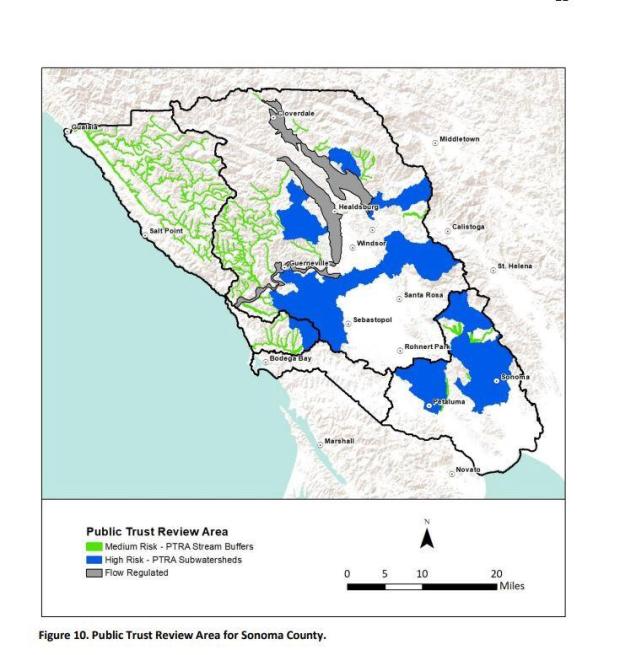
Wells exempt from that process include those using no more than 2 acre-feet of water annually and those outside of the designated Public Trust Review Area, which covers 313 square miles throughout the county. (An acre foot is 325,851 gallons, or about the amount of water used by up to two average California households in a year.)
County of Sonoma
A map showing the designated Public Trust Review Area where property owners seeking permission for new wells would be subject to more stringent county reviews as well as higher permit fees. (County of Sonoma)
When the county drafted the ordinance, environmental groups said the county should require metering across the board, including for low-use residential wells, to better track the impact of groundwater pumping. They also questioned whether the 2-acre-foot threshold was too high.
The May 2023 lawsuit sought to invalidate the amended ordinance and stop the county from issuing groundwater well permits. In August 2024, Sonoma County Superior Court Judge Bradford DeMeo found in favor of the plaintiffs, ruling the county’s revisions had failed to uphold the public trust doctrine and violated CEQA. The appellate court reversed DeMeo on the former ground and upheld his decision on the latter.
County officials insist the ordinance went through an exhaustive public process that weighed the needs of groundwater users against the impacts on the environment. Myers, in his statement, said the ordinance imposes new environmental requirements on well permitting that never existed before. It was crafted after a yearlong effort that included public hearings and collaboration with stakeholders and experts, he said.
 Sonoma County Counsel Joshua Myers (County of Sonoma)
He cited new regulations to consider potential harm to resources, including habitat for endangered coho salmon.
The ordinance “also included requirements for water conservation measures for all new wells and requirements for well meter installation and water use reporting of new nonresidential wells,” he said.
Myers said the county would evaluate its next steps.
Russian Riverkeeper’s McEnhill said county will now have to “support with some evidence” that the amended ordinance will not harm endangered species. McEnhill referred to the appeals court ruling as a “reckoning” over the way the county has been managing groundwater, which can impact surface flows.
“The reality is we’ve got so many straws in the ground, we’re pulling streams below the gravel. And if you’ve got no water, you’re not going to have salmon or steelhead in the future,” he said.
Chad Surmick / The Press Democrat file
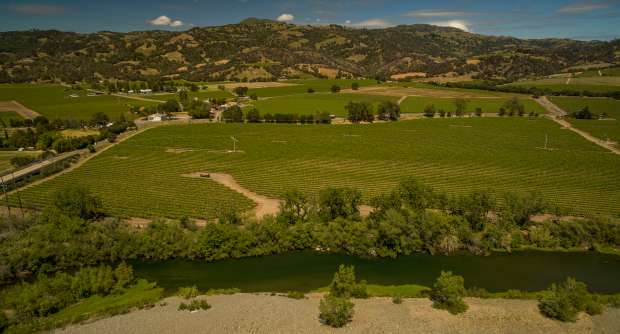
The Russian River flows just south of the Geyserville bridge at Highway 128 in an ever-growing dry riverbed on May 12, 2022, during California’s last major drought. (Chad Surmick / The Press Democrat file)
McEnhill pointed to public studies done by California Sea Grant showing the impact of the drought in 2020 and 2021. He said the organization has shown that well water use was “harming and killing fish” in some local feeder streams.
McEnhill said his organization is not trying to stop well permits altogether. He said groundwater use needs to be better monitored and the county needs to prove its amended rules won’t make things worse.
“We’ve been very, very honest that this well ordinance might do the trick,” he said. “Is this going to make sure we don’t continue harming fish? That question’s never been answered, and the state of the salmon and steelhead populations are such that we cannot afford to see if we got it right over the next 20 years. We need some data to know is this going to be protective or not.”
You can reach Staff Writer Martin Espinoza at martin.espinoza@pressdemocrat.com.