
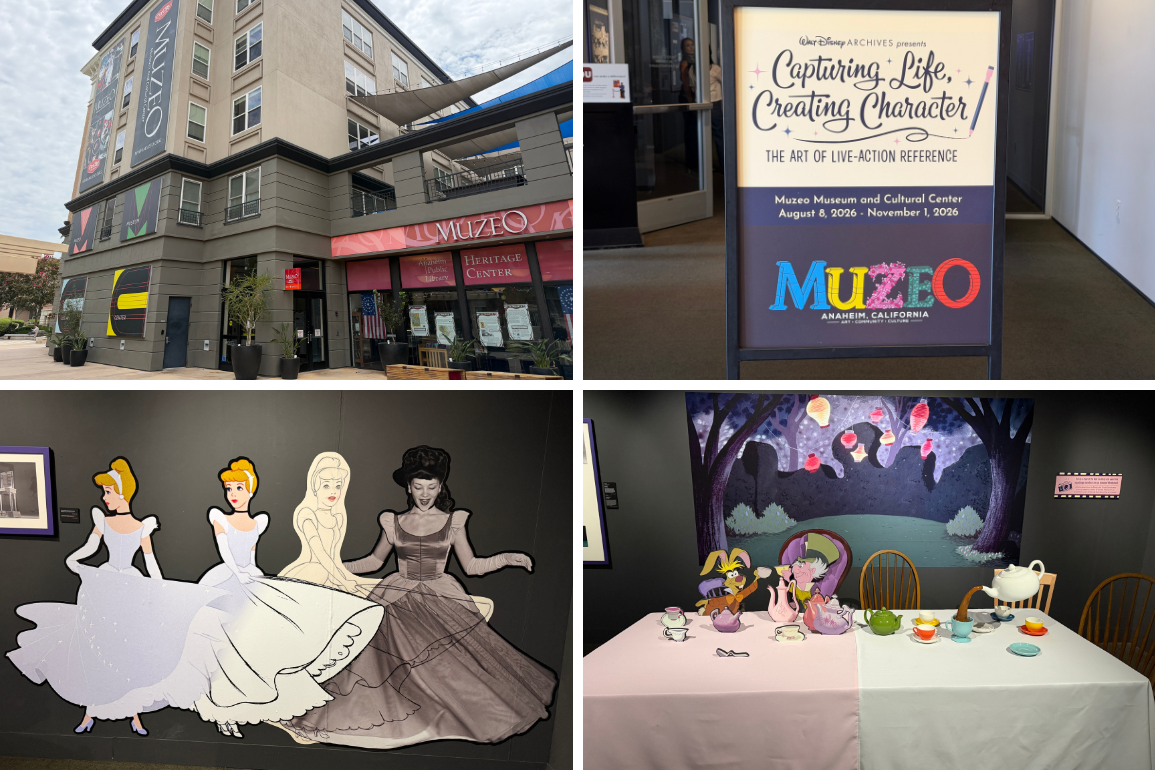
If you have ever wondered how Disney created realistic fabric, movement, and animal performances in animation form, the Muzeo Museum is hosting a limited-time photography exhibit created by the Walt Disney Archives to show a behind-the-scenes look at the process for live-action reference.
Walt Disney Archives Presents “Capturing Life, Creating Character” at the Muzeo MuseumAbout the Capturing Life, Creating Character Exhibit
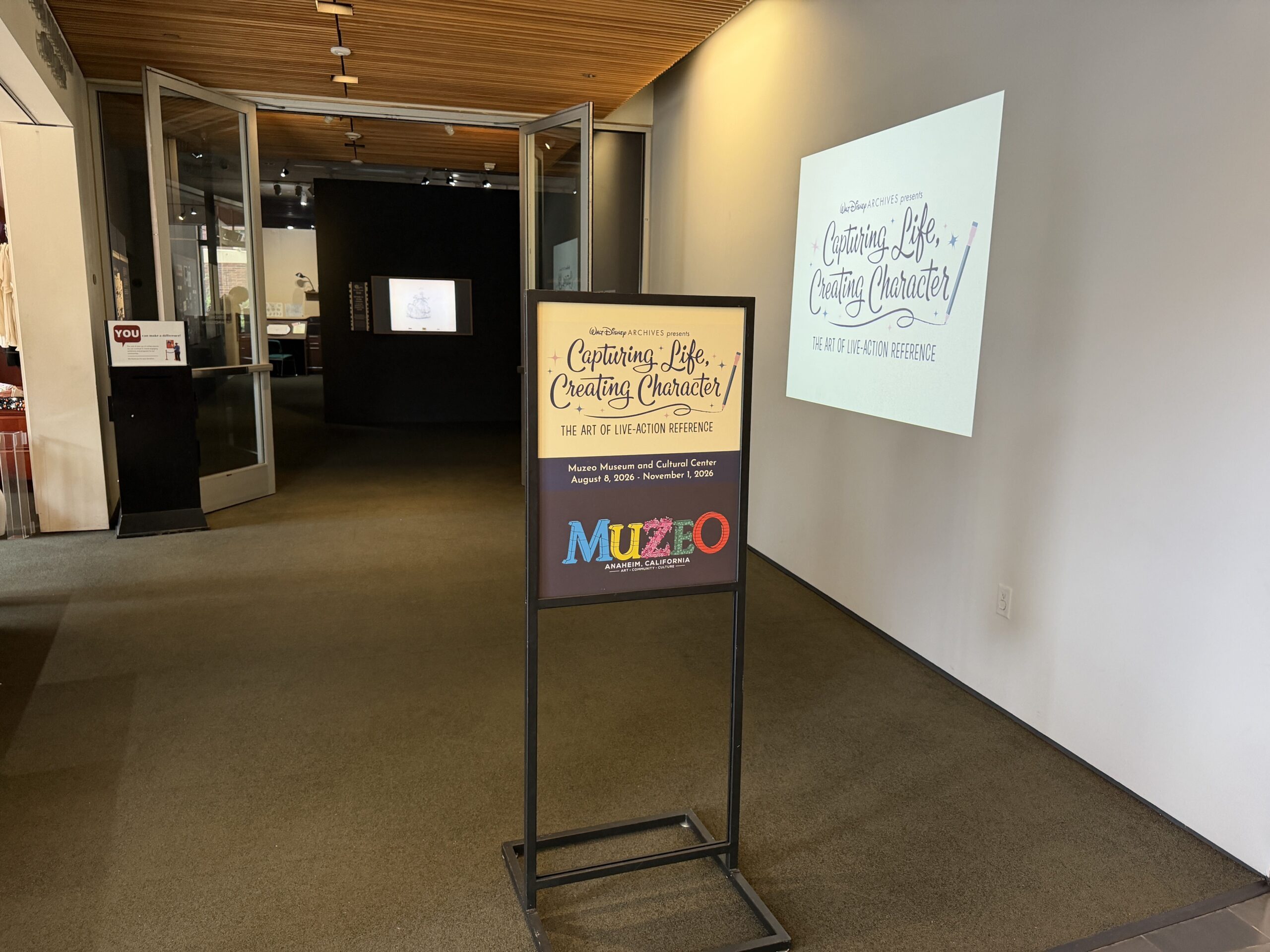
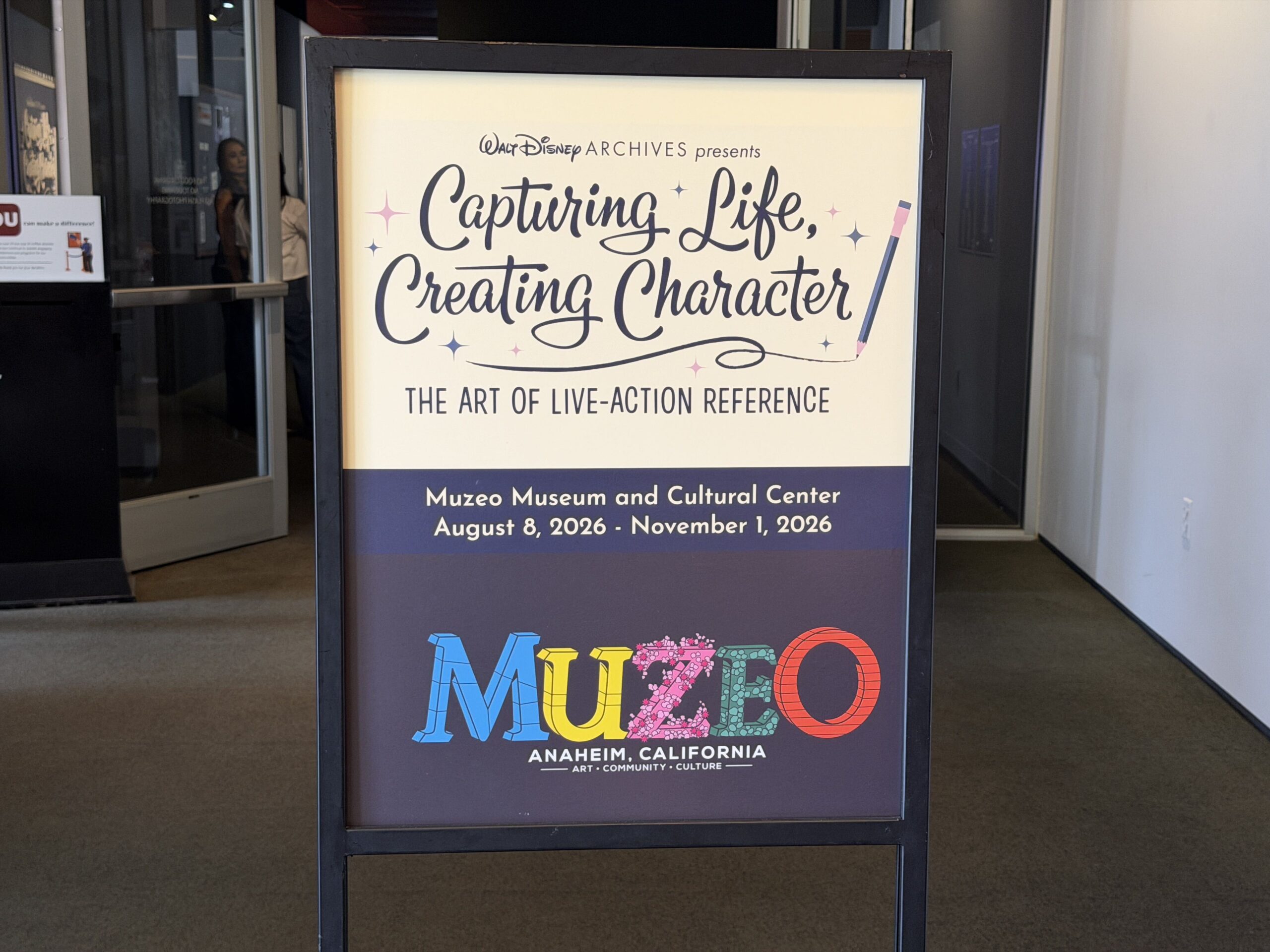
The exhibit has 60 images and 18 original artifacts, costumes, documents, and art from the archive. The Muzeo Museum website provides the following description for what guests can expect to experience:
Capturing Life, Creating Character: The Art of Live-Action Reference takes a fascinating look at the pursuit of character animation through a collection of rarely seen photographs of live performers and their animated counterparts. These charming snapshots celebrate the actors’ performances and the tenacious work of the Disney animation staff in their tireless pursuit of filmmaking excellence. They are also a testament to Walt Disney, a man who elevated animation into an art form and who pushed to achieve greater levels of personality in his craft.
The exhibition is structured around key themes that highlight the essential role of live-action reference in animation. It offers an in-depth look at how this technique enhances fluid movement, establishes a cohesive and balanced setting, captures realistic clothing and fabric, creates believable character performances as they interact with props, and ensures accurate proportions and behaviors for animals. These elements work together to add depth, personality, and realism to Disney’s animated stories.
Featuring rarely seen archival photographs, materials, and interactives assembled by the Walt Disney Archives, the exhibition offers visitors an intimate window into the creative process behind some of the most beloved animated films in history.
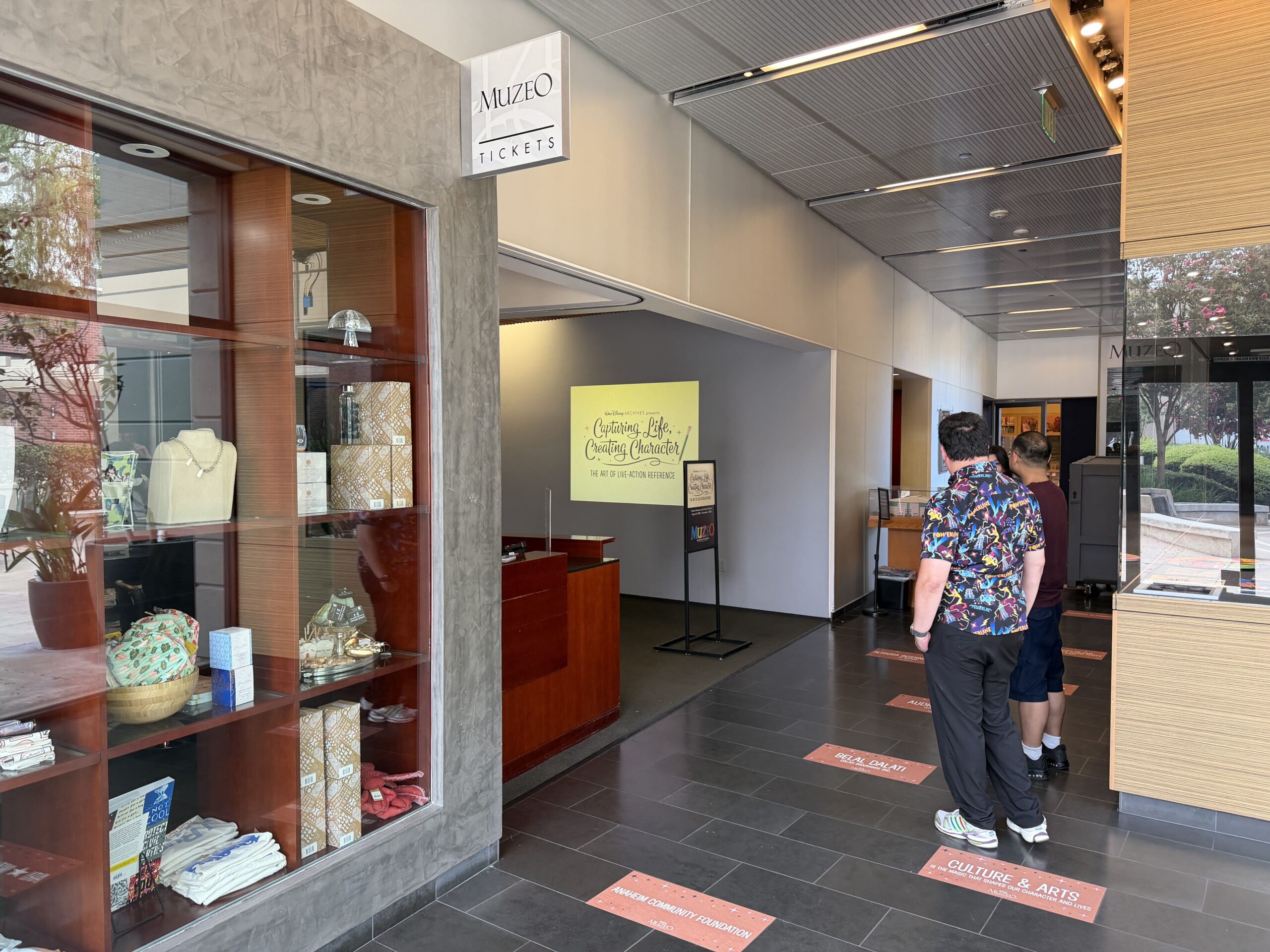
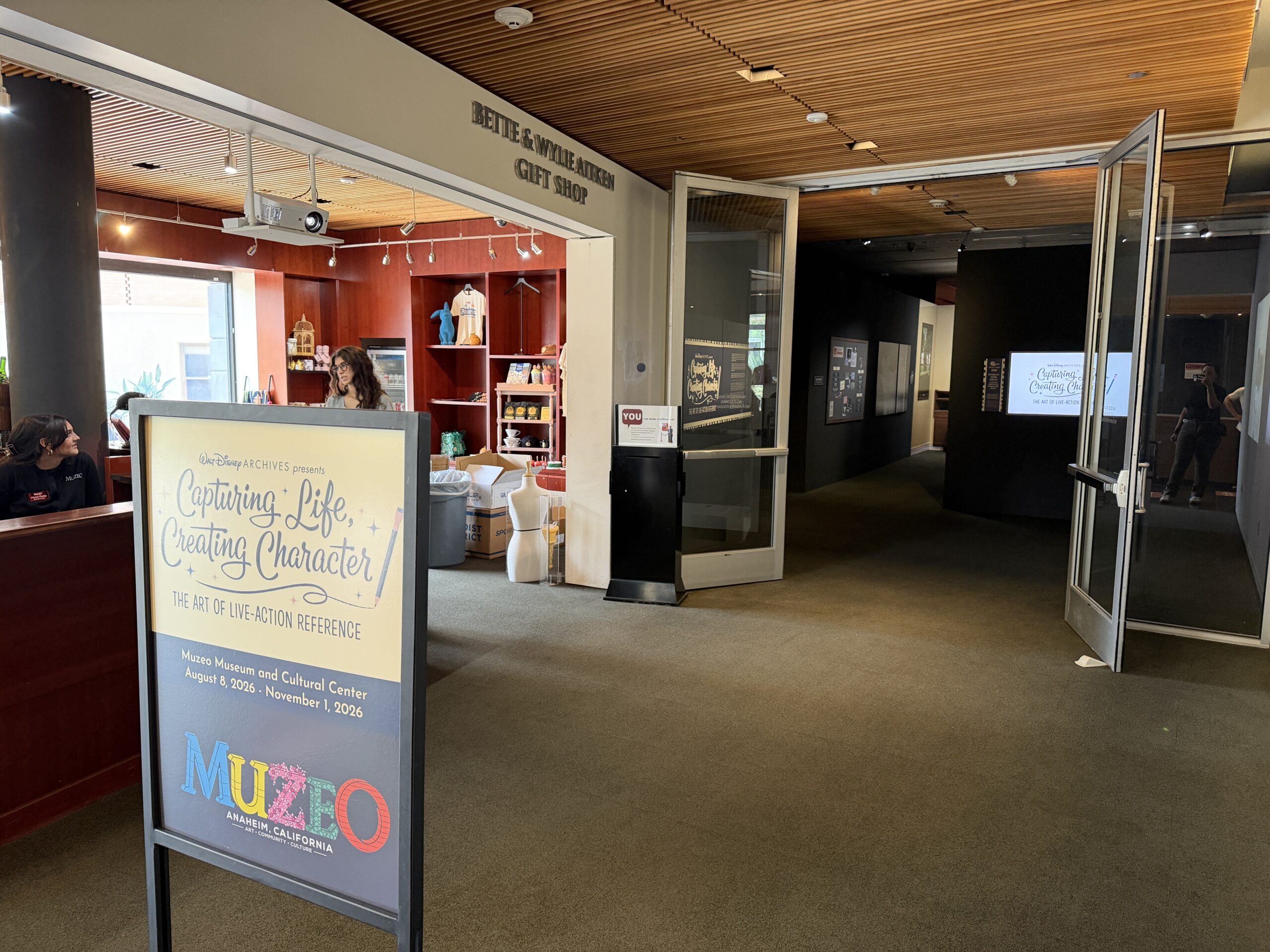
We were given the opportunity to view the new exhibit at the Anaheim, California museum before it opens to the public on Saturday, August 8. The last day to visit the exhibit is Sunday, November 1, 2026.
Capturing Life, Creating Character Exhibit WalkthroughBeginning
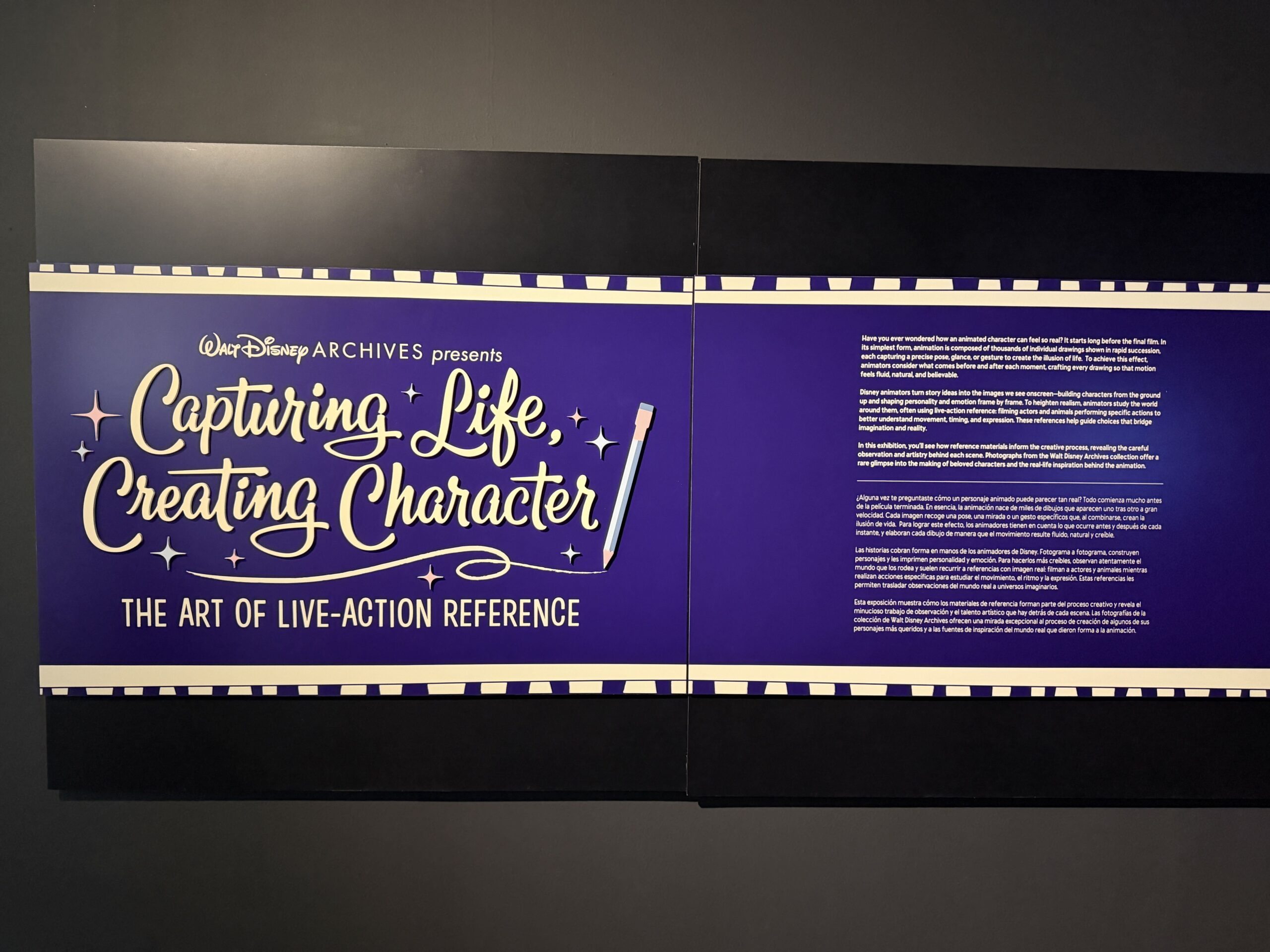
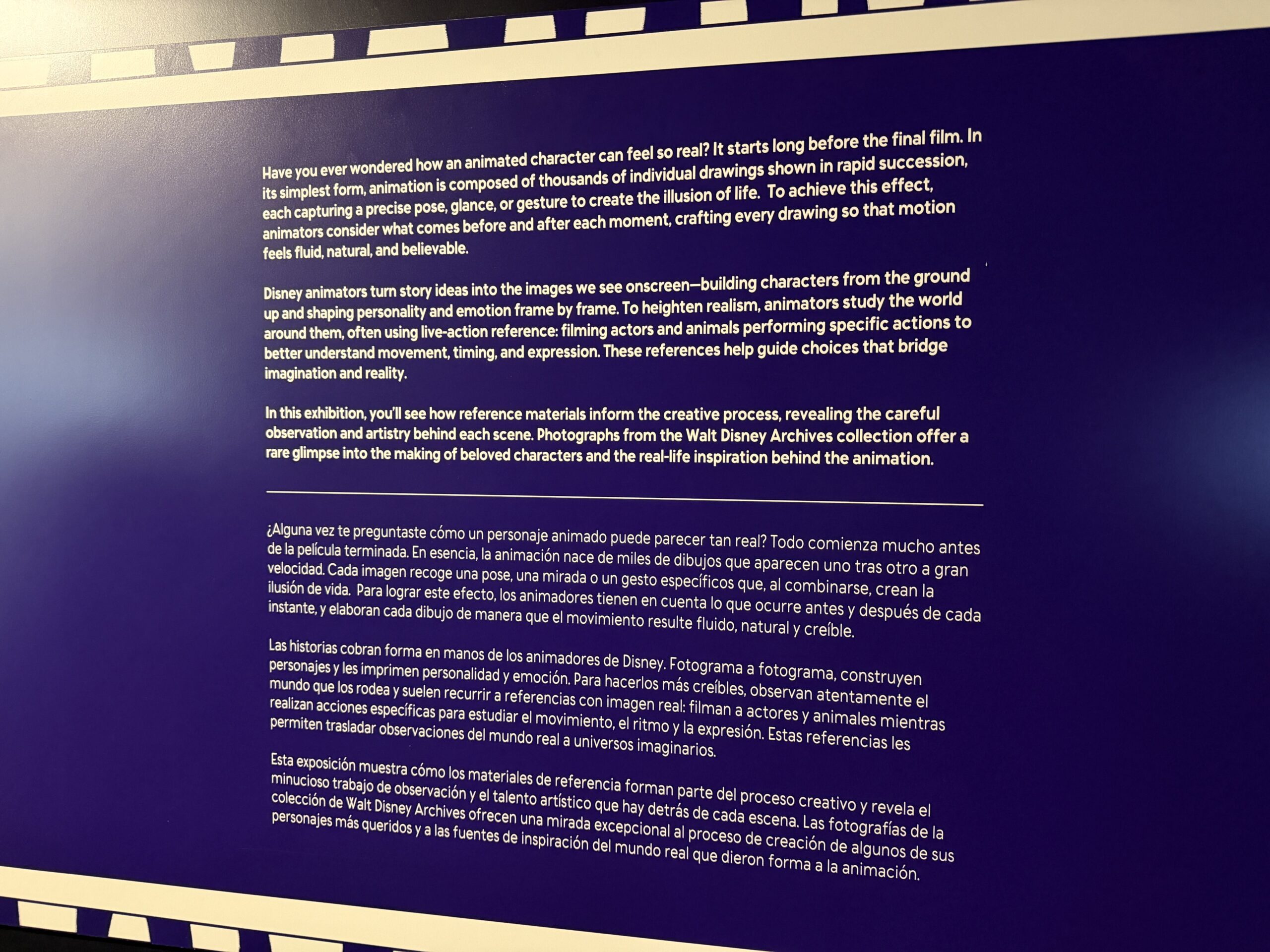
At the start of the exhibit, guests are welcomed with a purple and white sign decorated with the cursive Capturing Life, Creating Character exhibit logo. The sign explains that animation in its simplest form is composed of thousands of individual drawings shown in rapid succession. Each drawing captures a precise pose, glance, or gesture to make the animation feel alive.
To heighten the realism and making every motion feel fluid and natural, animators studied the world around them, often using what is known as “live-action reference”: Filming actors and animals performing specific actions to better understand expression, movement, and timing. This exhibit explores the process from live-action reference to animation.
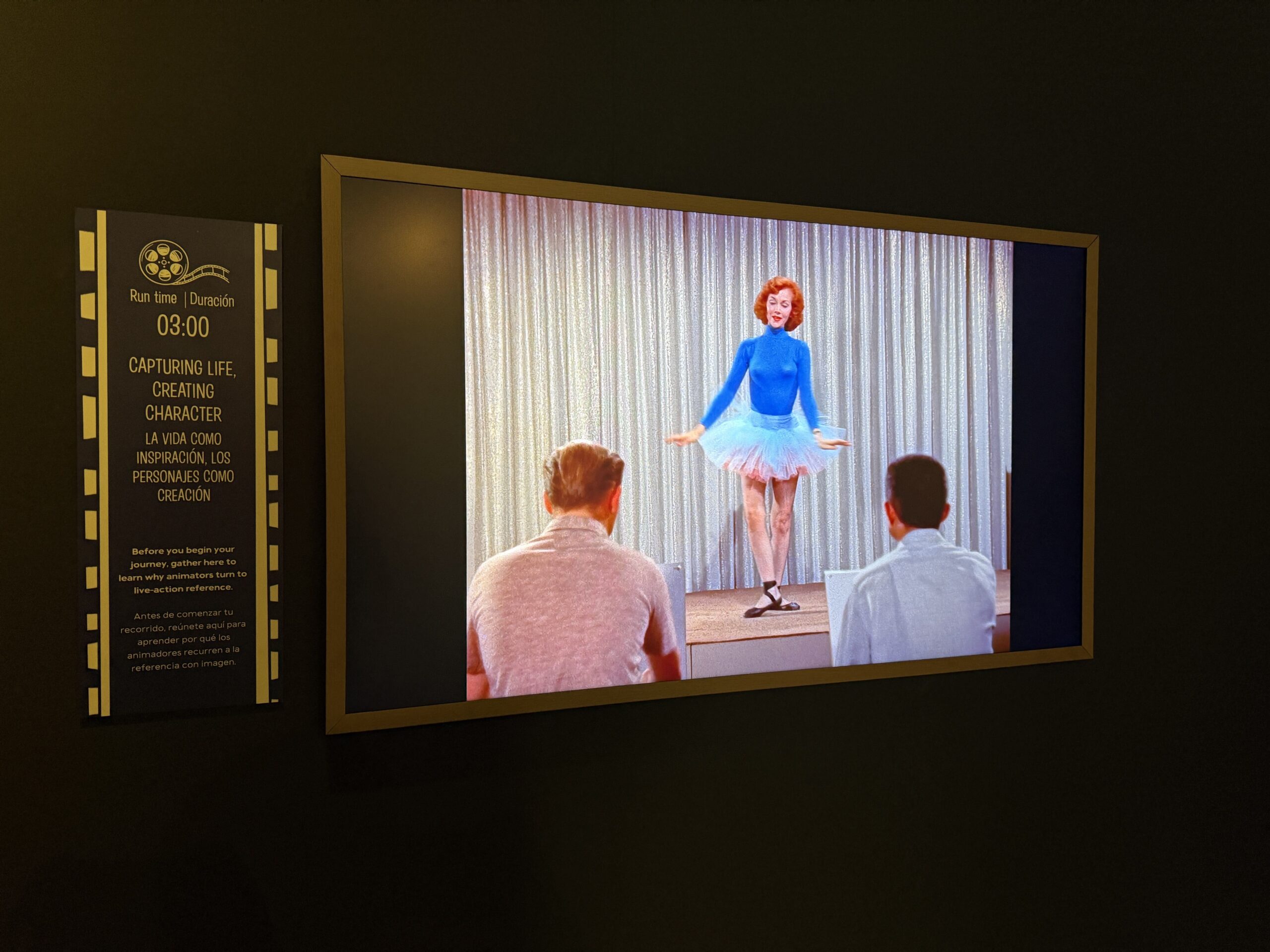
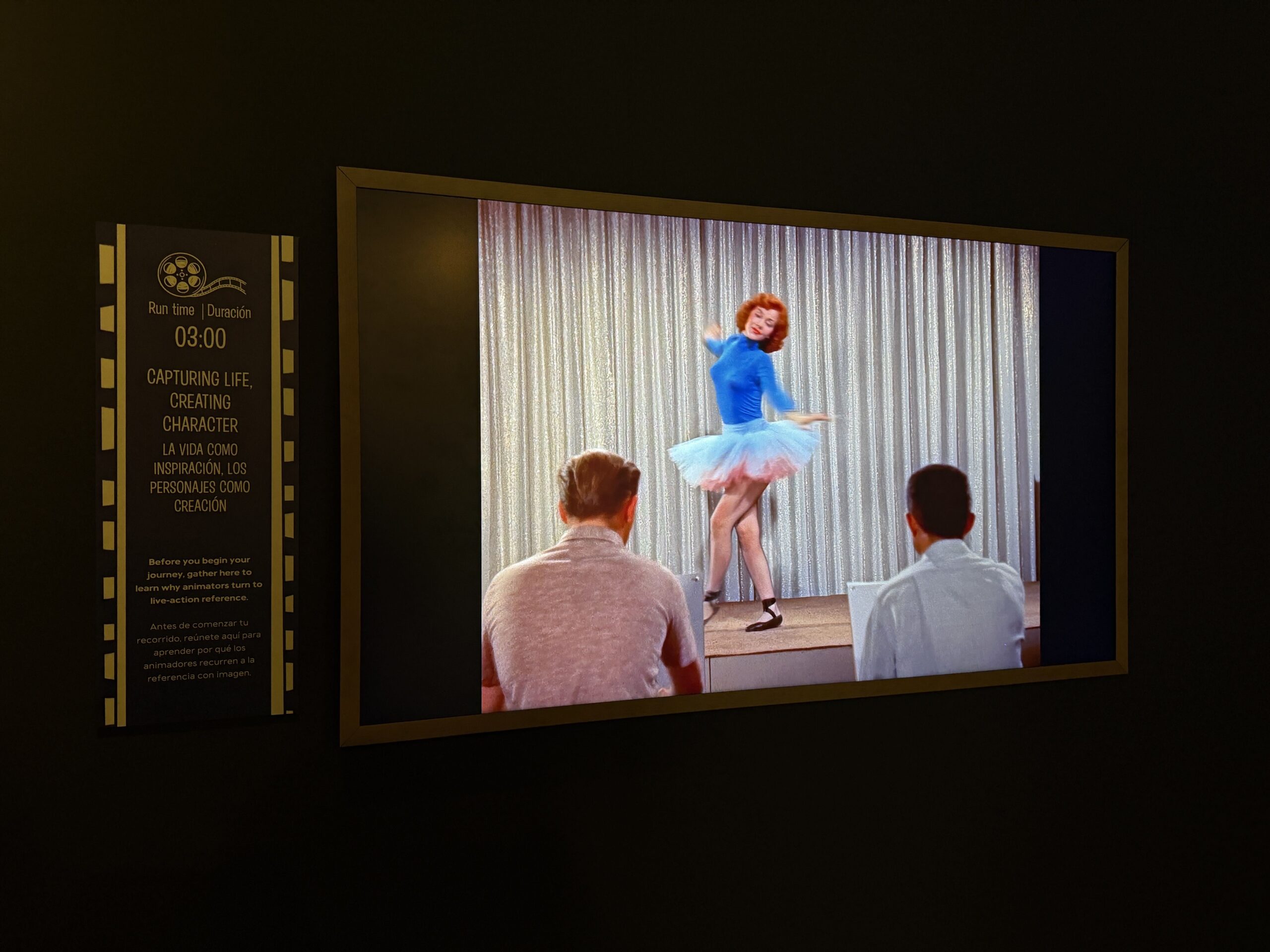
There is also a short three-minute video about why animators used live-action reference with their work before guests enter the rest of the exhibit.
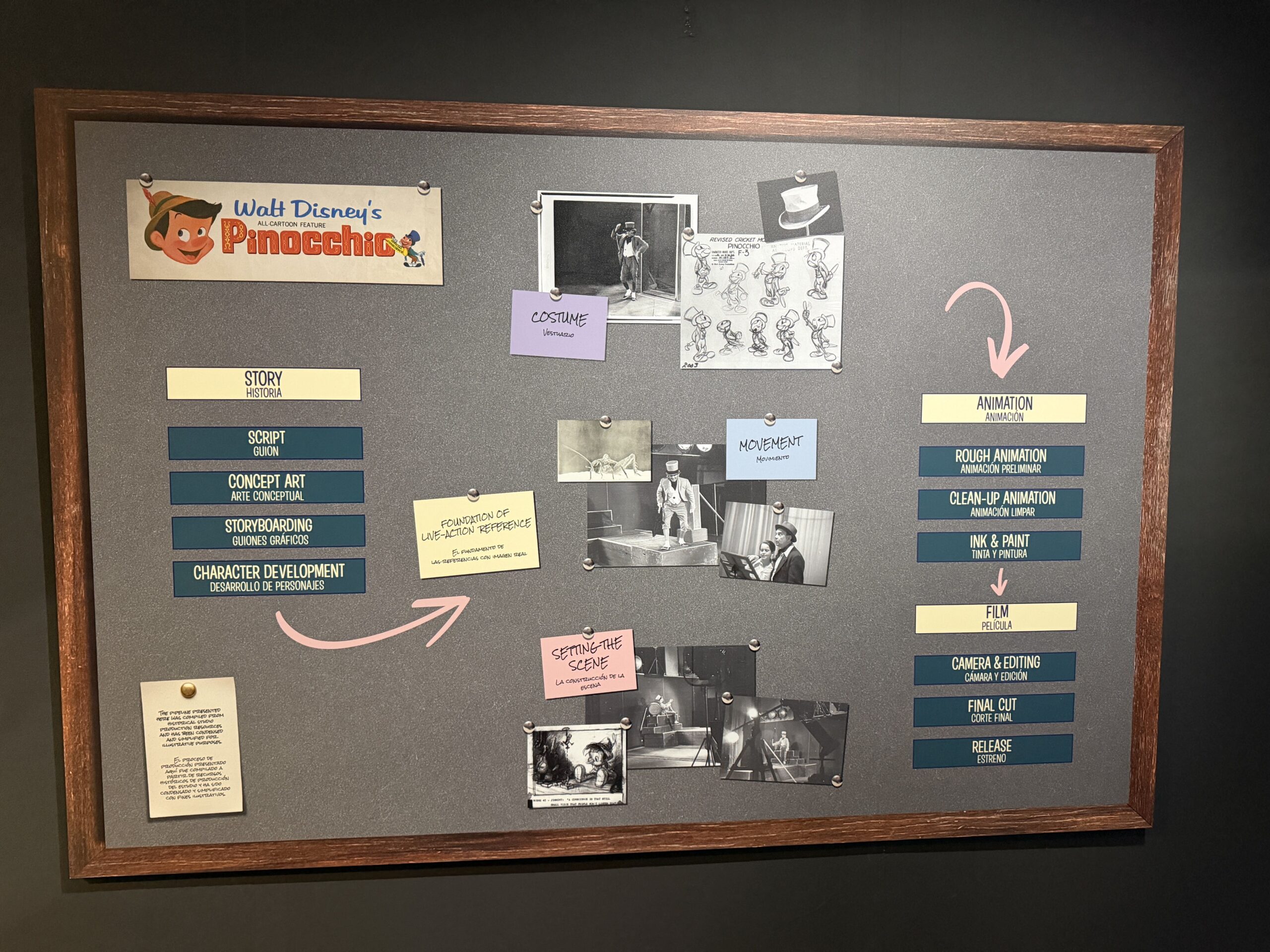
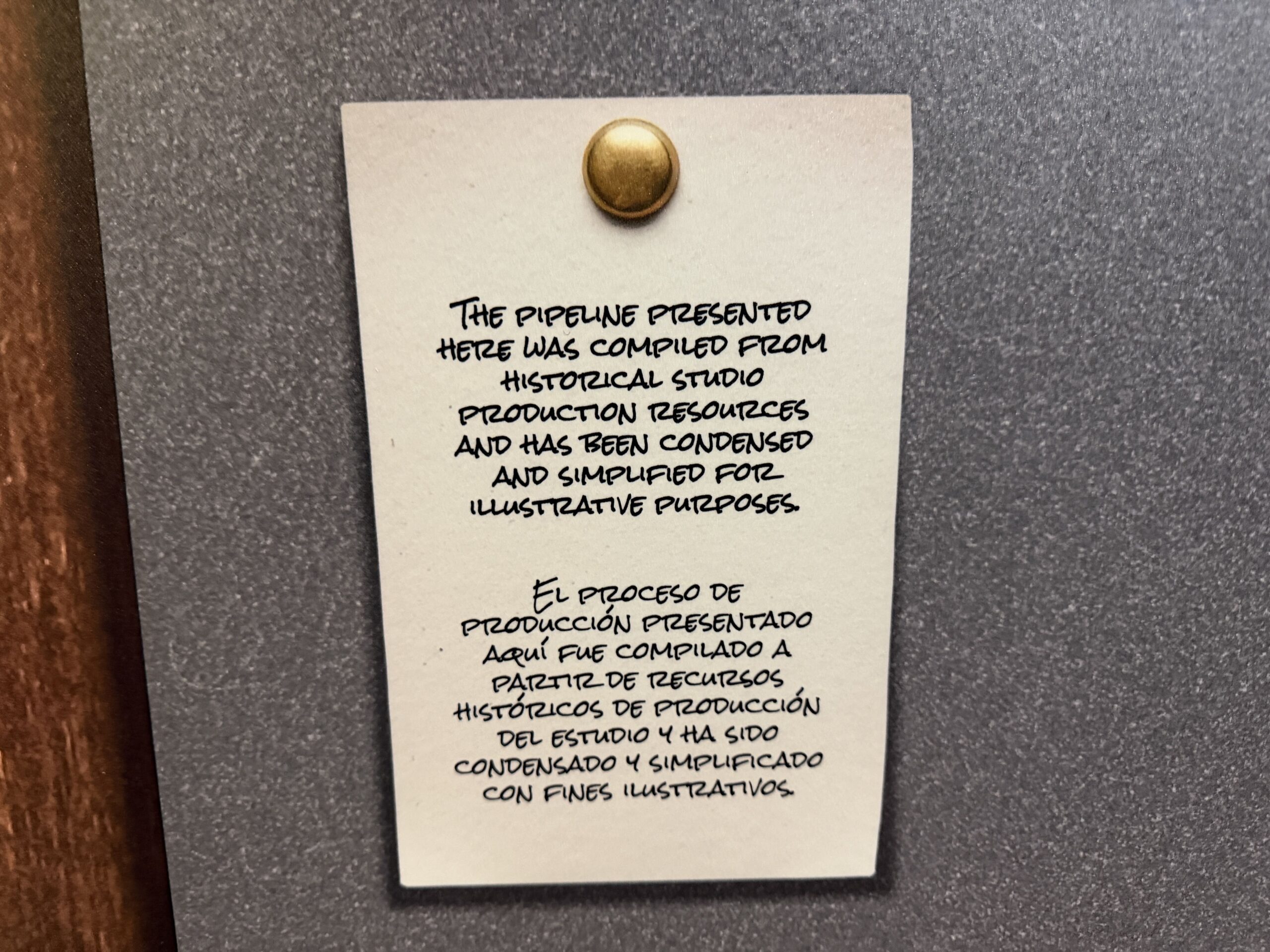
A sign nearby explains the full animation process. After the story, script, concept art, storyboarding, and character development have been completed, the live-action reference is brought in.
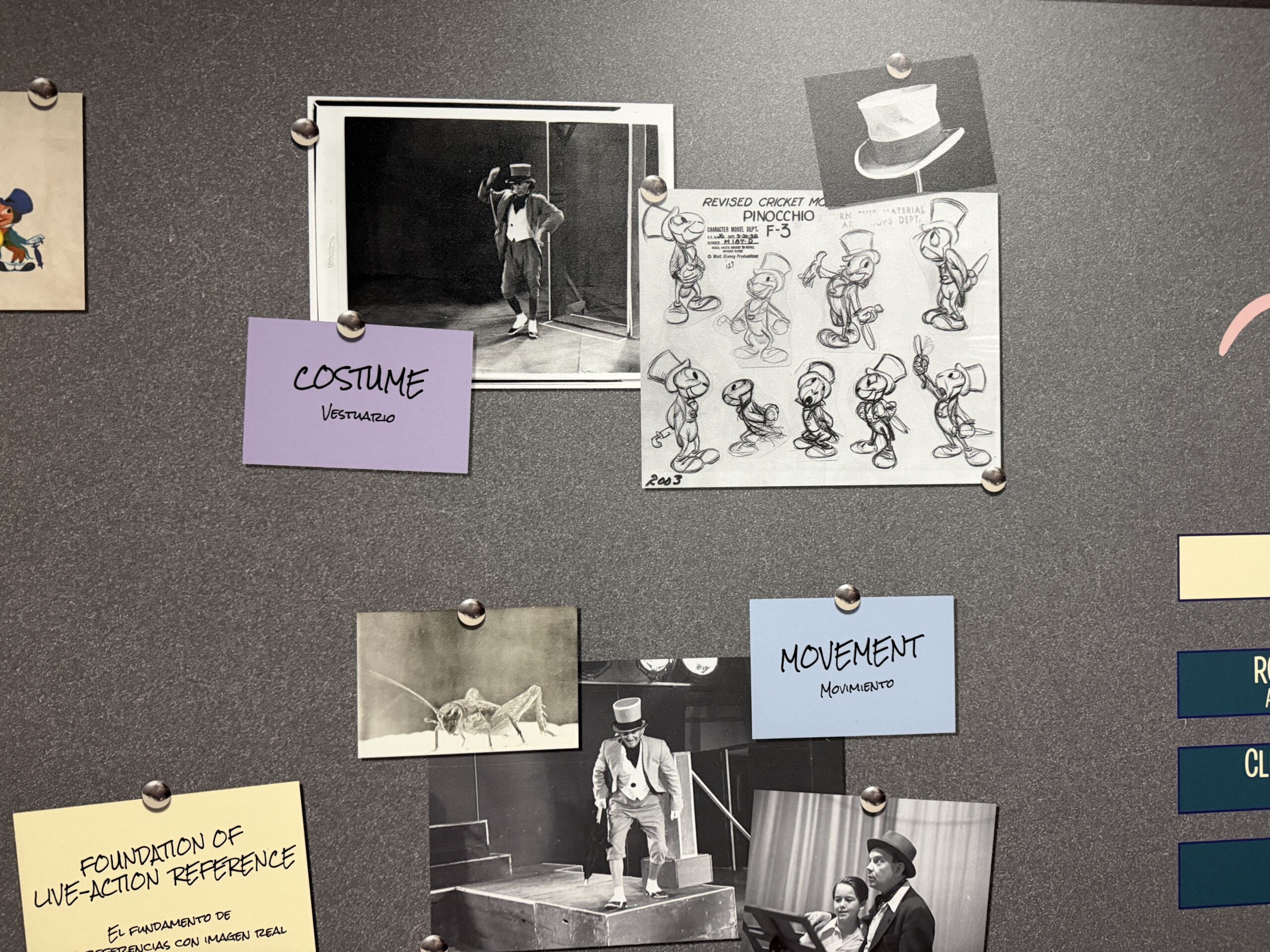
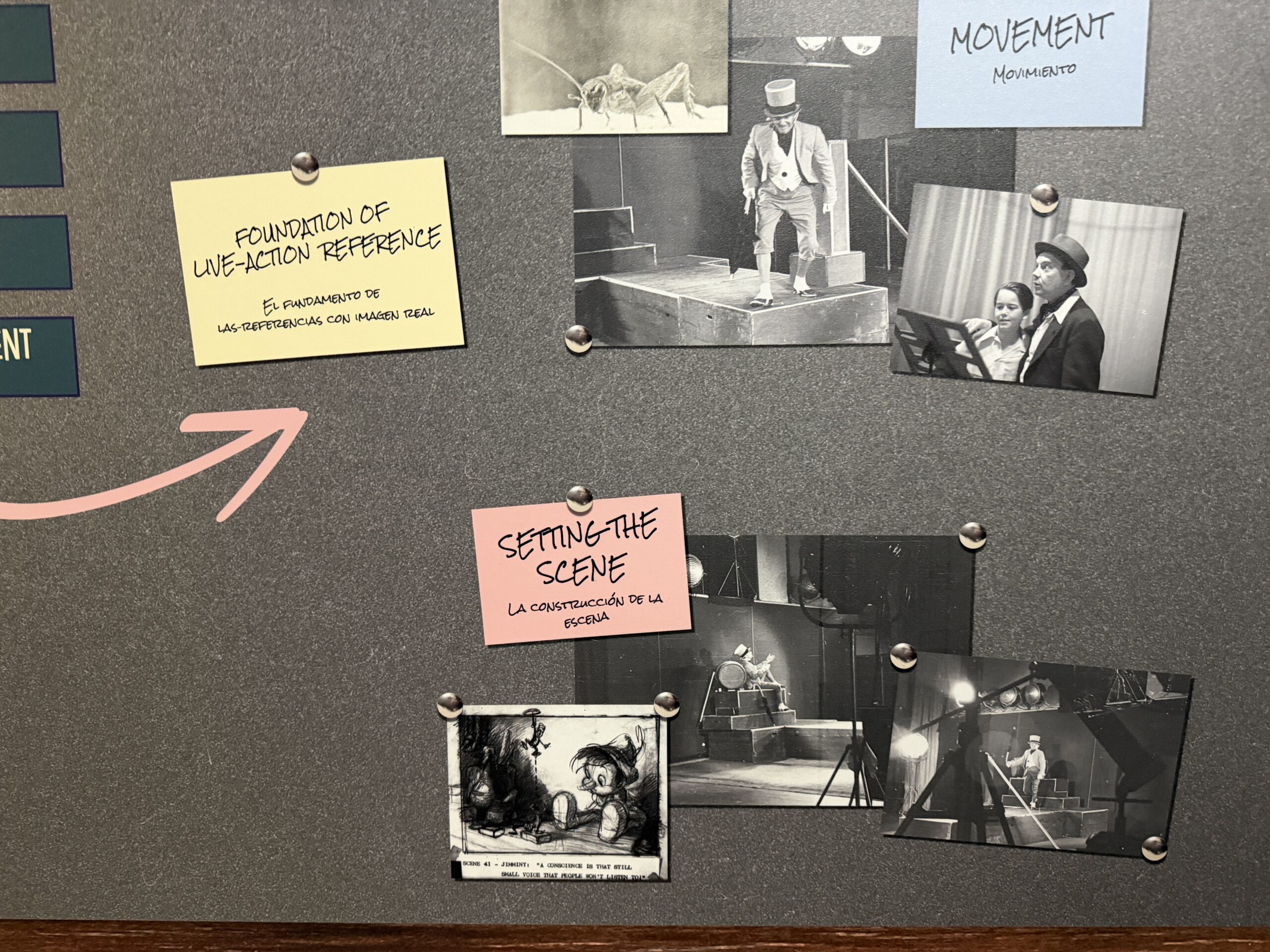
Costumes, movements, and setting the scene are all utilized for the live-action reference. After that is the animation stage, which consists of rough animation, clean-up animation, and ink and paint. Film can then take over, with camera and editing, final cut, and then the release.
Costume
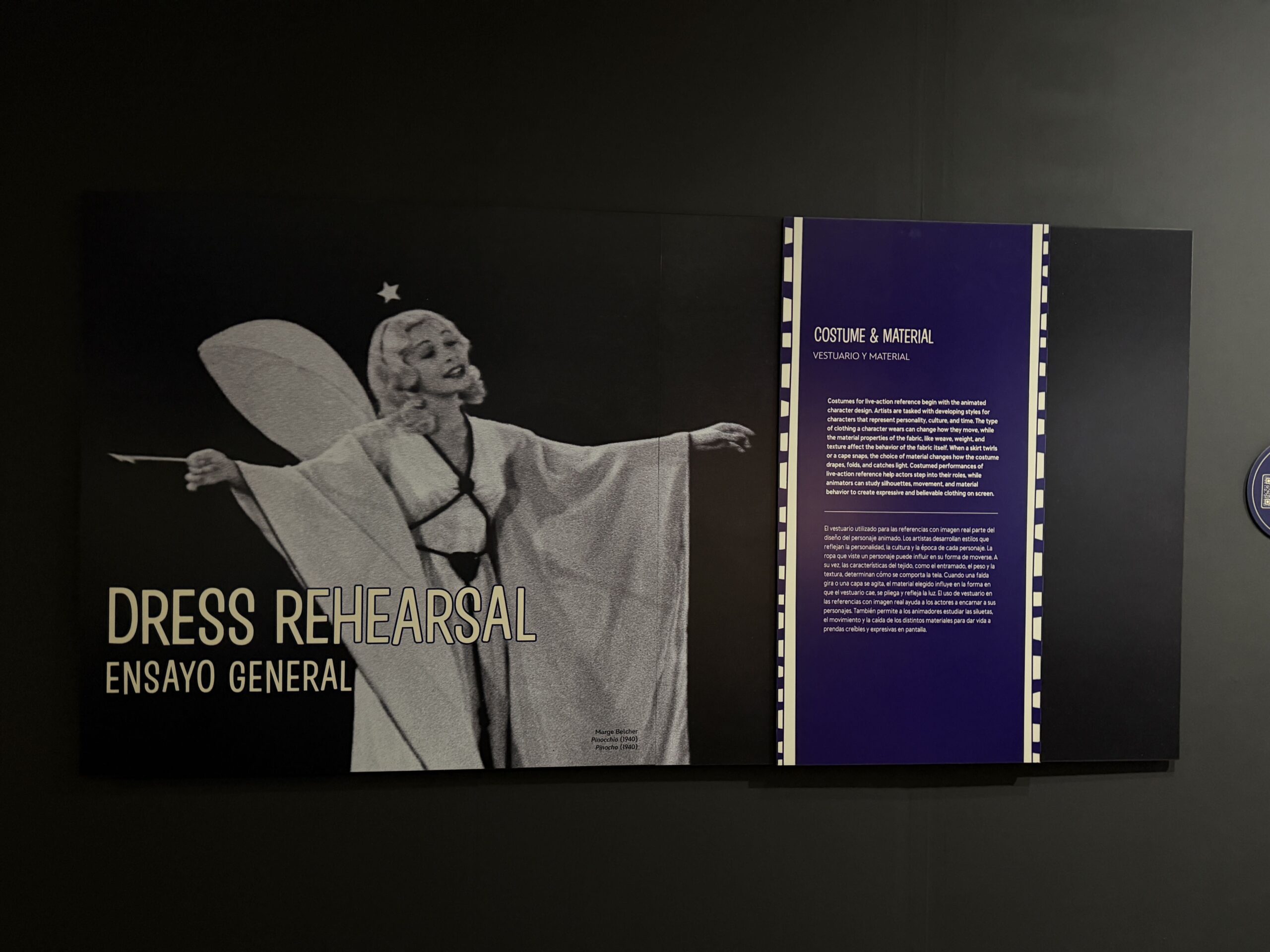
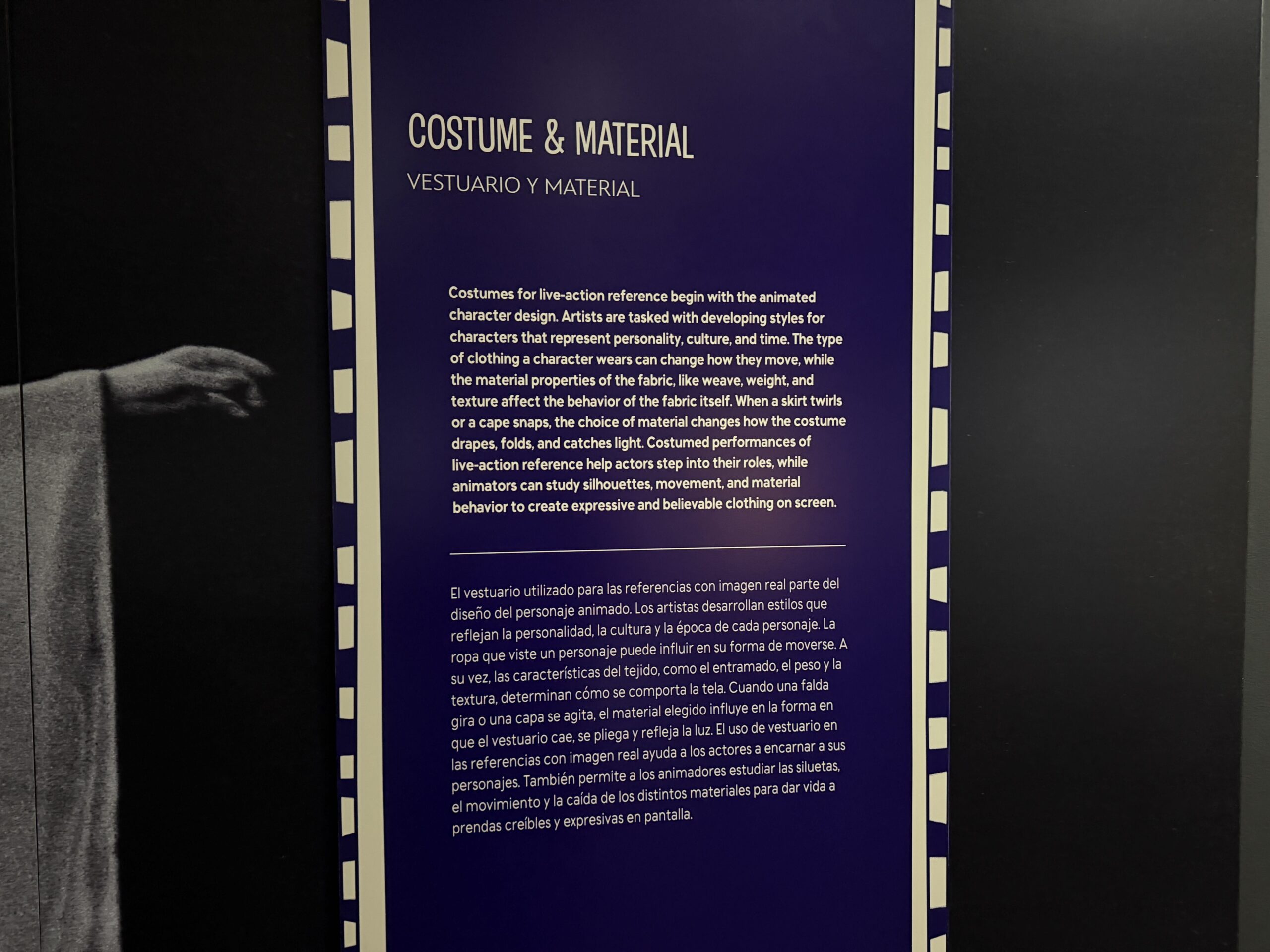
The first large portion of the exhibit features various costumes used in the live-action reference for several classic Disney films. As the sign explains, the type of clothing a character wears can change how they move, while the material properties of the fabric affect the behavior of the fabric itself. Costumes help the live-action performers step into their roles as the animators study the movement, silhouettes, and material behavior to create believable clothing.
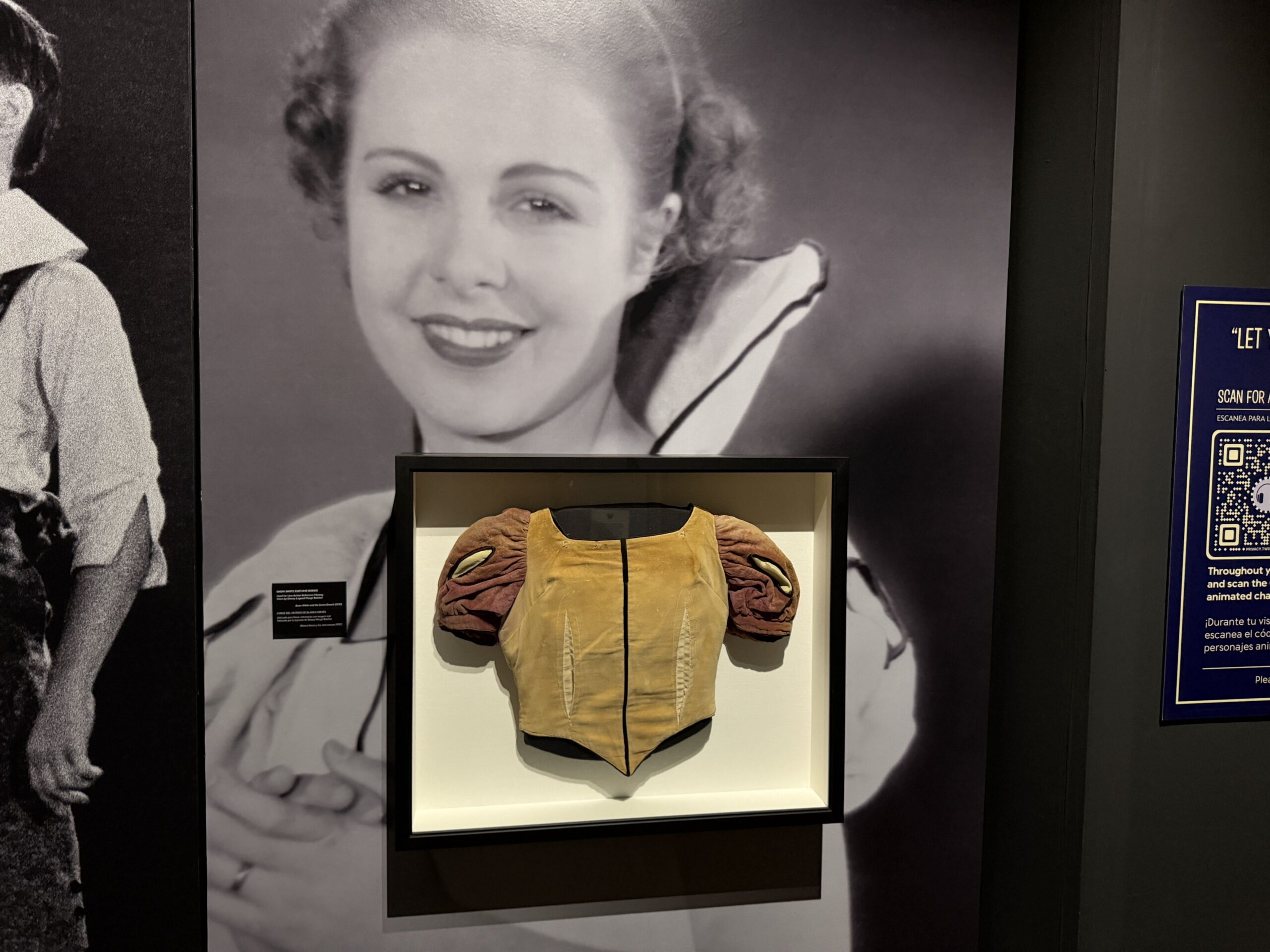
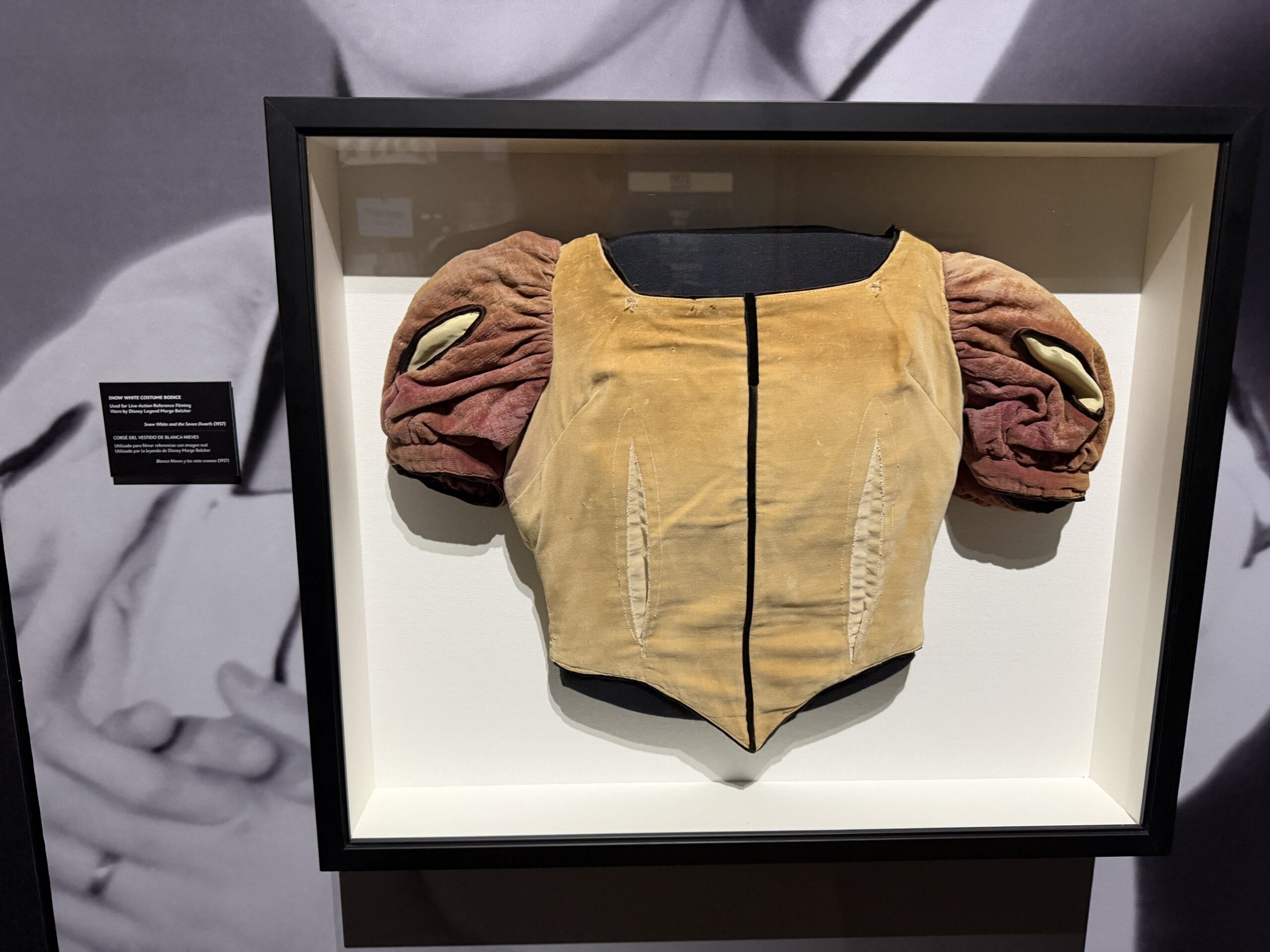
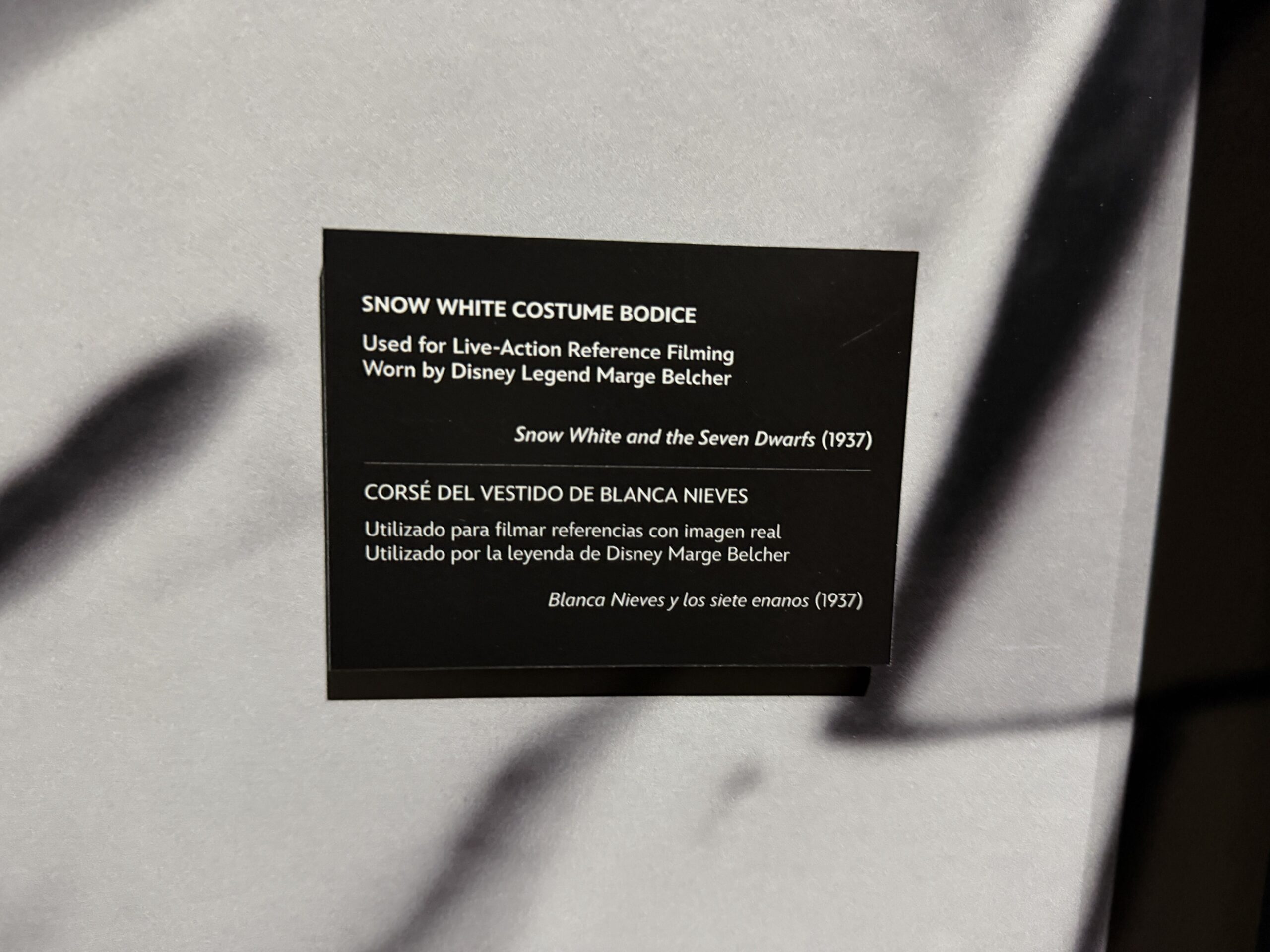
One display case has the yellow-and-brown dress bodice used for Snow White’s costume in Snow White and the Seven Dwarfs (1937). Behind the bodice is a black-and-white portrait of Disney Legend Marge Belcher wearing the bodice.
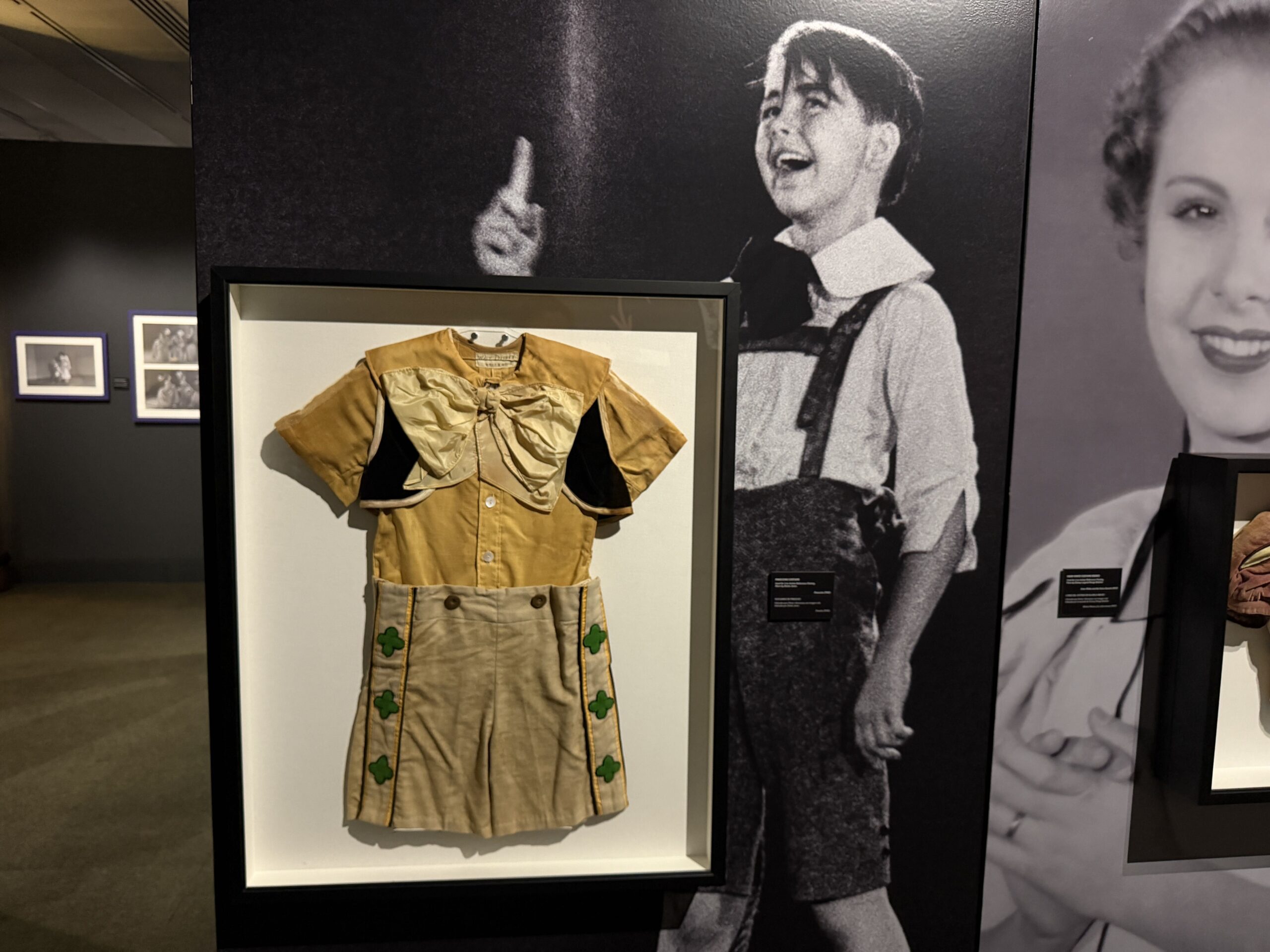
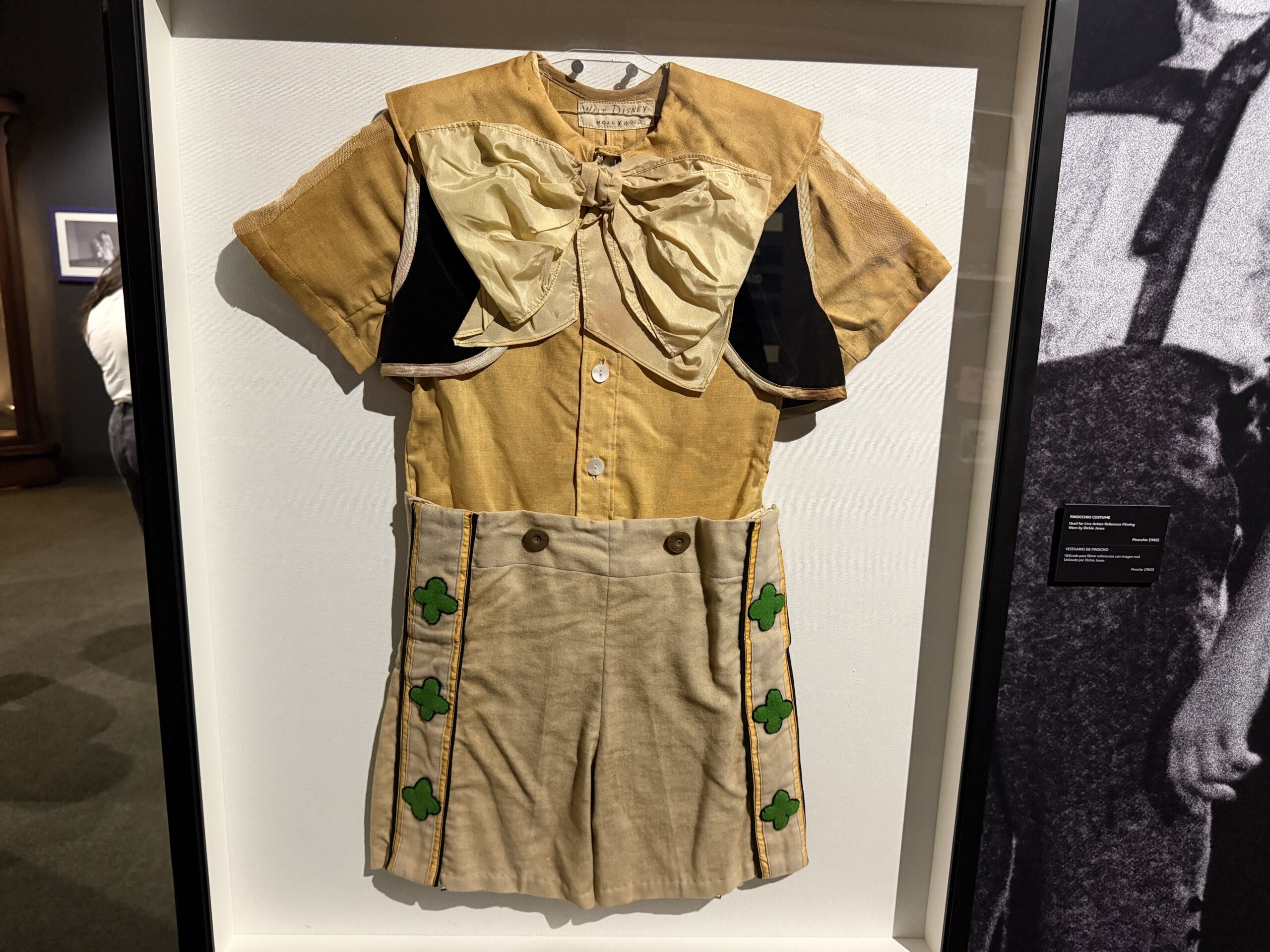
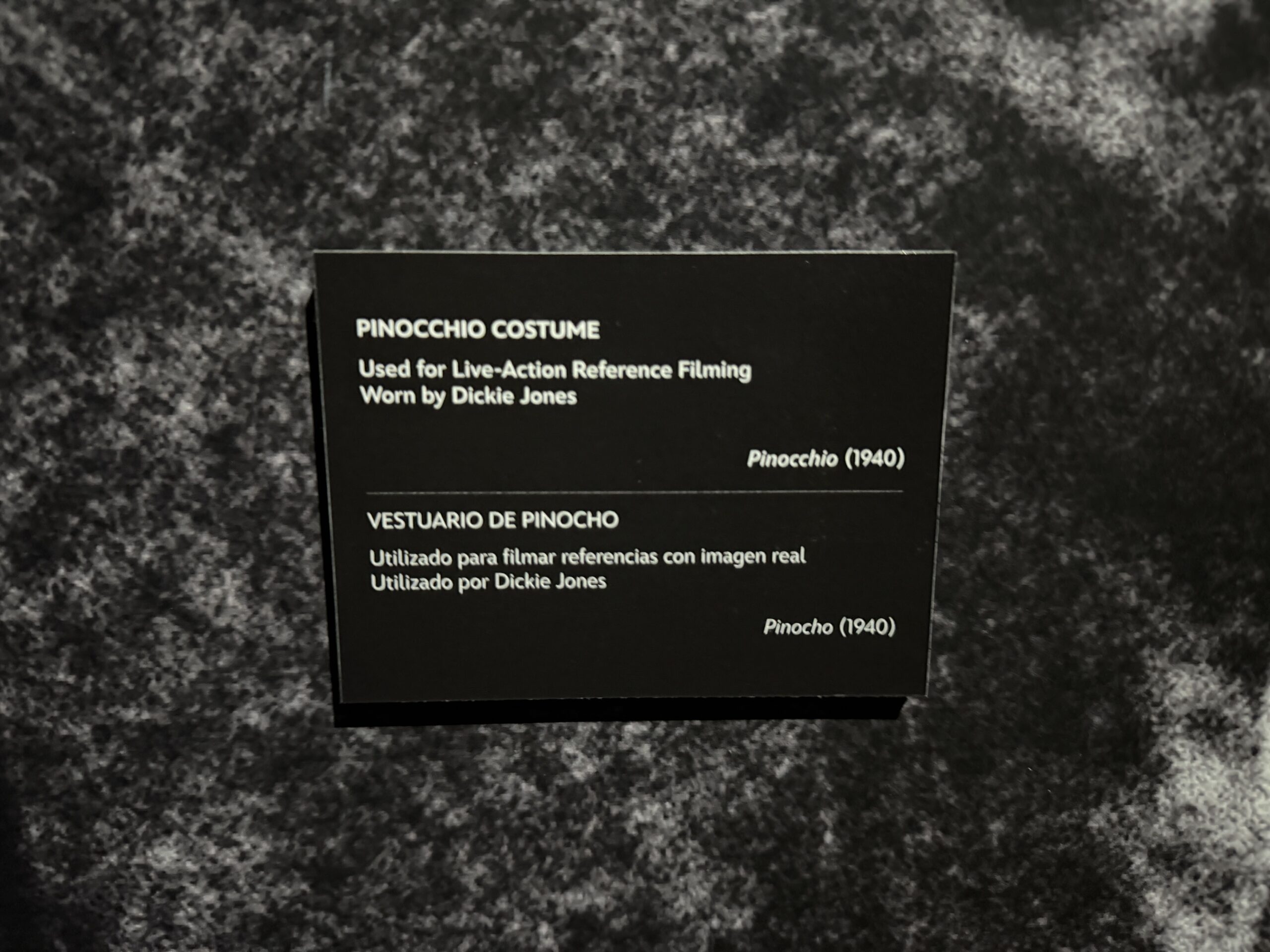
Also on display is the yellow-and-tan Pinocchio costume worn by Dickie Jones for Pinocchio (1940). He is shown wearing the costume in the black-and-white portrait behind the case.
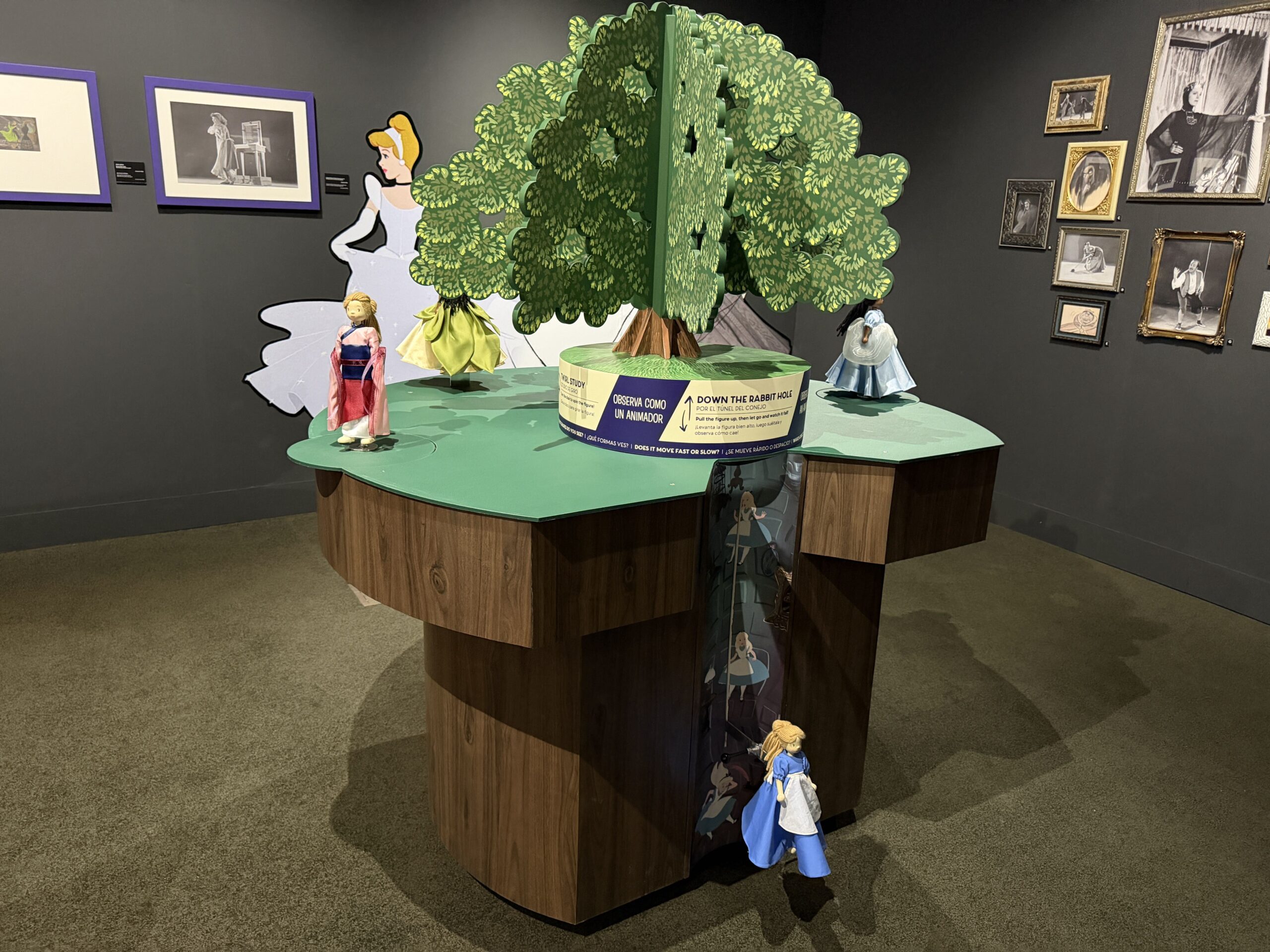
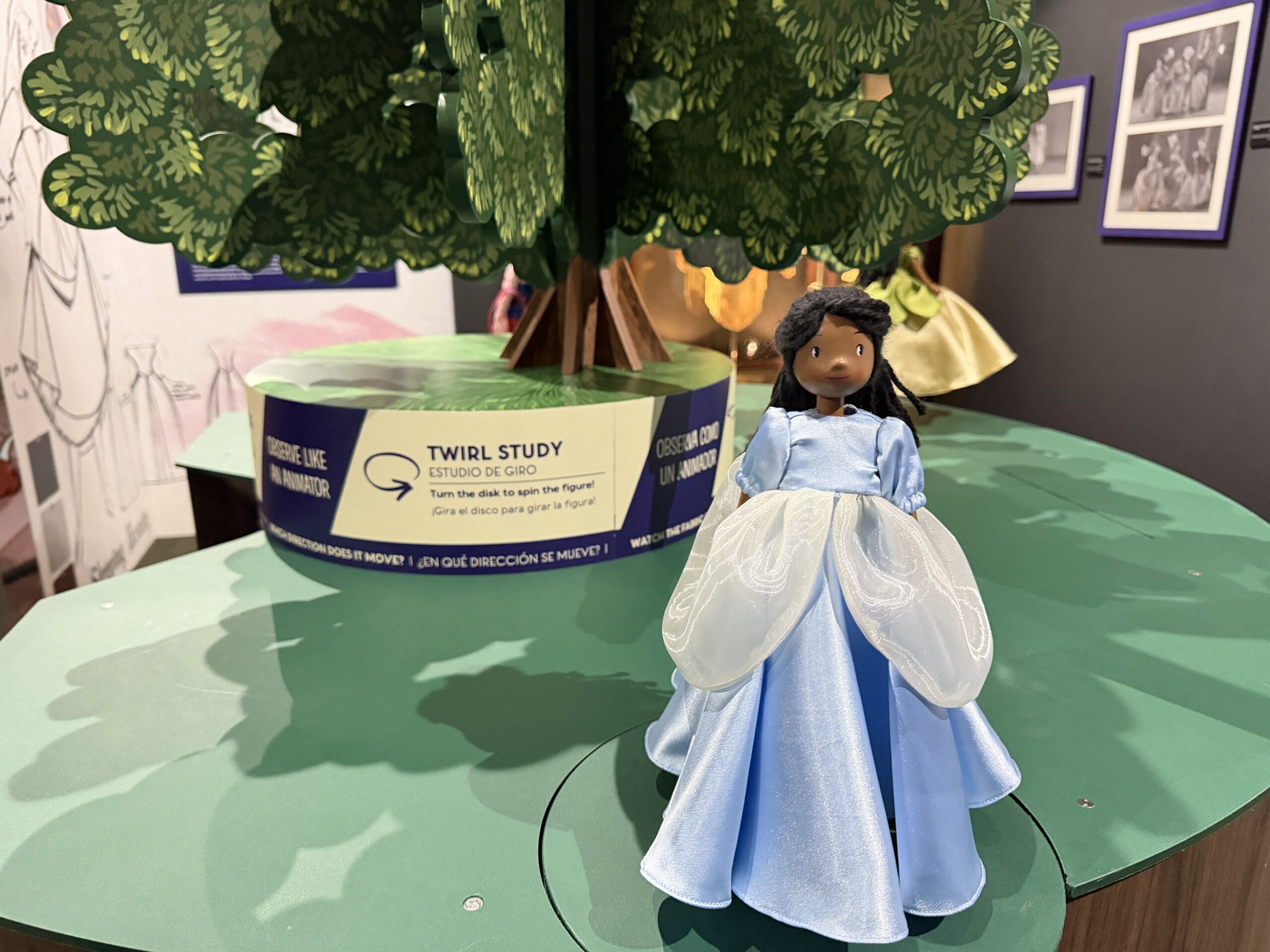
In the middle of the room is an interactive element for guests to play with. For the “Twirl Study,” several dolls dressed in various gowns are placed on spinning platforms. Guests are encouraged to turn the disk to spin the figure, noticing how the dress flares with the movement. There is also an experiment where guests can pull a doll resembling Alice from Alice in Wonderland up a shaft before letting her go to see her fall down the rabbit hole.
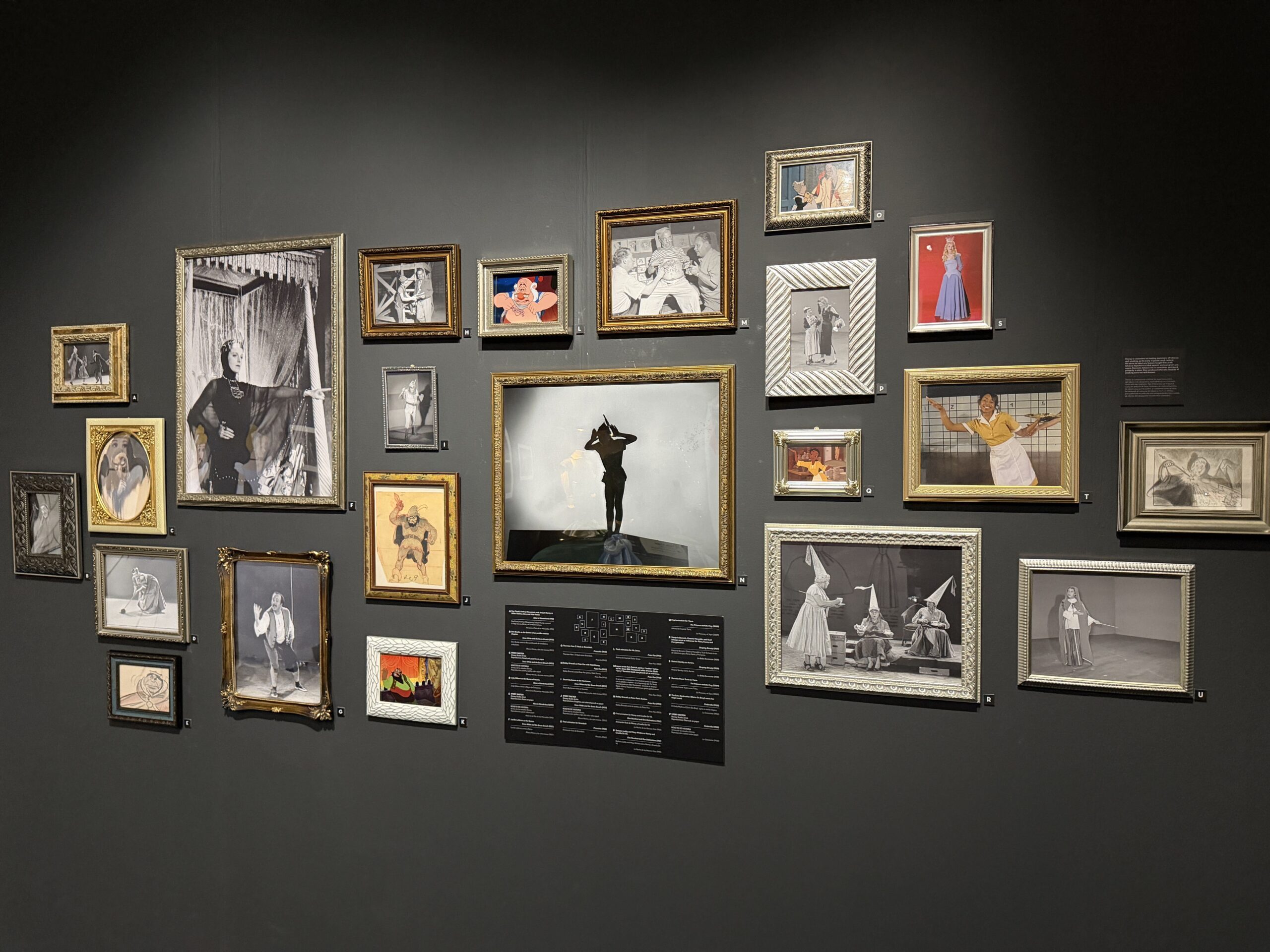
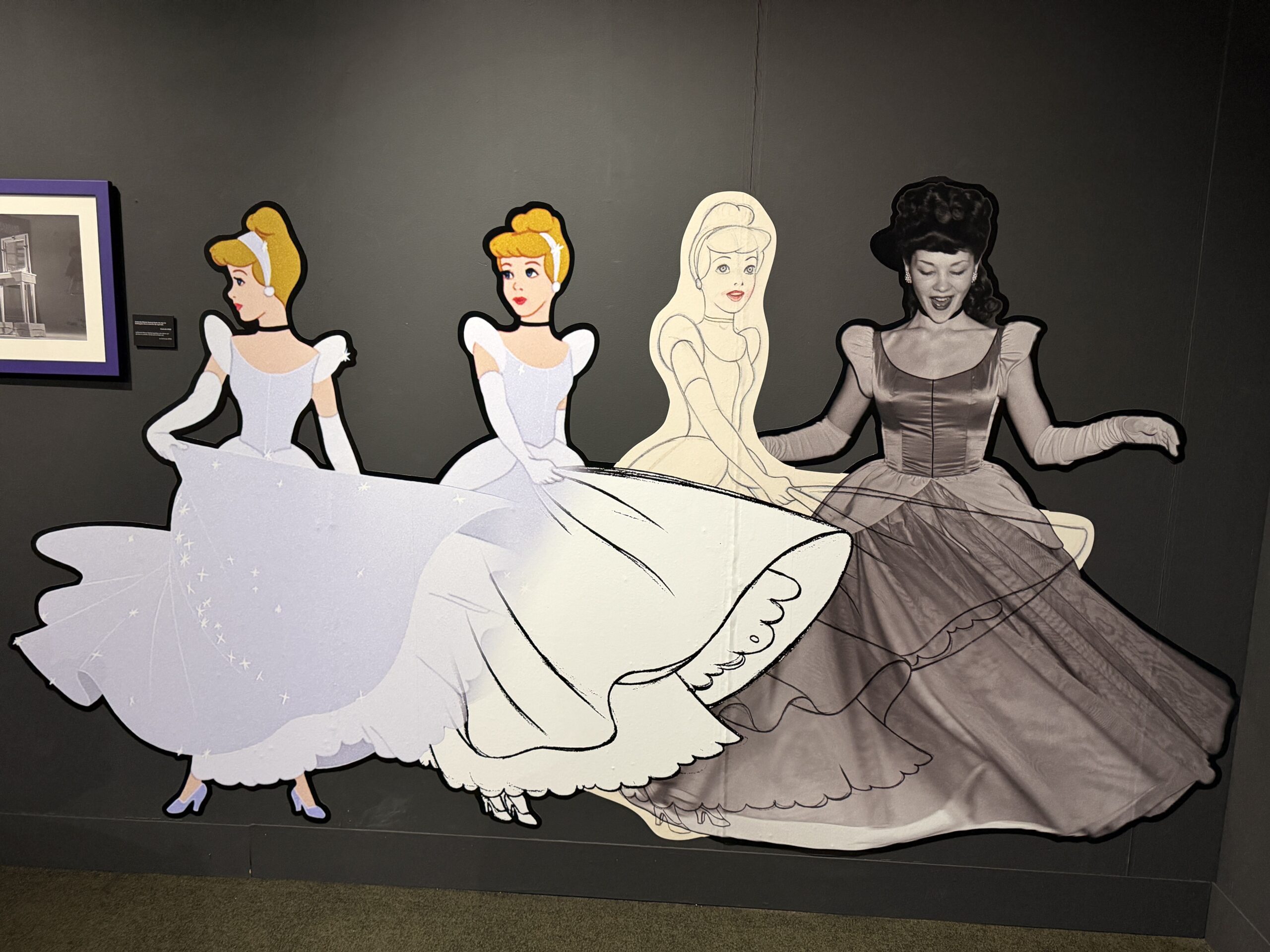
On a wall are comparison photos of concept art of Disney characters, like Evil Queen, Smee, Tiana, and Cruella de Vil, with their animated counterparts. Further down the wall is a collage of Cinderella twirling her gown from animated form to sketch form to live-action reference form.
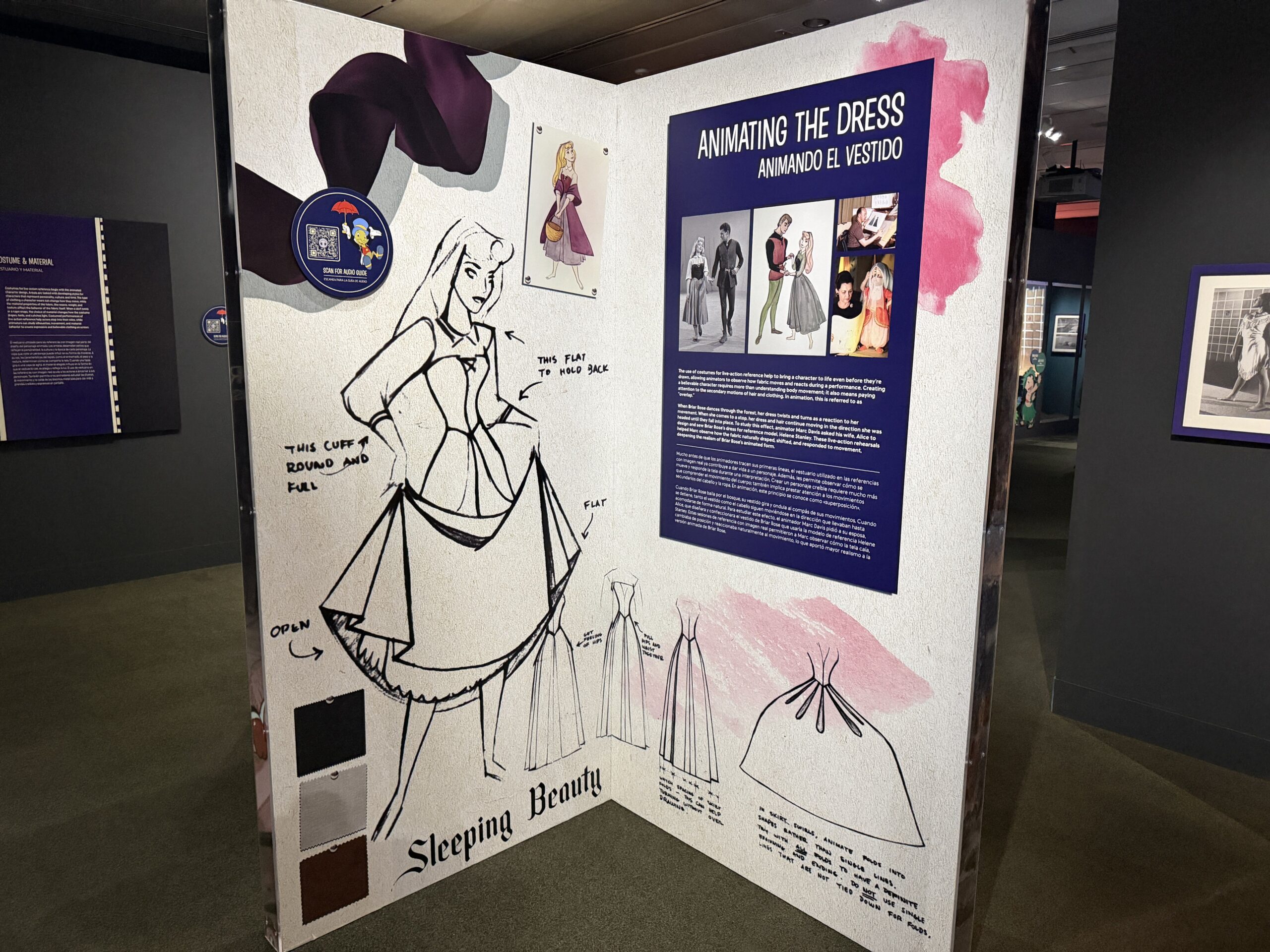
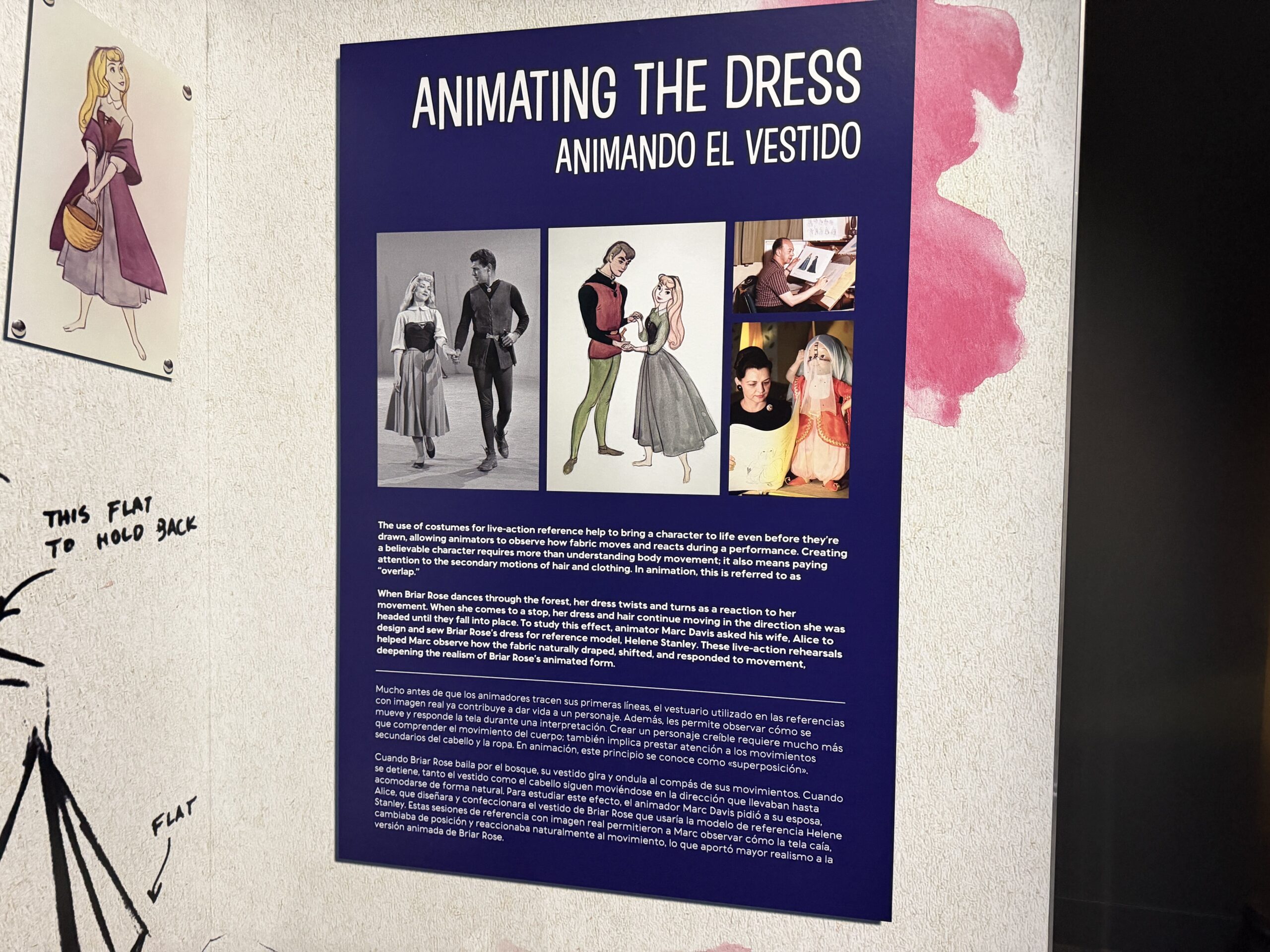
A large book-shaped display explores a case study of Briar Rose (Princess Aurora) in Sleeping Beauty (1959). When Briar Rose dances through the forest, her dress twirls as a result of her movement, but when she stops, her dress and hair continue moving in the direction she was headed until gravity takes over. These secondary motions of hair and clothing are known in animation as “overlap” and must be taken into account for realistic movements.
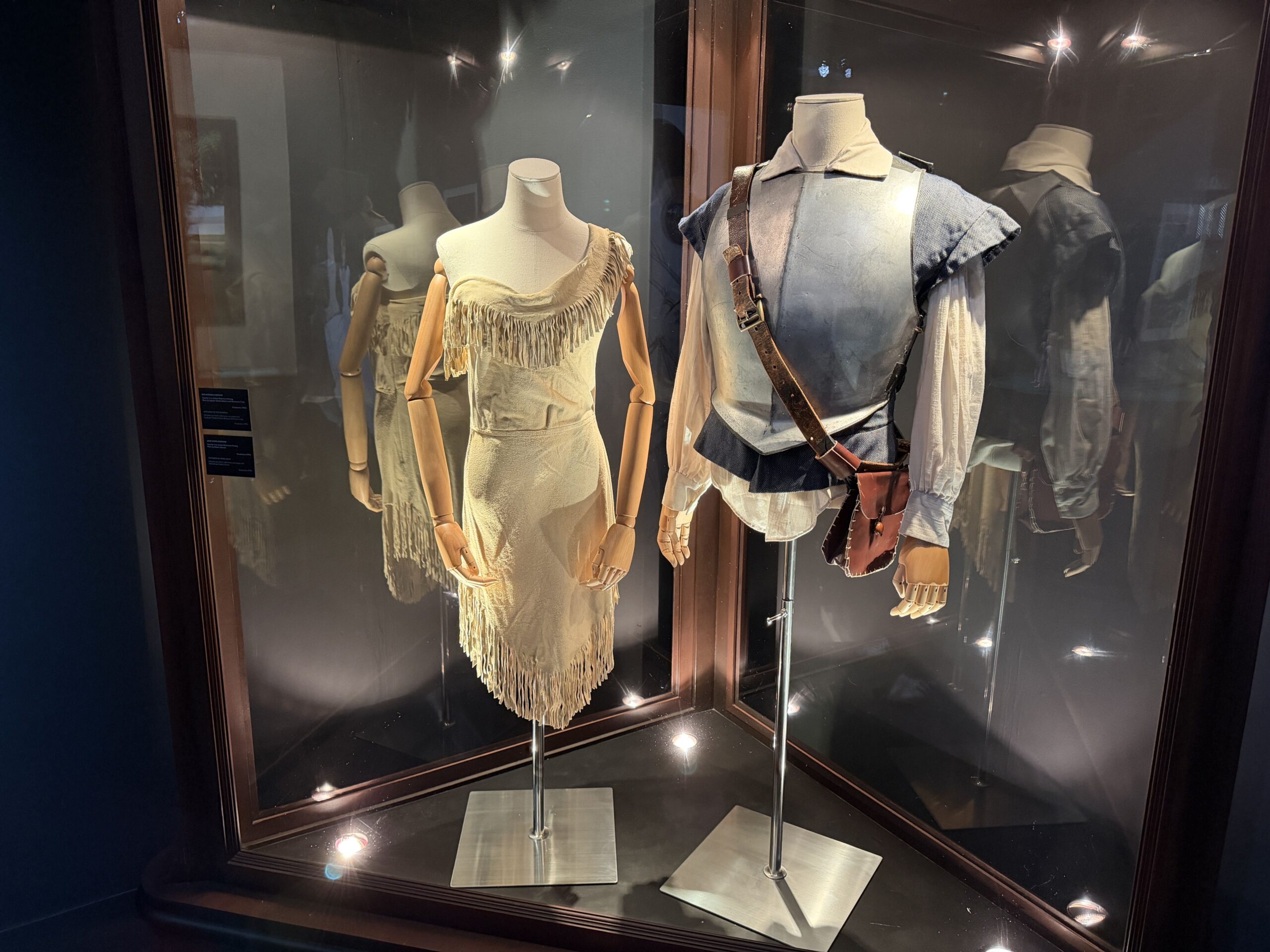
The dress and shirt for Pocahontas and John Smith, respectively, from the film Pocahontas (1995) are also on display.
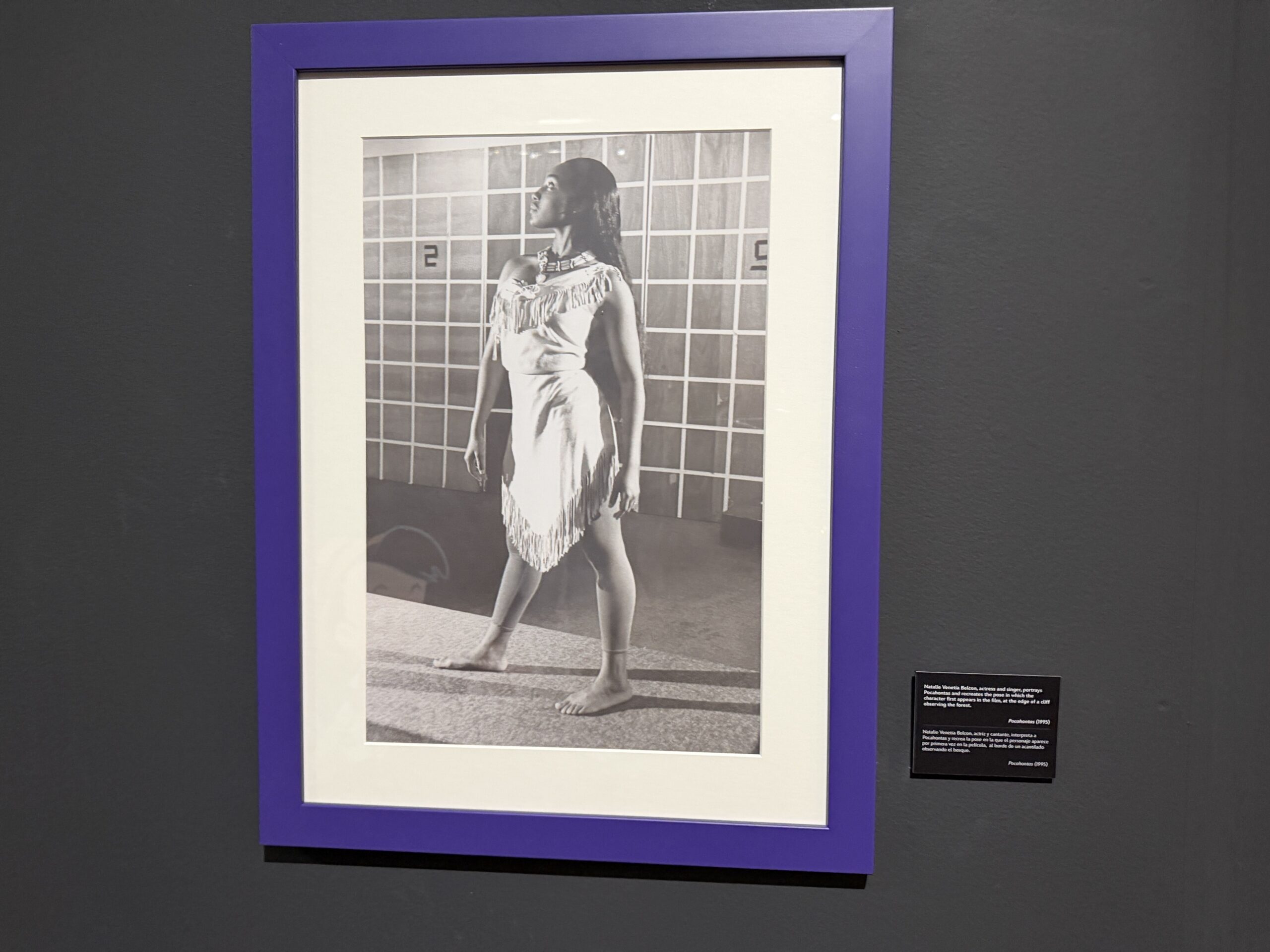
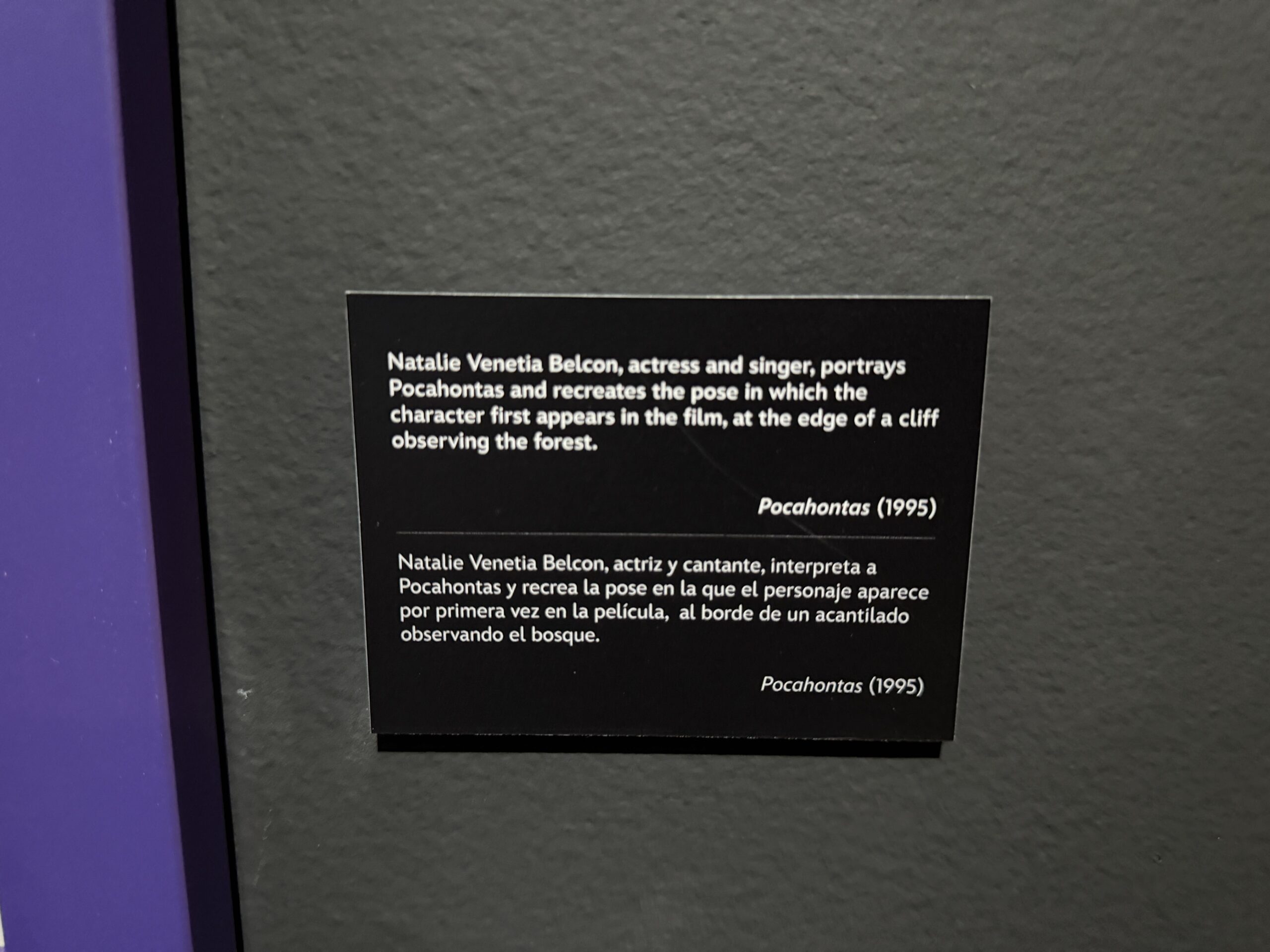
A black-and-white photo of actress and singer Natalie Ventia Belcon shows her portraying Pocahontas as she first appears in the film, standing at the edge of a cliff observing the forest.
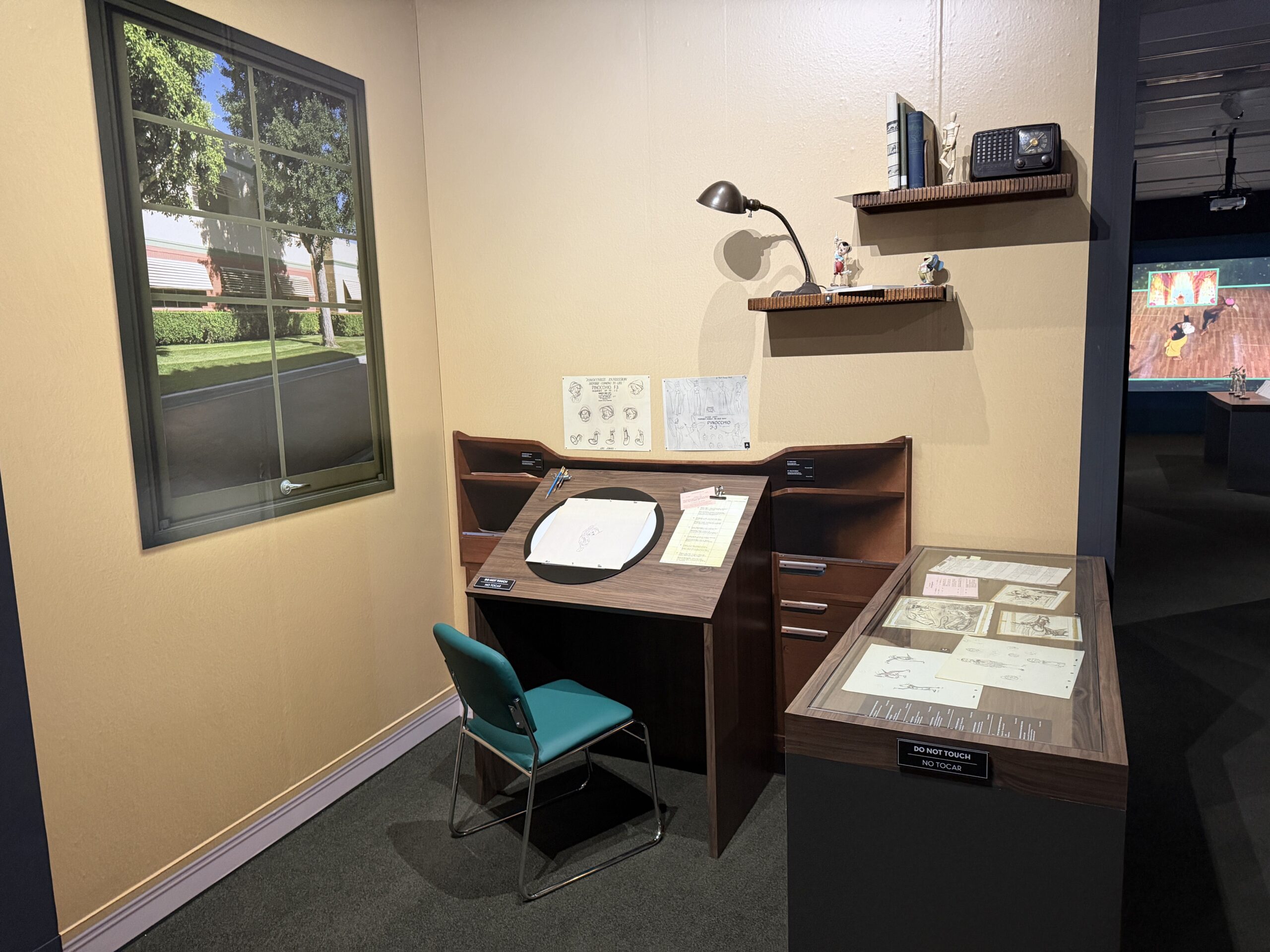
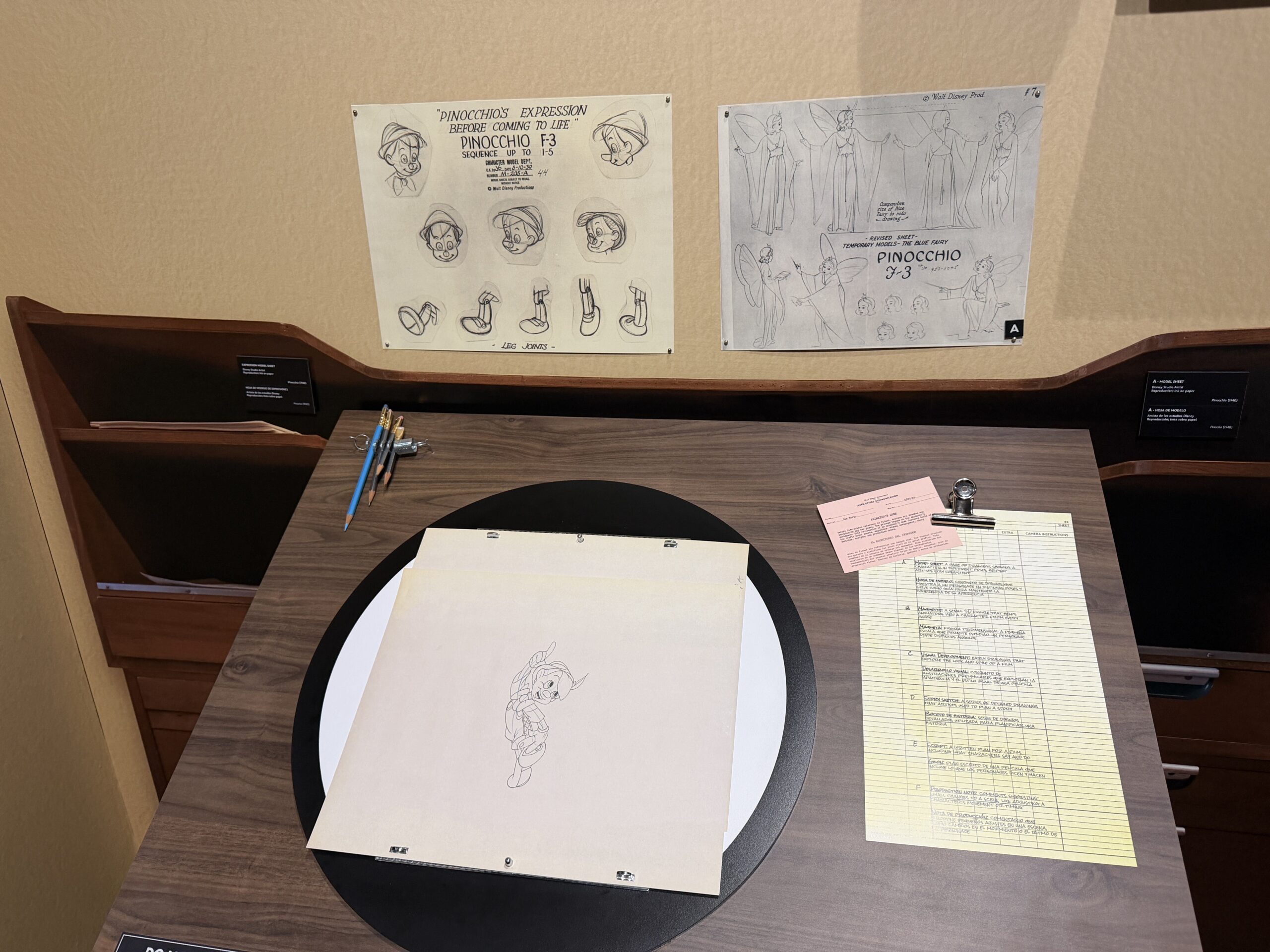
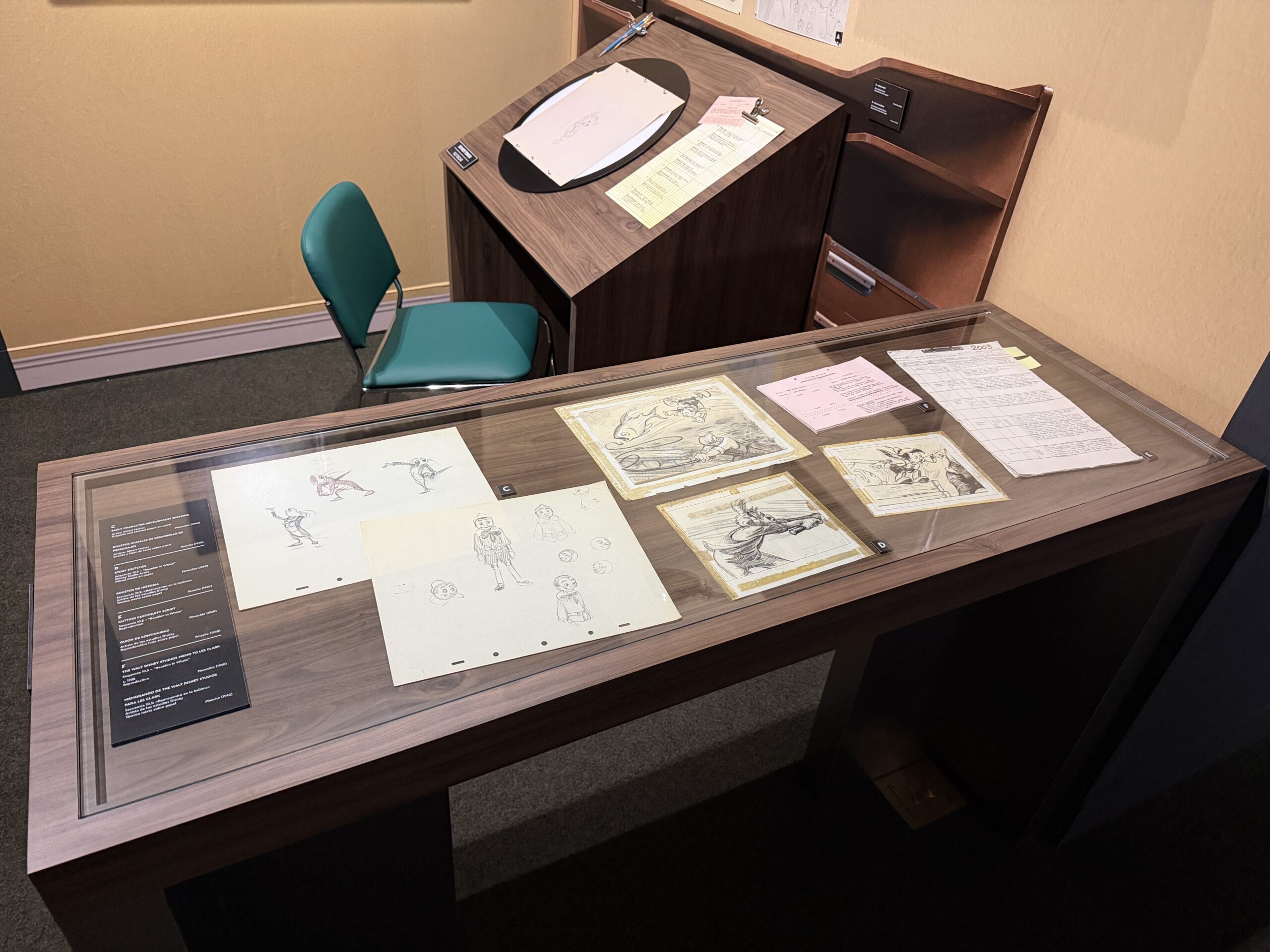
An animator’s desk has also been recreated for the exhibit. Several sheets of paper with hand-drawn versions of characters from Pinocchio can be seen.
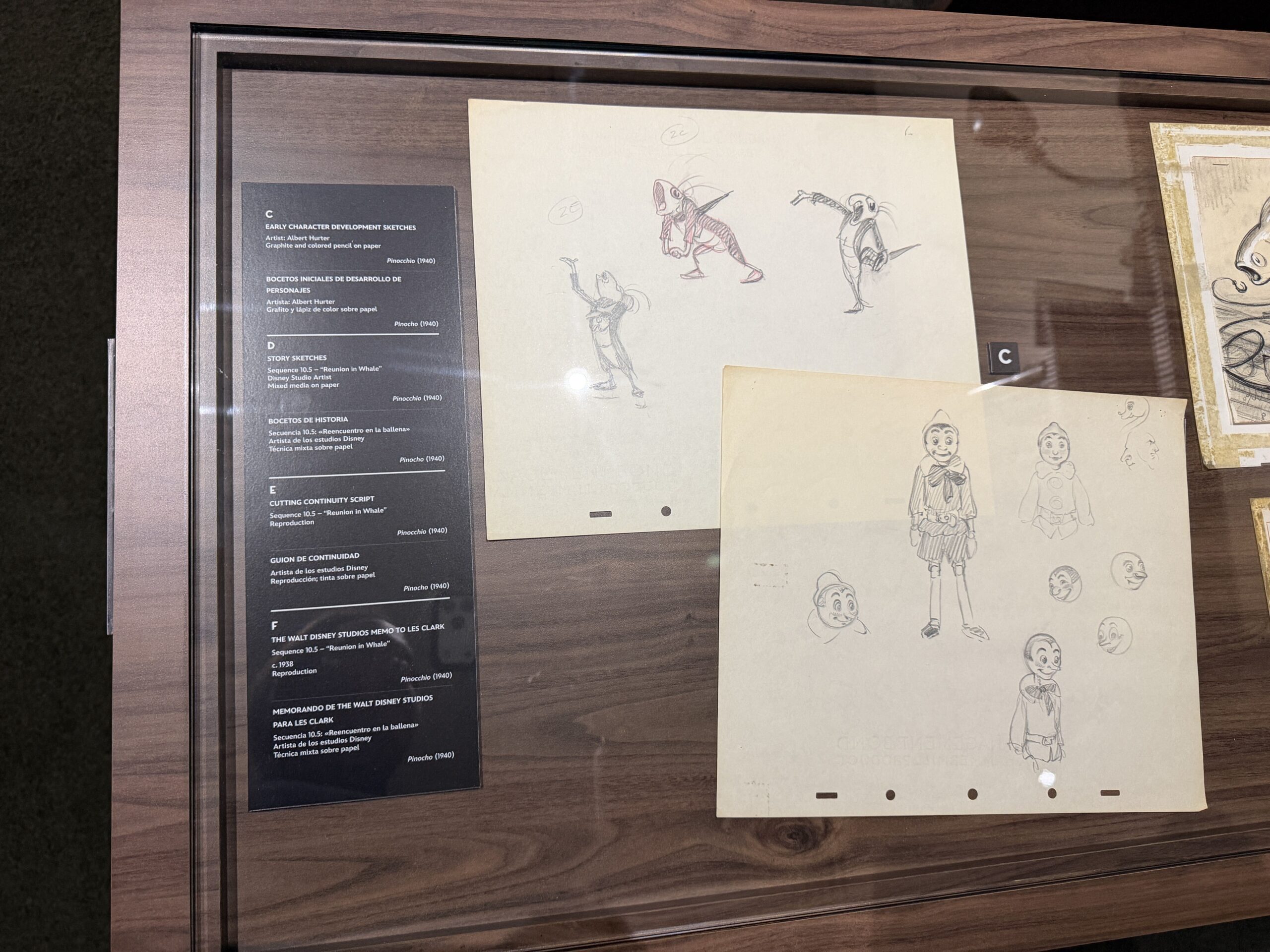
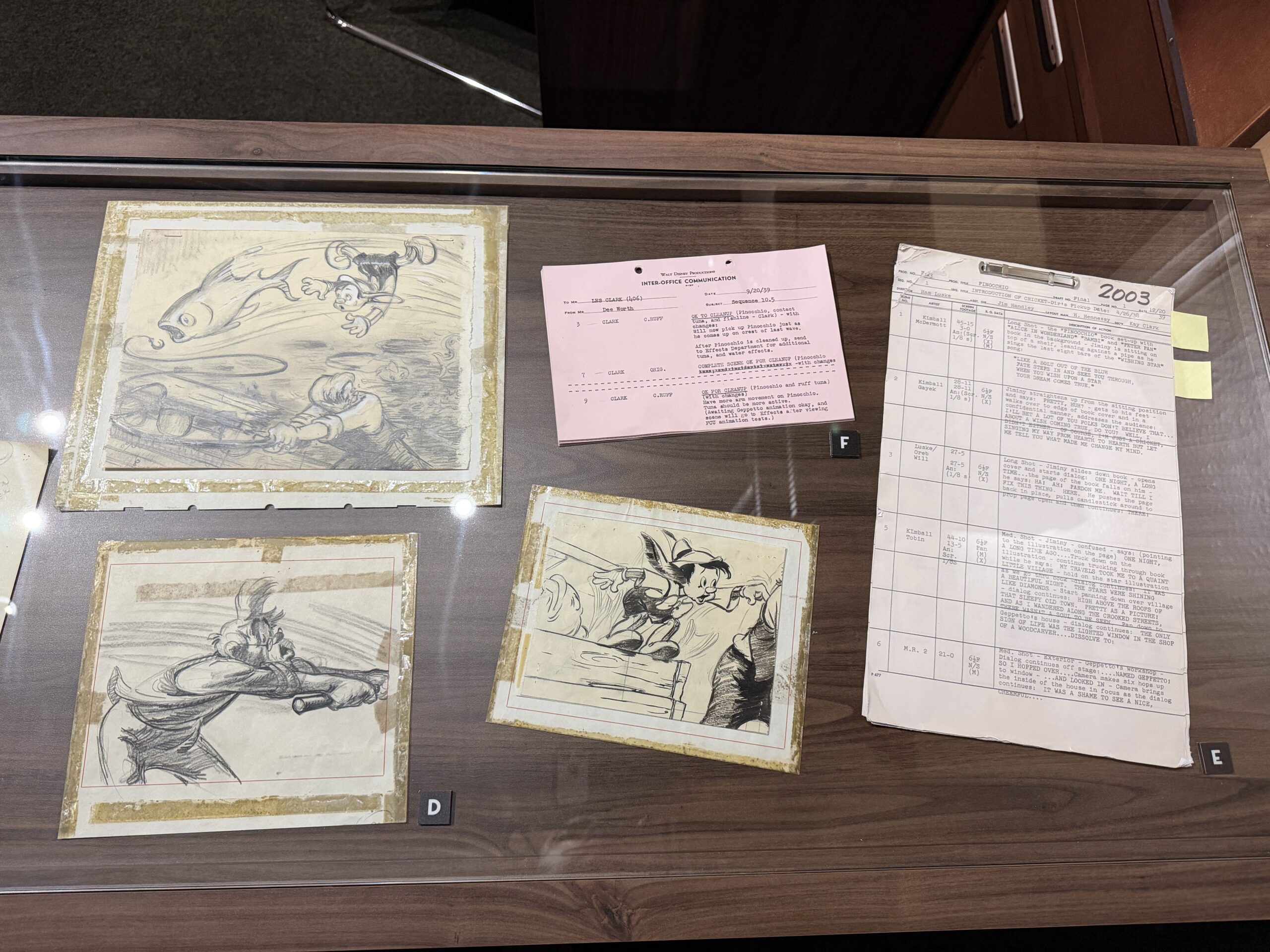
More concept art for the film, along with inter-office communication and scene action descriptions, can be studied in the display case.
Movement
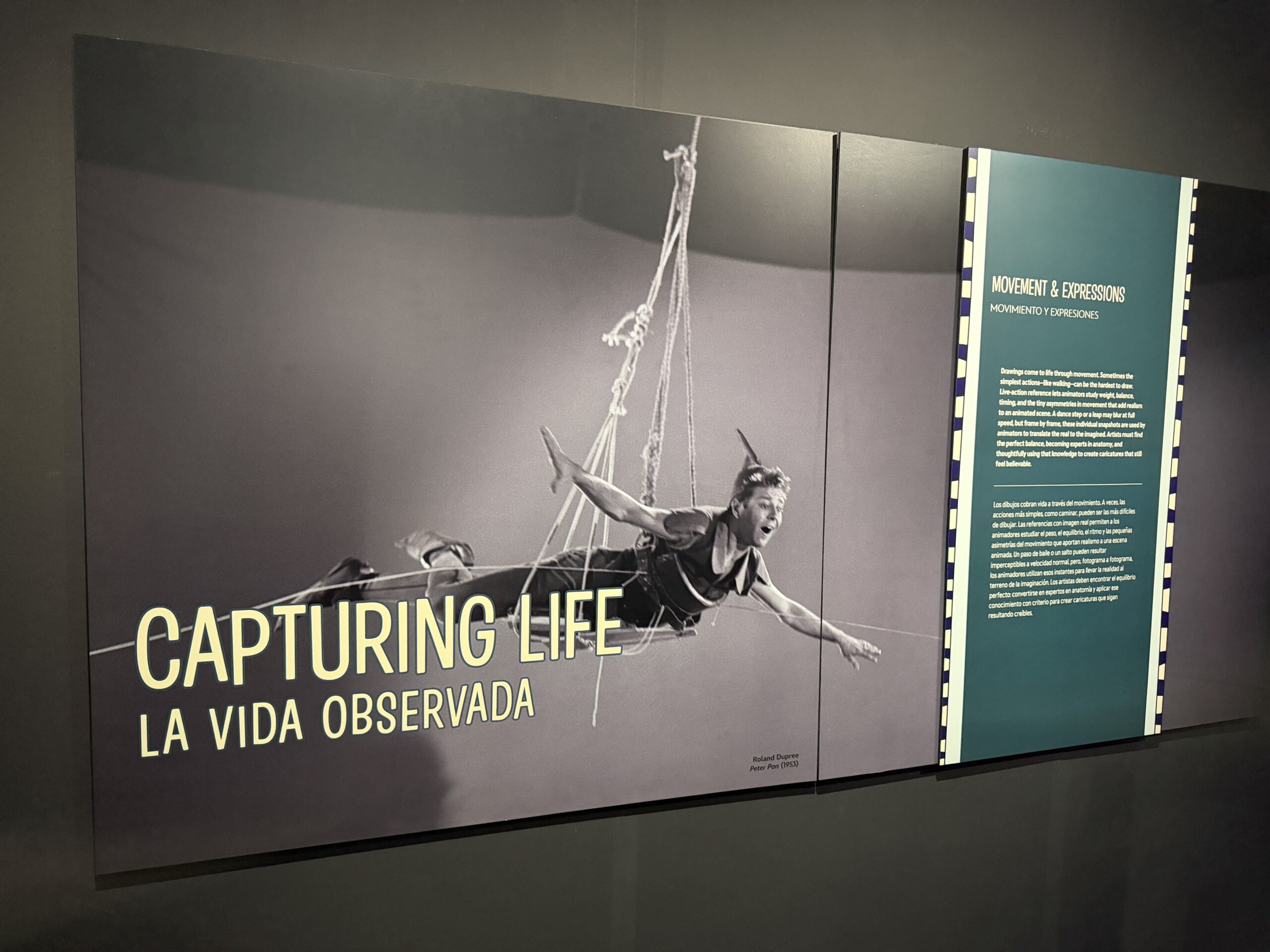
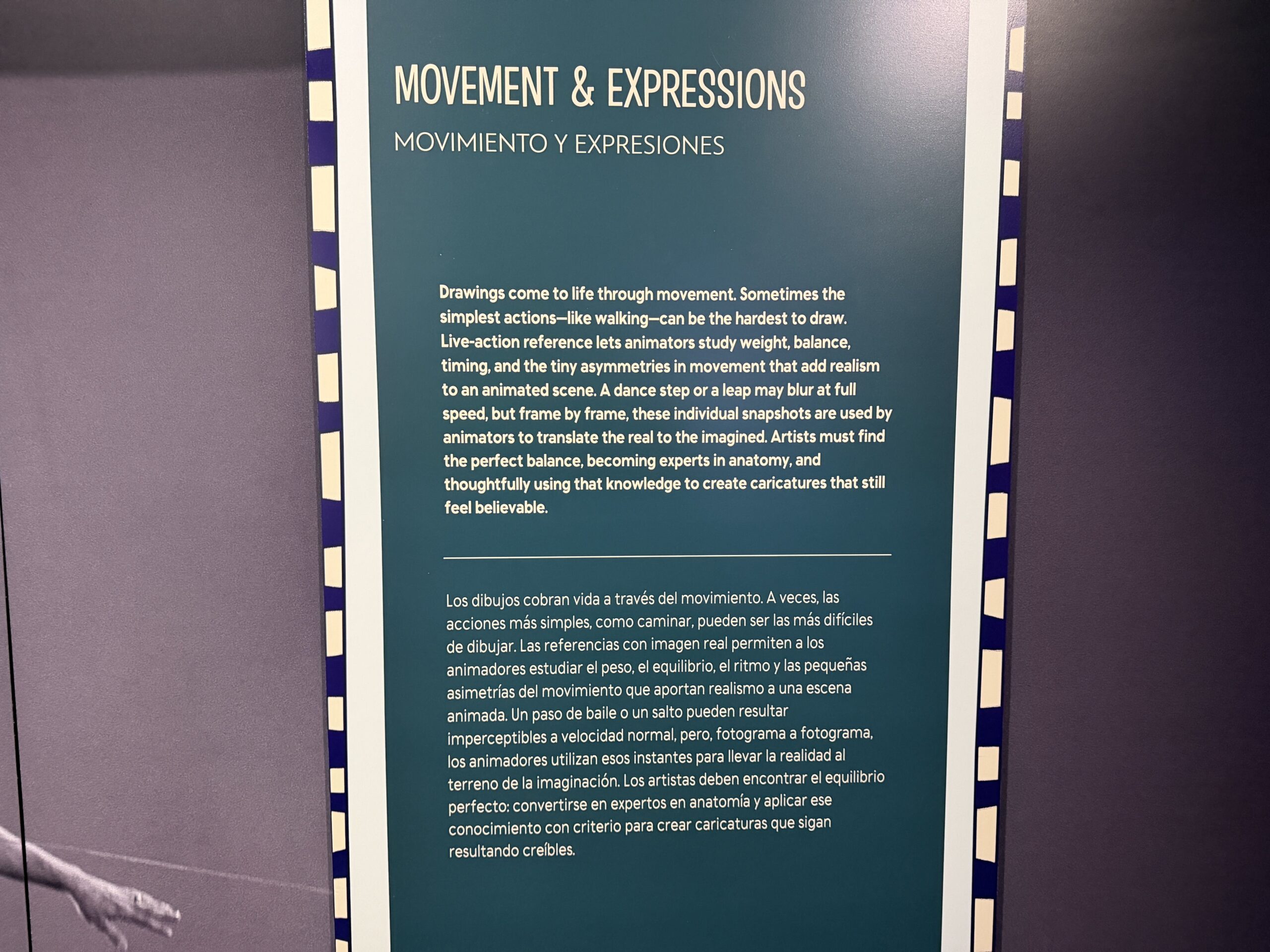
The next portion of the exhibit is themed to movement, as that is how drawings come to life. Sometimes the simplest actions, like walking, can be the hardest to draw. Using live-action references can help animators more closely study the weight, balance, timing, and tiny asymmetries of movement that impact the realism of an animated scene.
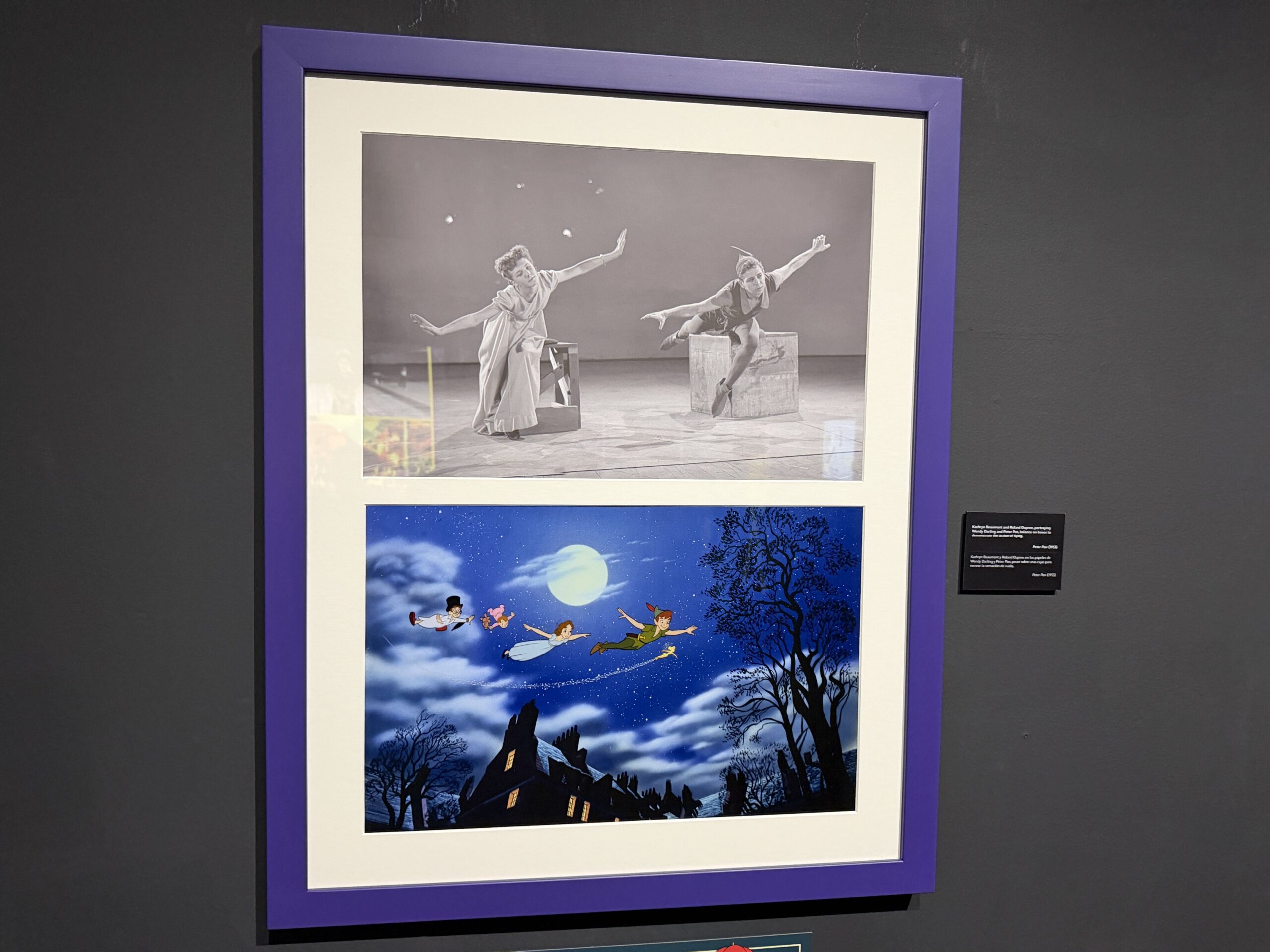
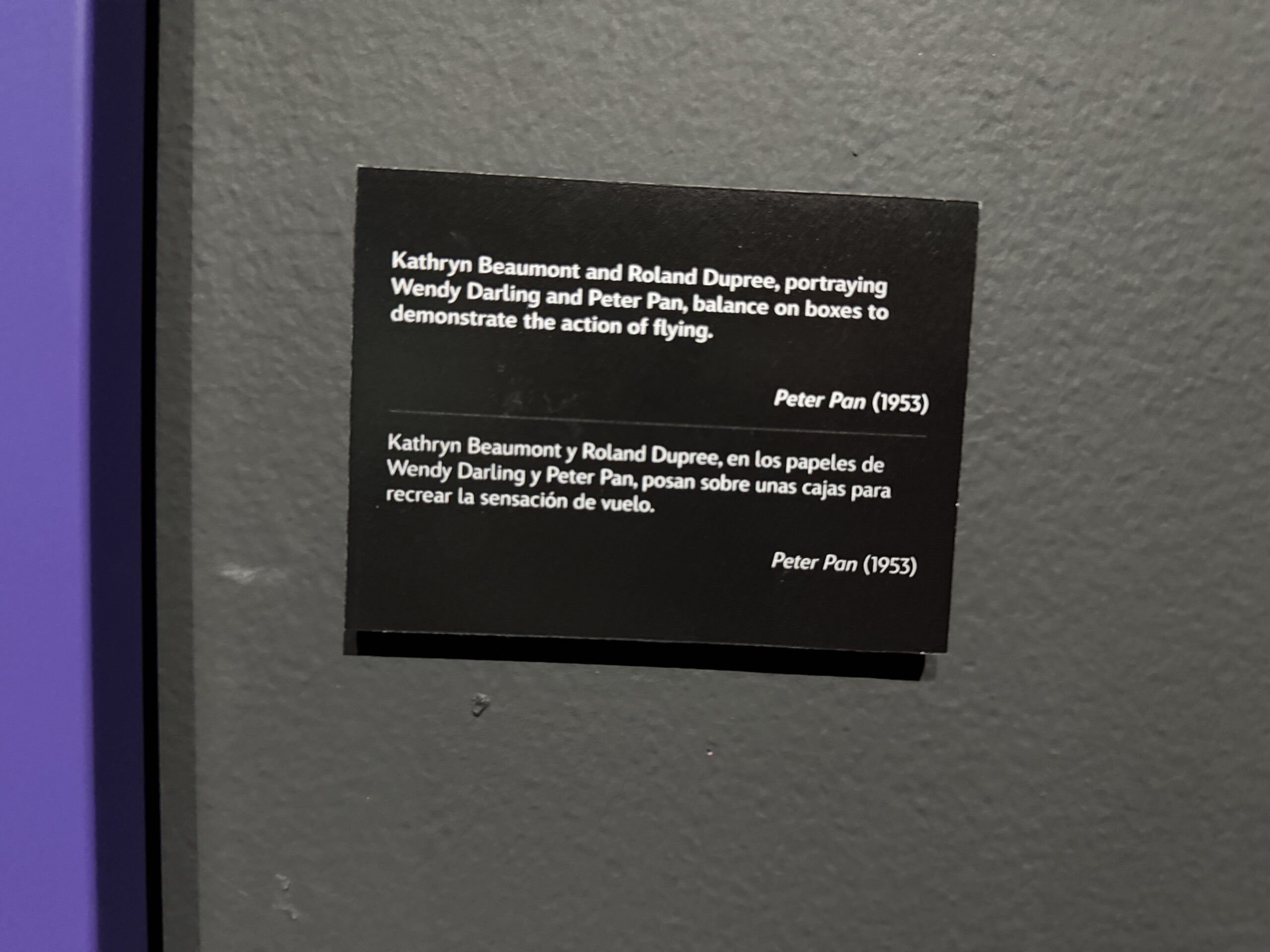
Several photographs on the wall show the live-action references performing specific movements for different films. In this photo, Kathryn Beaumont (Wendy) and Roland Dupree (Peter Pan) balance on boxes to demonstrate “flying” for Peter Pan (1953).
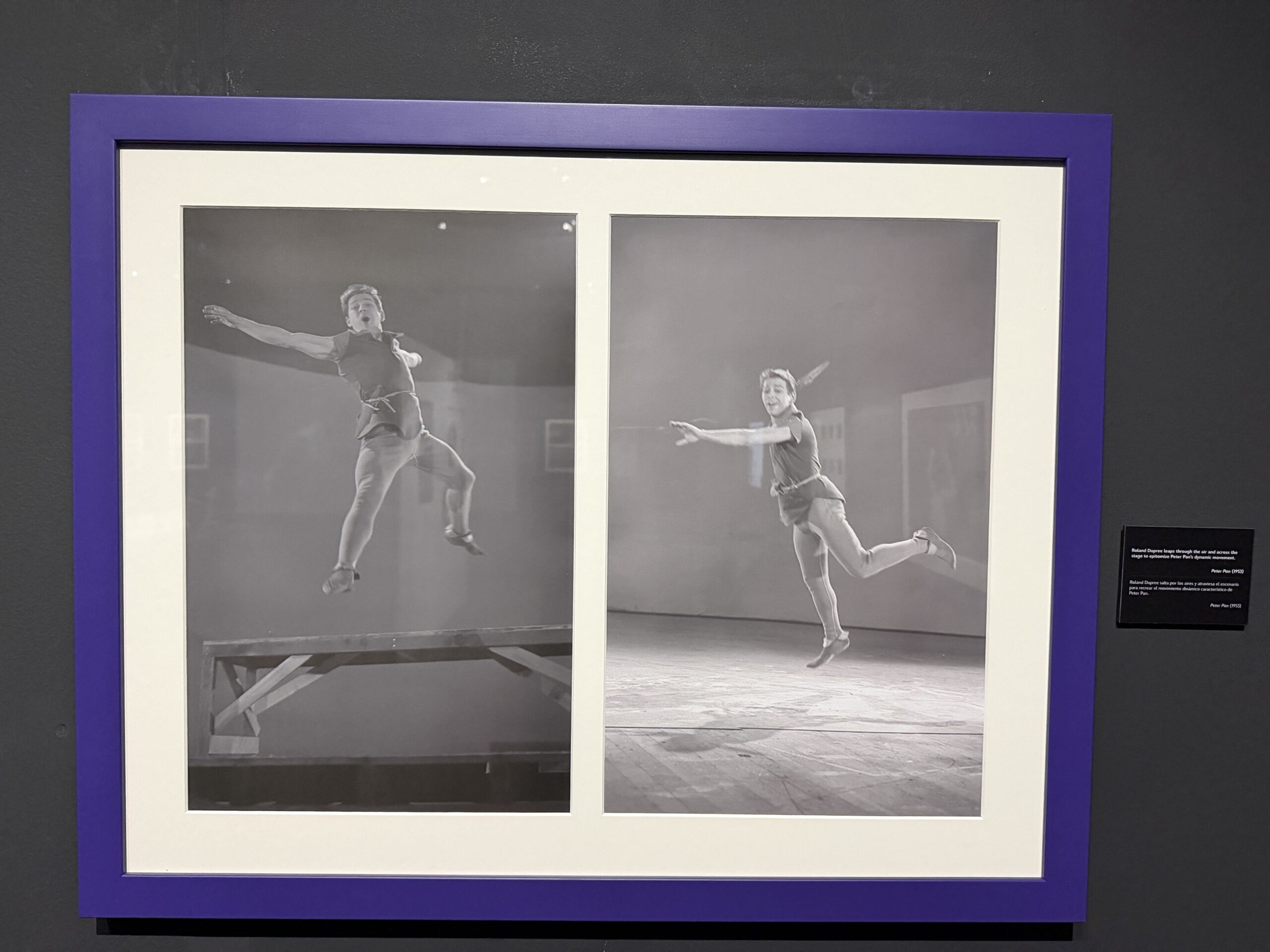
Peter Pan’s dynamic movement is captured by these photos of Roland Dupree leaping through the air.
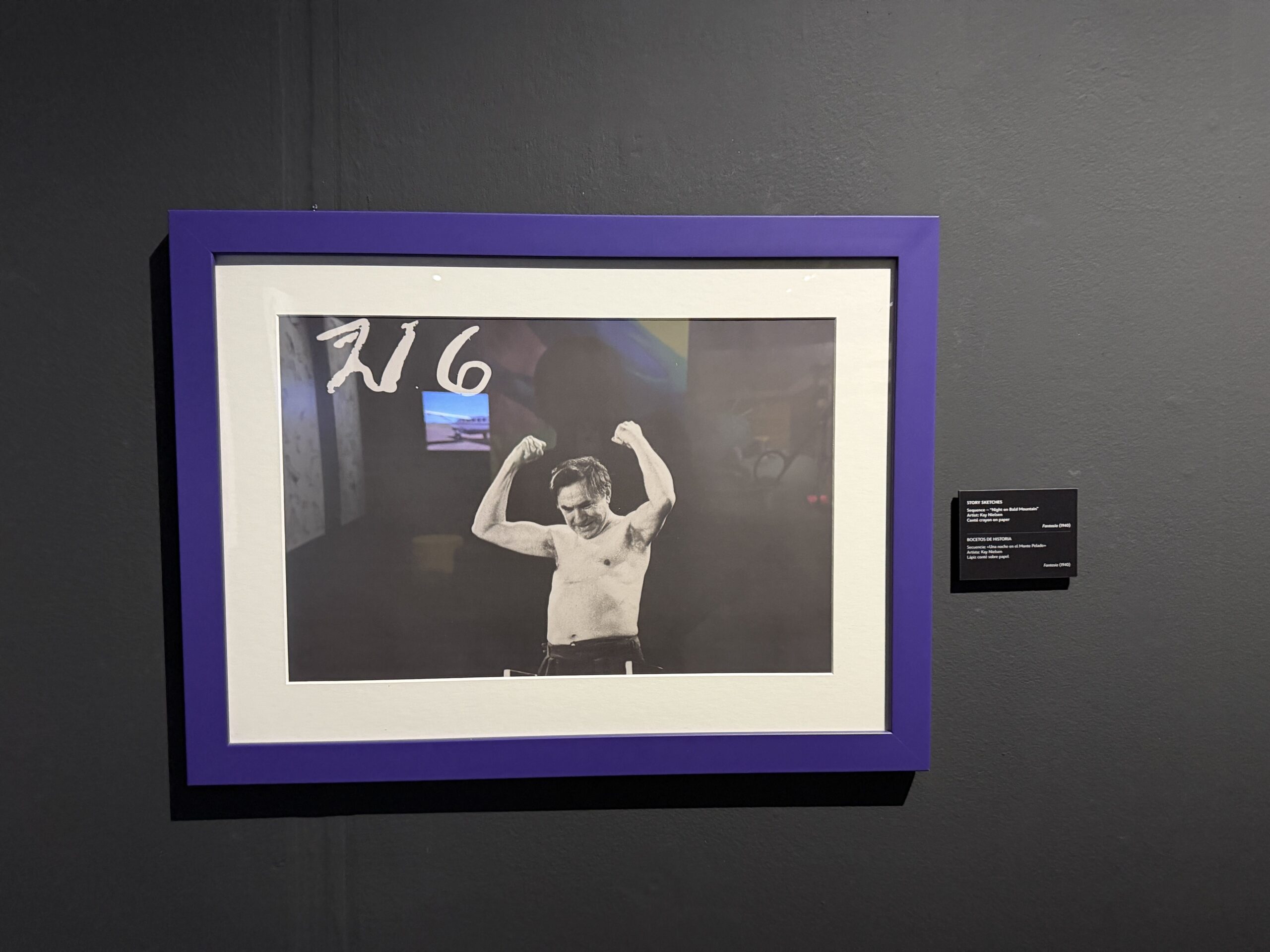
This story sketch created by artist Kay Nielsen with conté crayon on paper shows an actor raising their arms above them, as seen in the “Night on Bald Mountain” sequence in Fantasia (1940).
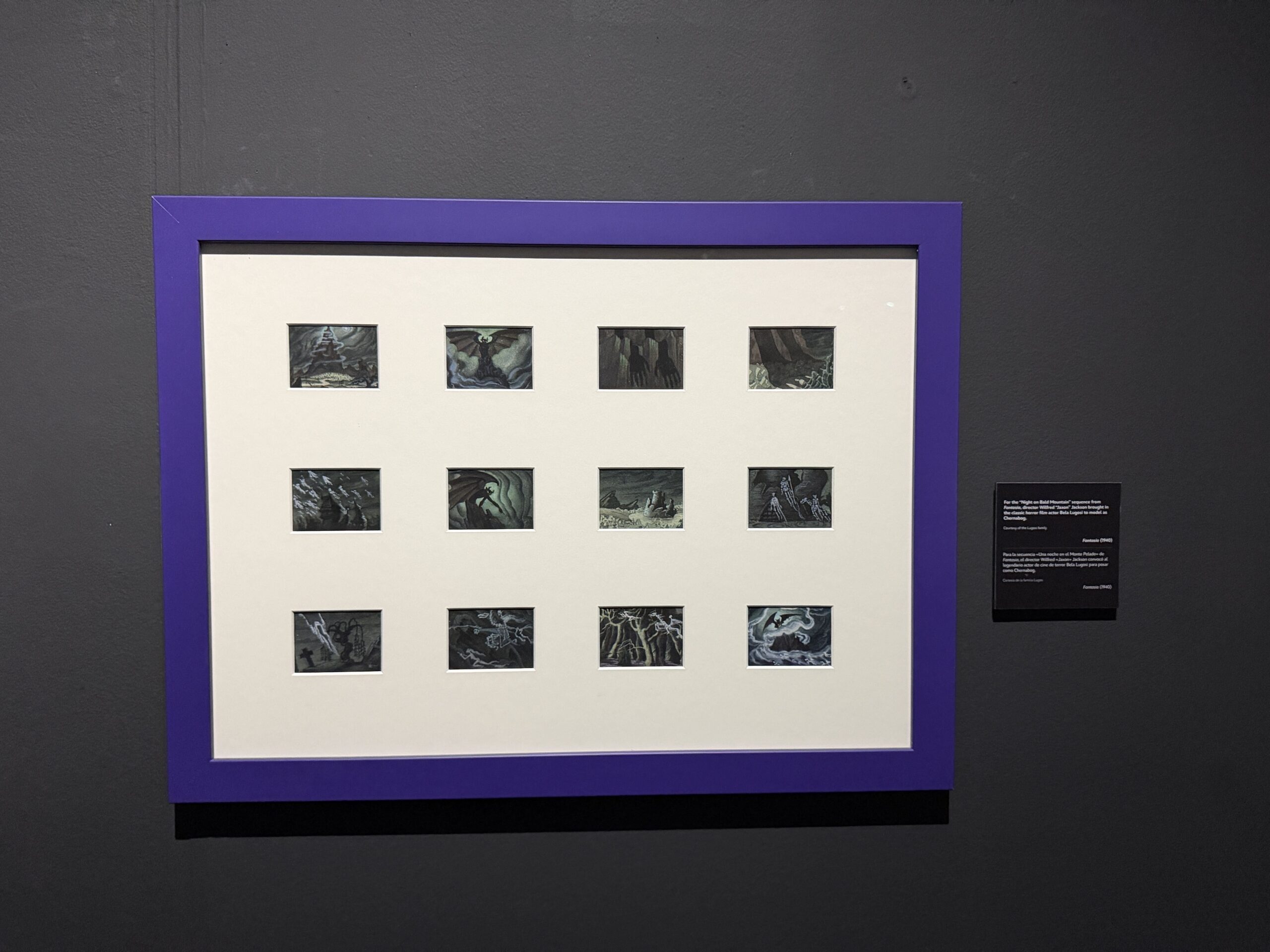
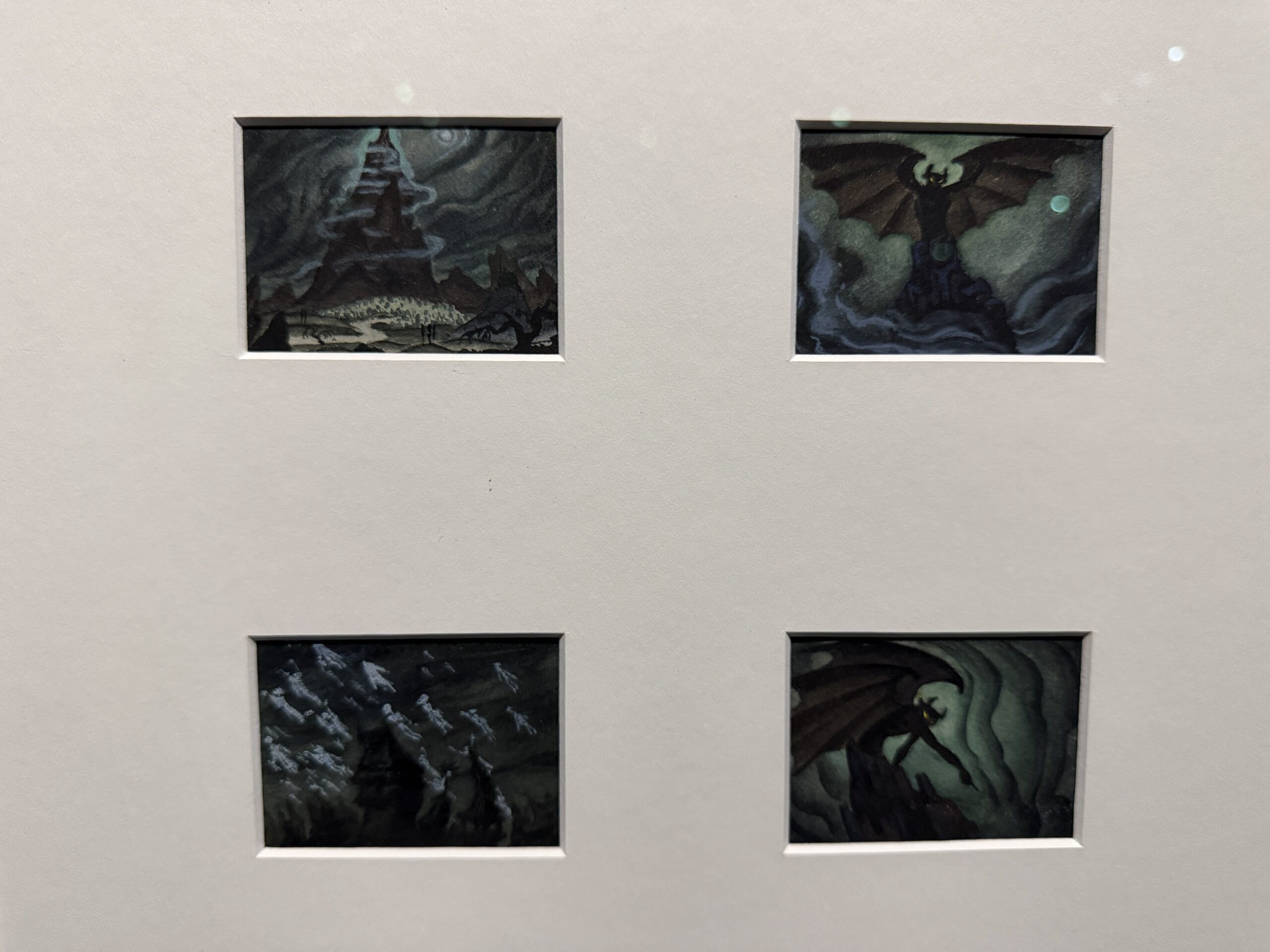
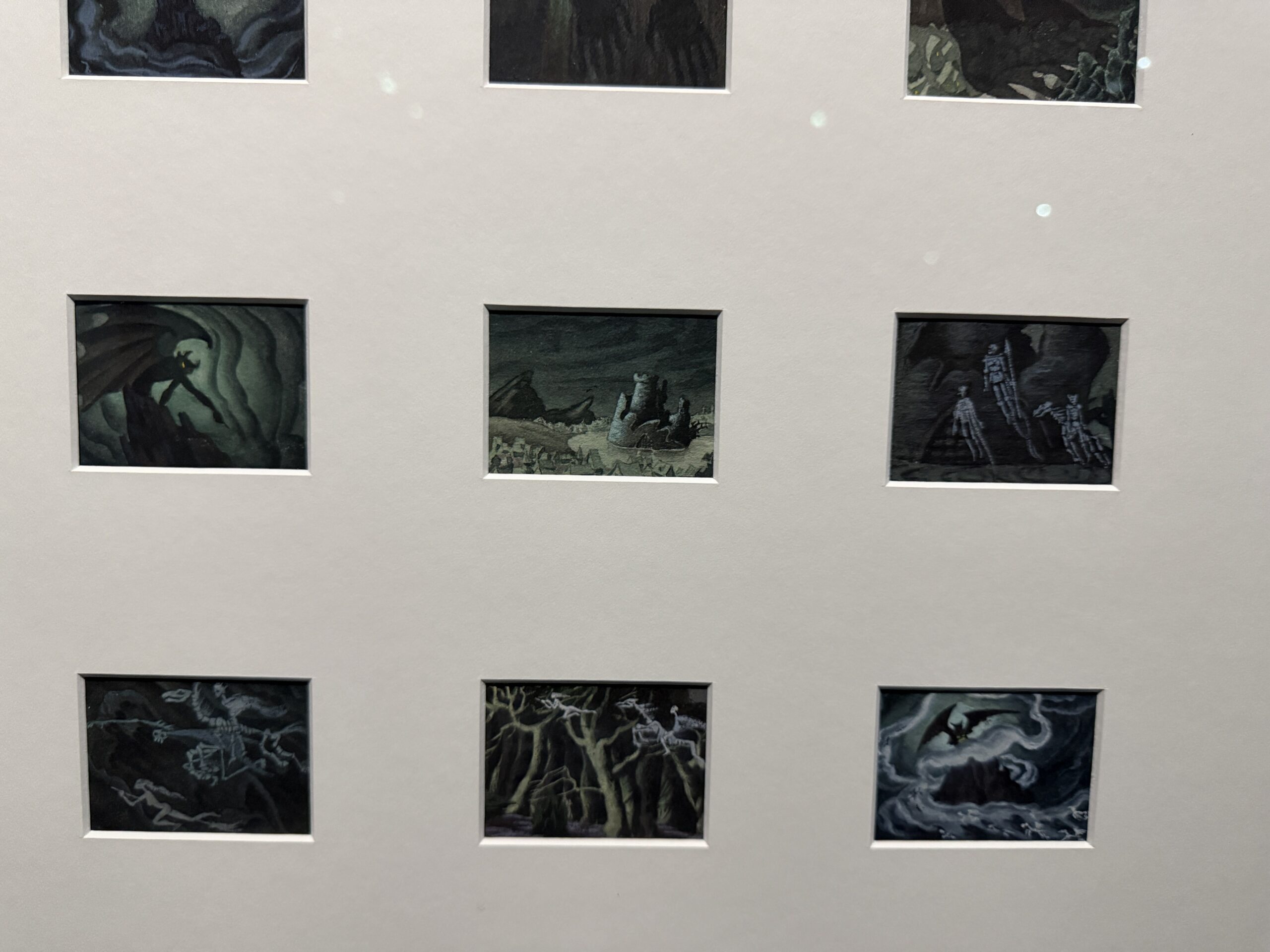
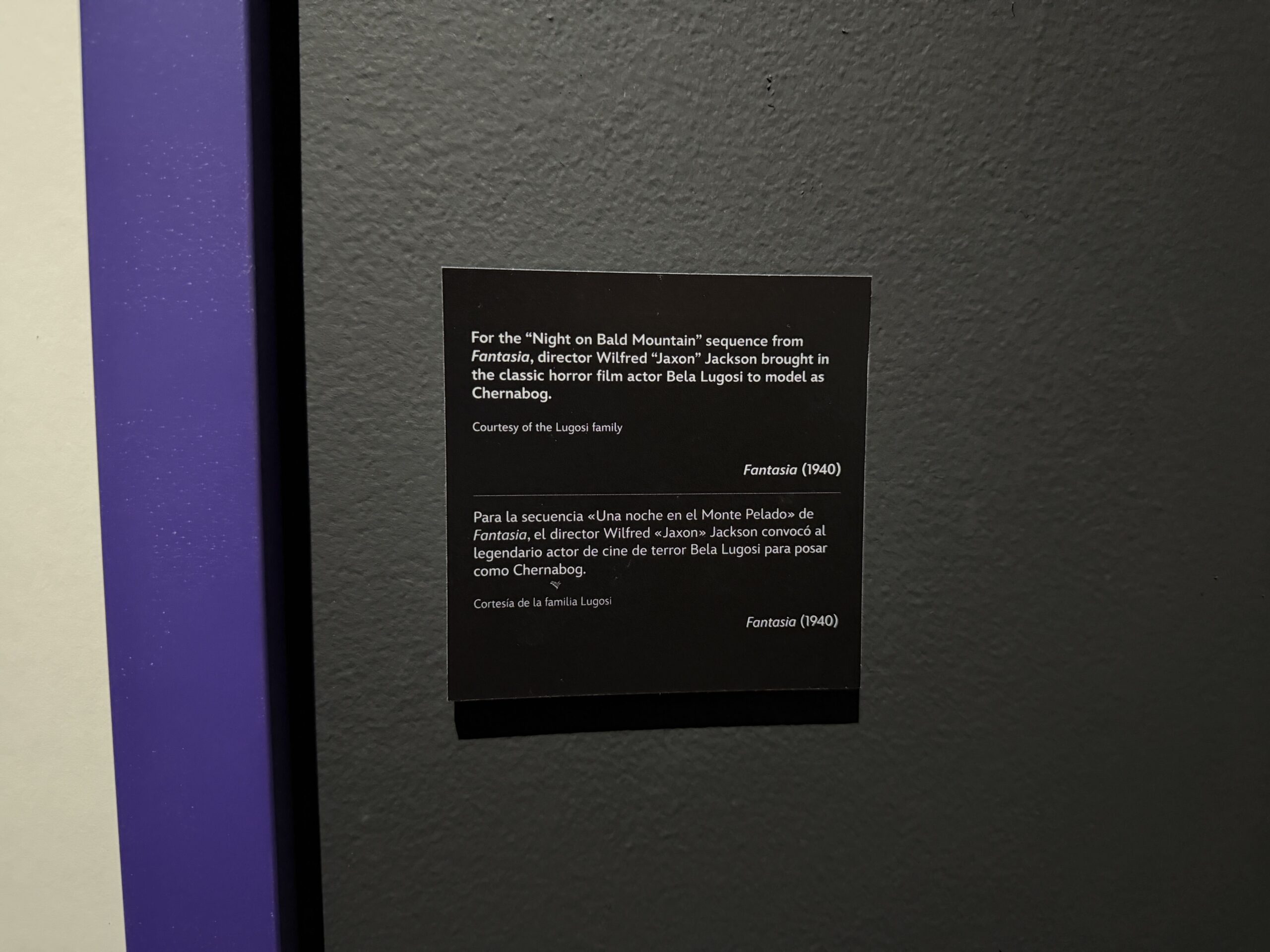
Several more squares of concept art depict the “Night on Bald Mountain” sequence. Director Wilfred “Jaxon” Jackson brought in classic horror film actor Bela Lugosi to model as Chernabog.
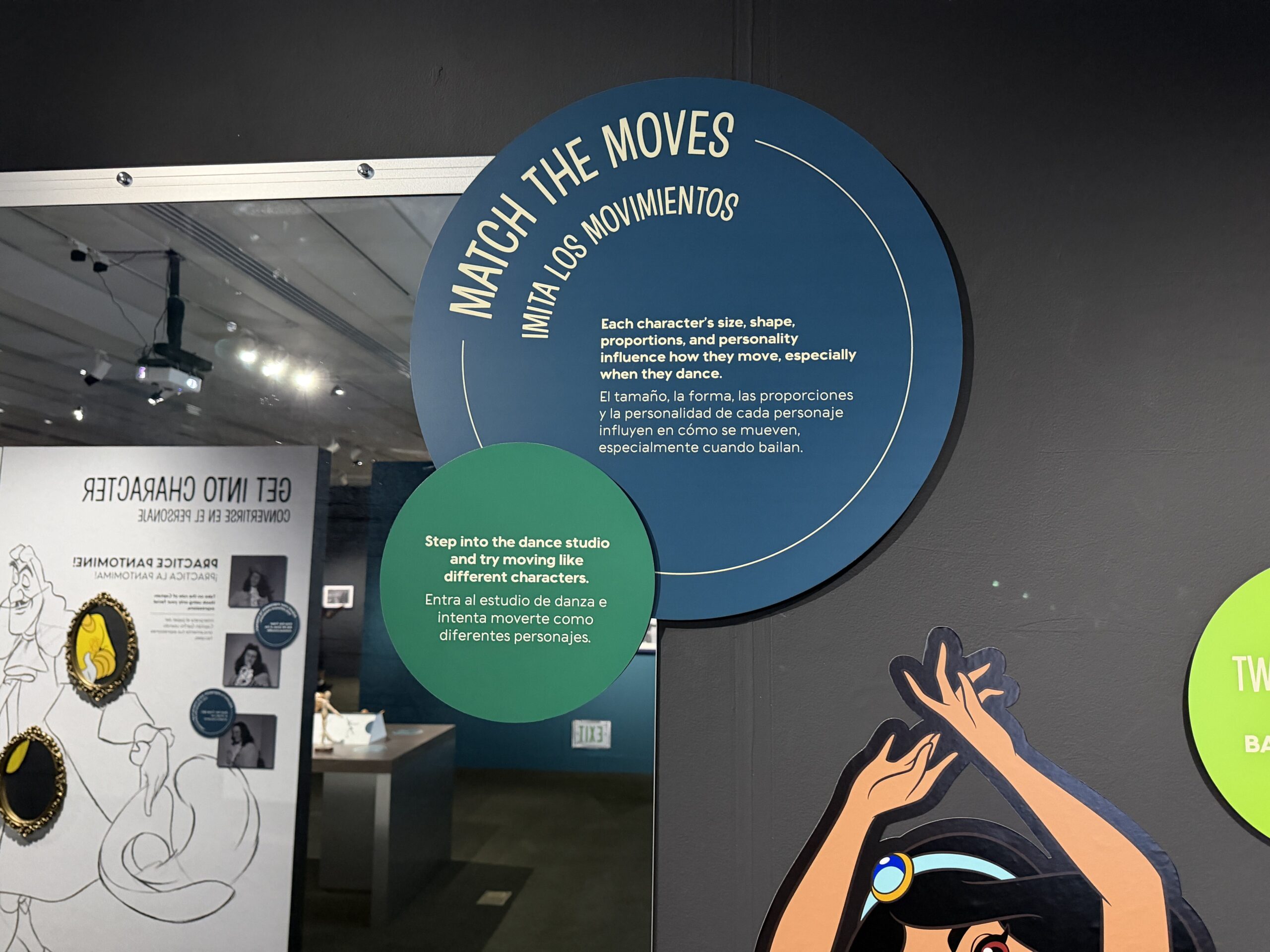
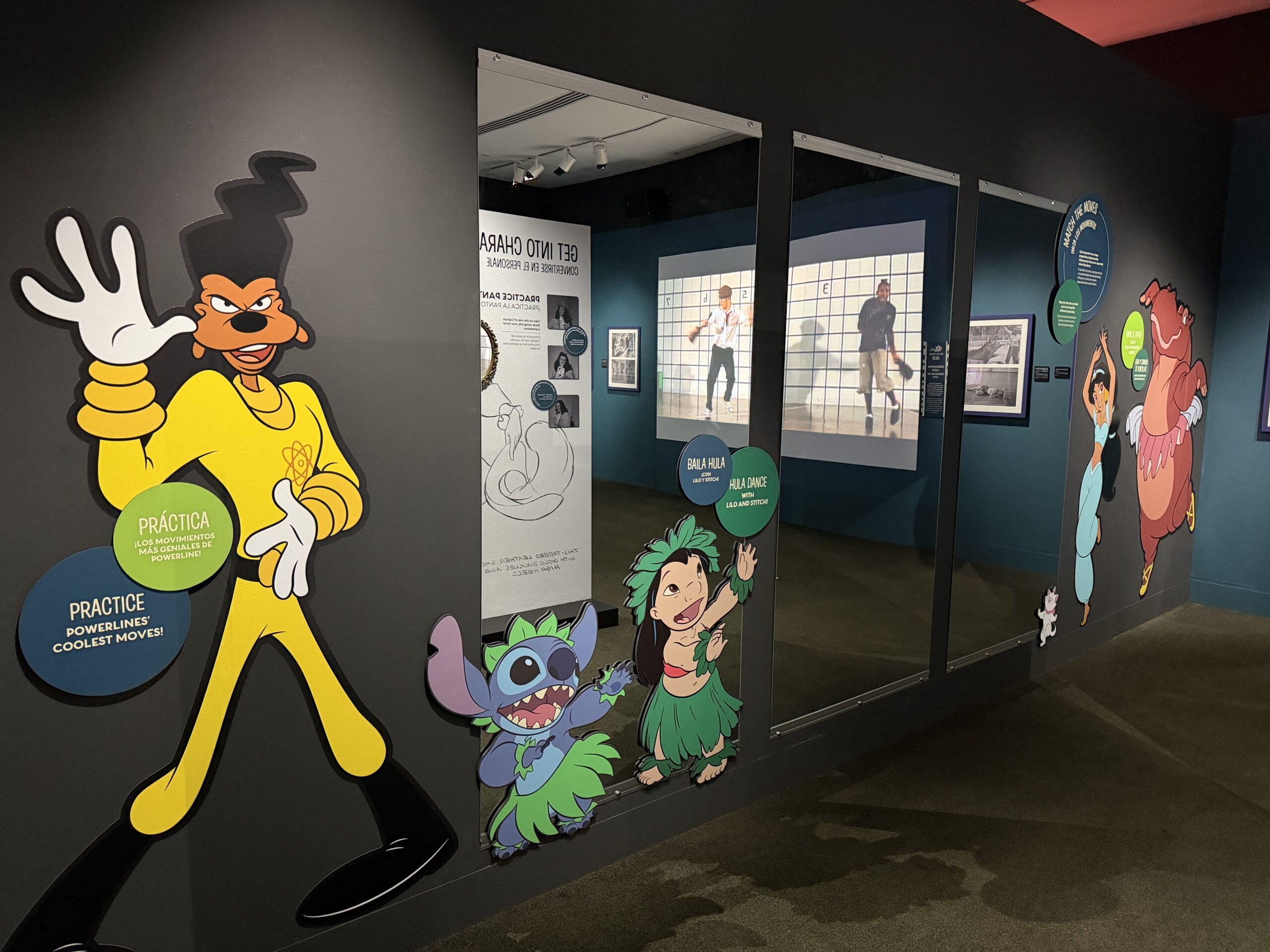
More interactive elements encourage guests to step into the dance studio and try moving like different Disney characters.
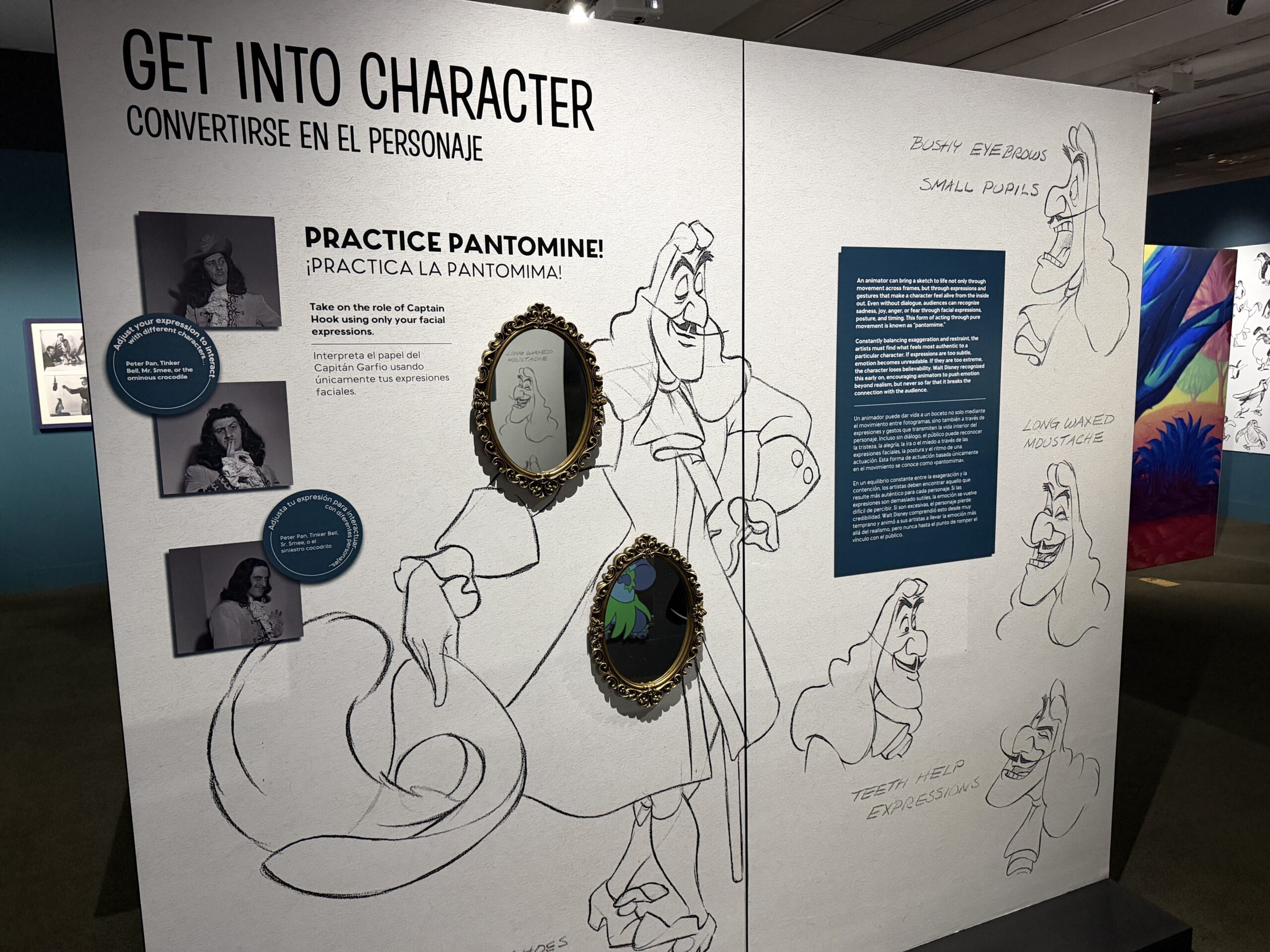
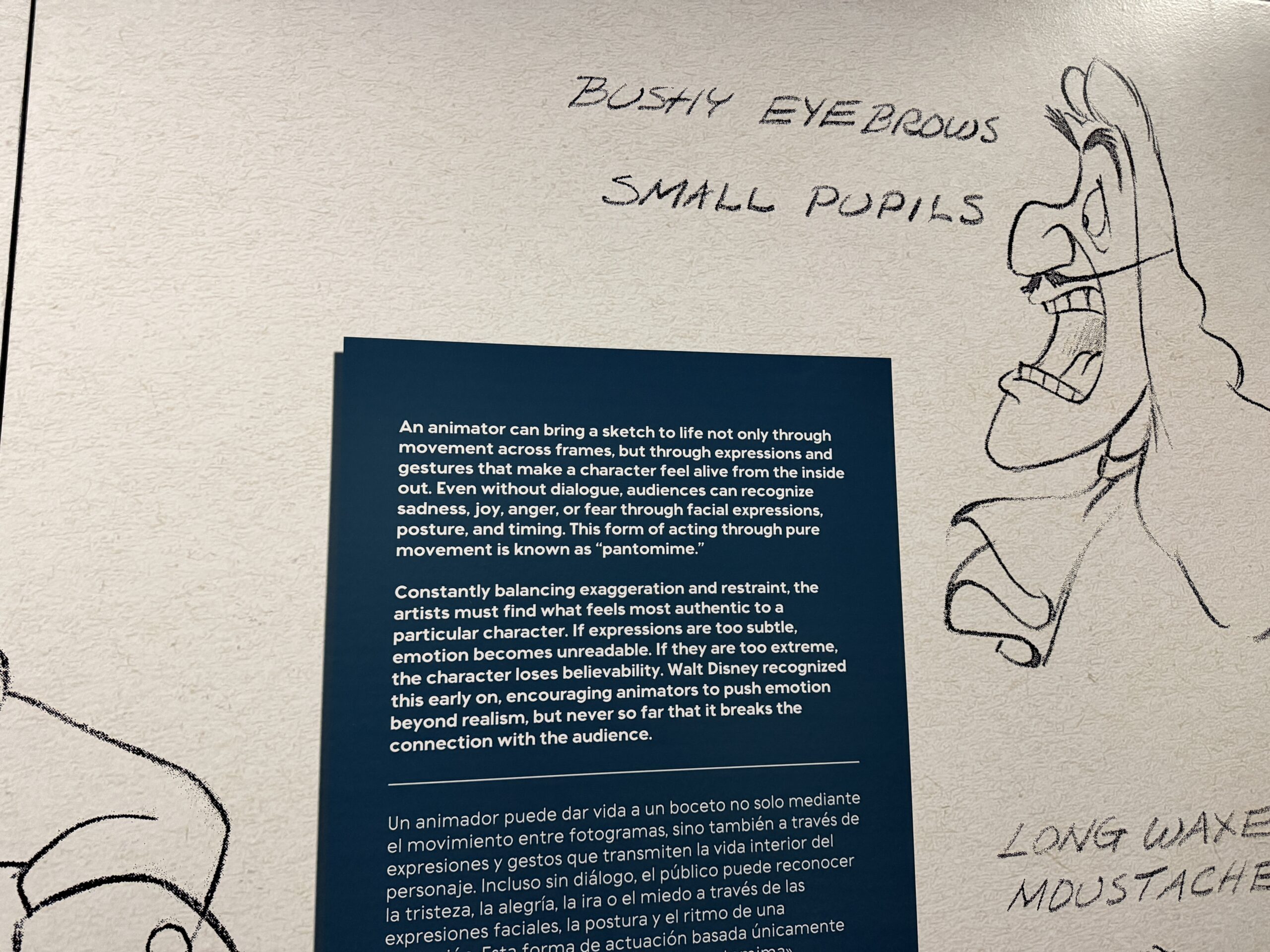
Guests can also practice the art of pantomime by impersonating Captain Hook while only using facial expressions.
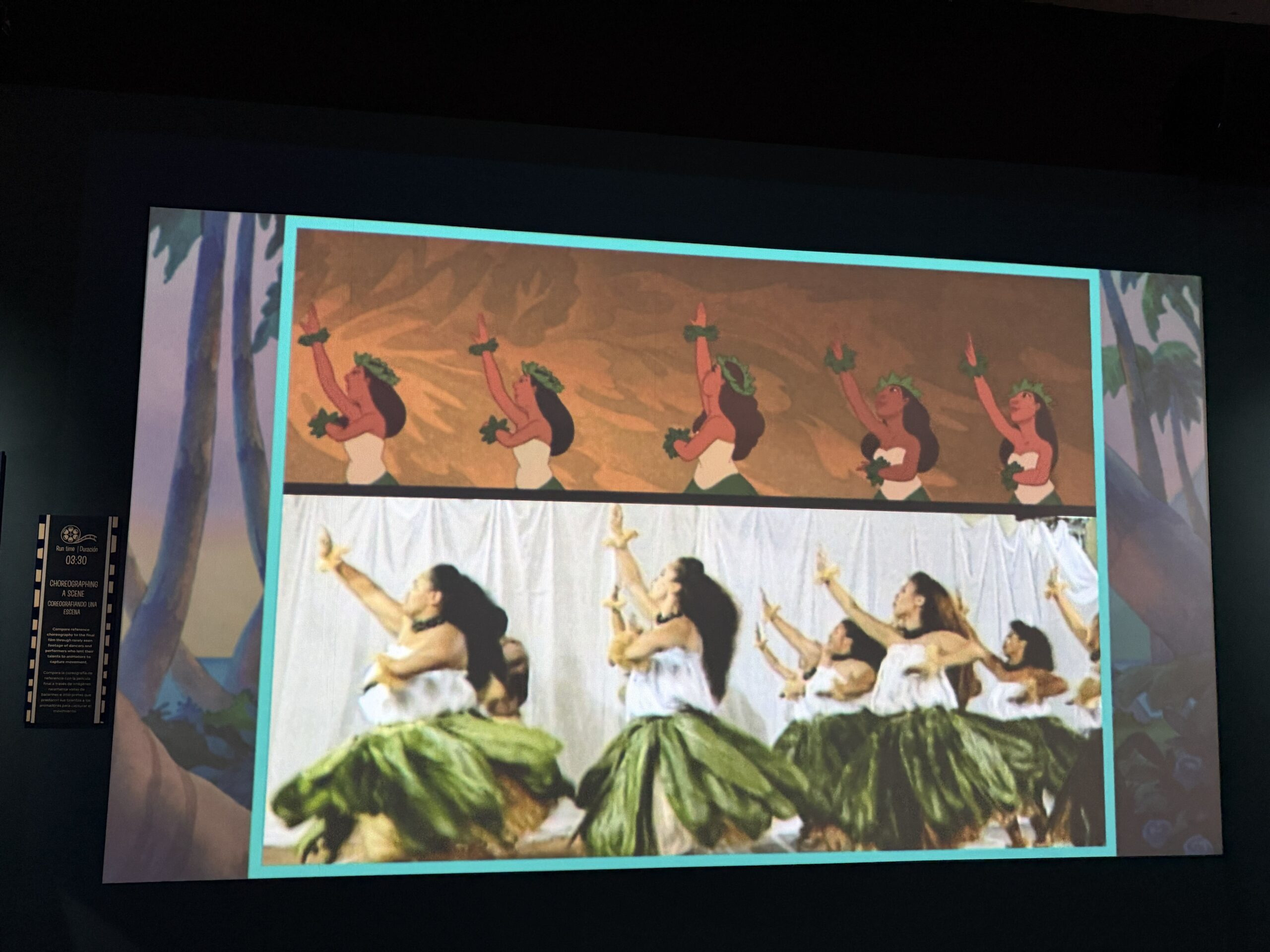
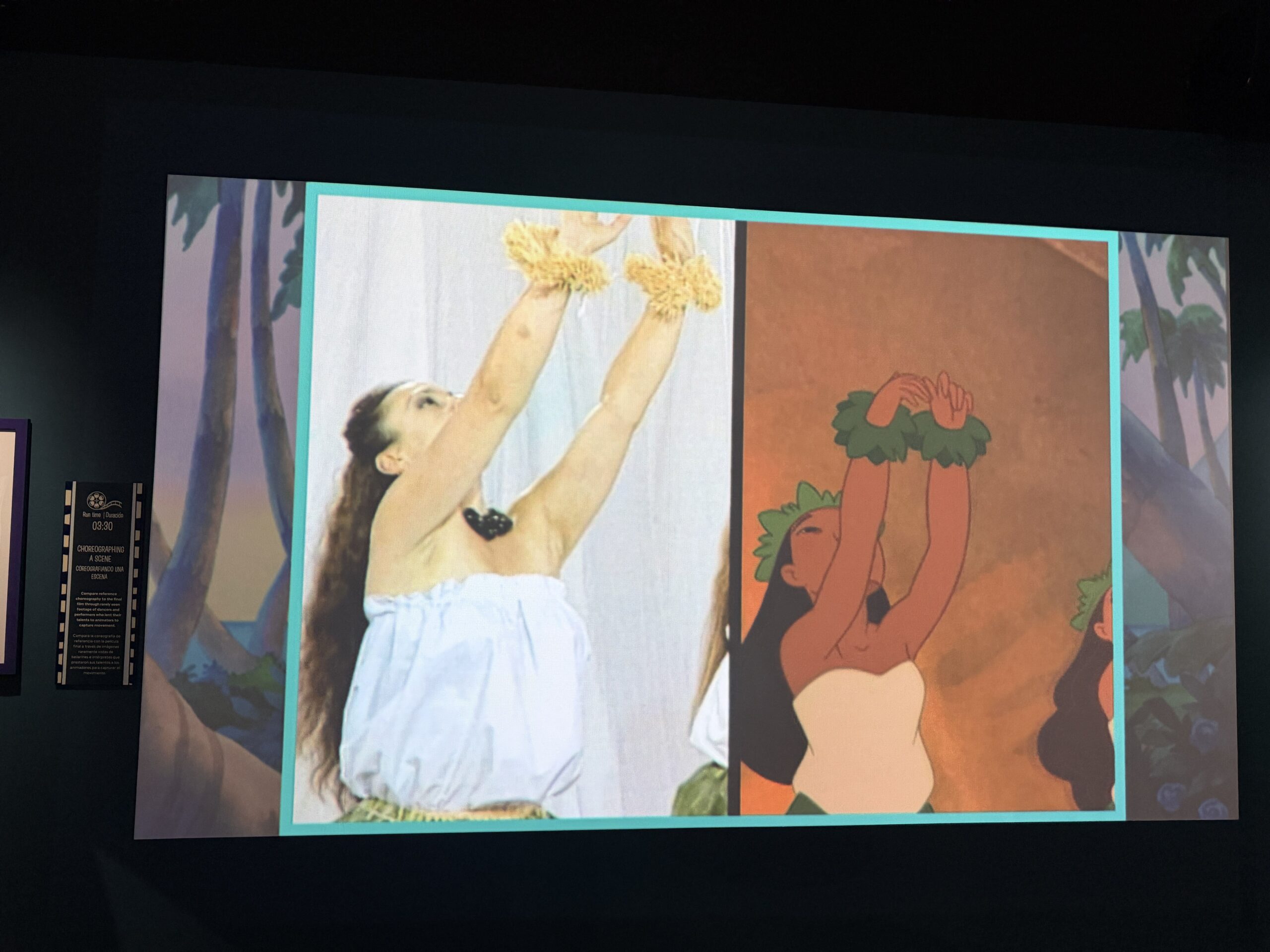
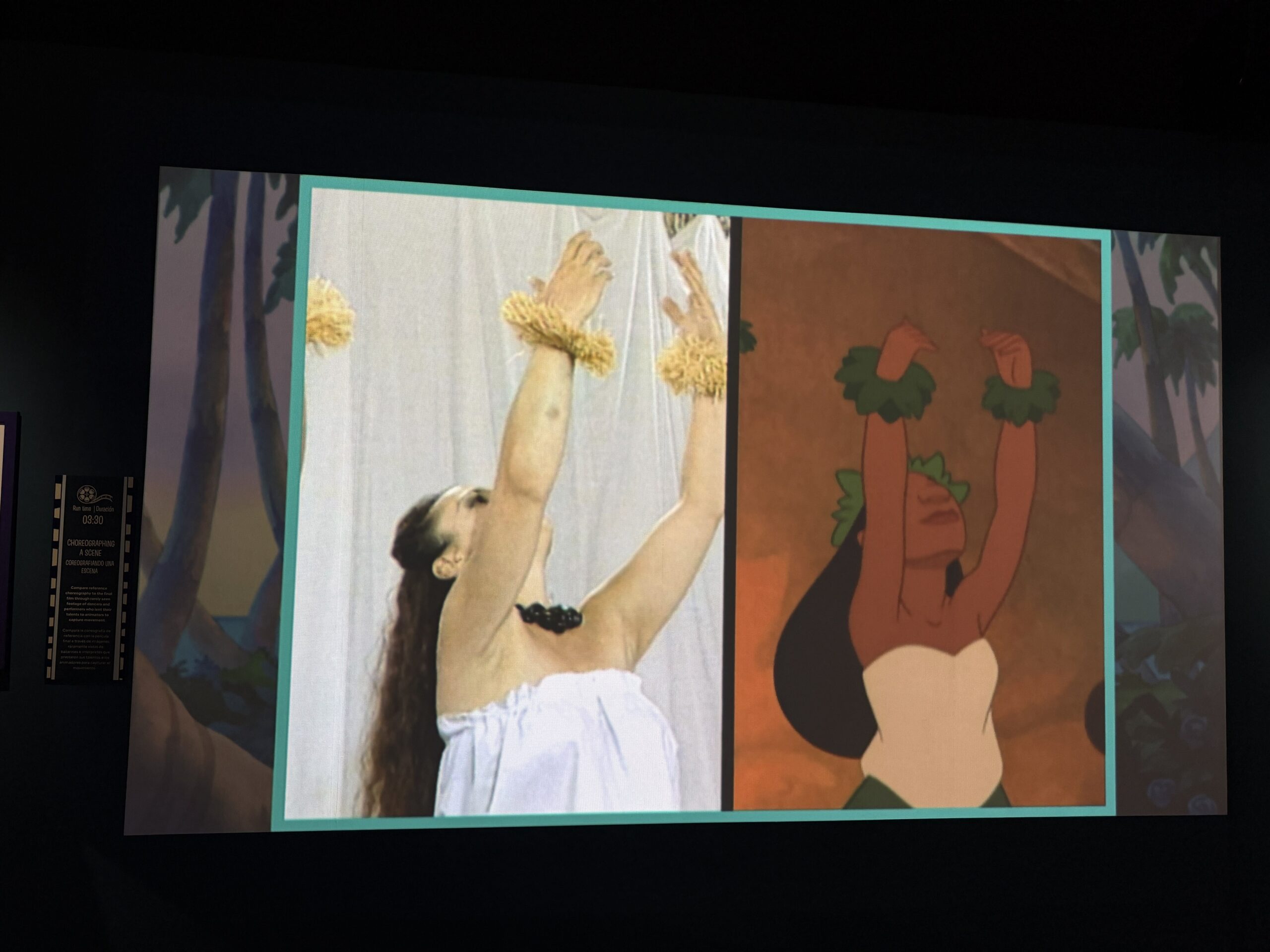
A short film about studying dance plays as well, and it mentions Encanto and Lilo and Stitch.
Animal Studies
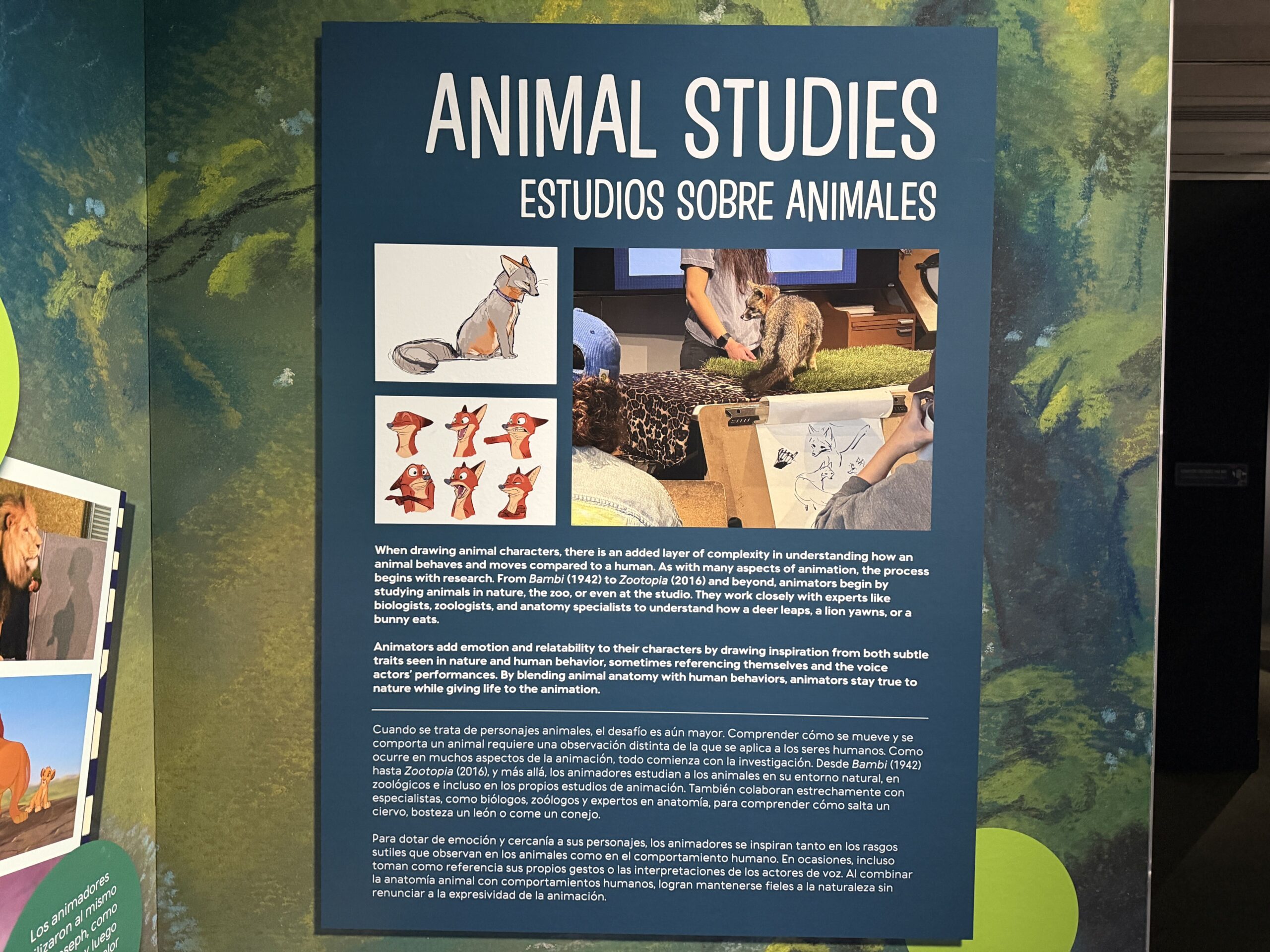
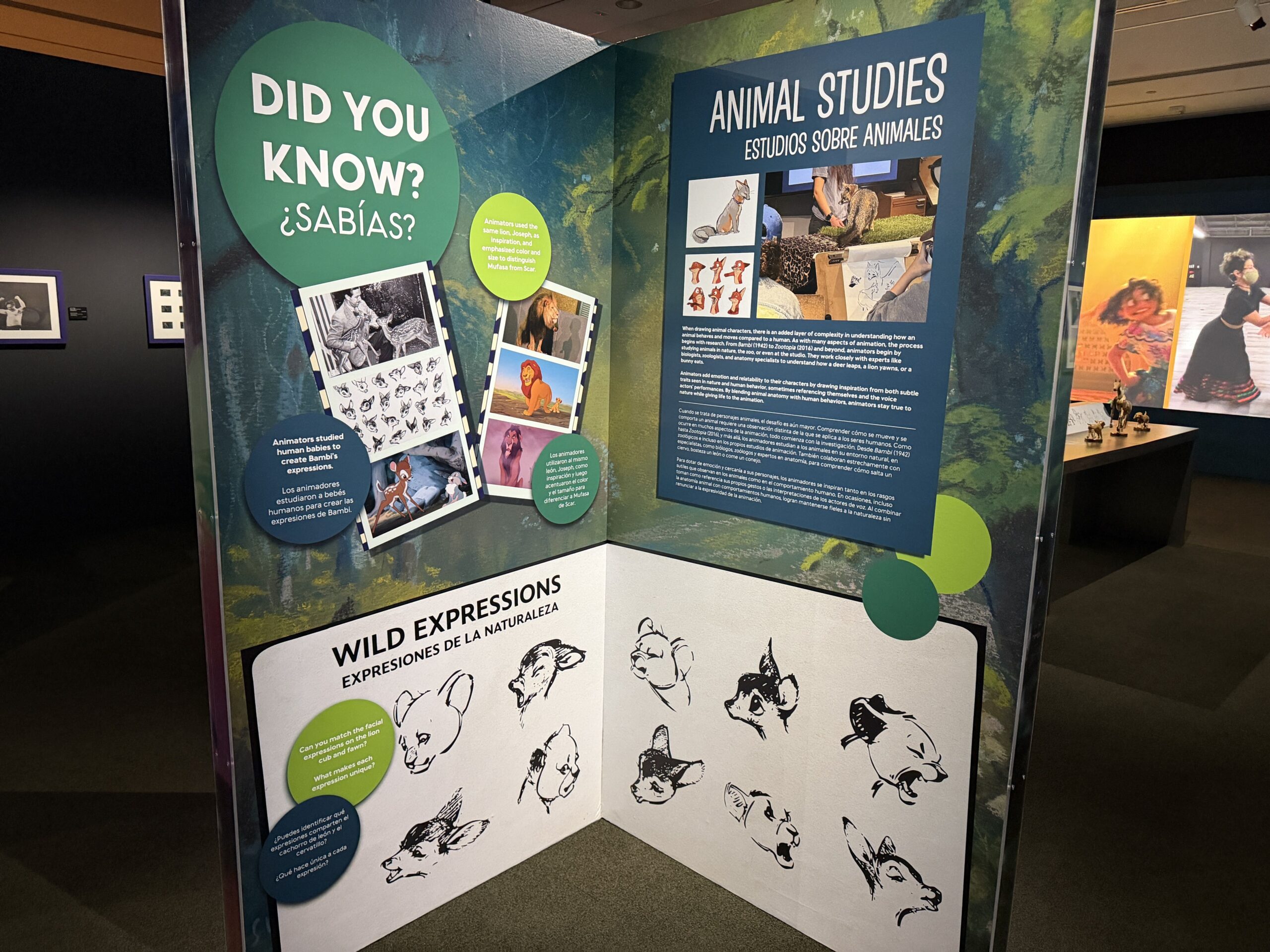
Animal characters, the cornerstone of Disney Animation, are also some of the most complex to animate. Animals behave and move differently than humans, so animators brought in experts like biologist, zoologists, and anatomy specialists to understand their behavior. Emotion inspired by subtle traits in nature as well as the voice actors’ performances can then be added to the characters to bring them to life.
Some fun facts on the display mention that animators studied human babies to create Bambi’s expressions, and the same lion, Joseph, was used as the live-action references for Mufasa and Scar (The Lion King).
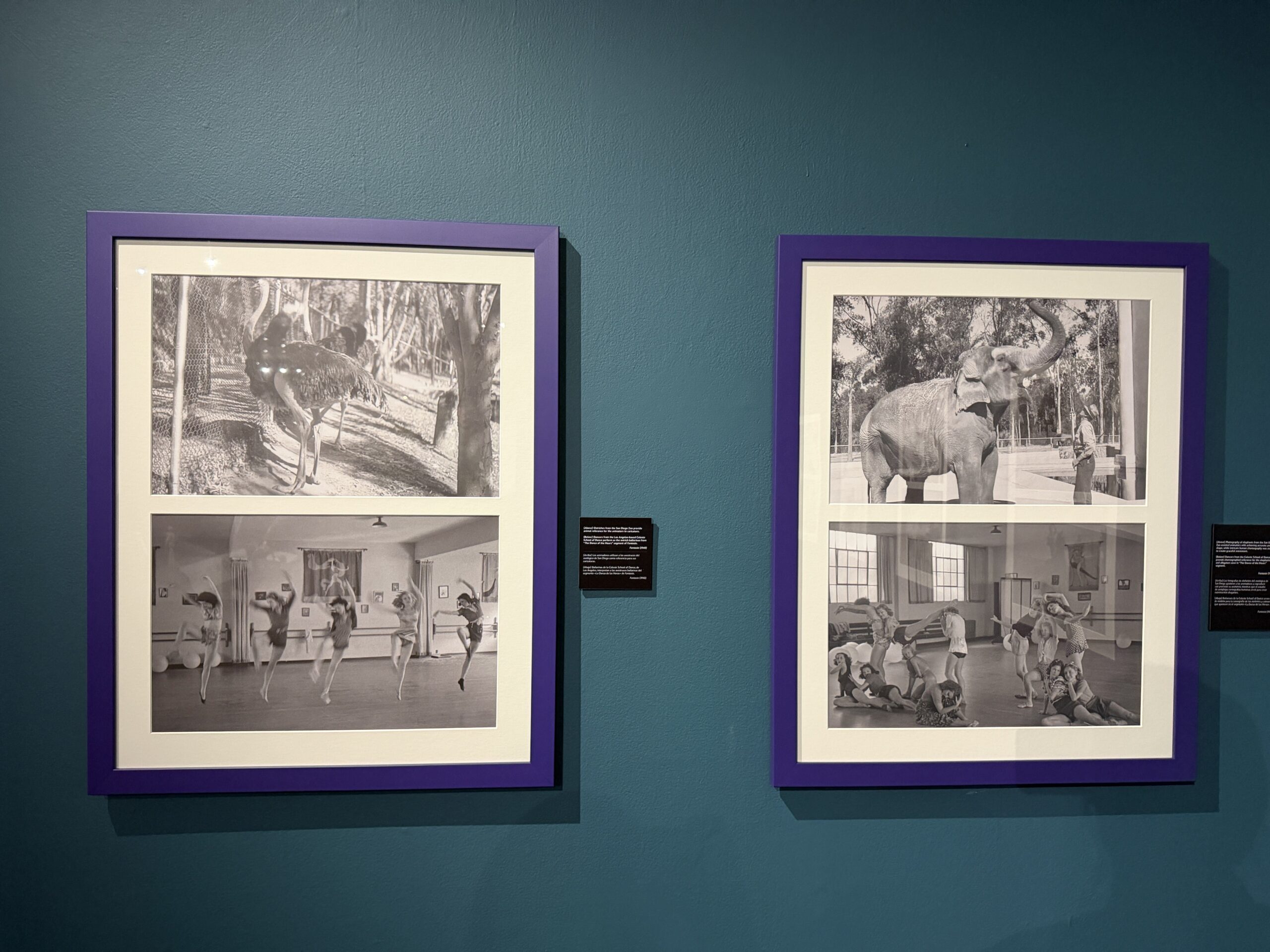
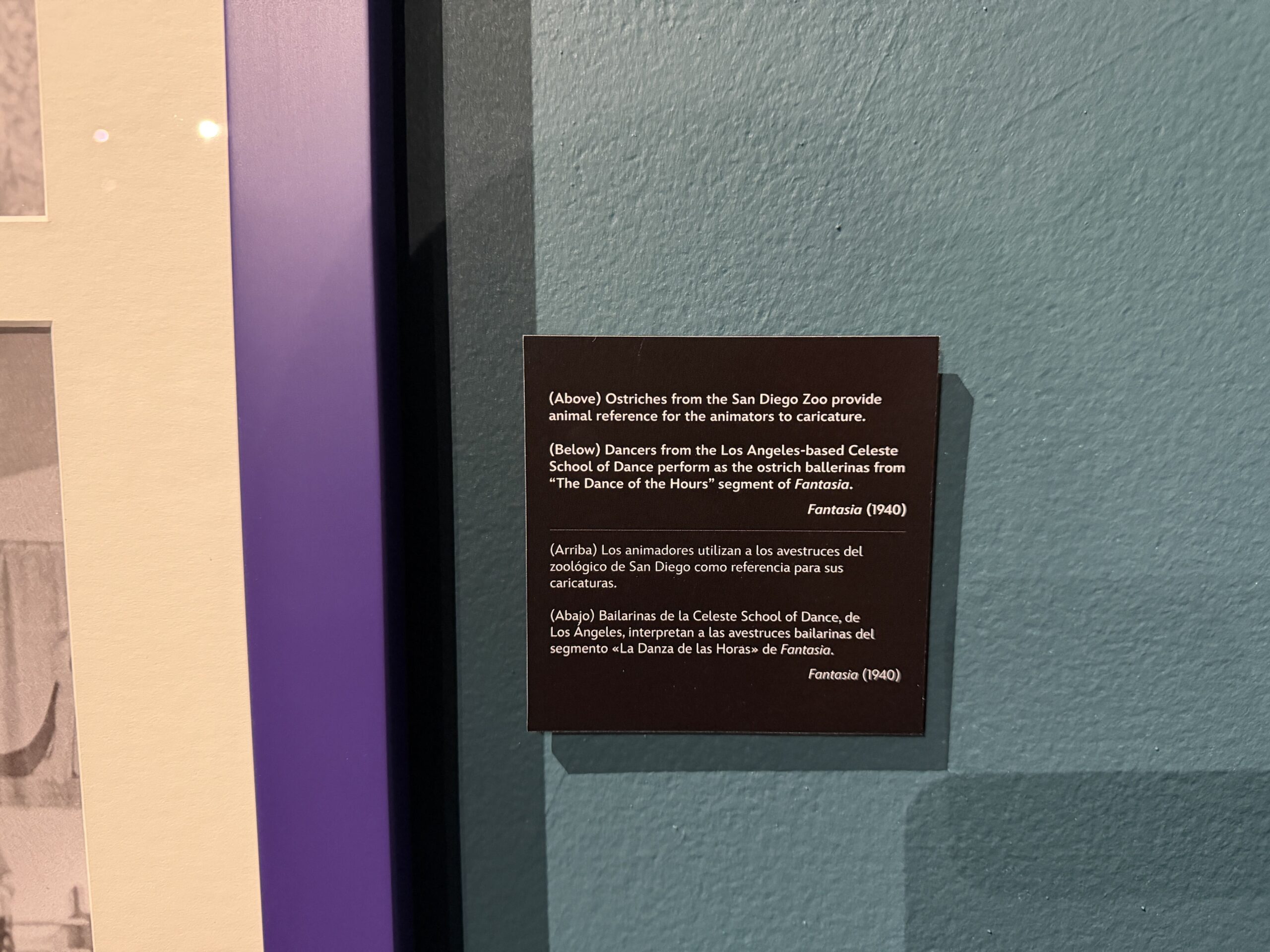
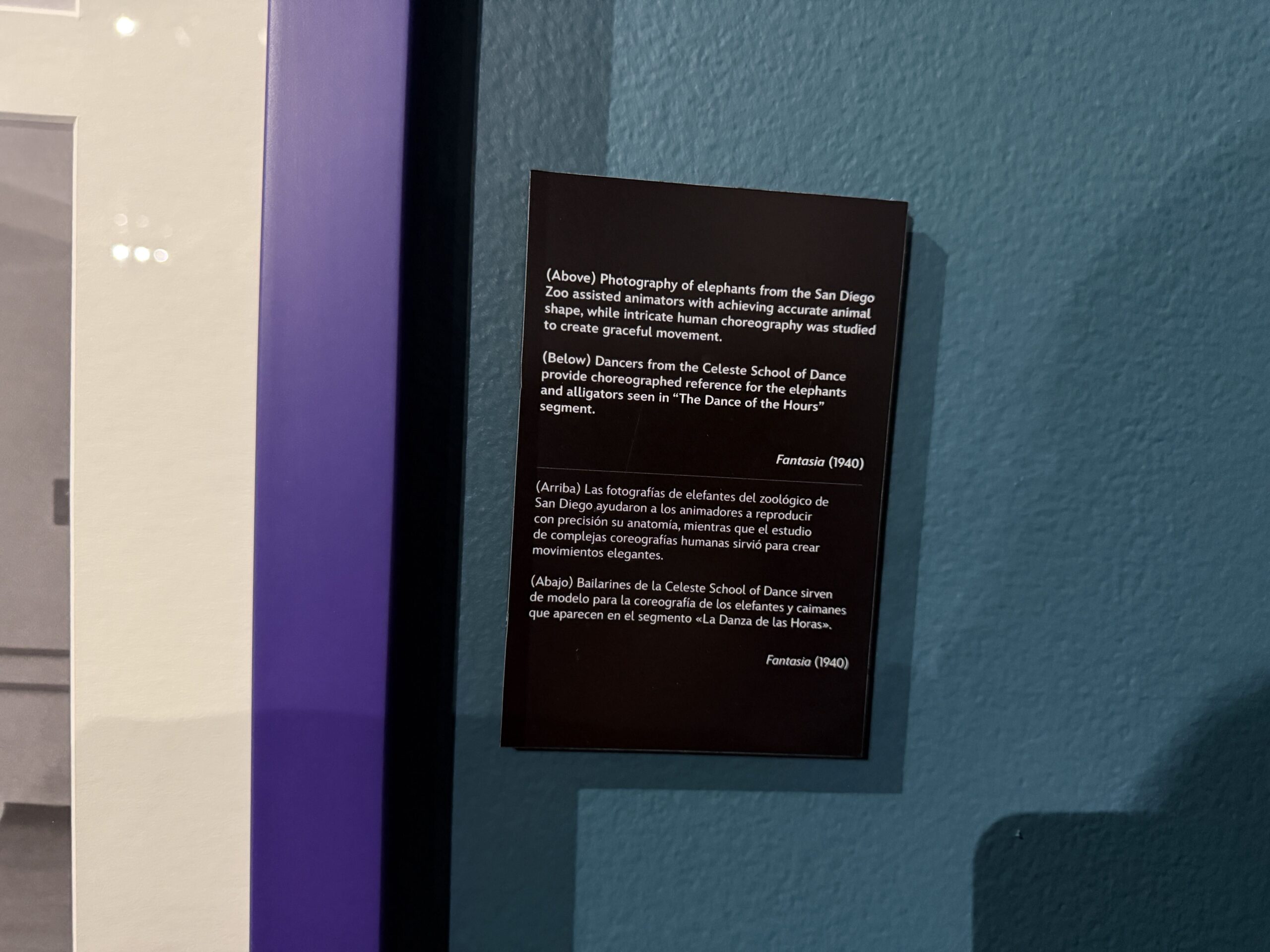
For the “The Dance of the Hours” segment of Fantasia, animators studied real ostriches and elephants to provide an accurate animal shape, while dancers from the Celeste School of Dance in Los Angeles performed the choreography of the dance sequence.
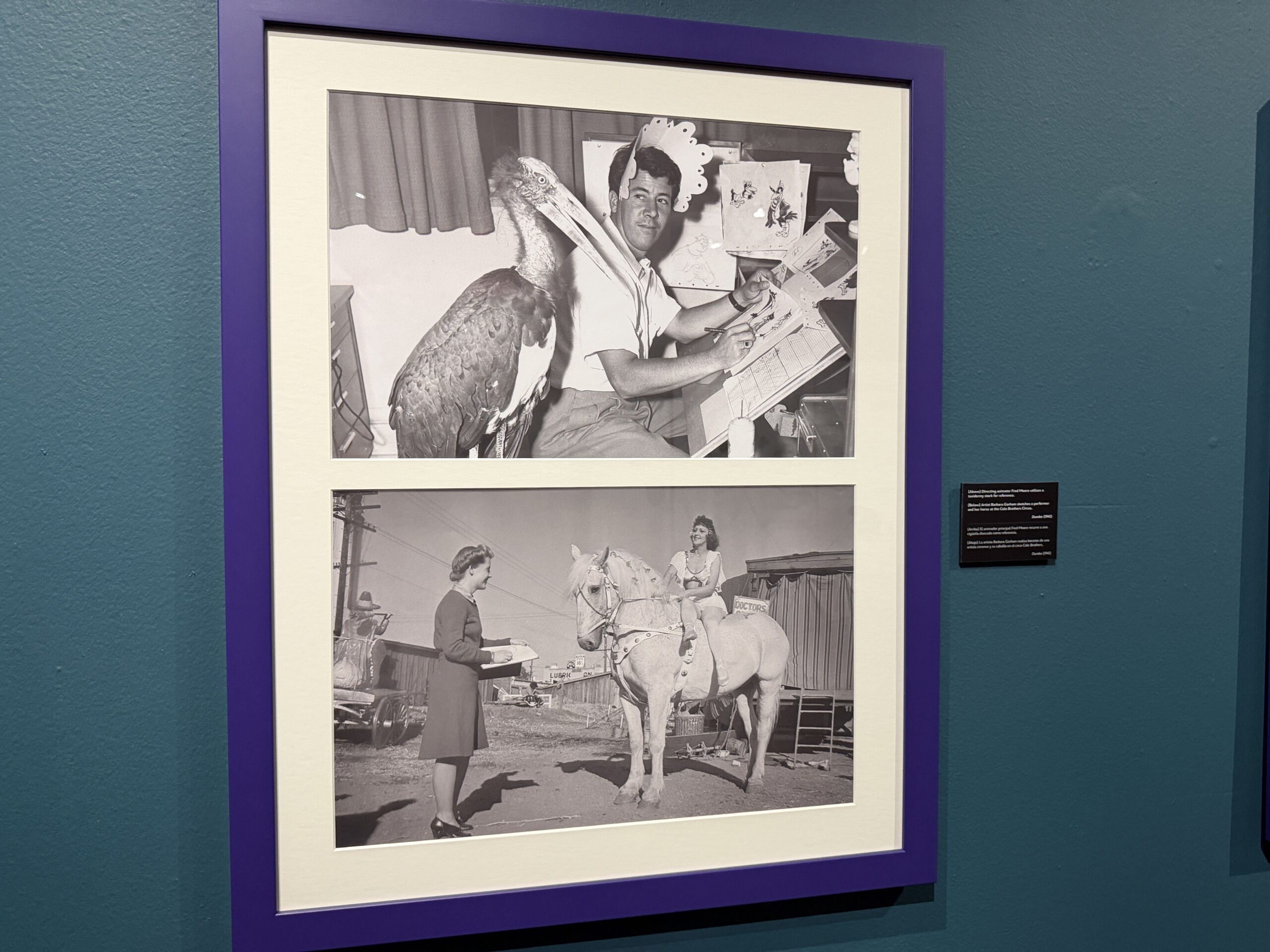
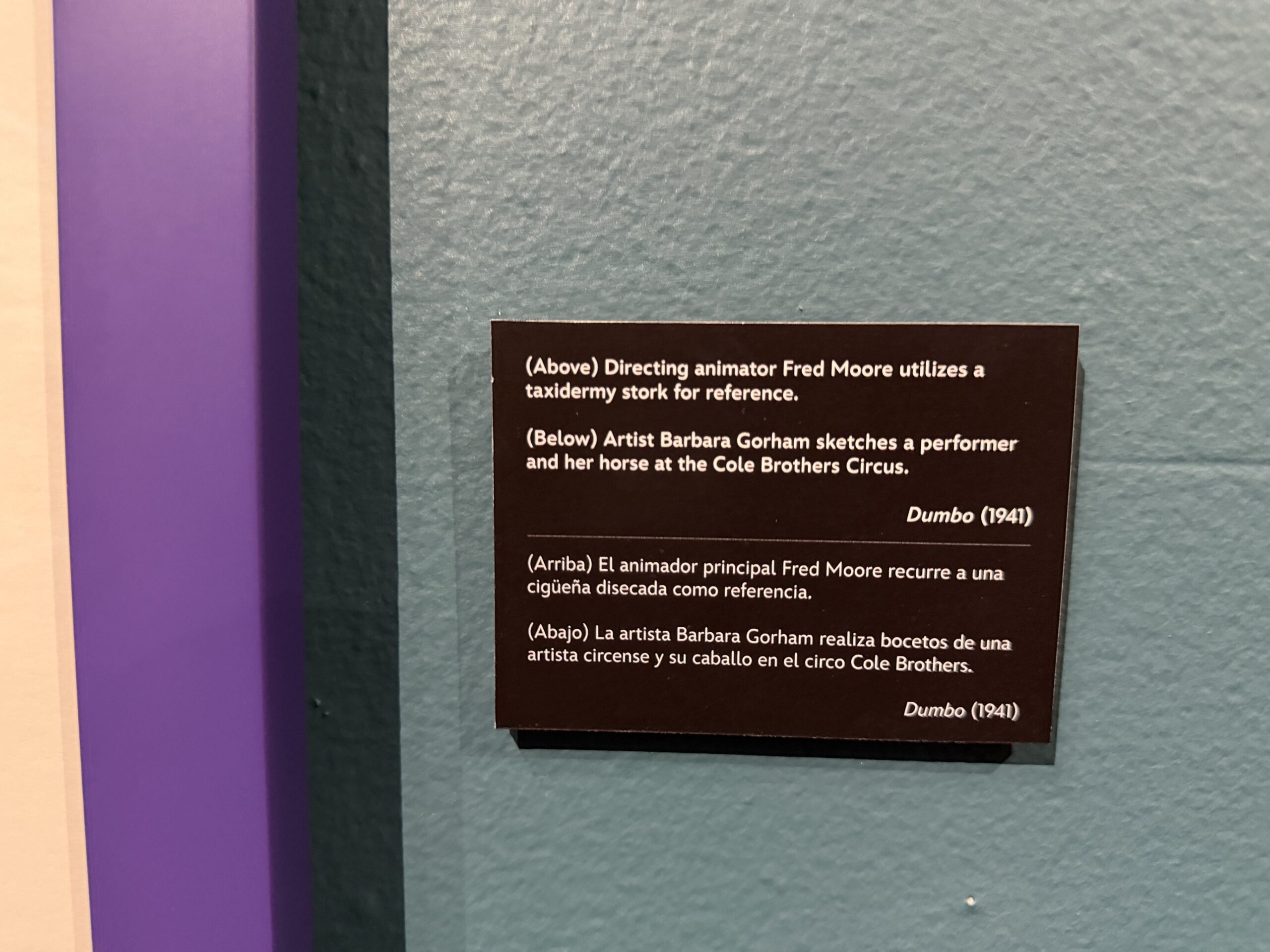
More photos show directing animator Fred Moore utilizing a taxidermy stork for reference, while artist Barbara Gorham sketches a performer and her horse. Both were used for Dumbo (1941).
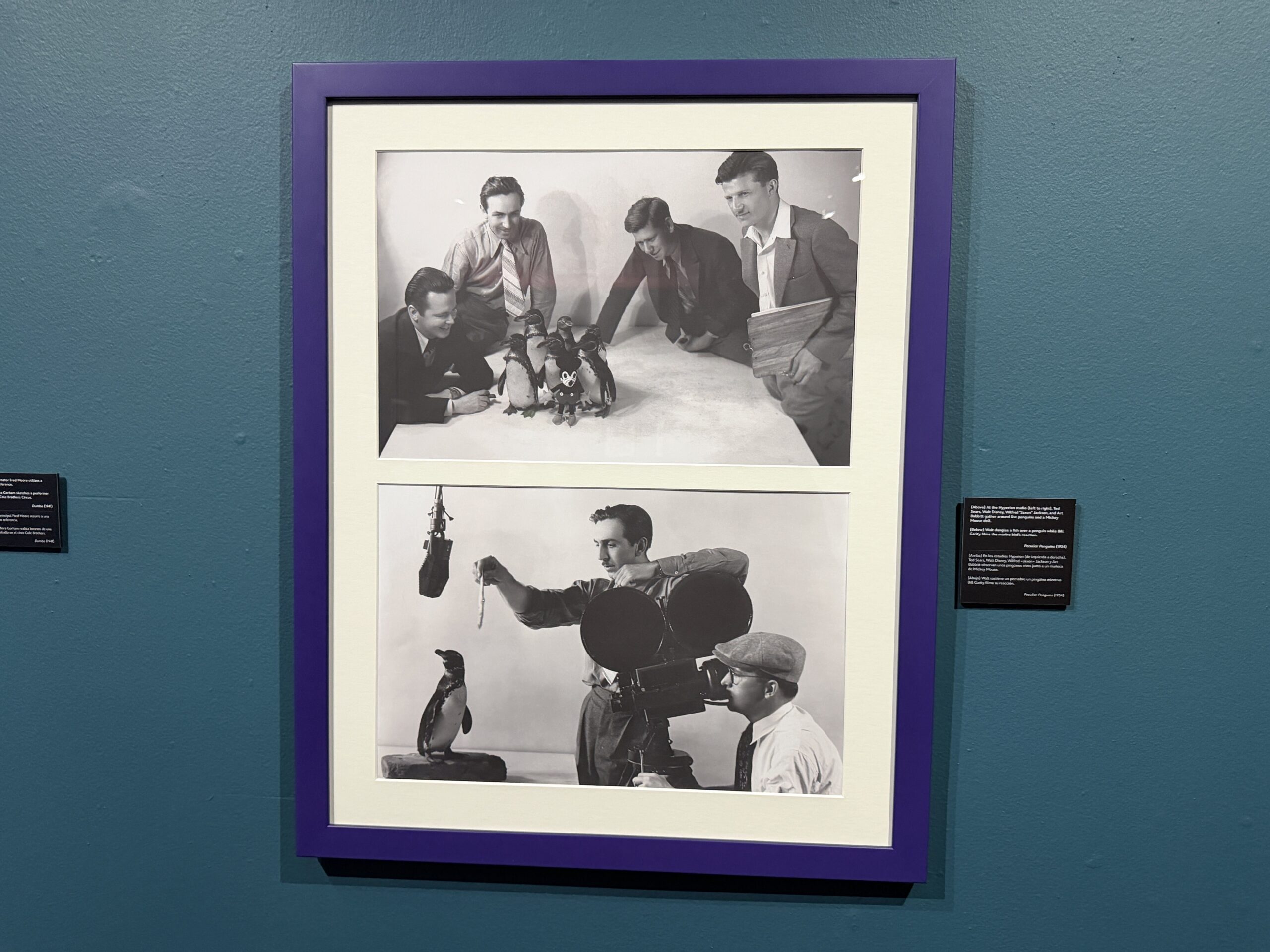
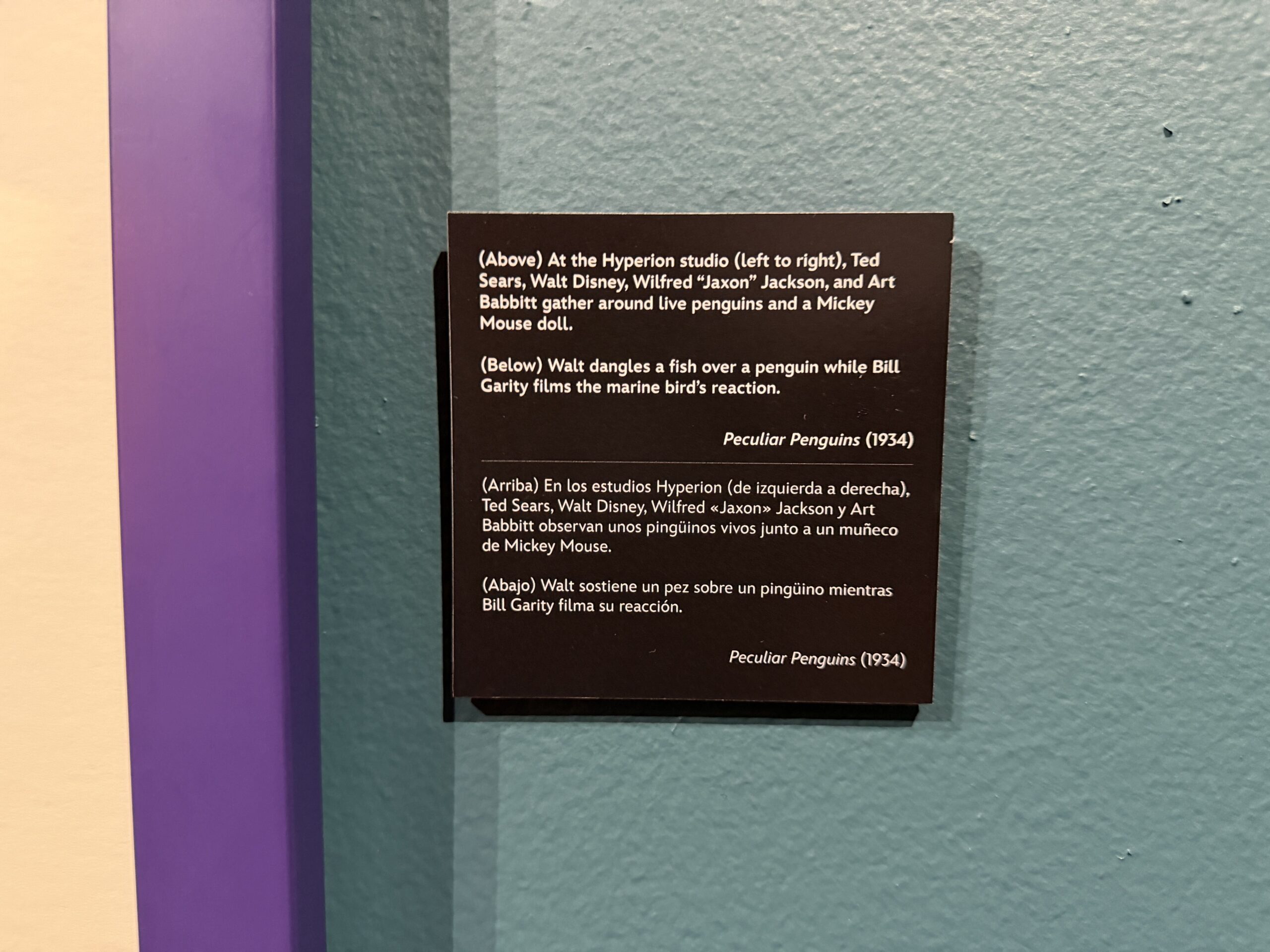
For Peculiar Penguins (1934), live penguins were brought into the Hyperion studio. Walt Disney himself can be seen in the photos dangling a fish over a penguin while the penguin’s reaction is filmed.
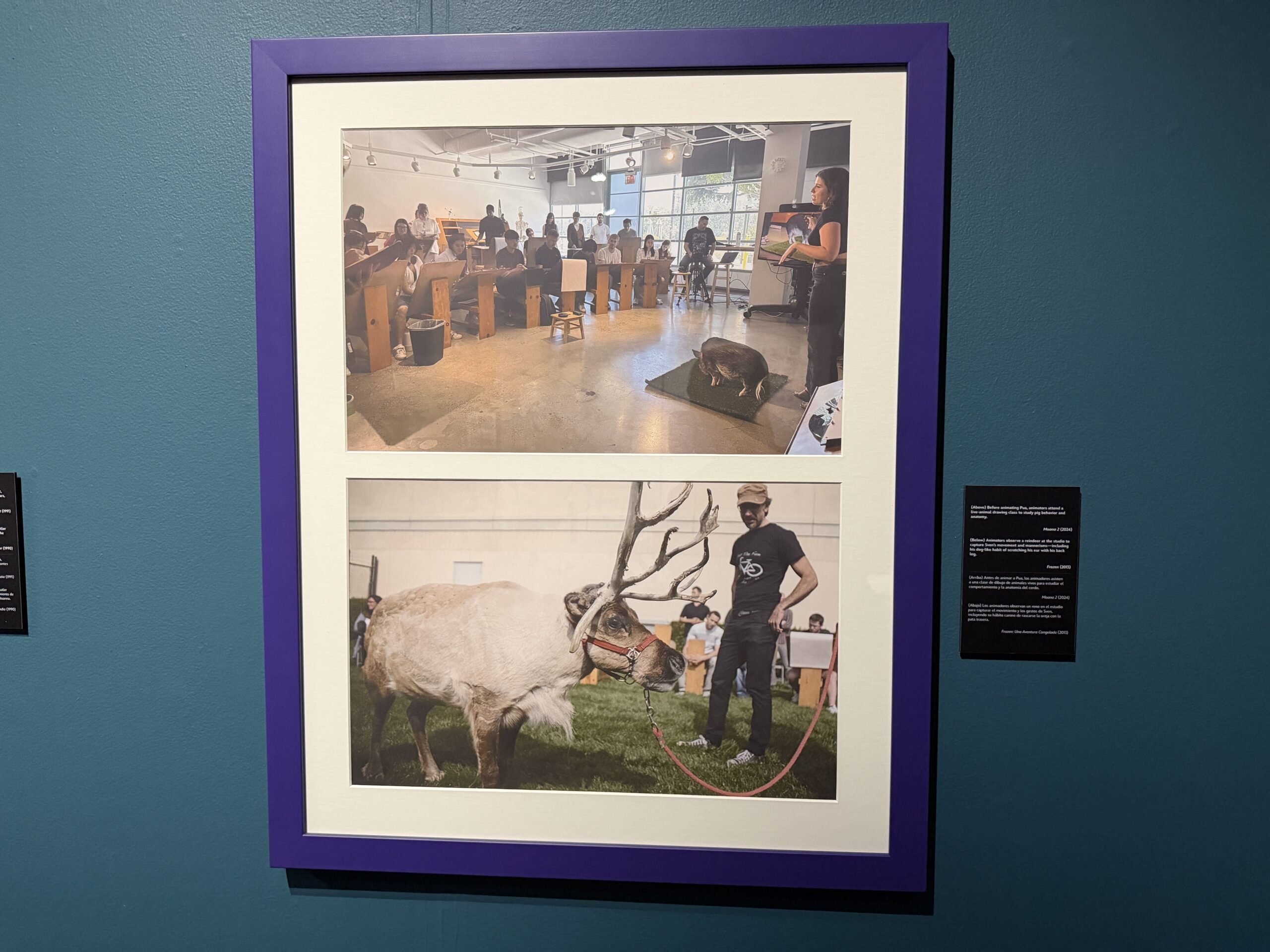
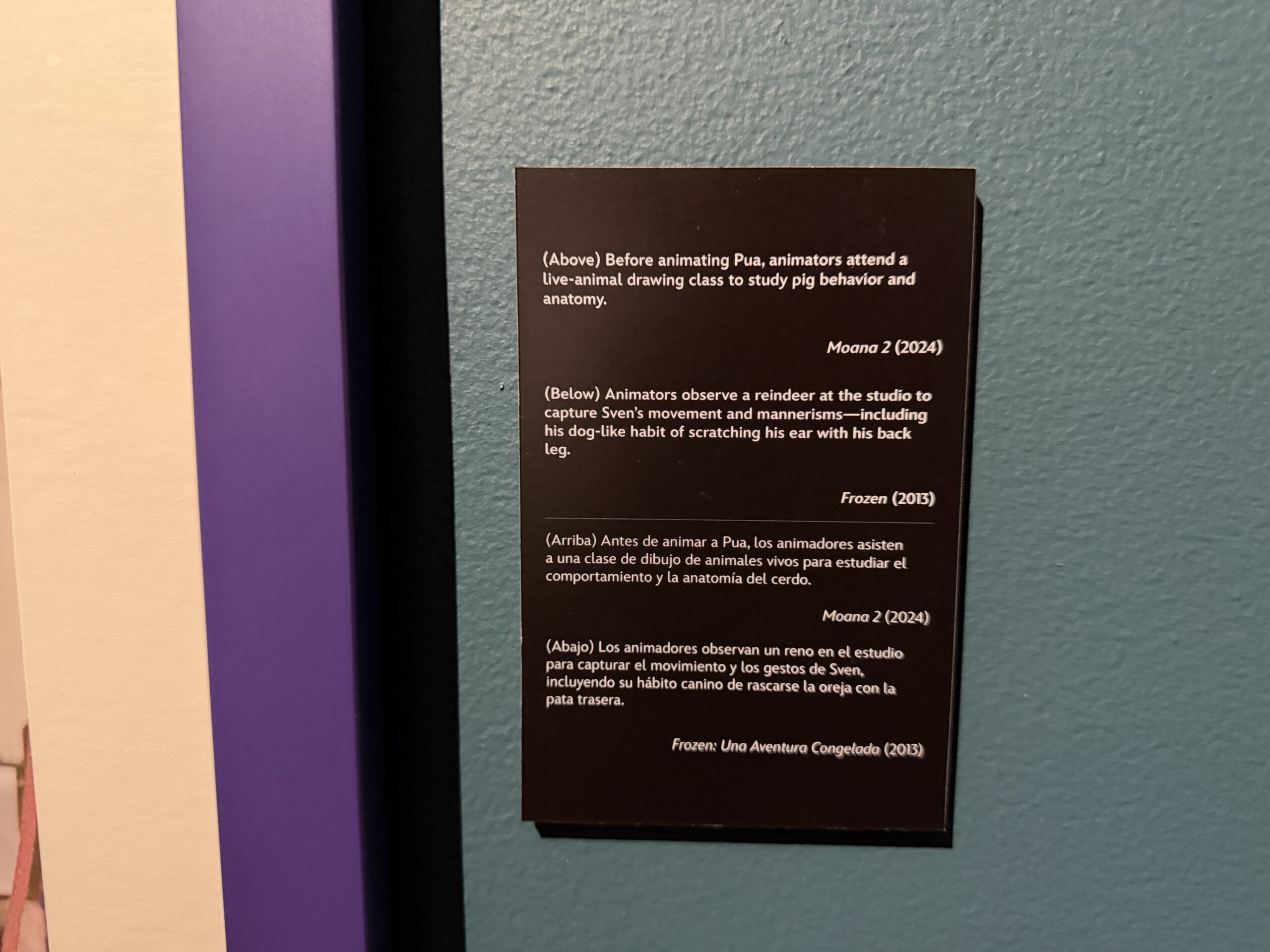
For Moana 2 (2024), animators attended a live-animal drawing class to study pig behavior and anatomy before animating Pua, Moana’s pig companion. And for Frozen (2013), a live reindeer was brought to the studio so animators could accurately depict Sven’s movements.
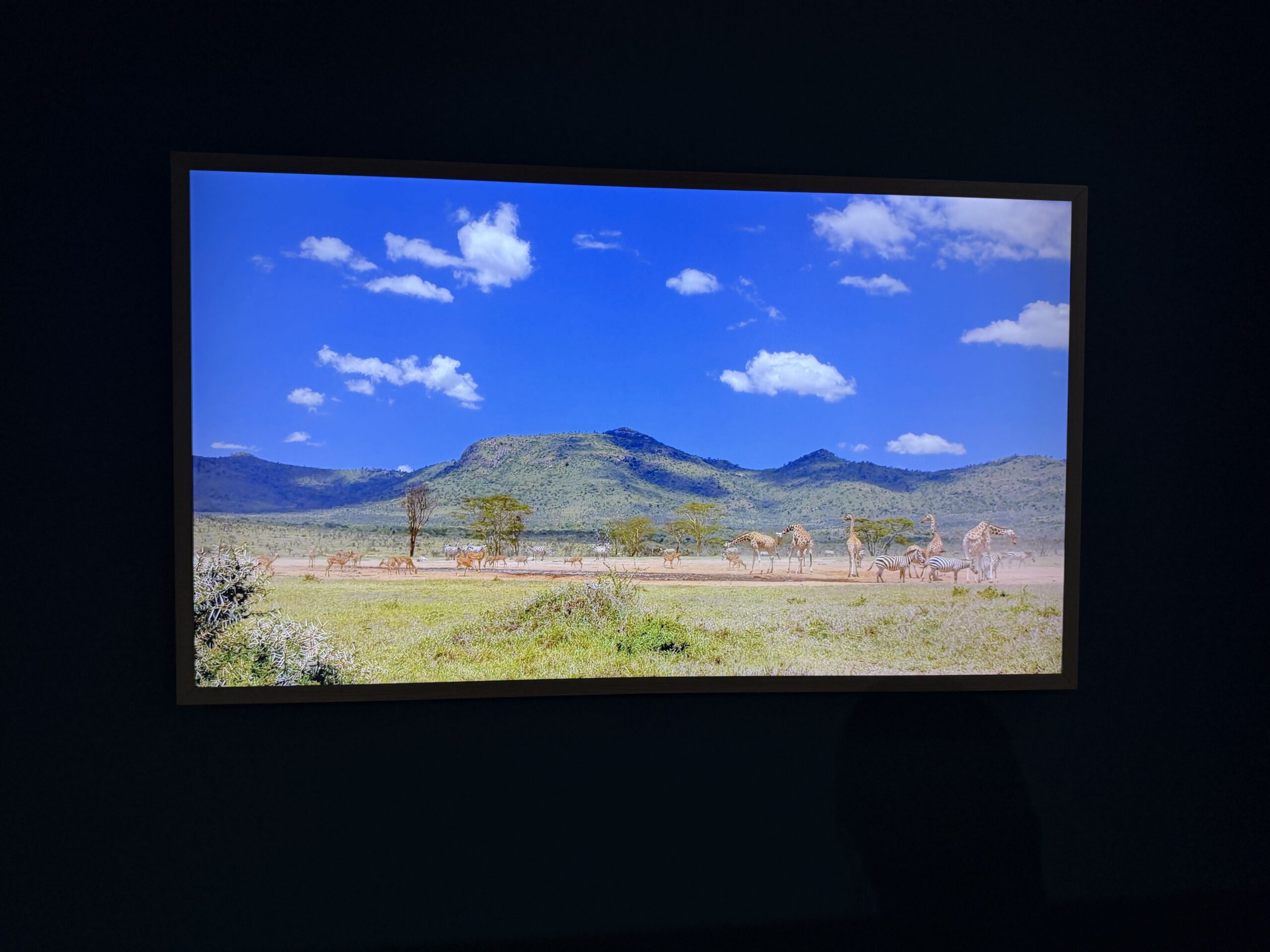
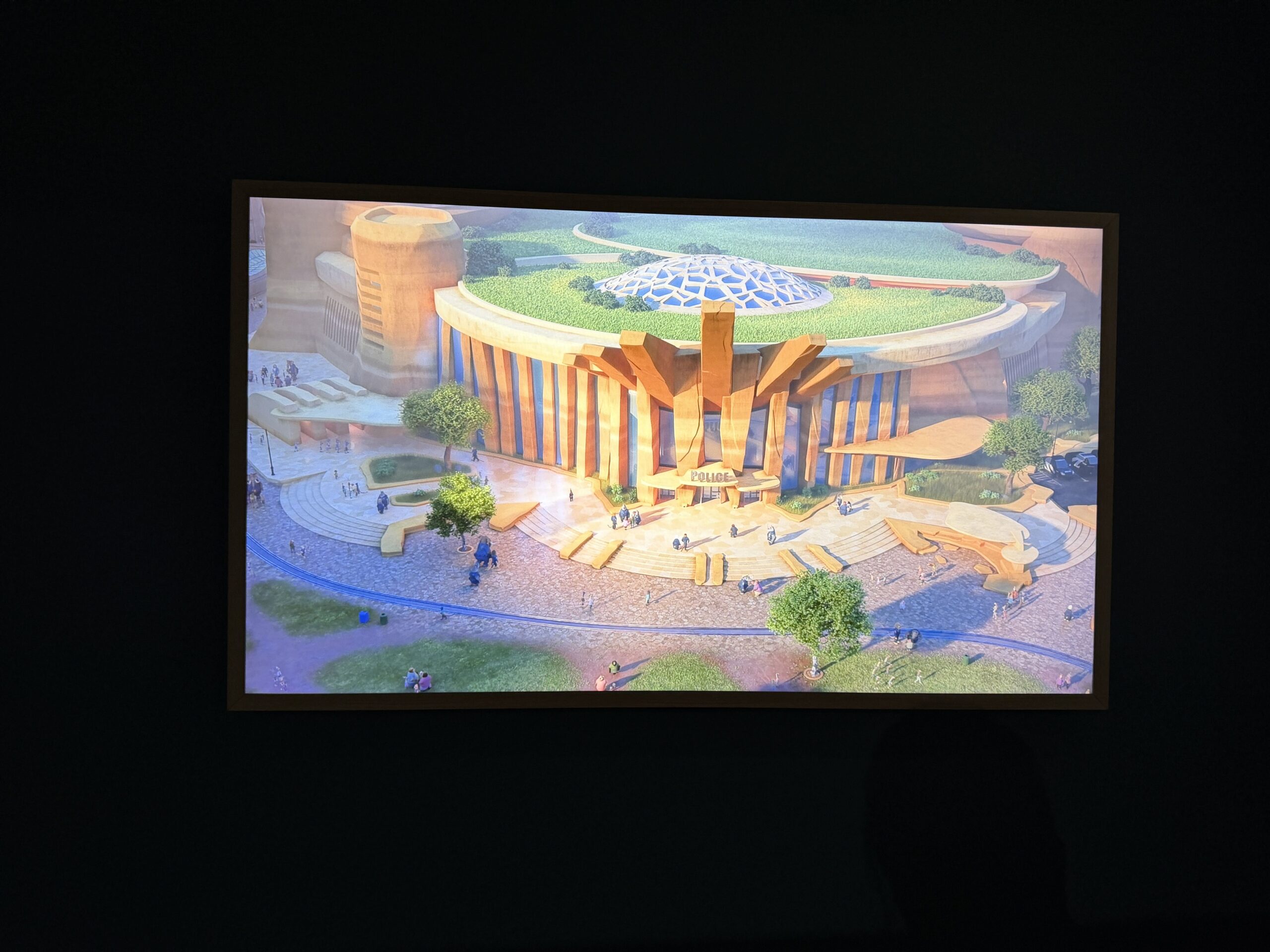
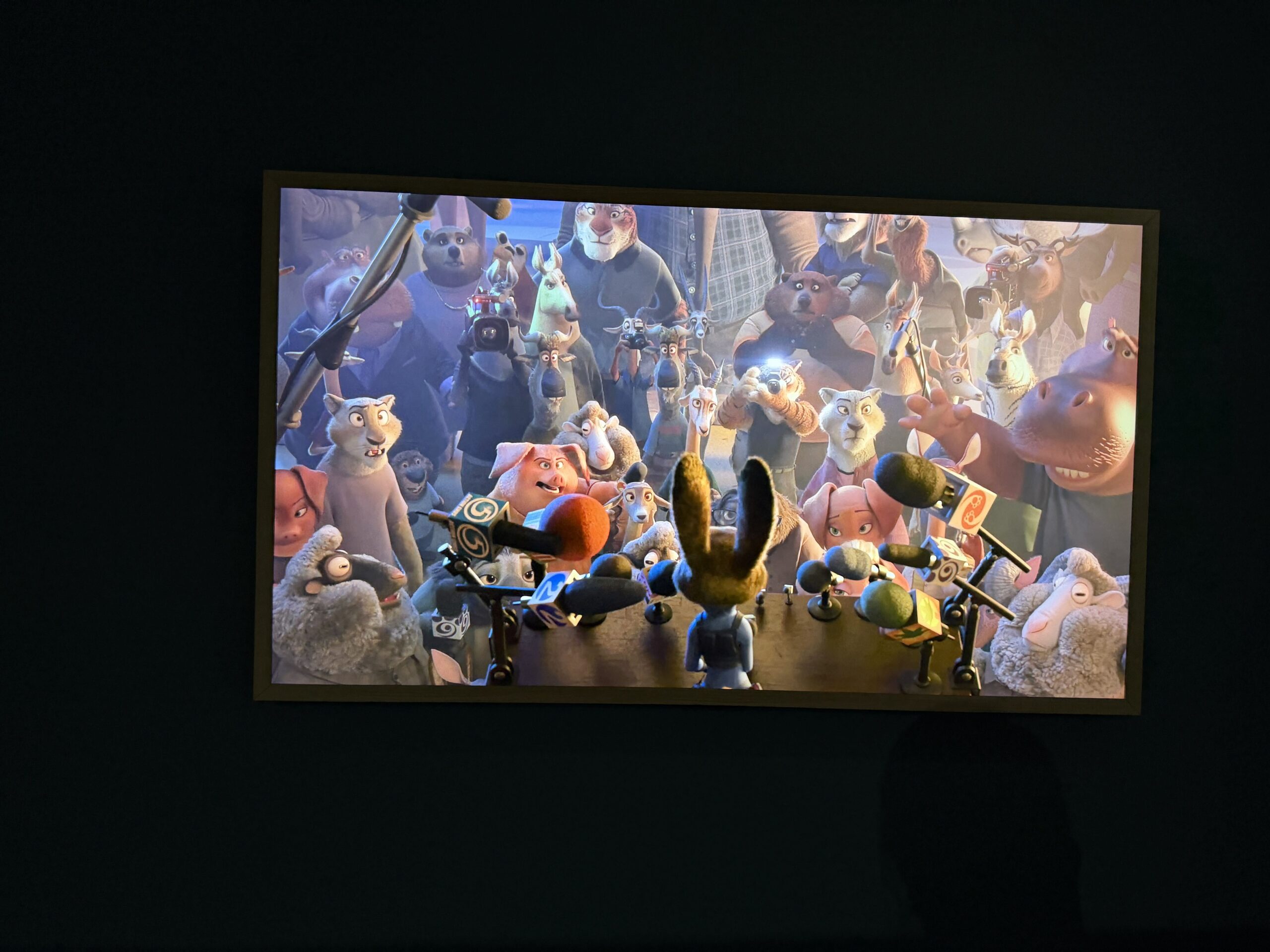
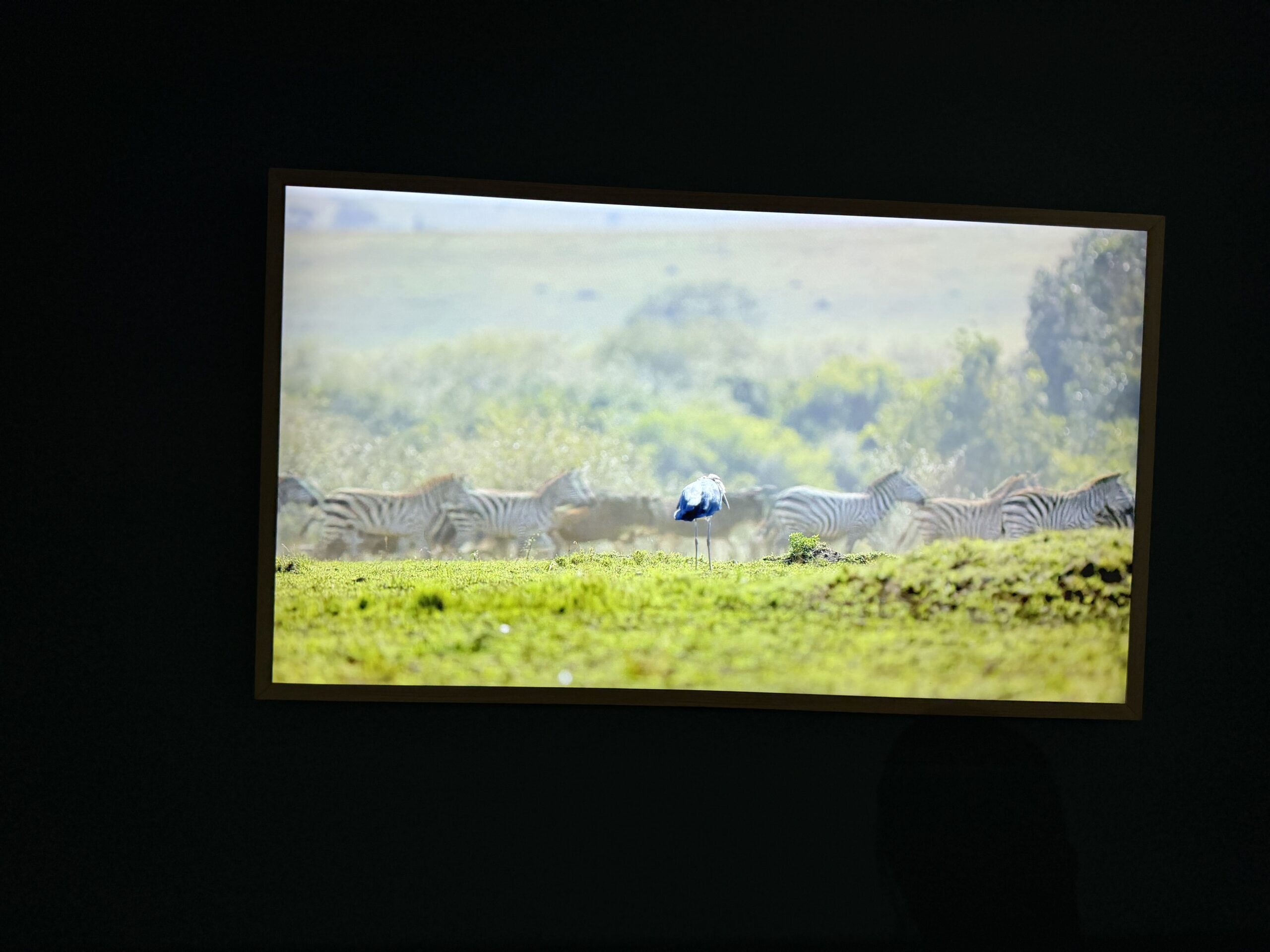
Another short film was available for guests to watch, this time about a research trip animators while creating Zootopia (2016).
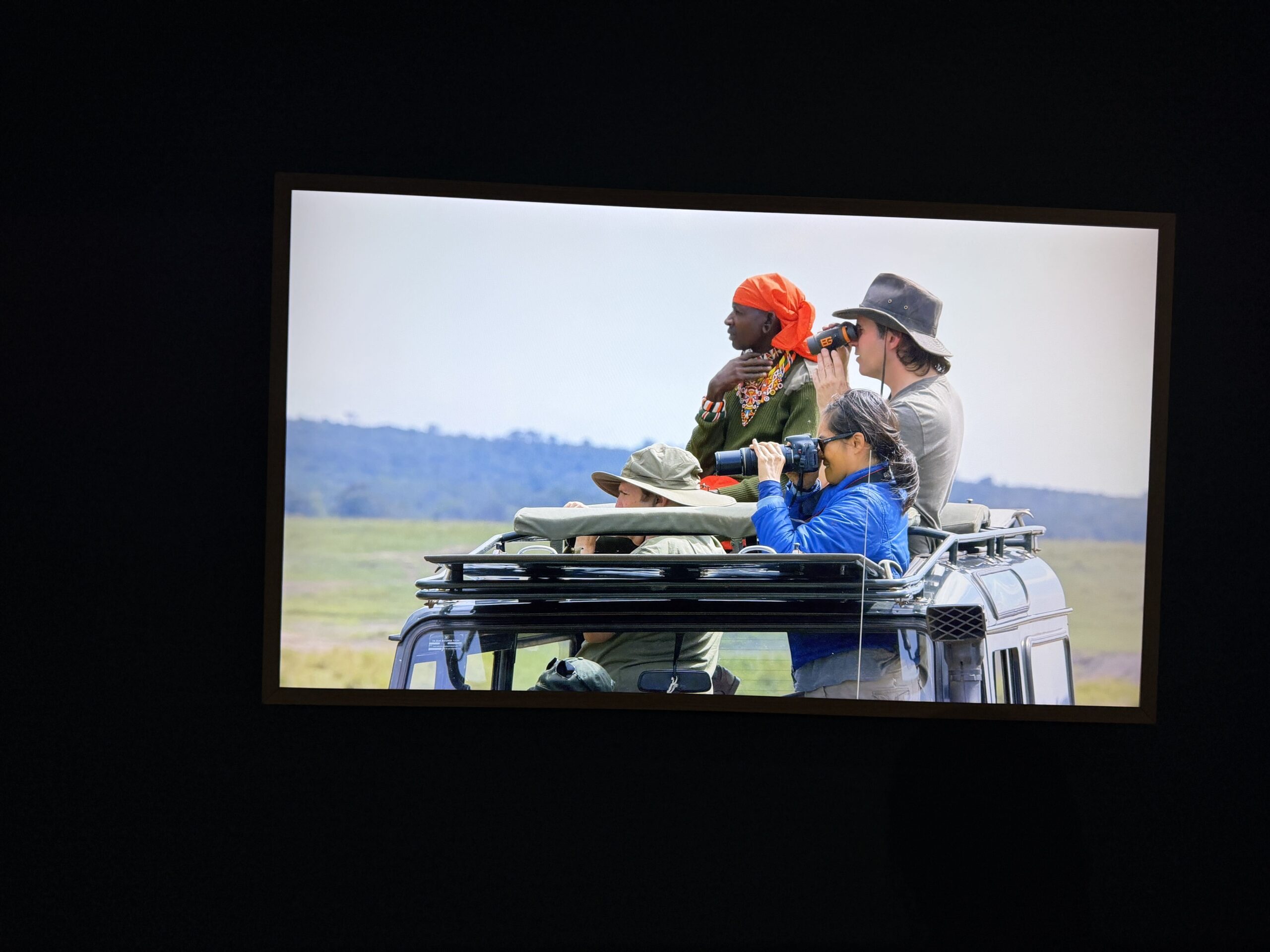
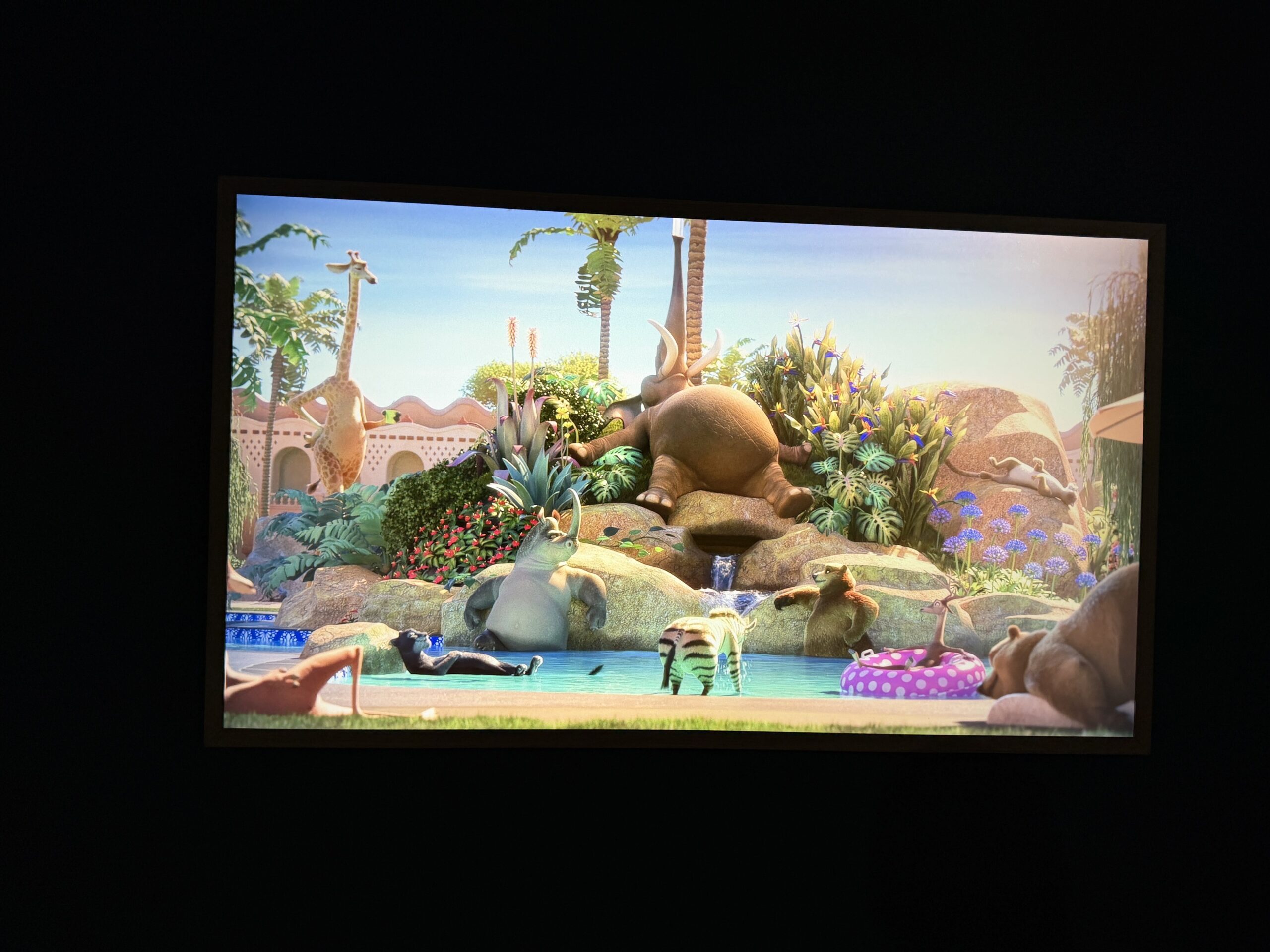
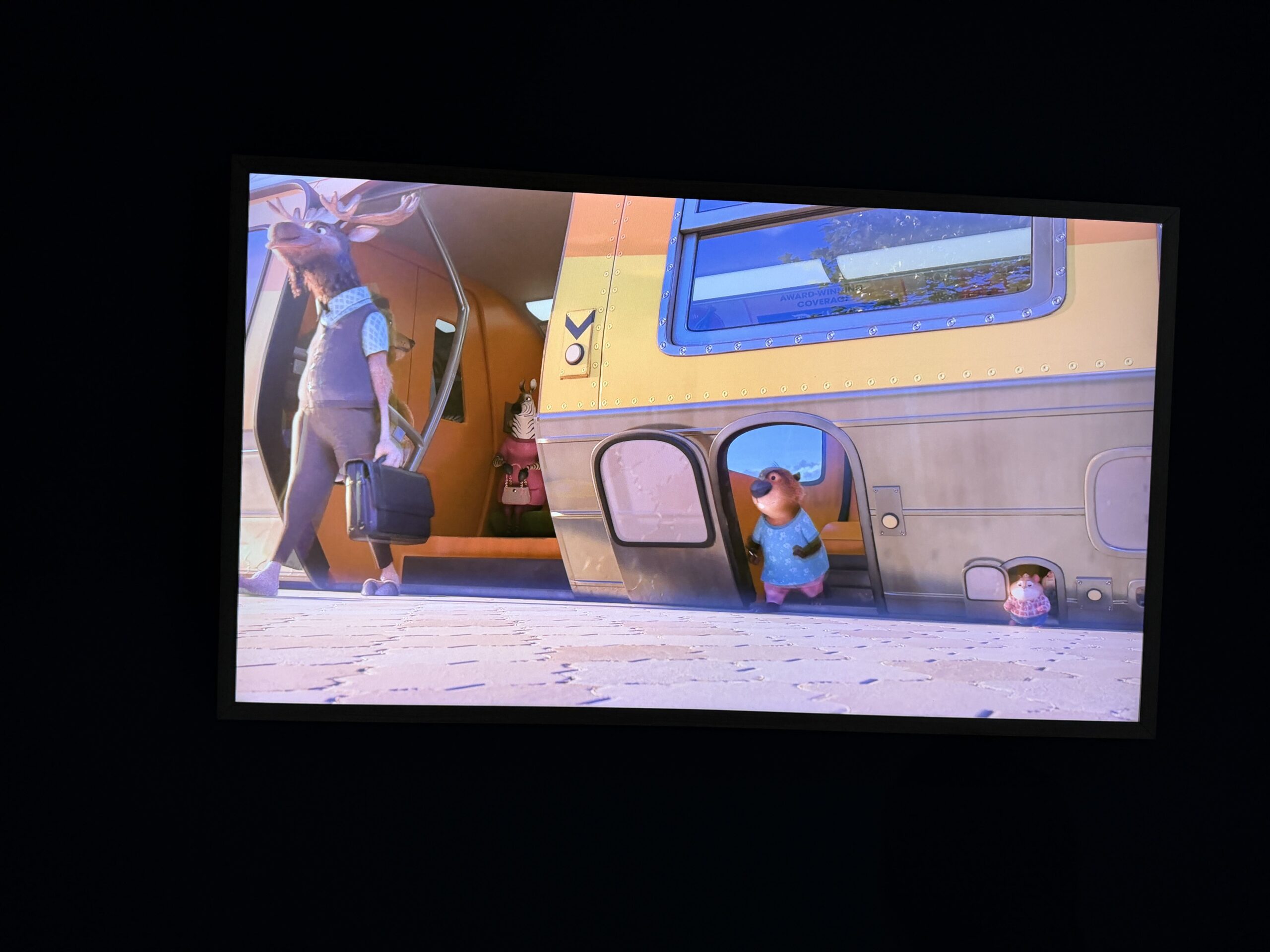
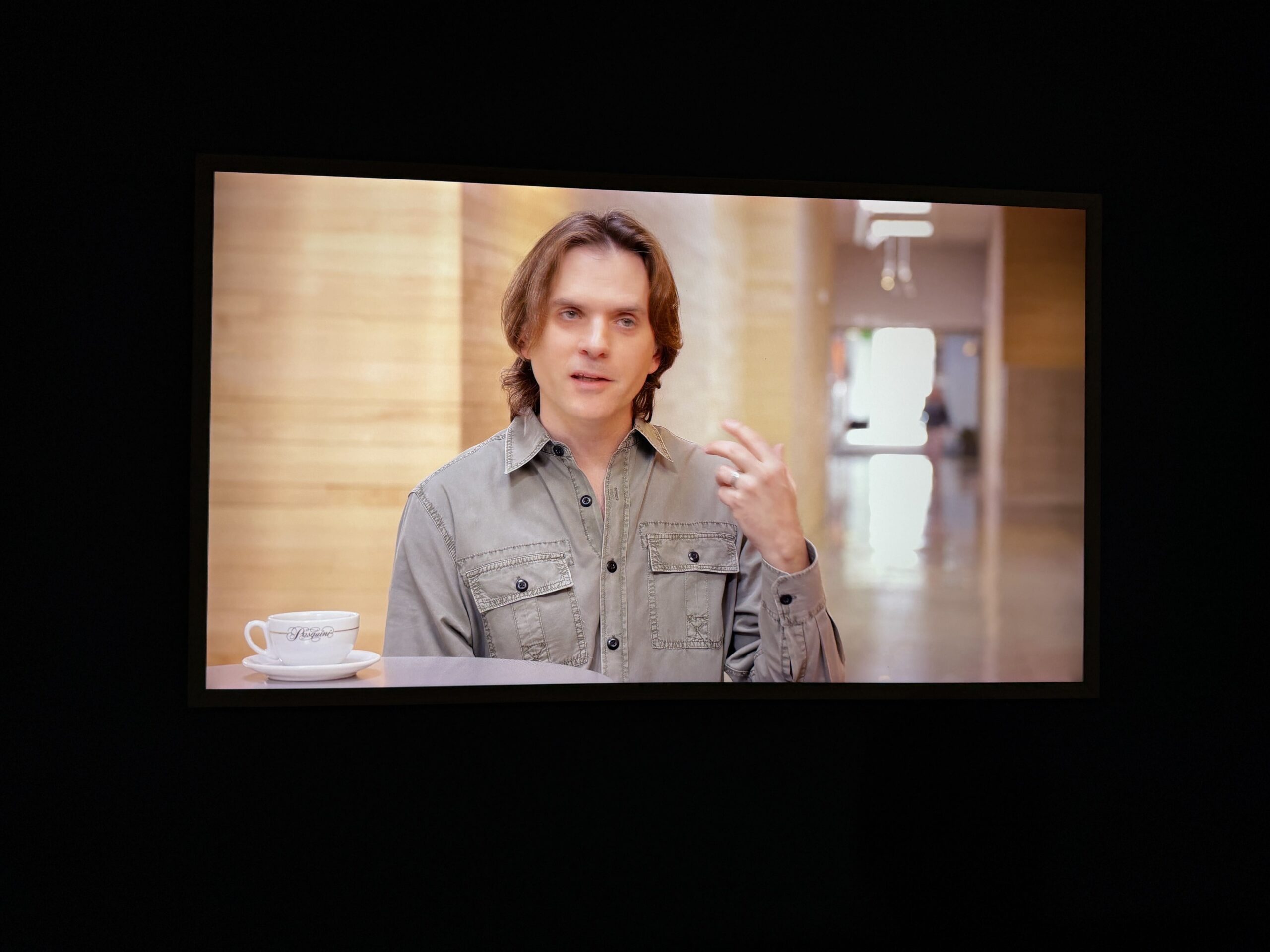
The film showcased testimonials by animators, as well as finished scenes from Zootopia.
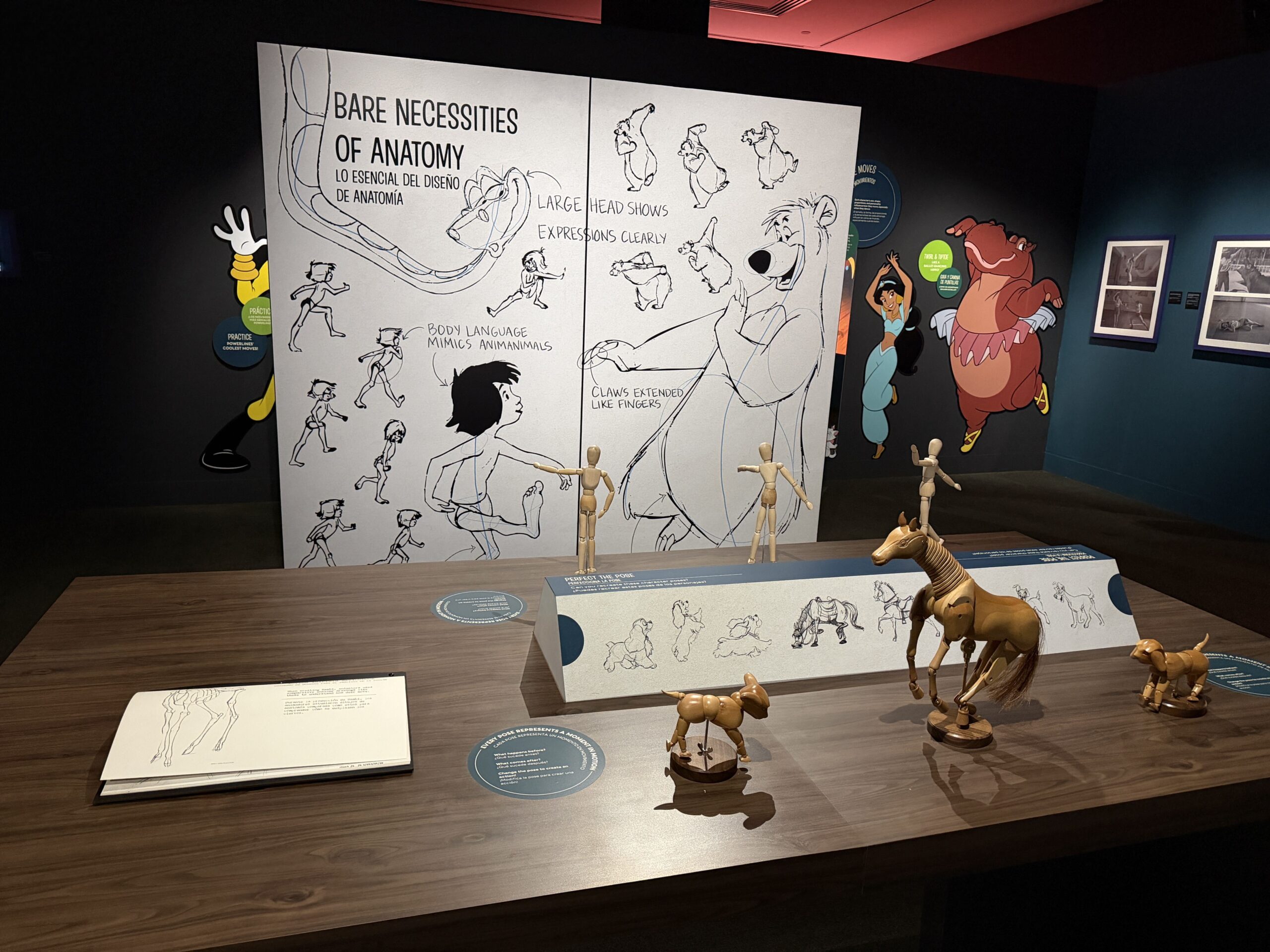
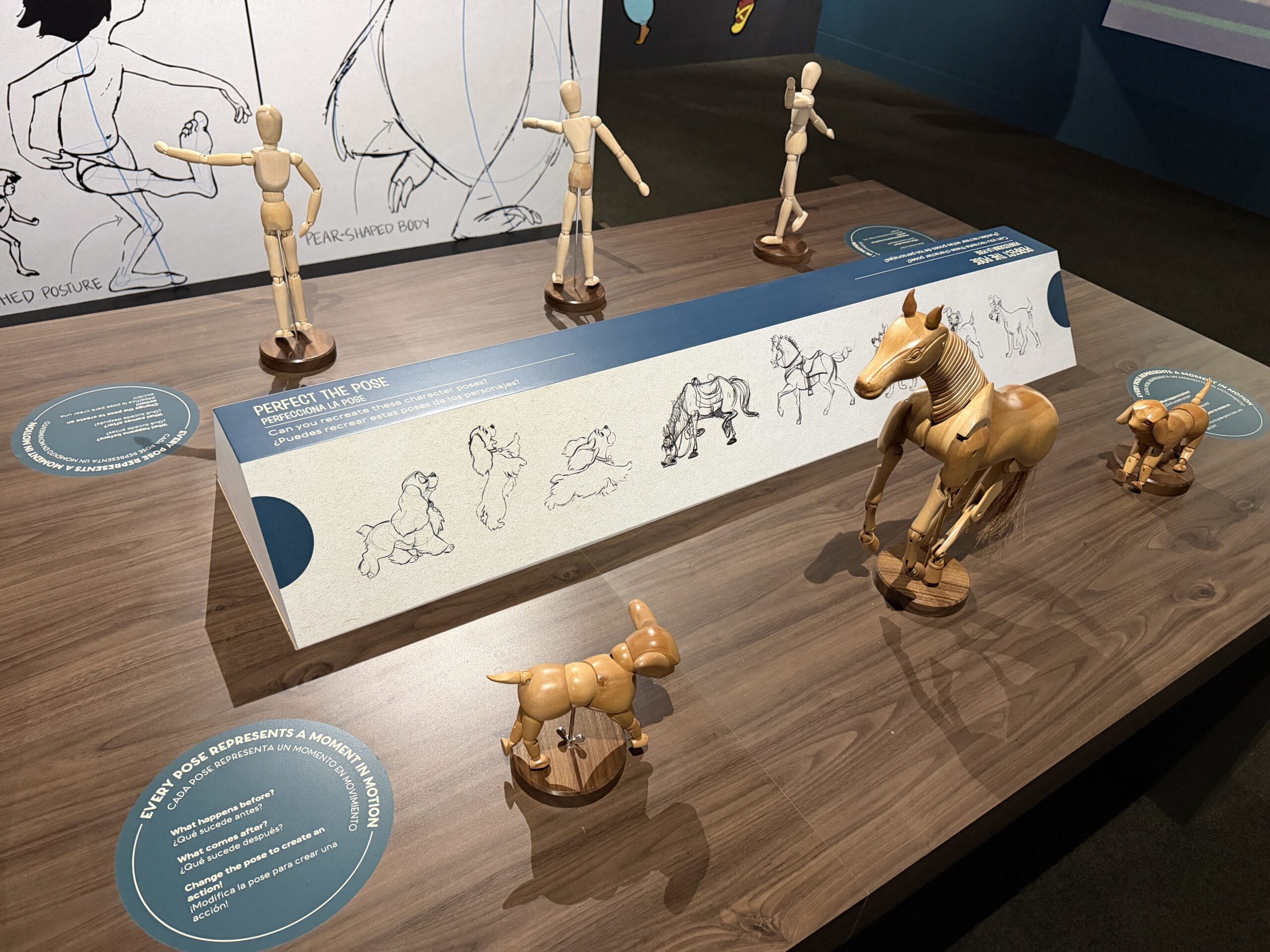
At a large table was another display for guests to interact with. Wooden models of a horse and two dogs were set up, encouraging guests to move the models into the shown poses.
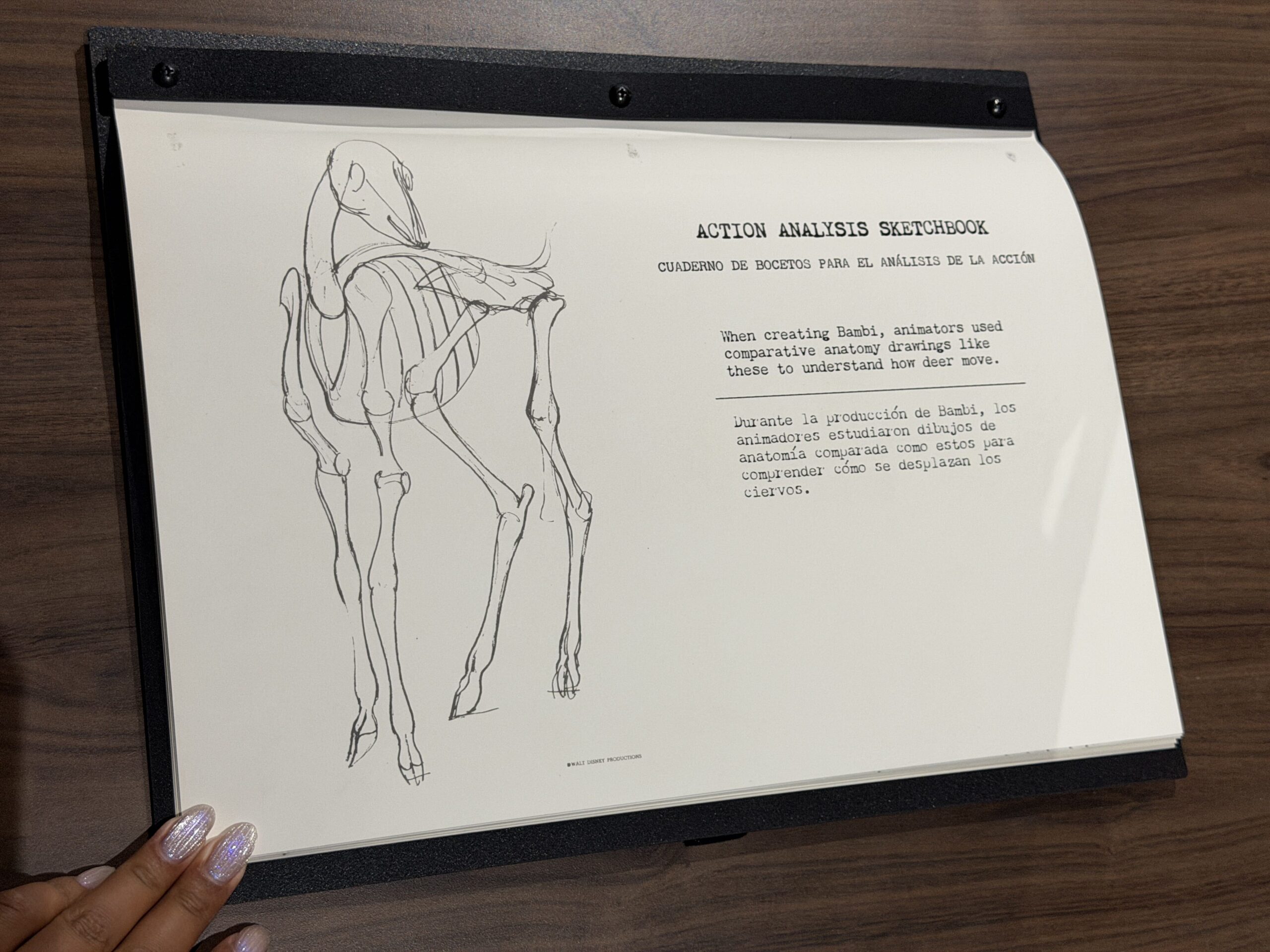
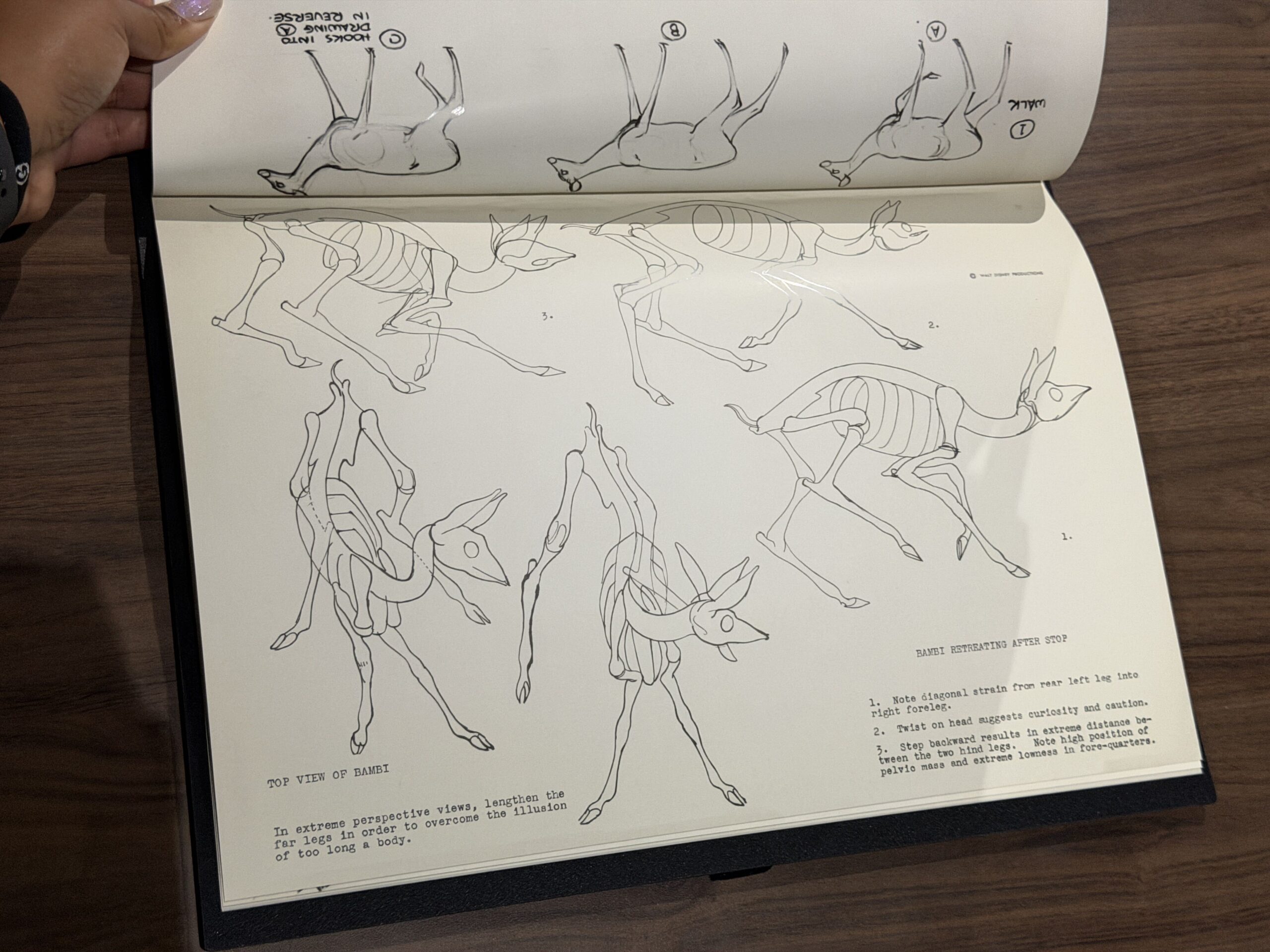
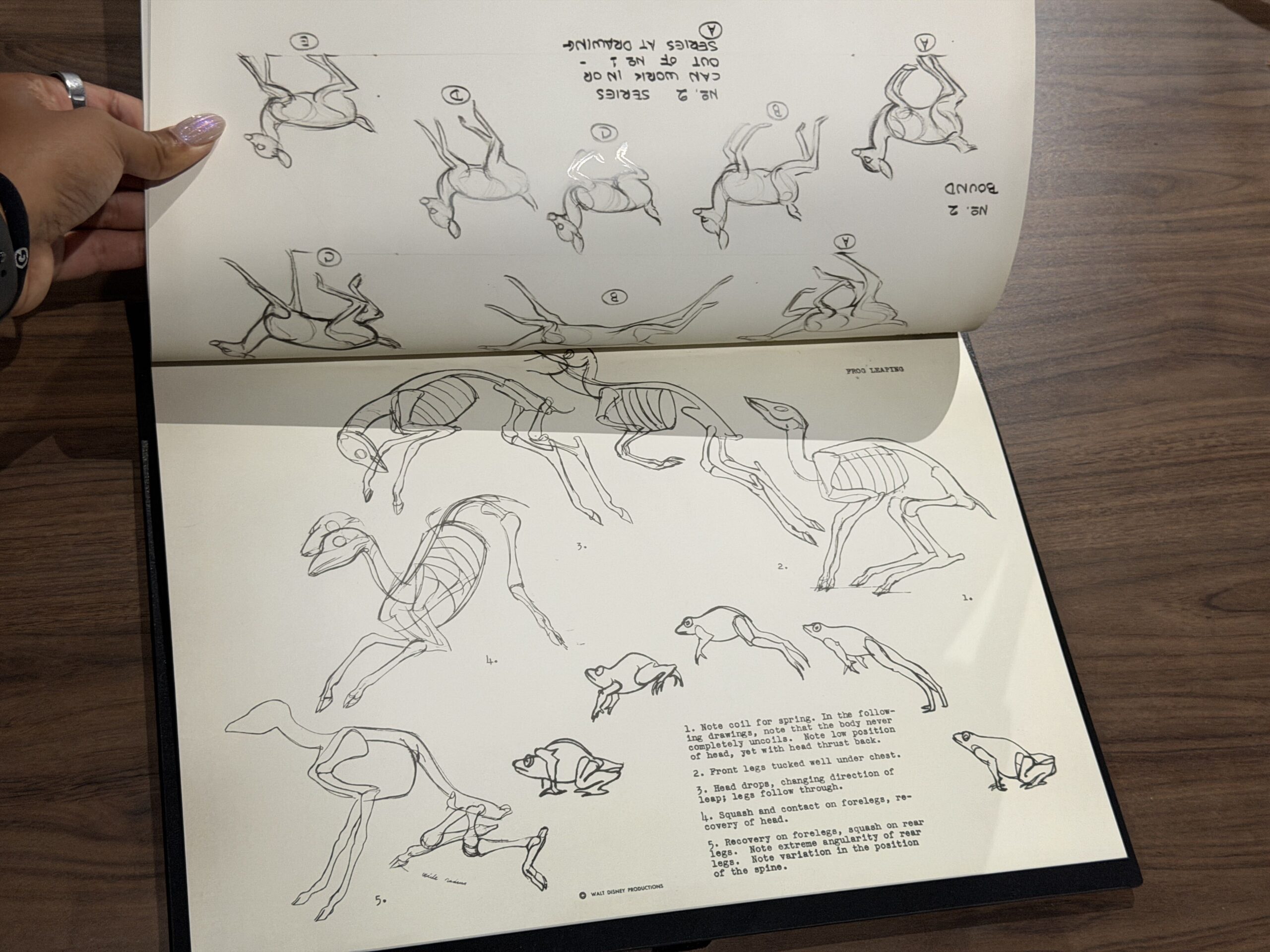
A sketchbook of animal anatomy drawings from Bambi is also available for guests to flip through.
Setting the Scene
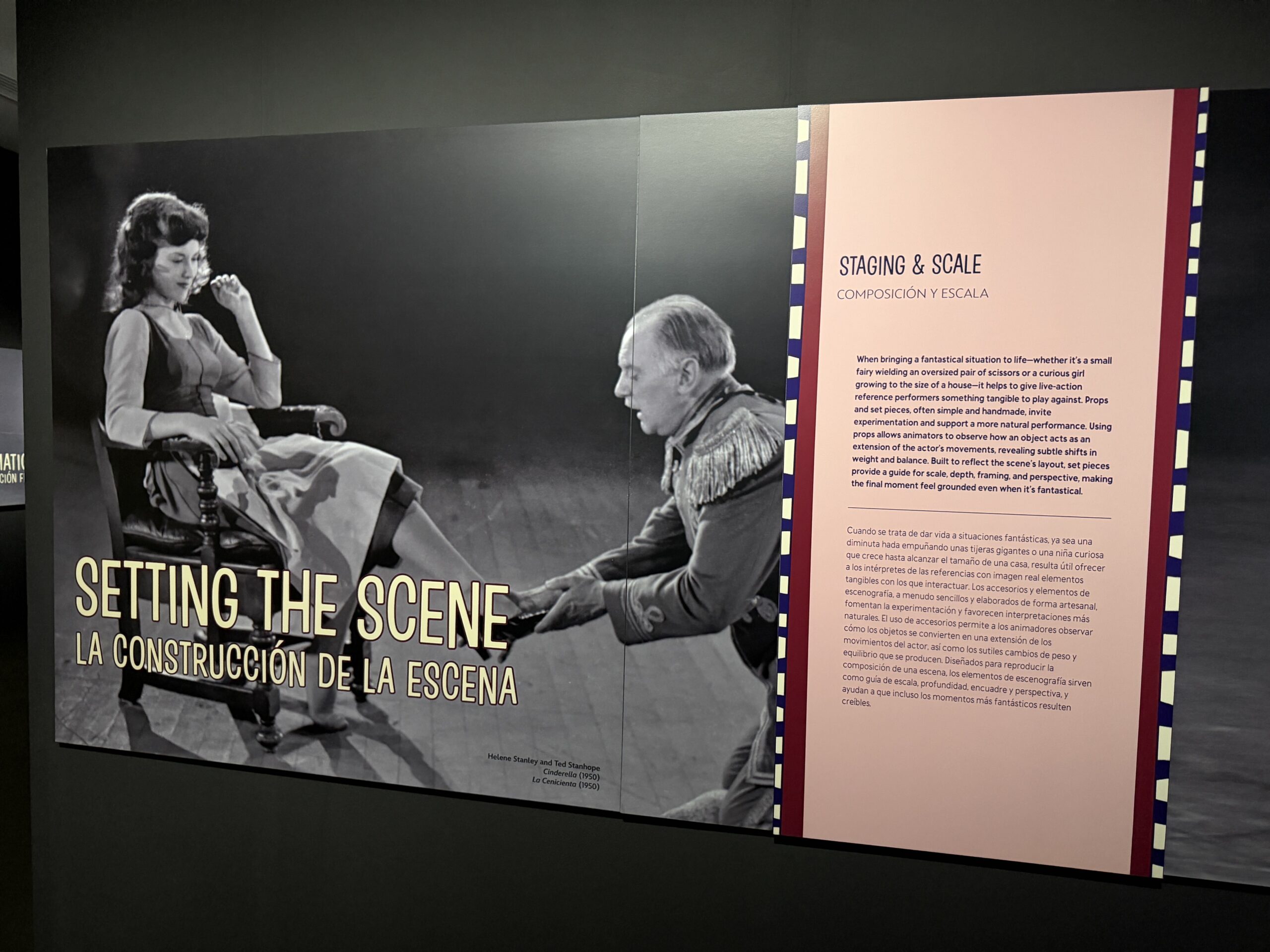
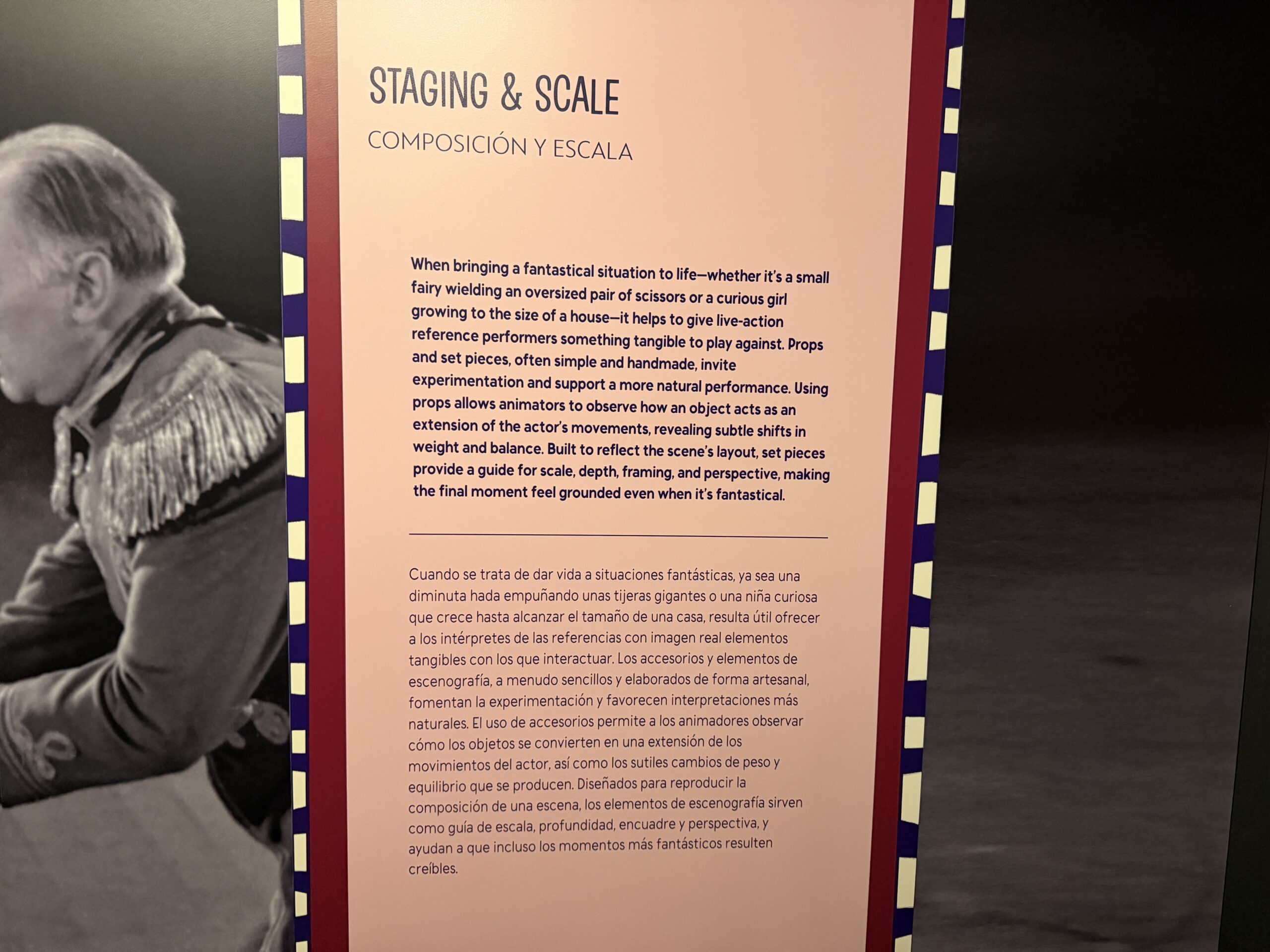
The next major section of the exhibit is themed to using set pieces and props for scale and composition of a specific scene. Using props encourages a more natural performance and allows animators to see how an object interacts with an actor.
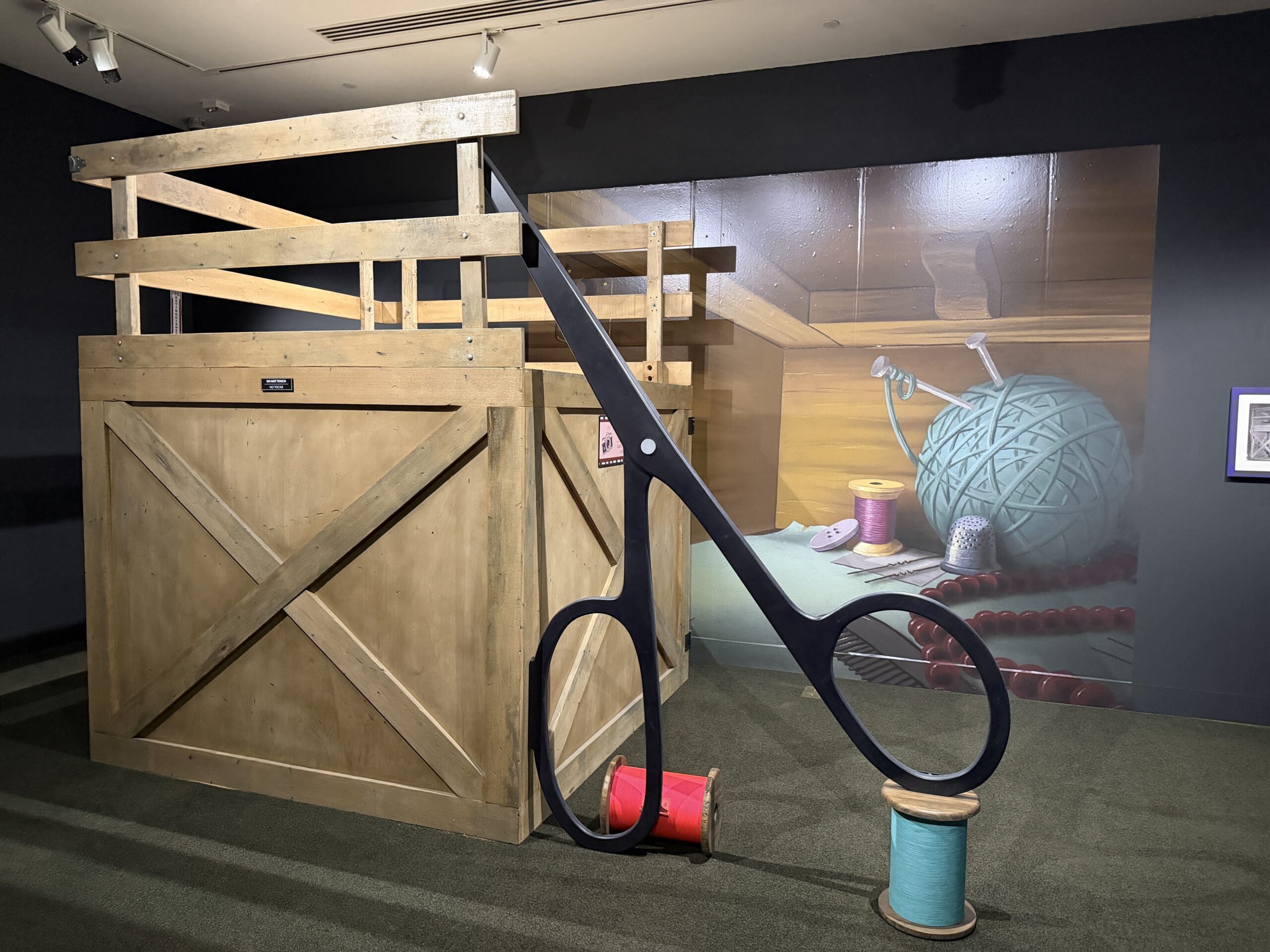
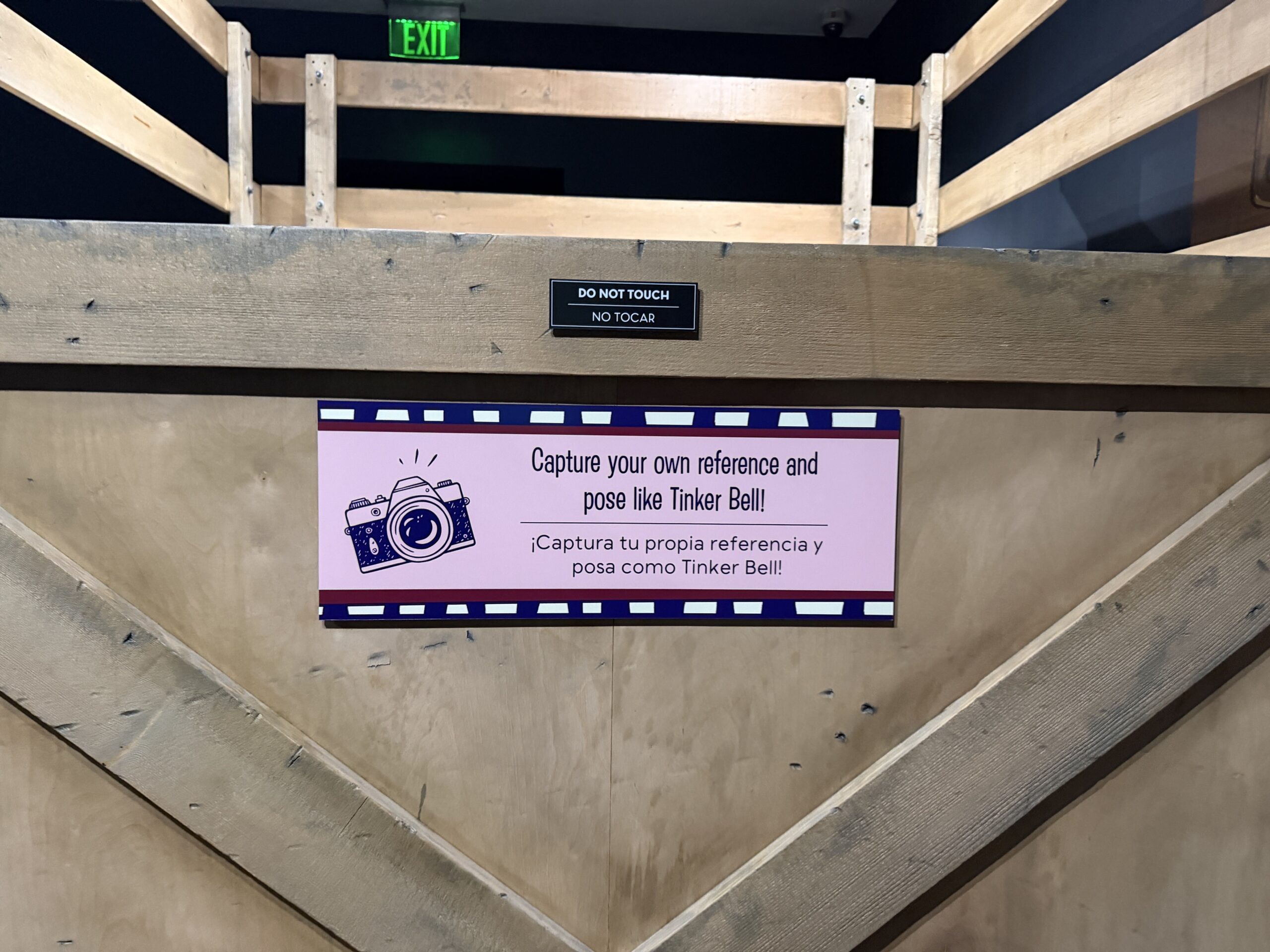
A larger-than-life display has been recreated from Peter Pan. In the film, Tinker Bell gets stuck in a drawer and uses a pair of scissors to try and escape. Guests are encouraged to pose like Tinker Bell next to the large black scissors.
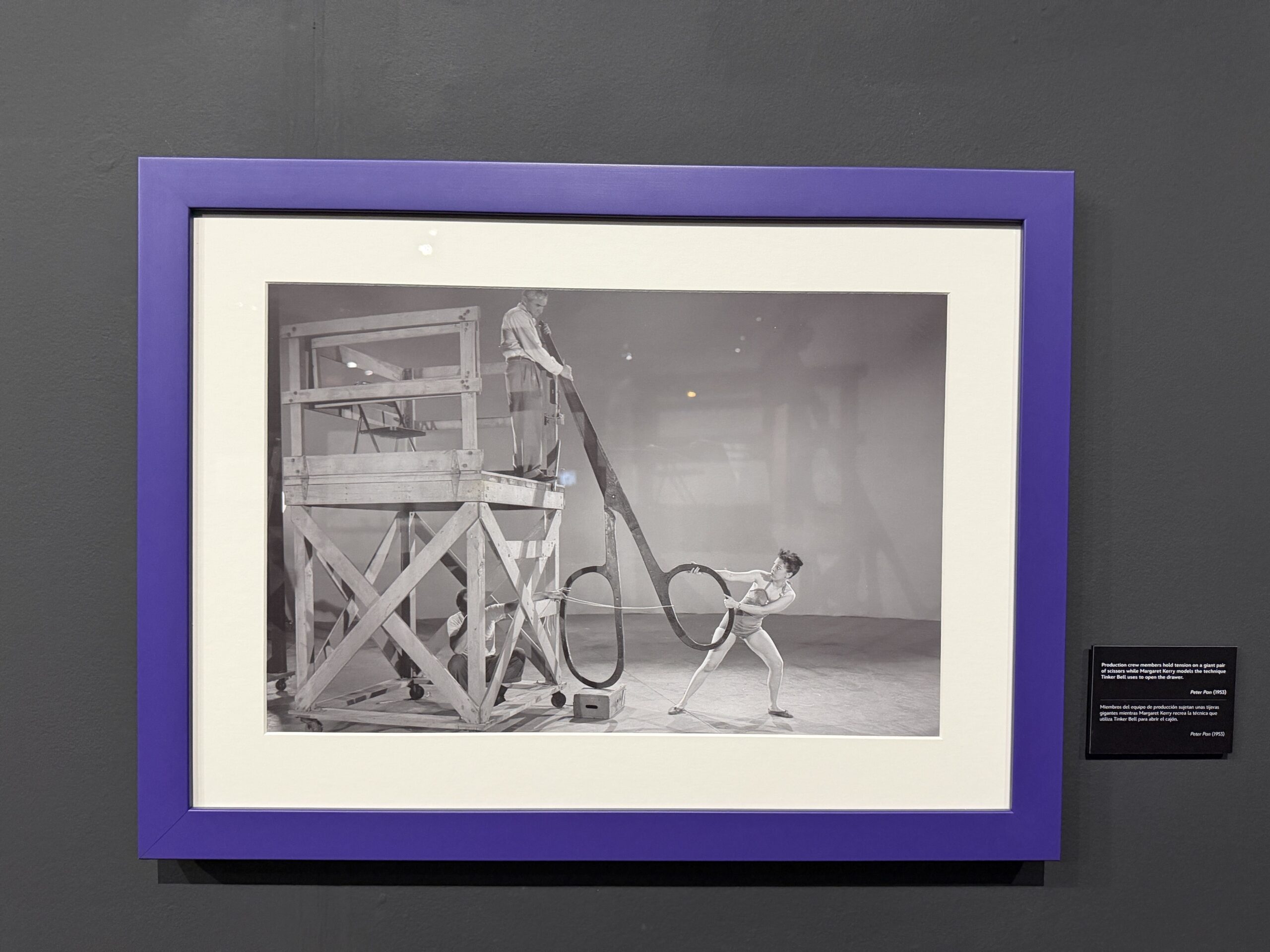
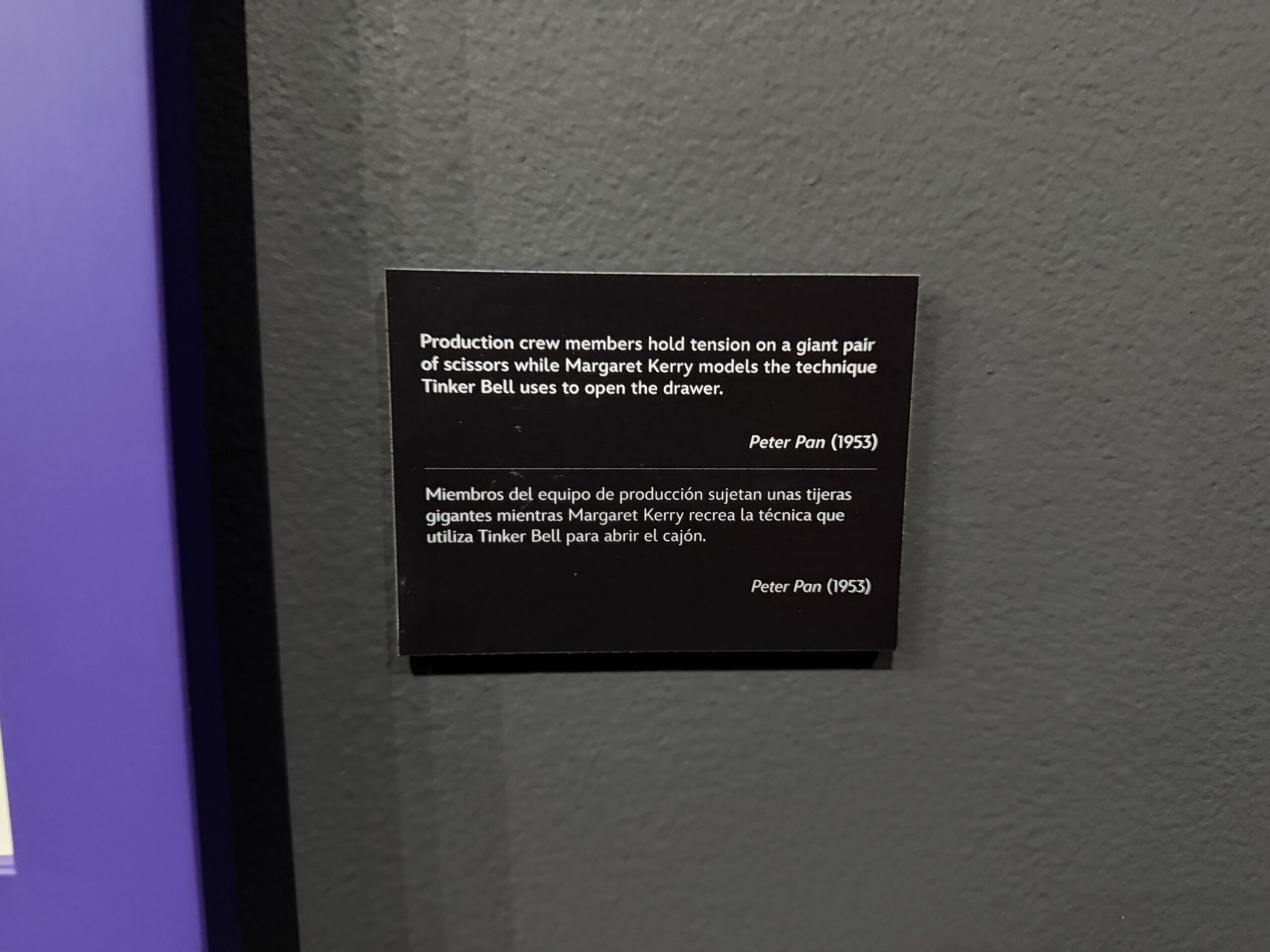
A photo nearby shows Margaret Kerry modeling the technique Tinker Bell uses to open the drawer while production crew members hold the other end of the scissors to maintain tension.
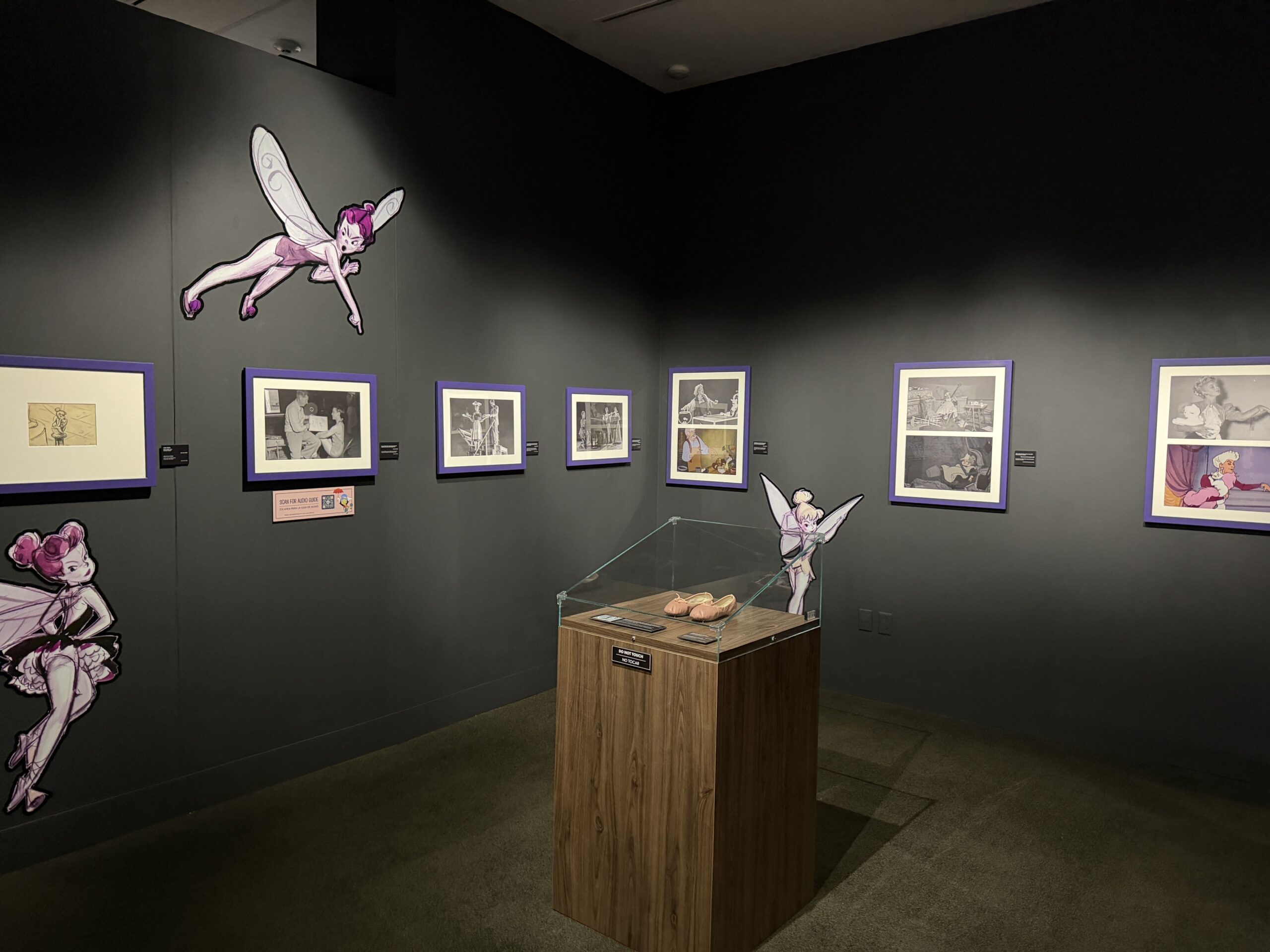
Various concept art of Tinker Bell has been added above and below the photographs.
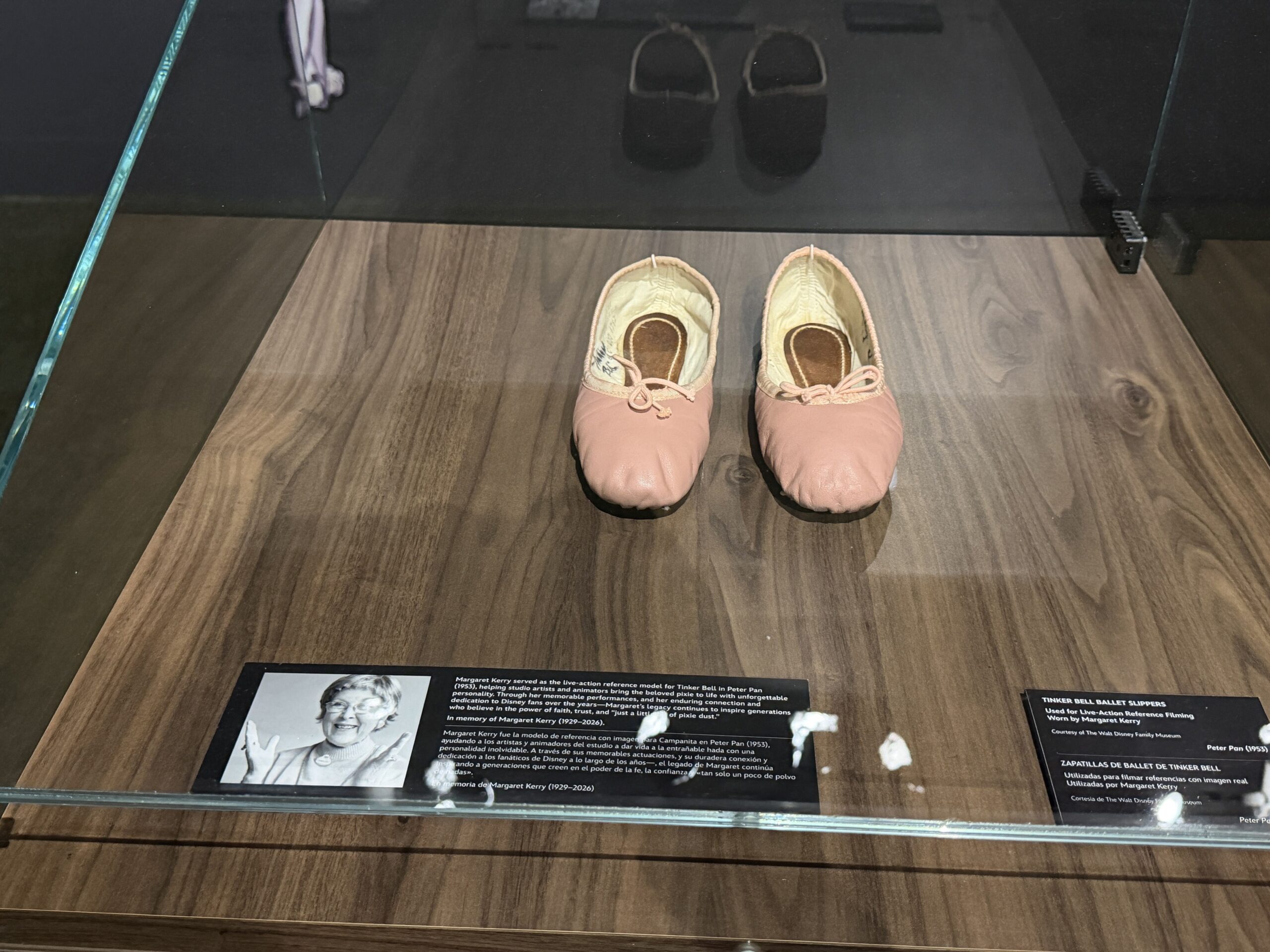
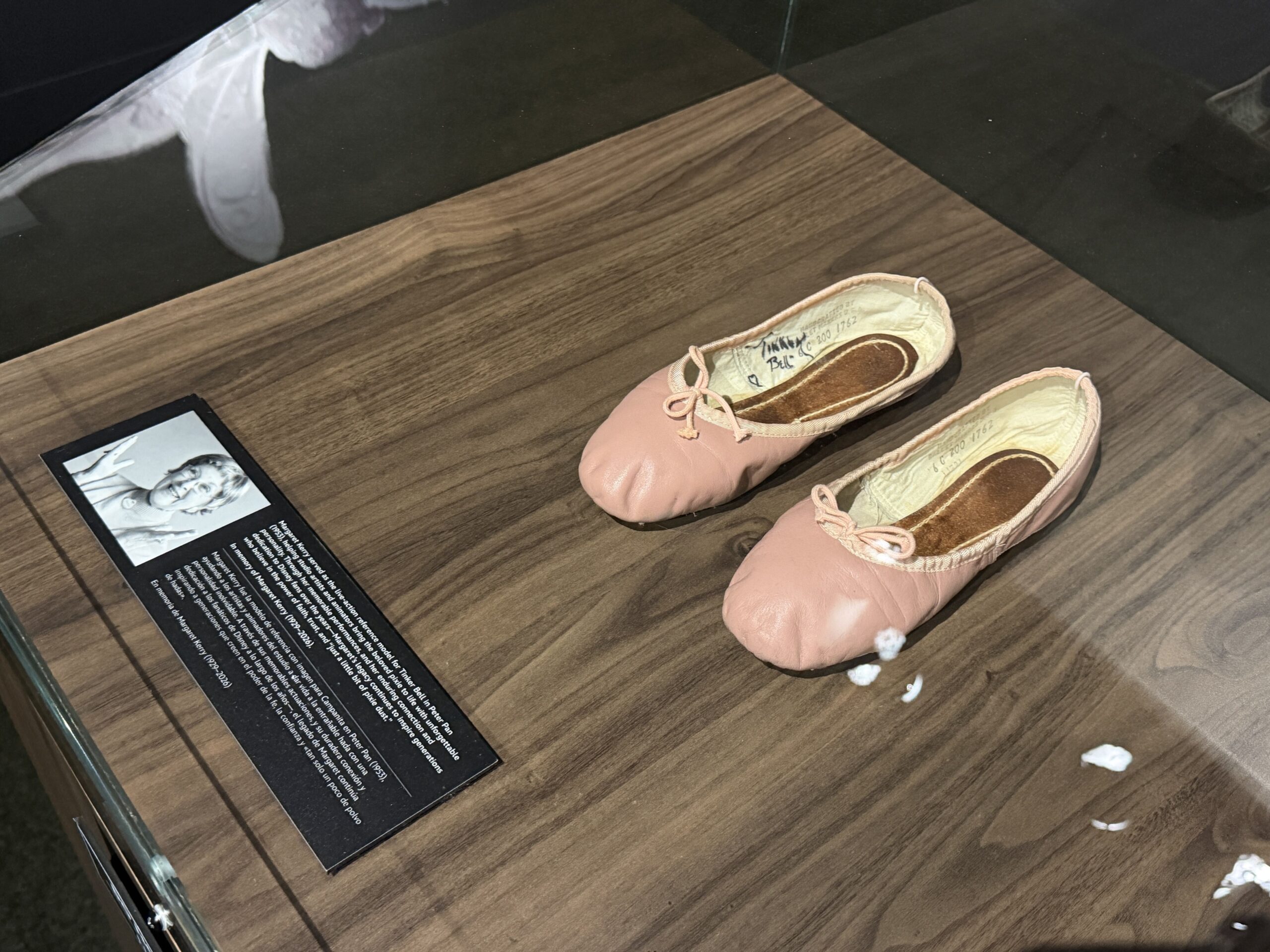
Placed in the middle of the room is a display case with a pair of pink slippers worn by Margaret Kerry, the live-action reference model for Tinker Bell. This particular display is noted to be in memory of Kerry, who passed away last month at the age of 97. “Tinker Bell” with a heart can be seen written on the inside of one of the slippers.
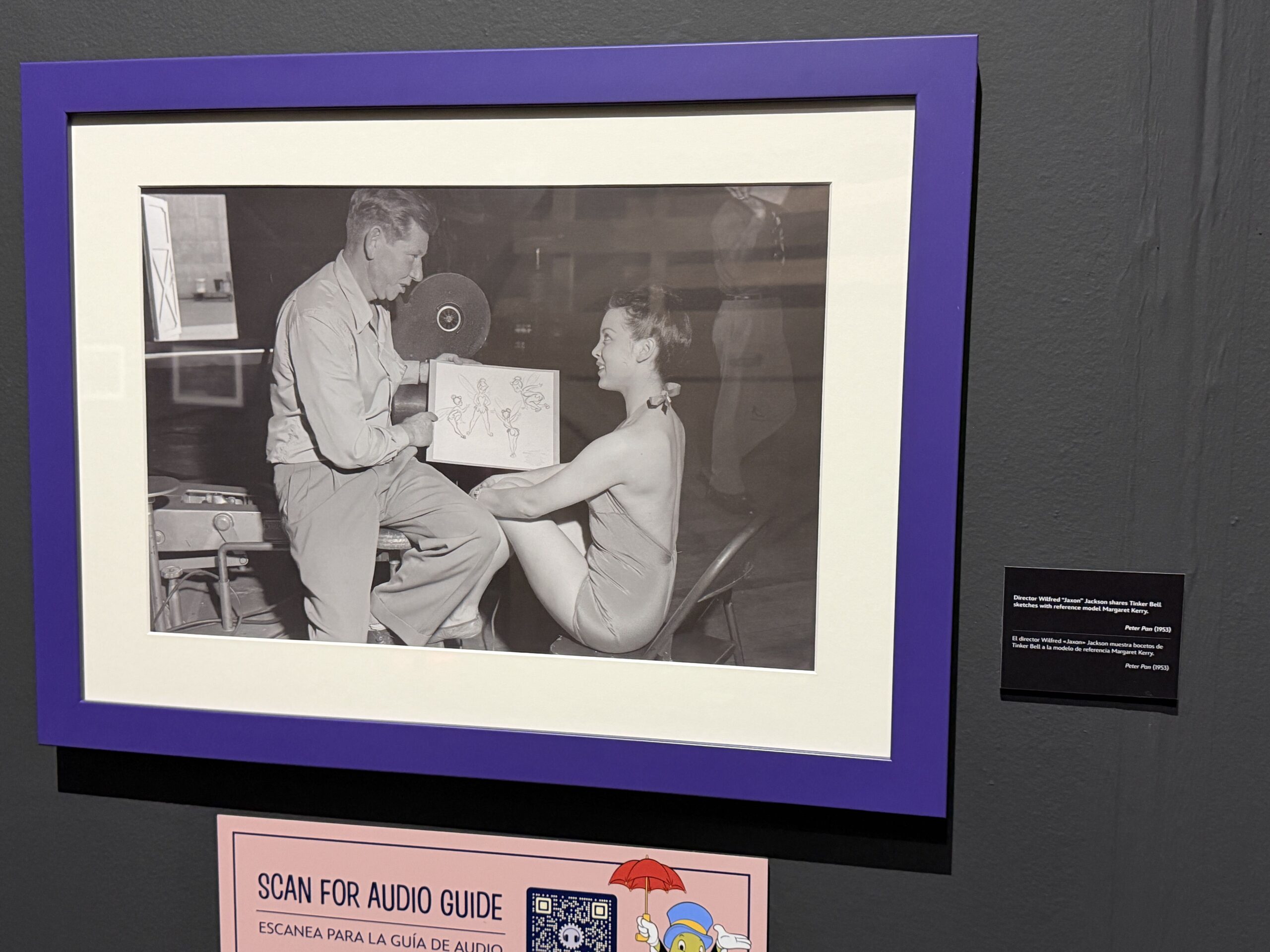
In this photo, director Wilfred “Jaxon” Jackson shares Tinker Bell sketches with Margaret Kerry.
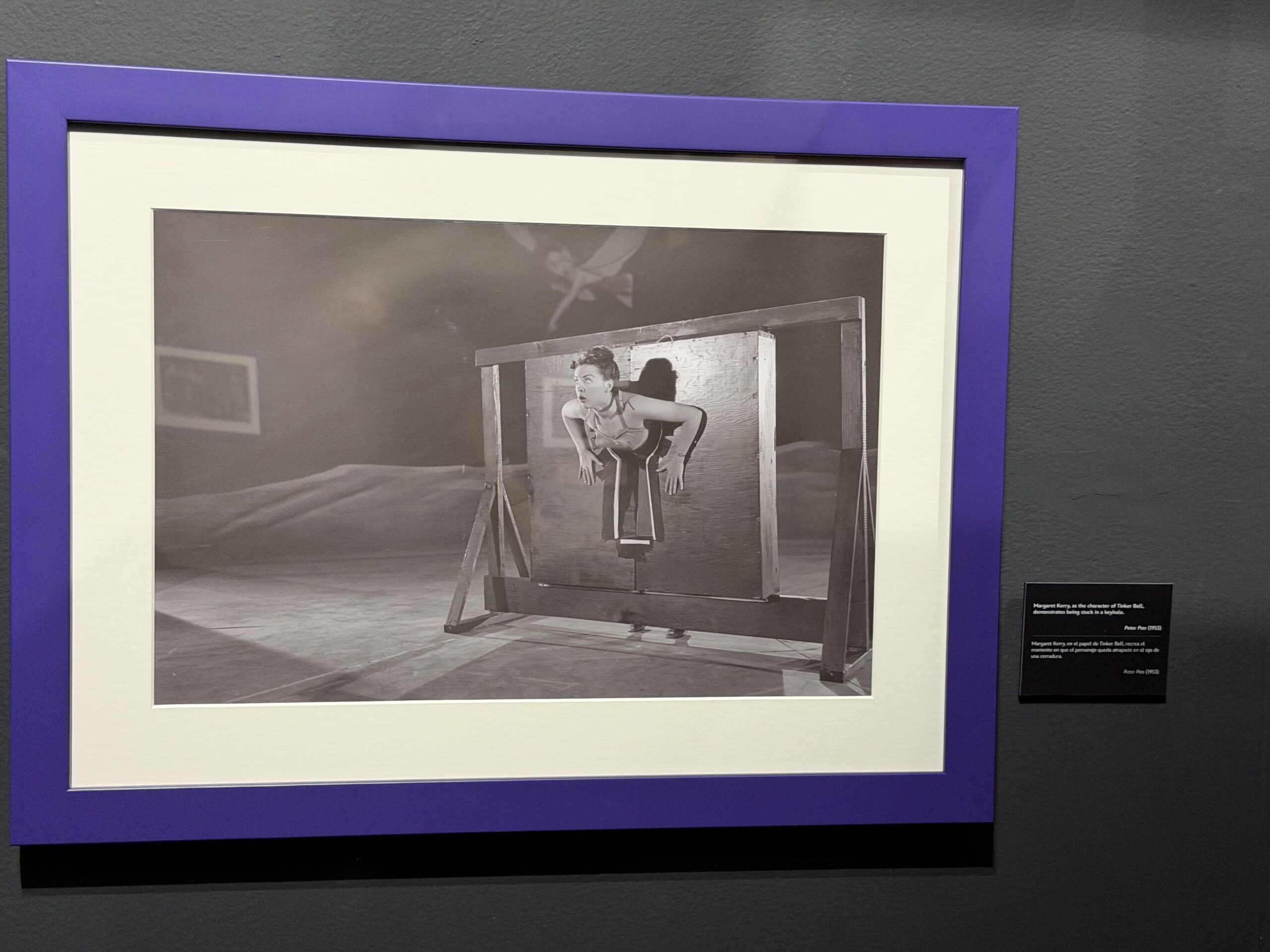
The iconic scene where Tinker Bell gets stuck in a keyhole was demonstrated by Kerry.
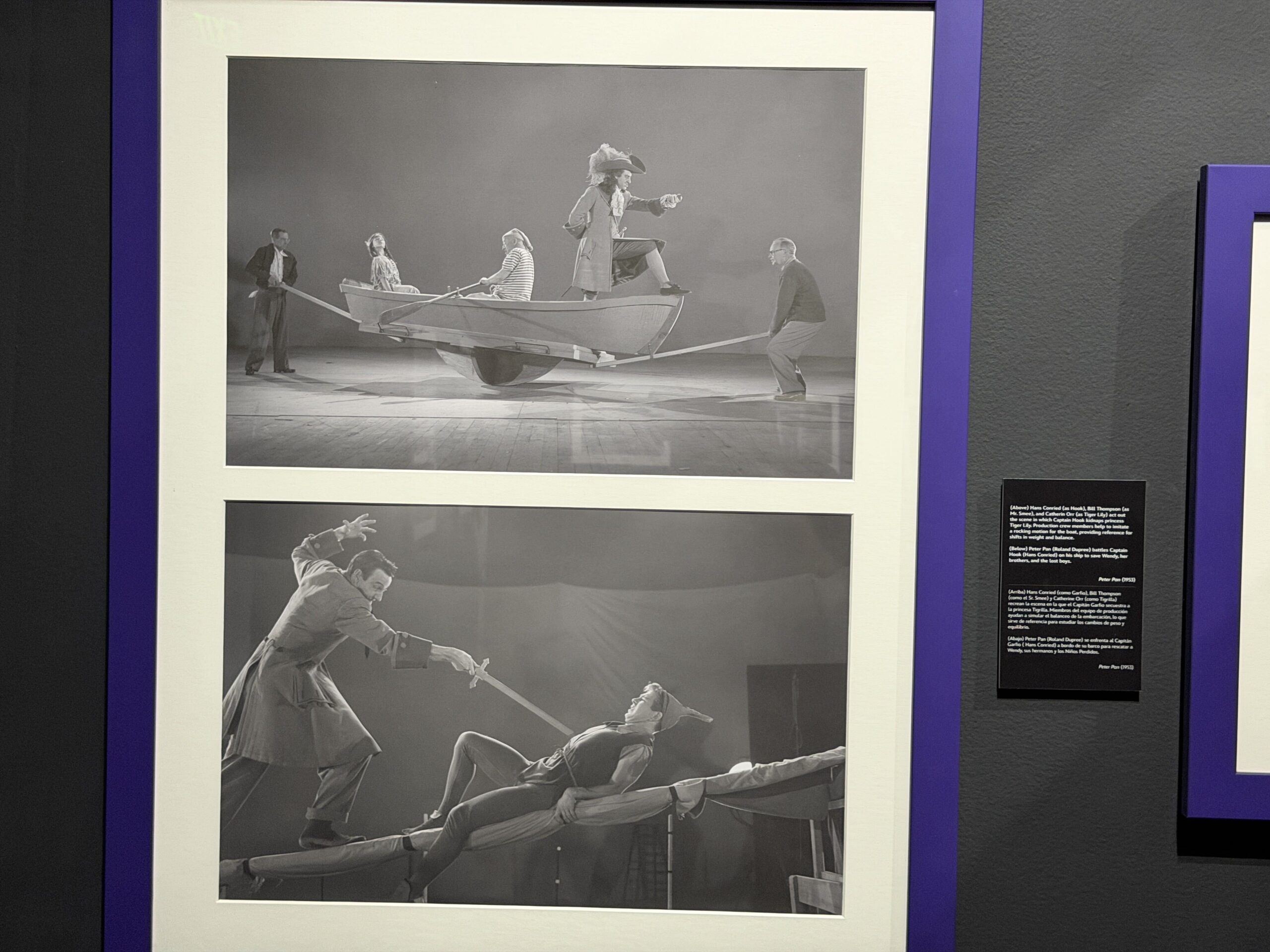
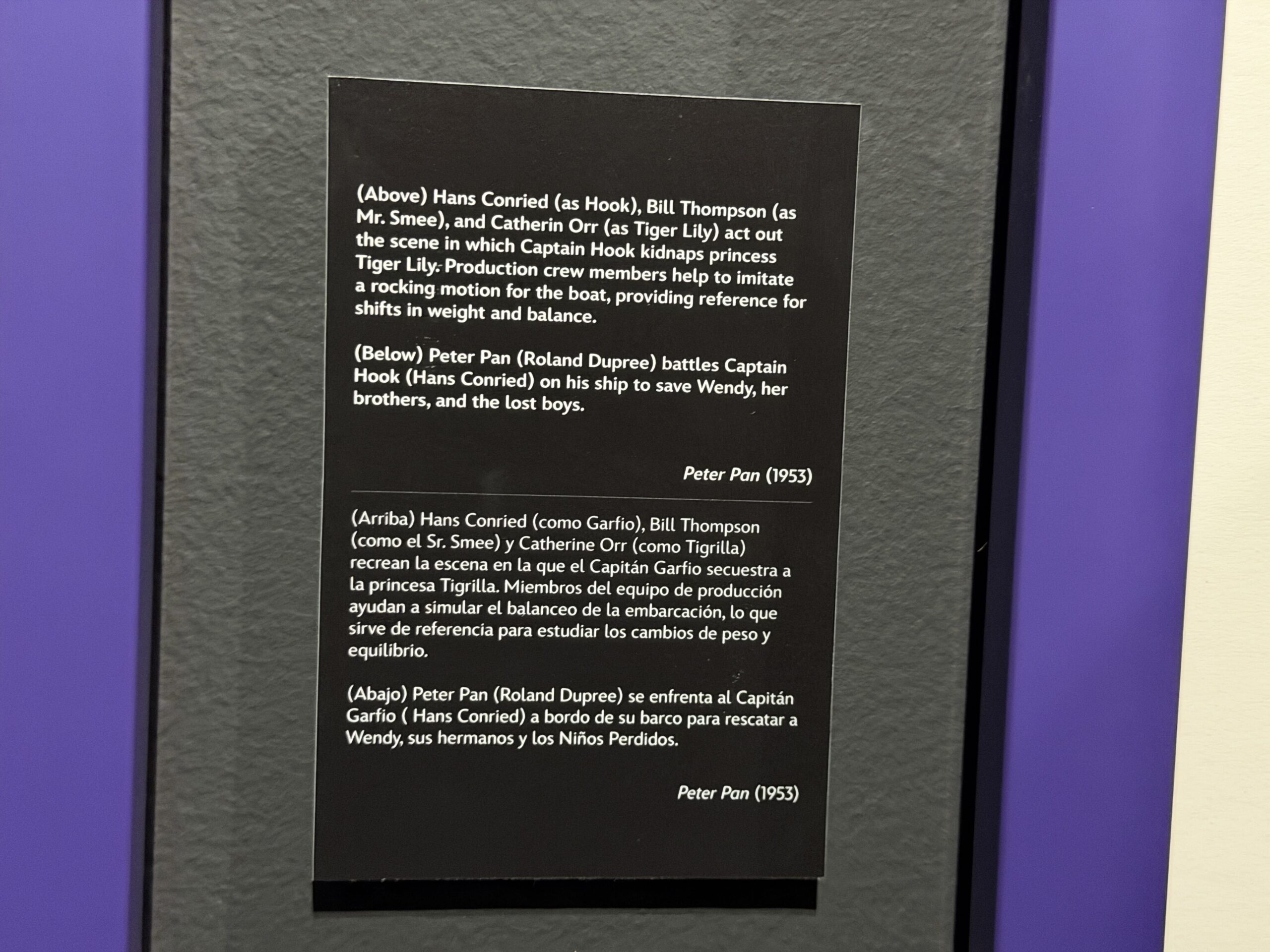
Two scenes from Peter Pan are shown in this collage. In the above photo, Hans Conried (Captain Hook), Bill Thompson (Mr. Smee) and Catherin Orr (Tiger Lily) act out the scene where Captain Hook kidnaps the princess. Crew members helped imitate the rocking motion for the boat. In the below photo, Peter Pan (Rolan Dupree) fights with Captain Hook (Hans Conried) on Hook’s ship.
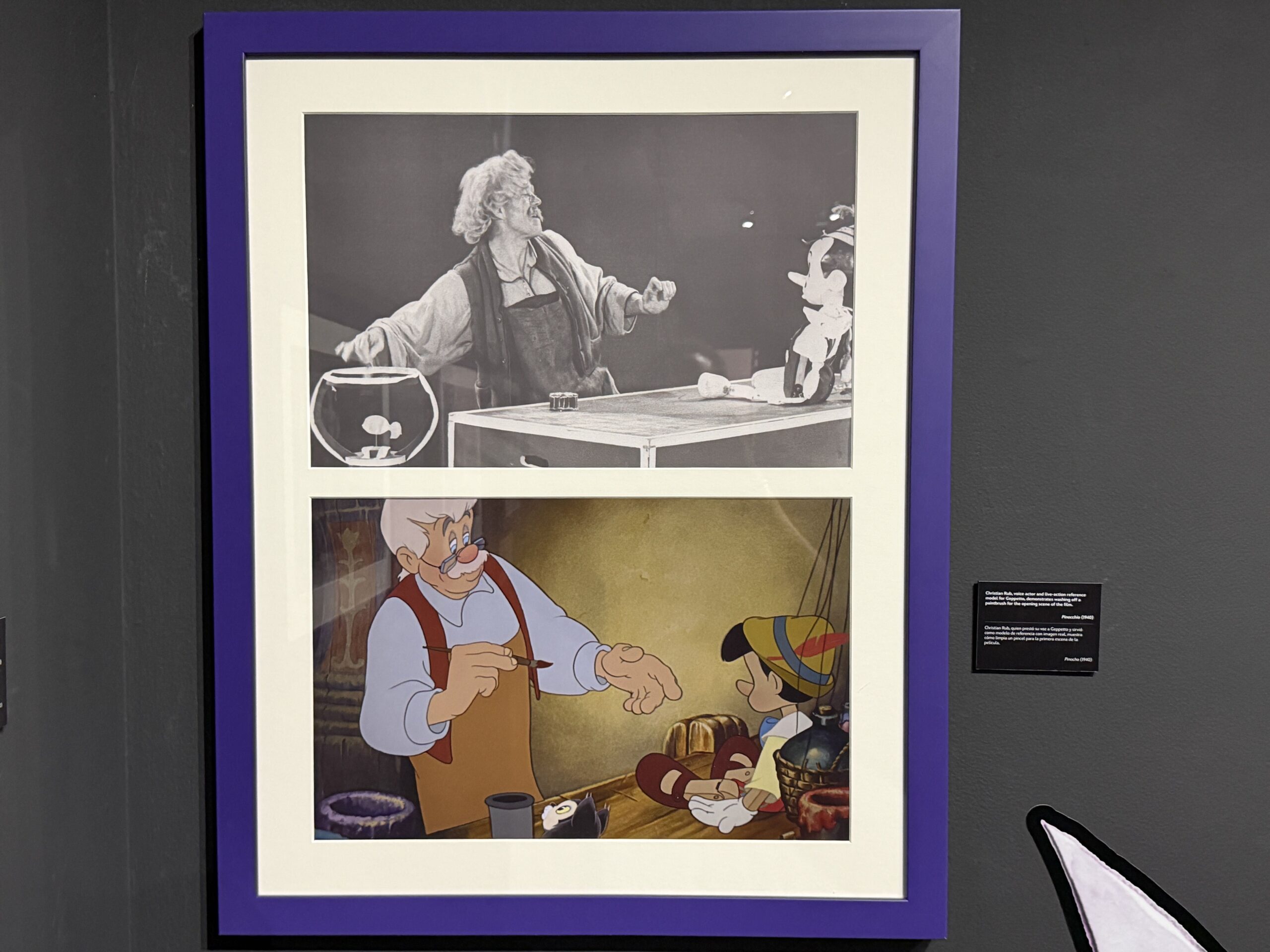
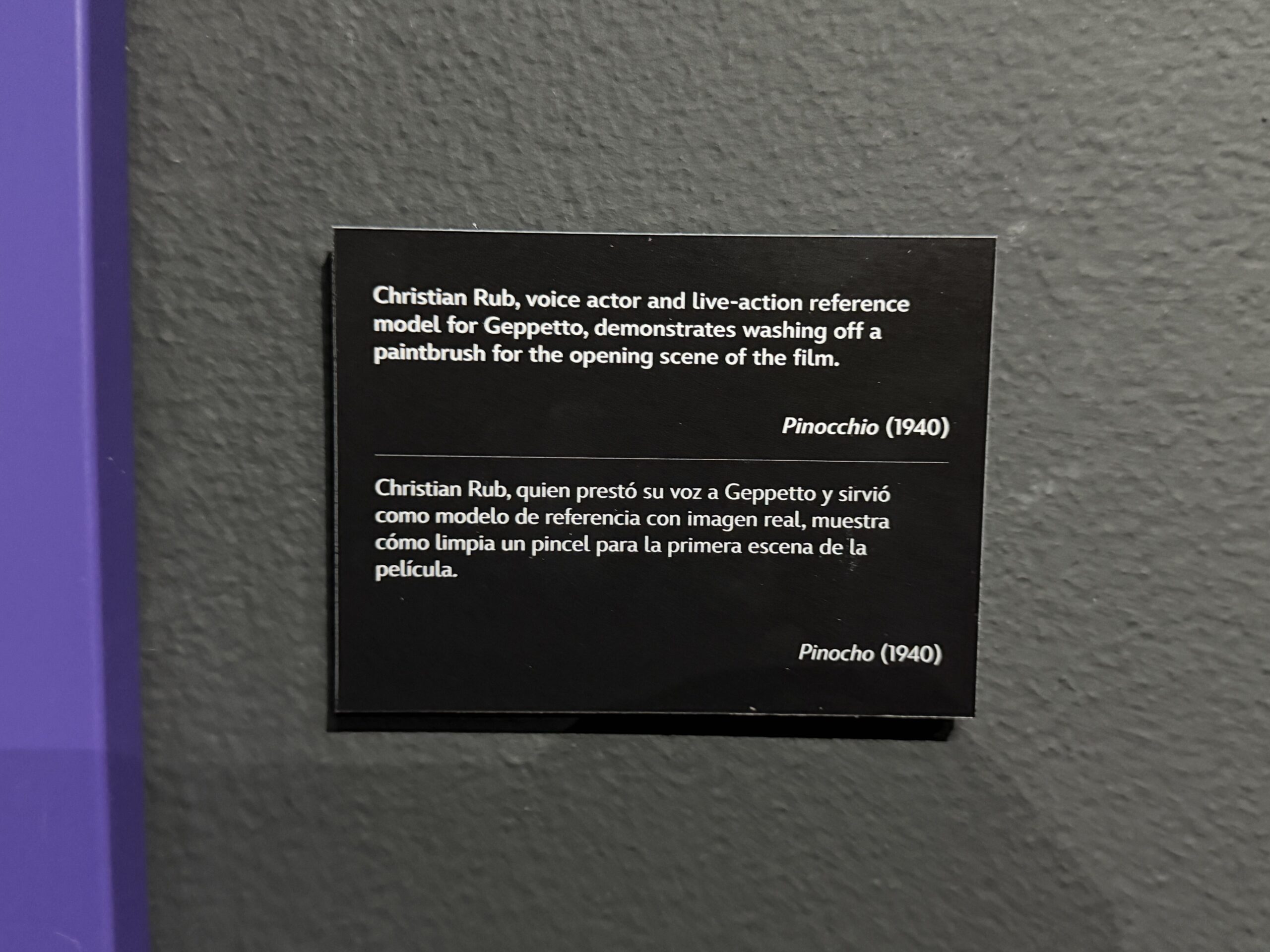
Christian Rub, voice actor and live-action reference for Geppetto in Pinocchio, demonstrates washing a paintbrush for the opening scene of the movie.
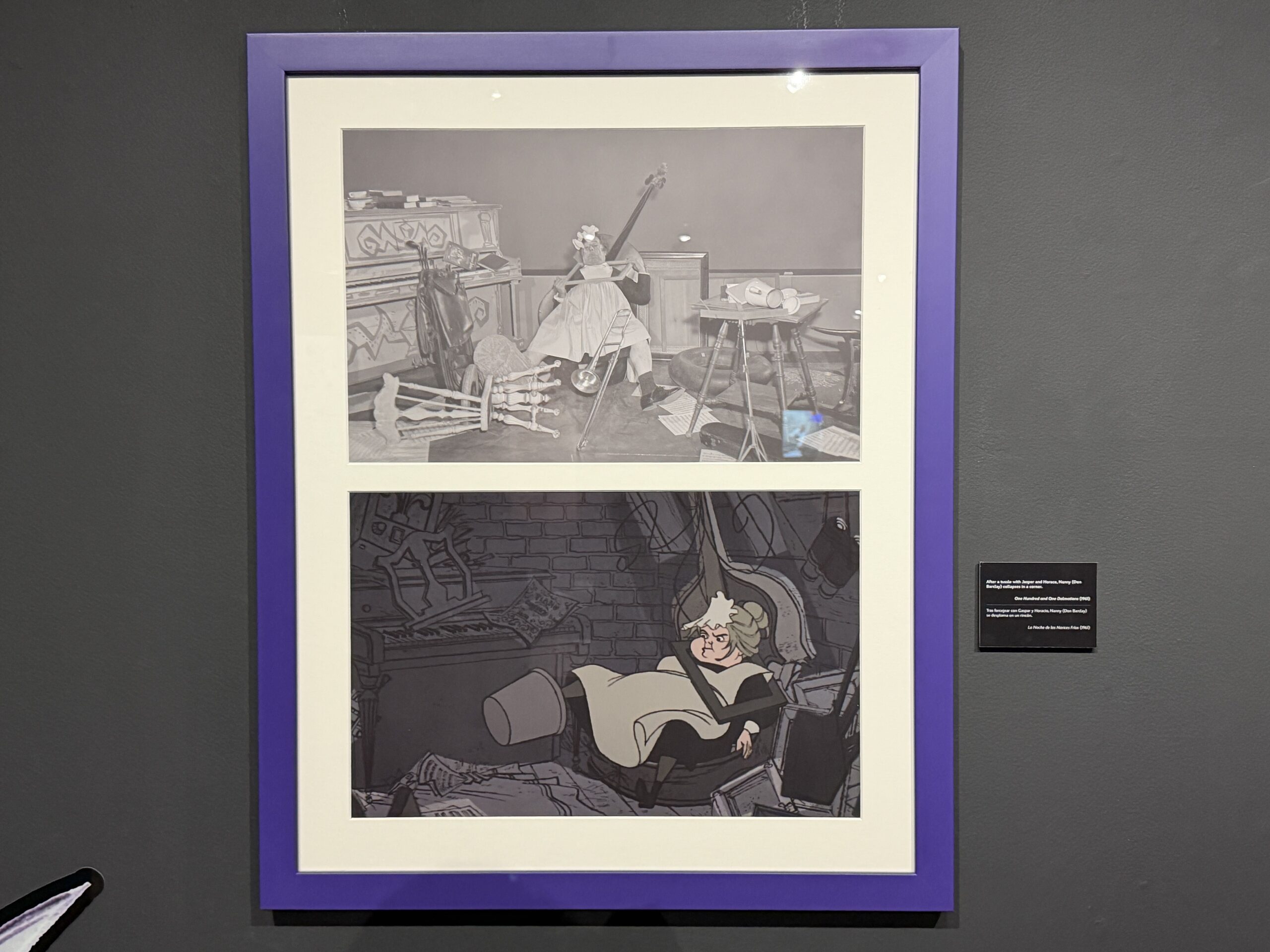
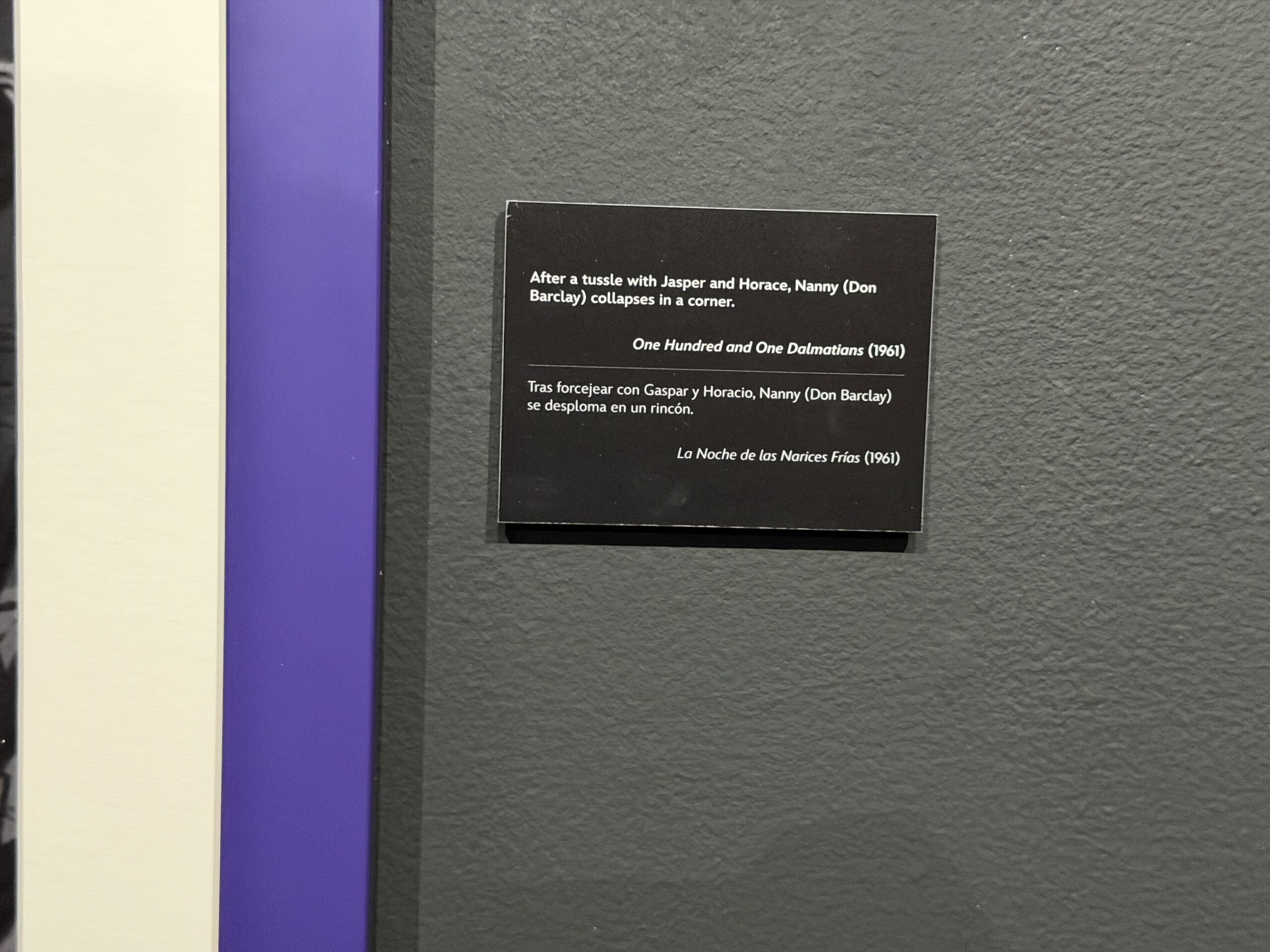
In this photograph, Don Barclay represents Nanny from One Hundred and One Dalmatians (1961) collapsed in a corner after a fight with Jasper and Horace.
Final Animation
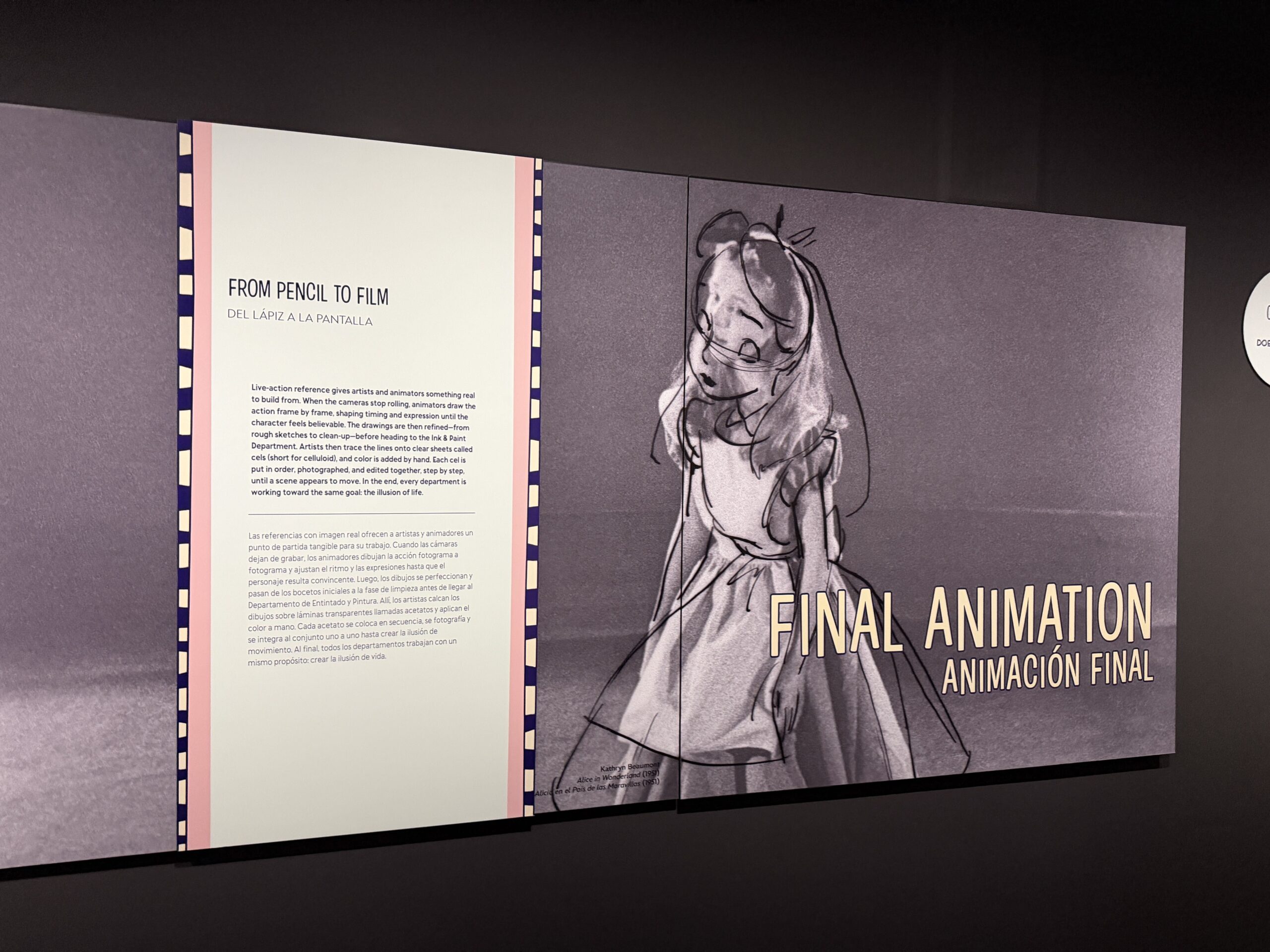
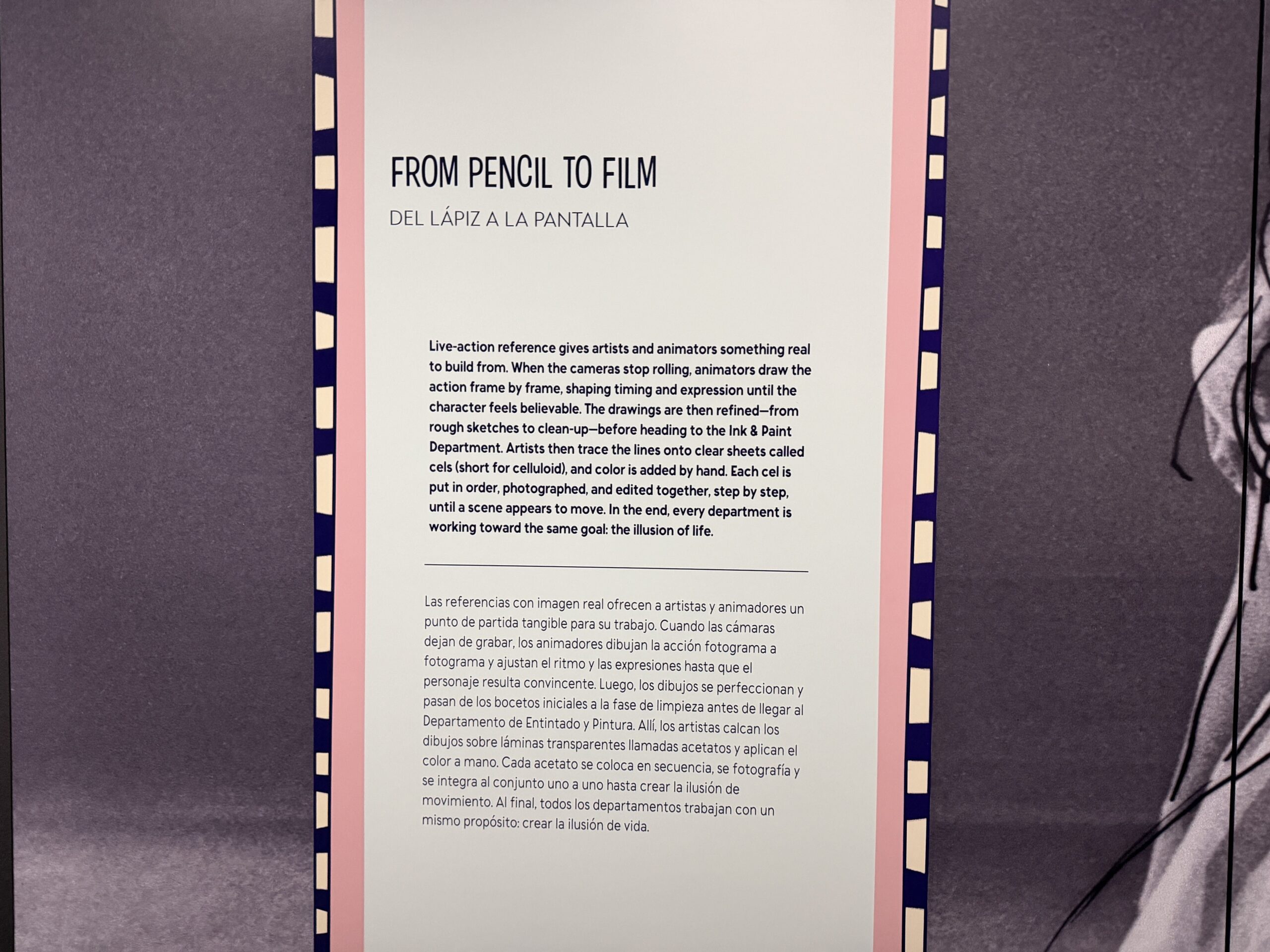
The last major section of the exhibit is themed to the final animation stage of development. After live-action reference footage has been captured, animators get to work on drawing the action frame by frame. After the drawings are refined from rough sketches to clean-up, they are sent to the Ink & Paint Department, where artists trace the lines onto clear sheets called cels (short for celluloid). After color is added by hand, each cel is put in order, photographed, and edited together. The combined effort results in a scene that appears to move.
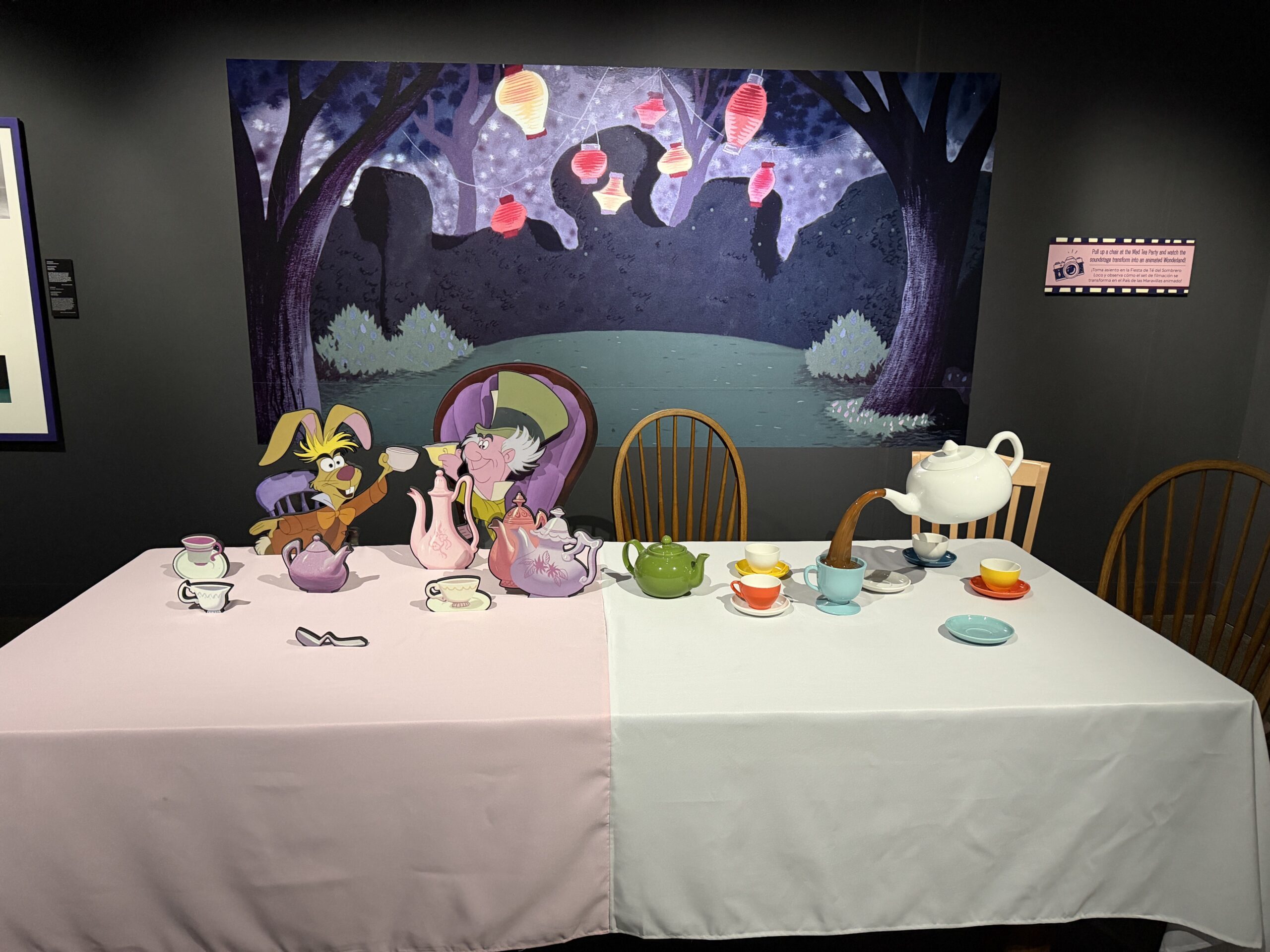
An interactive diorama of the Mad Tea Party from Alice in Wonderland invites visitors to “pull up a chair…and watch the soundstage transform into an animated Wonderland!” The scene is complete with the Mad Hatter and the March Hare on one end of the table surrounded by various teapots, teacups, and other accompaniments positioned as if caught mid-pour.
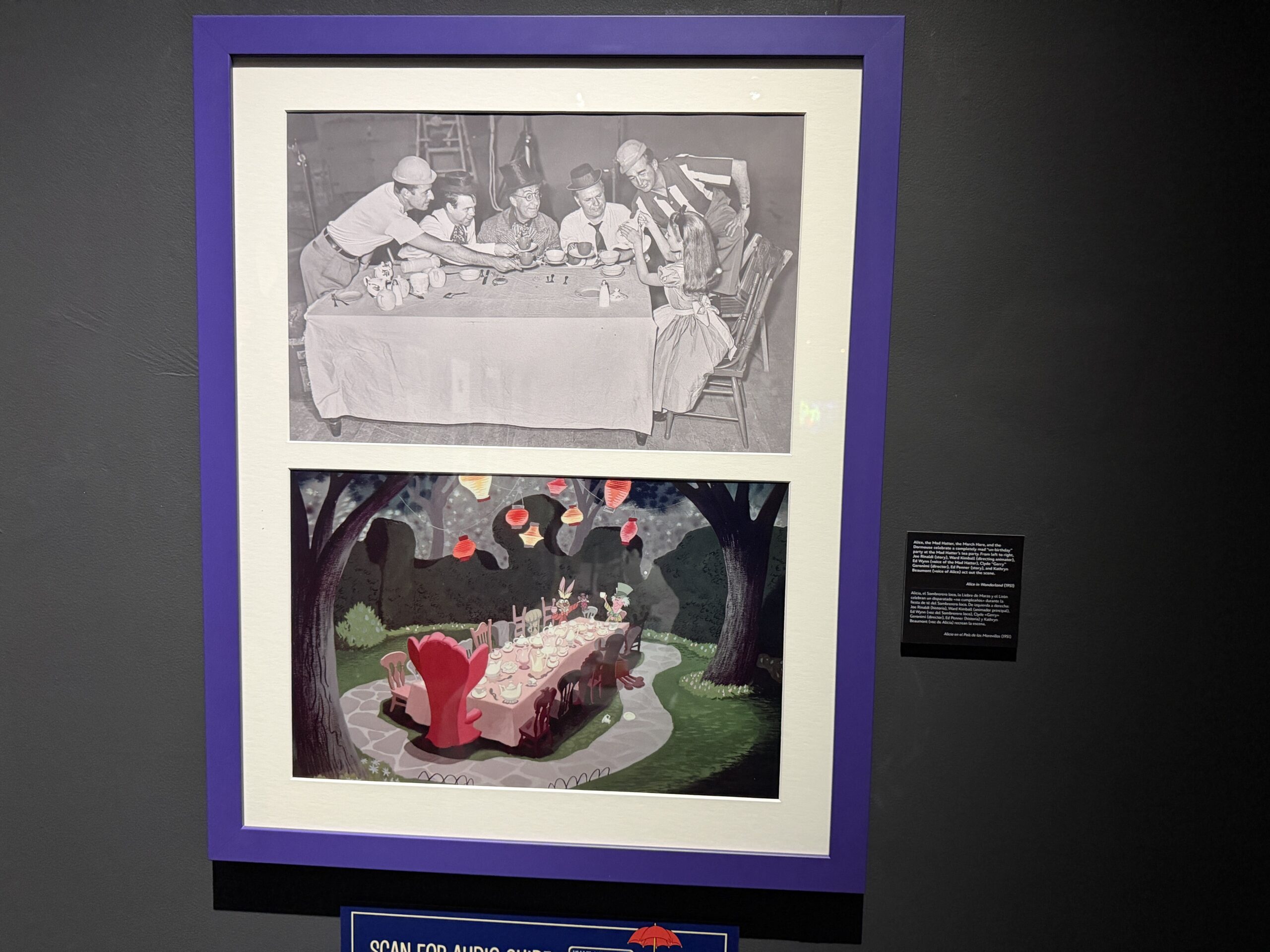
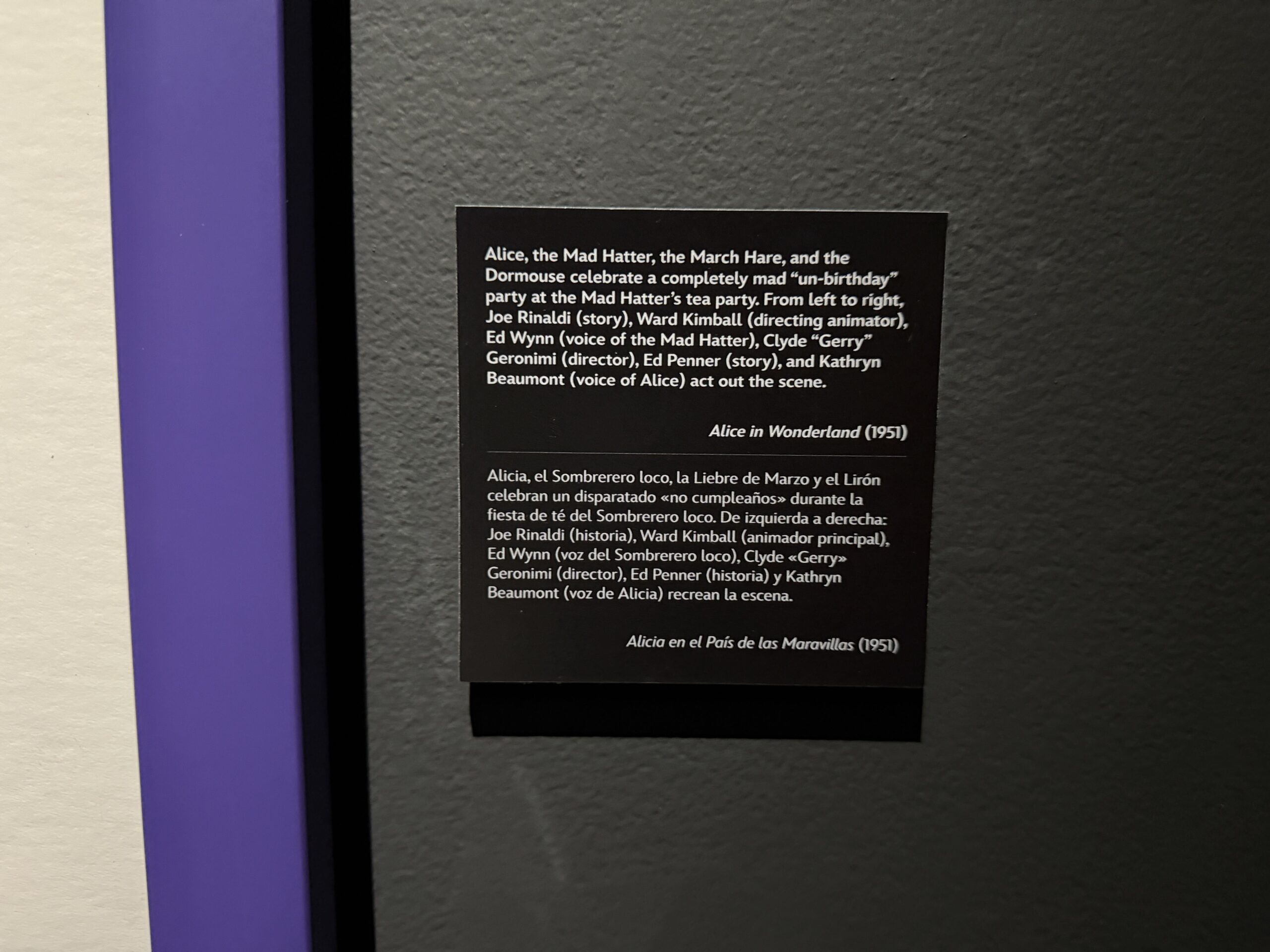
Near the diorama, an archival photo compares several members of the production team acting out the tea party scene for reference in animating the final product. The tea party consists of notable Disney creatives including Joe Rinaldi, Ward Kimball, Ed Wynn, Clyde Geronimi, Ed Penner, and Kathryn Beaumont – the voice of Alice herself.
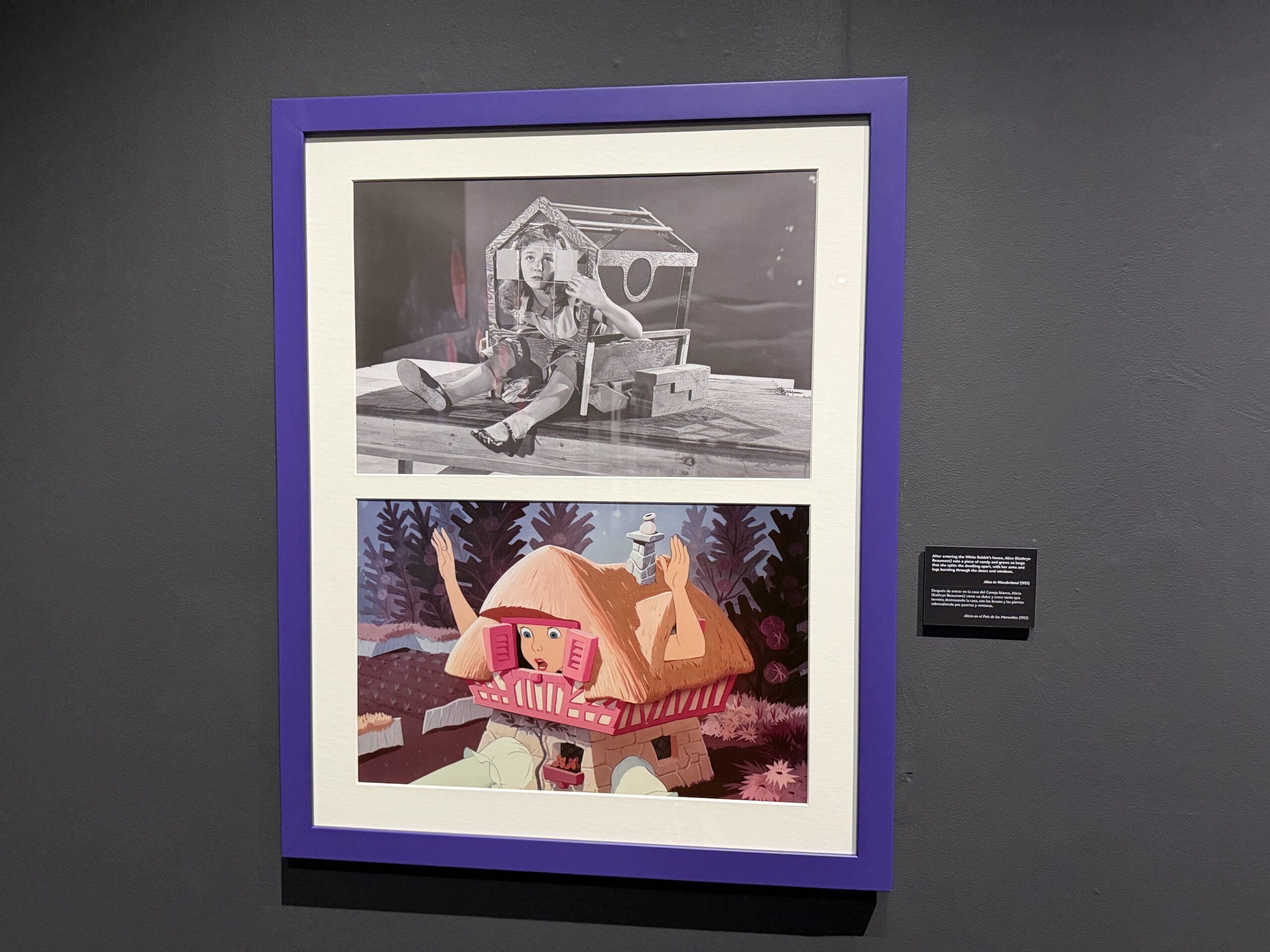
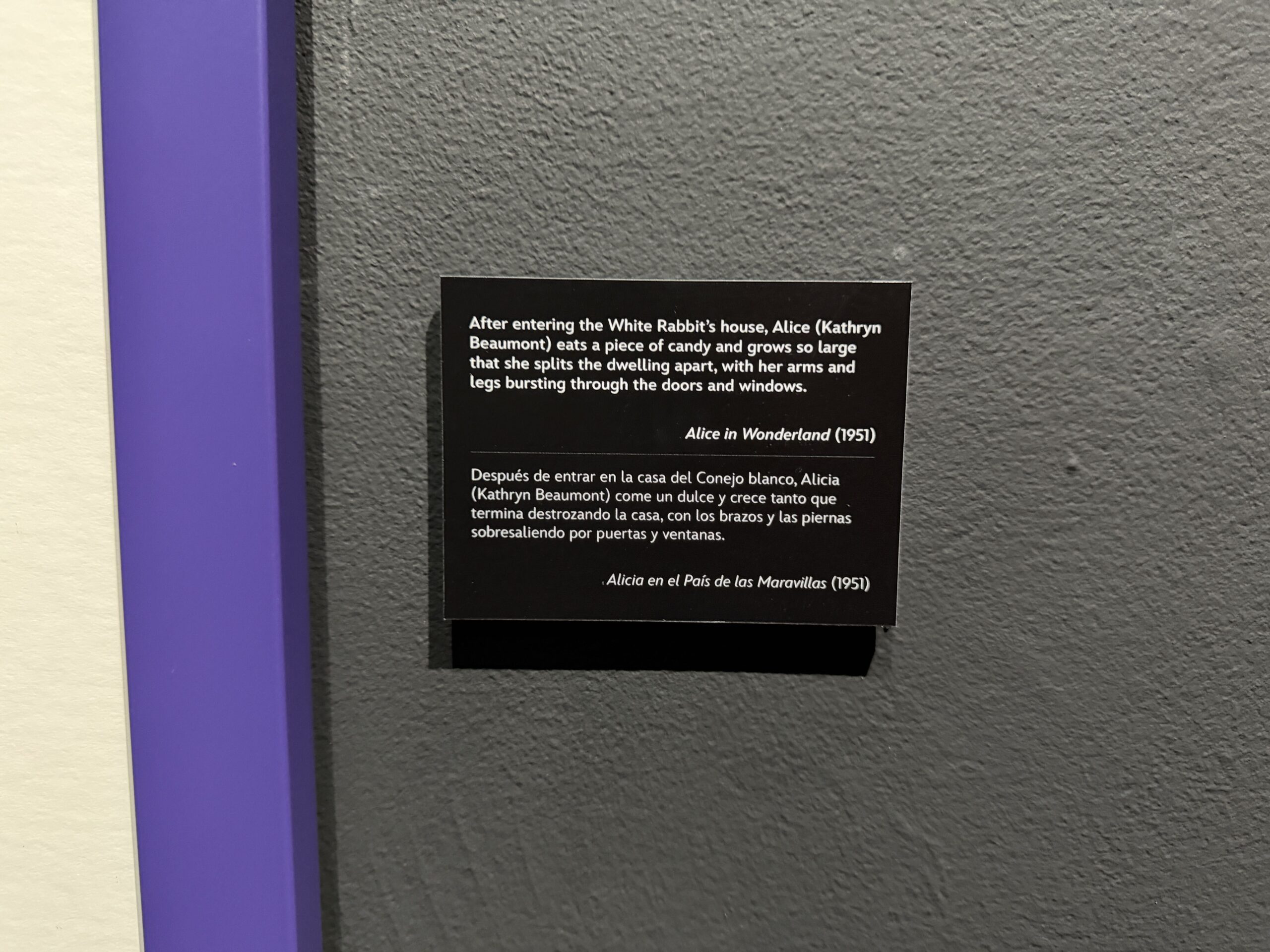
Another nearby photo shows Kathryn Beaumont posing for the scene in which Alice eats a piece of candy and grows large enough to fill and burst through the openings of the house she found herself in.
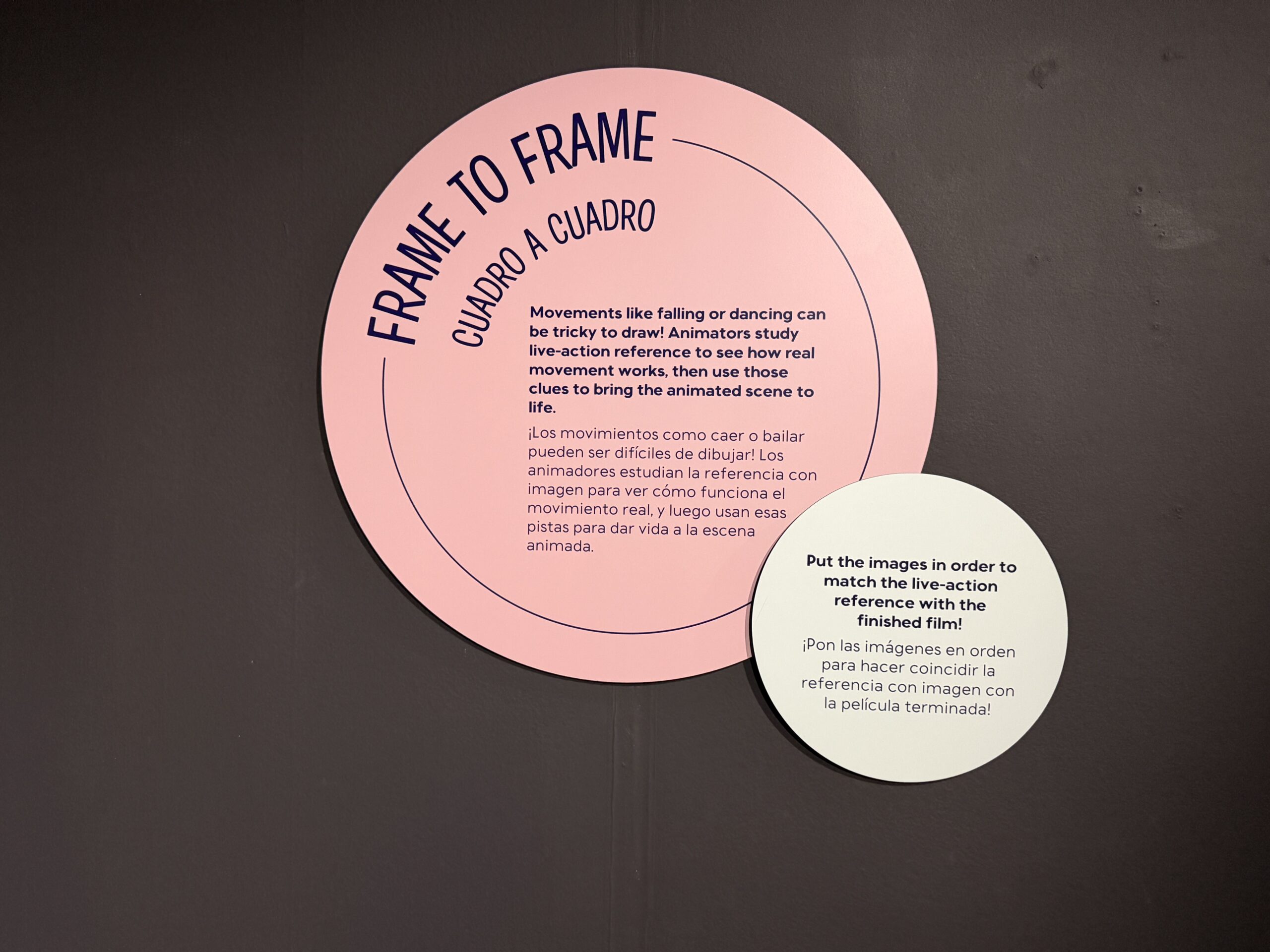
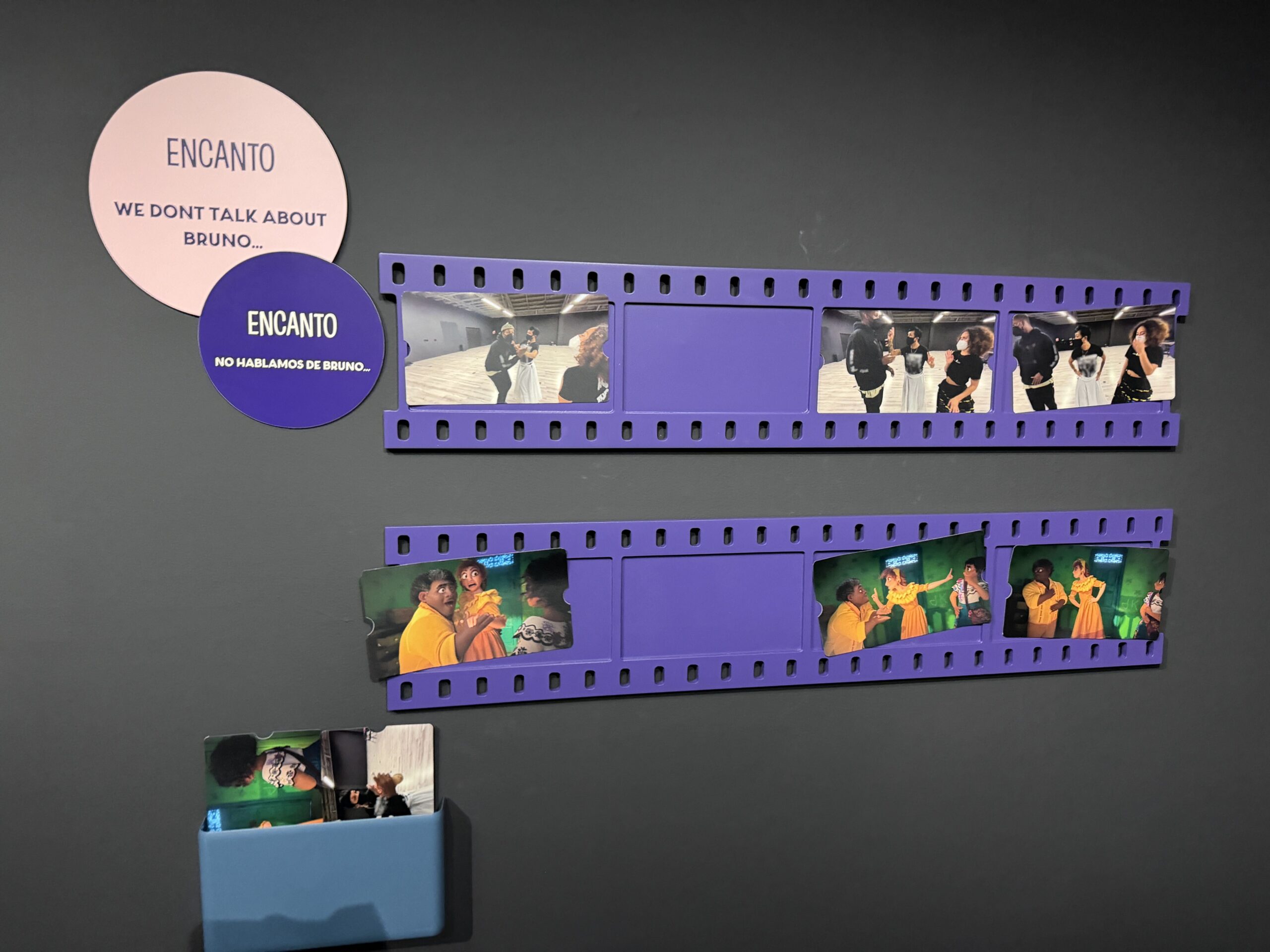
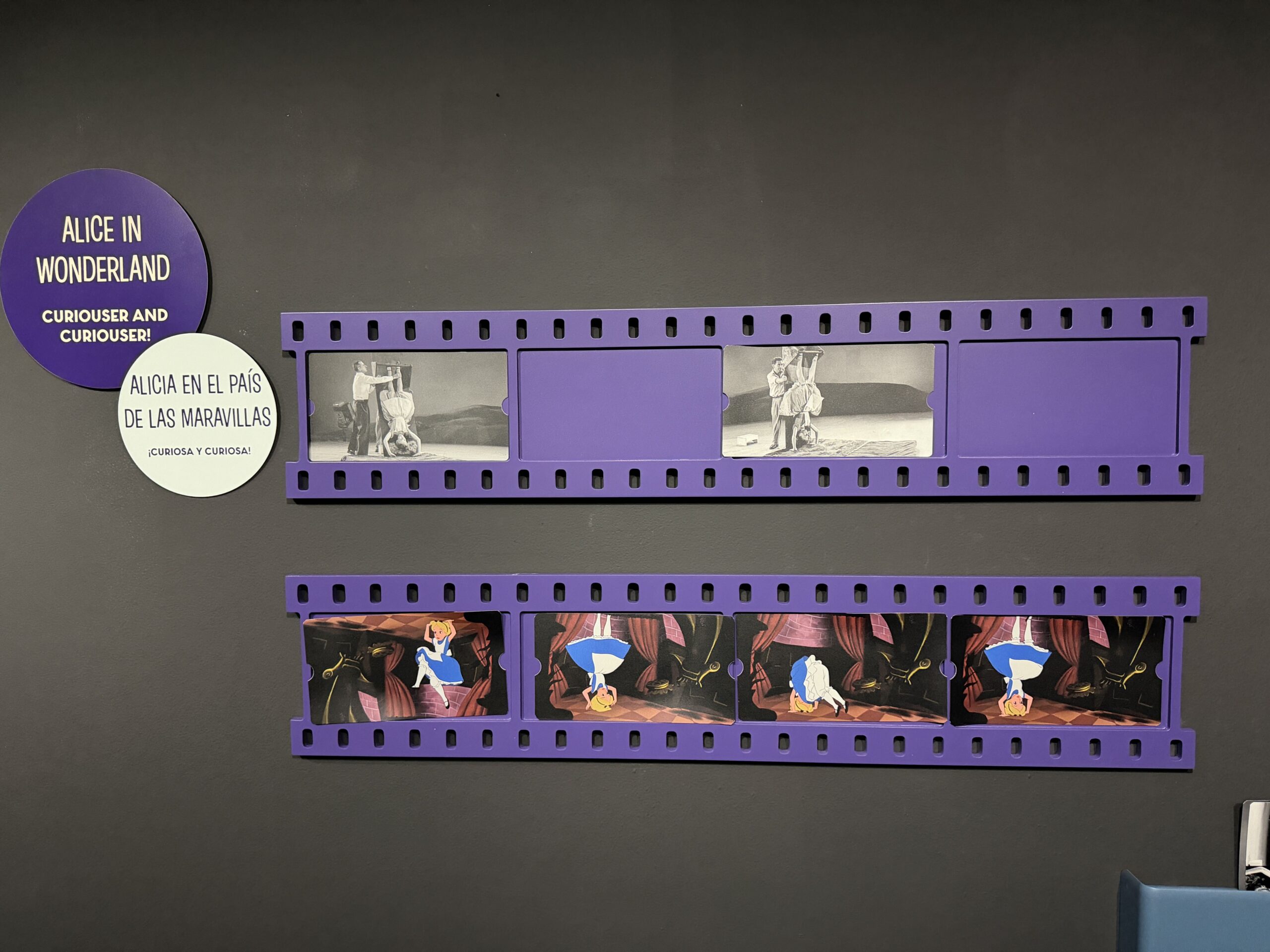
A “Frame to Frame” interactive element invites guests to correctly arrange a series of live-action reference stills with their corresponding animated stills from Alice in Wonderland and the more modern hit Encanto, demonstrating the continuing practice of live-action reference in today’s animation process.
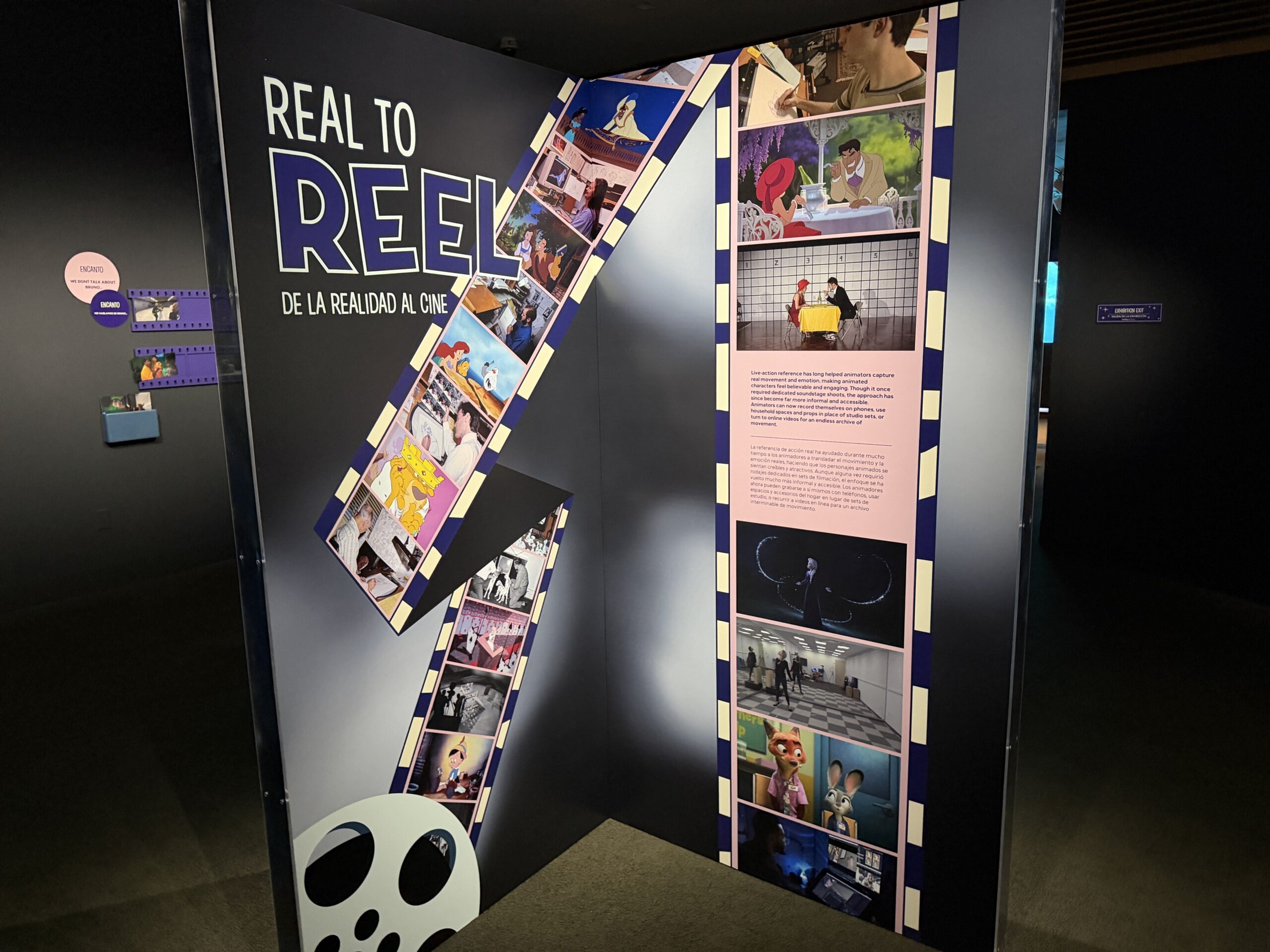
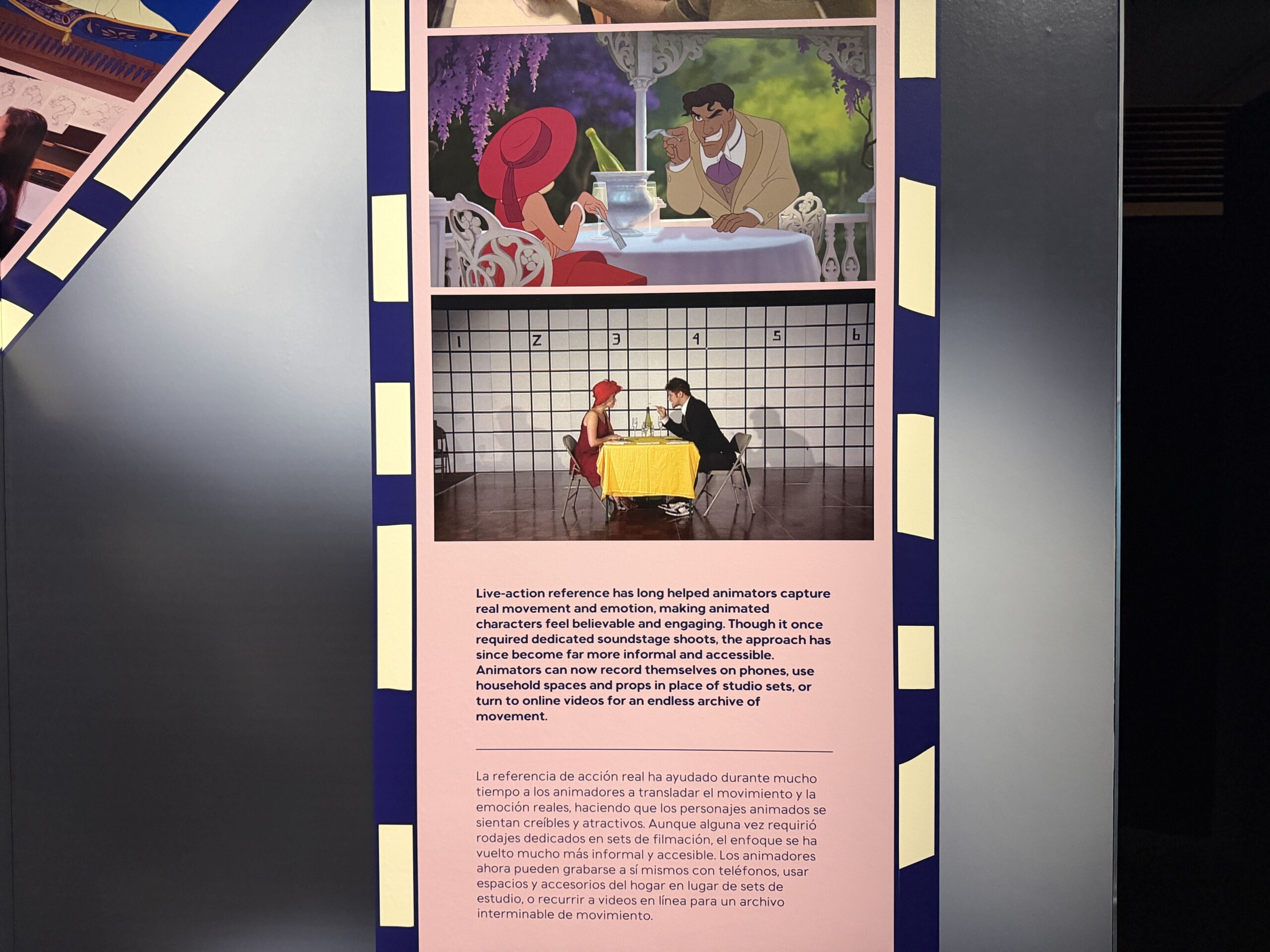
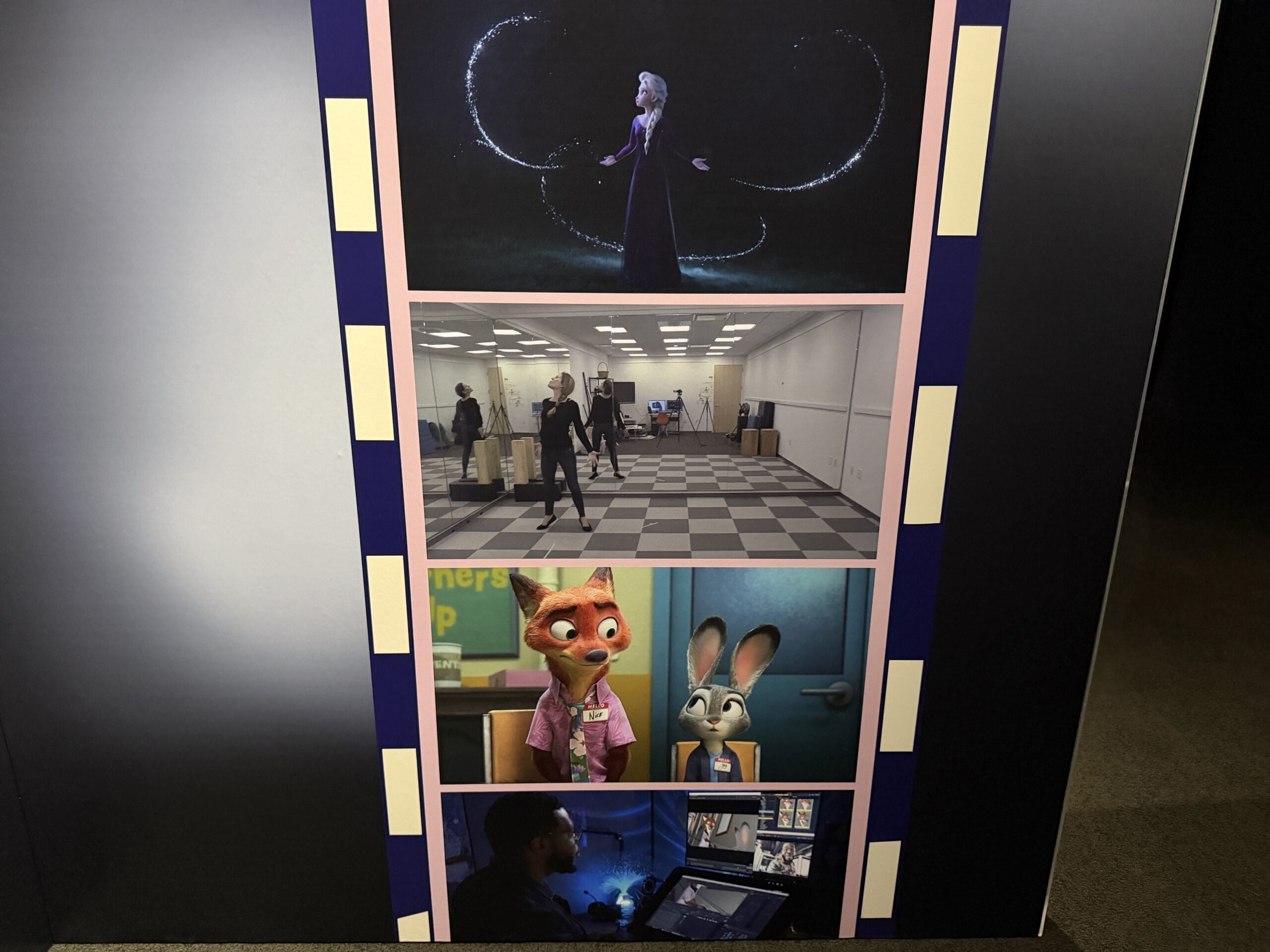
The exhibit also explores how intuitive and accessible the art of live-action reference has become for today’s animators and creatives. Productions of the 20th century often required elaborate staging and material requirements to produce an accurate, compelling, and worthwhile reference point for animators to work with. Nowadays, the animators themselves can employ live-action references thanks to the proliferation of smartphones with high-resolution cameras, and the ease of access to lighting and prop elements through everyday household items.
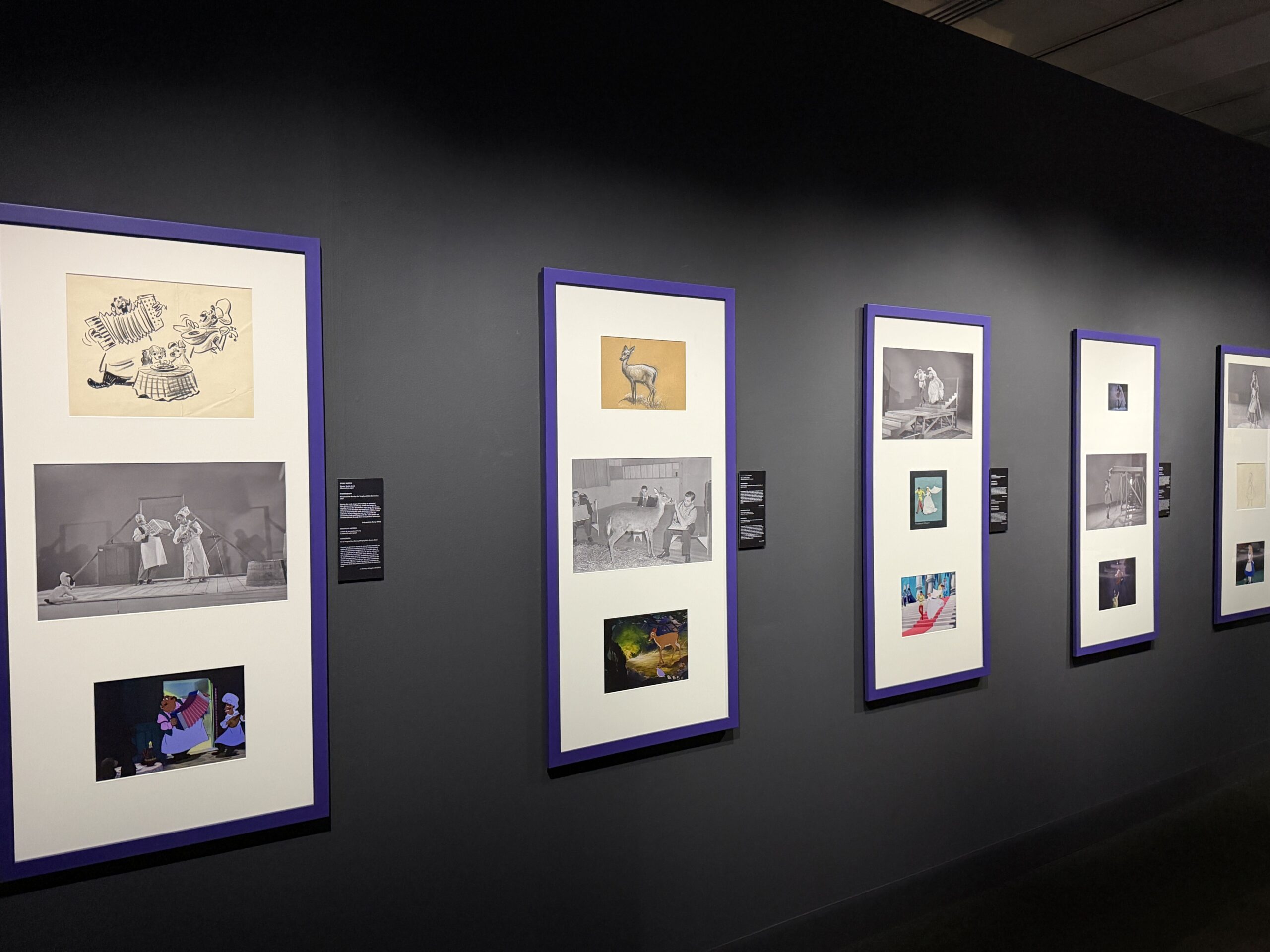
A variety of archival photos, sketches, and animated stills are on display side-by-side throughout this section of the exhibit to further demonstrate the pipeline process that transforms live-action references into full-color animated projects.
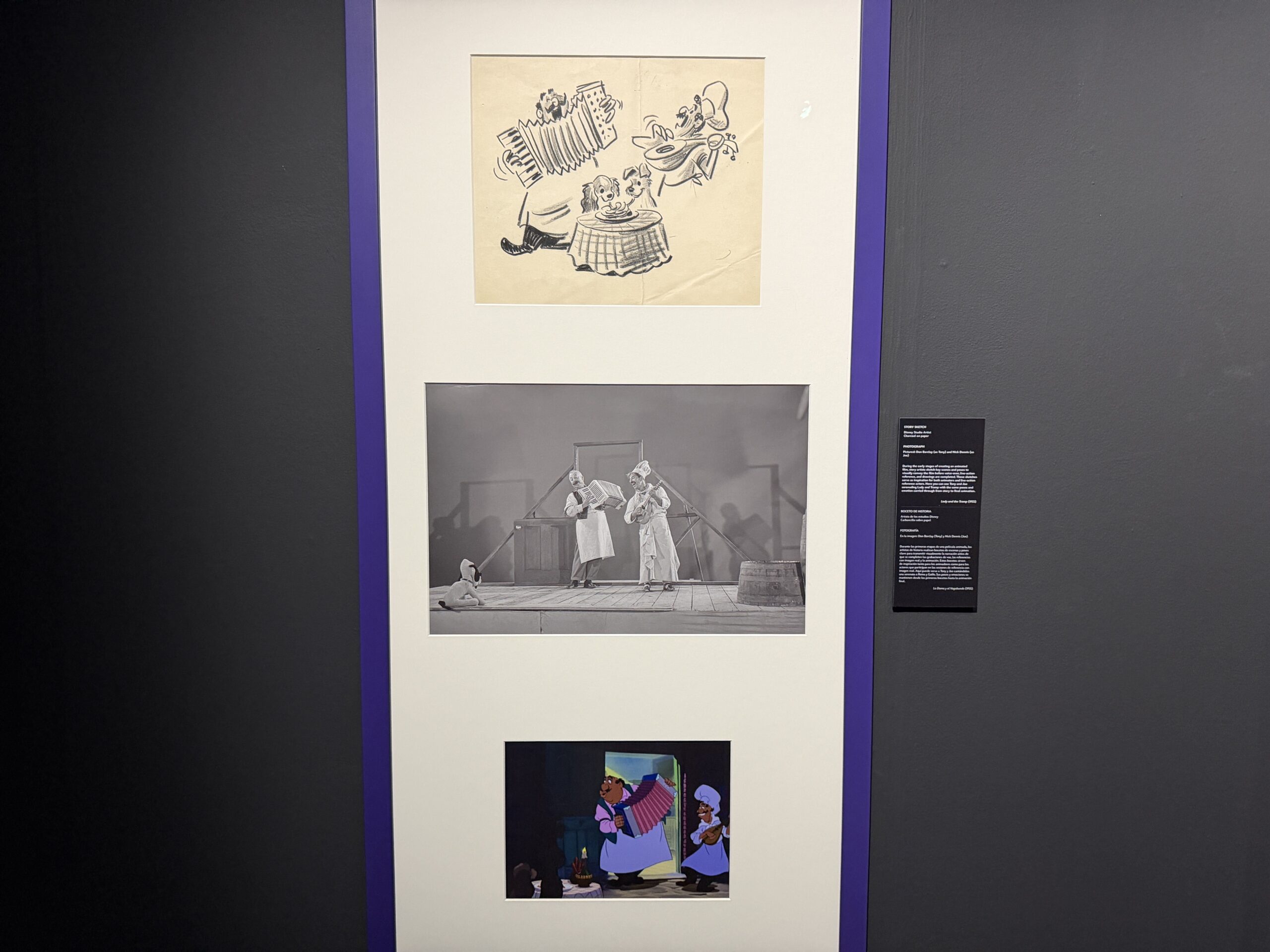
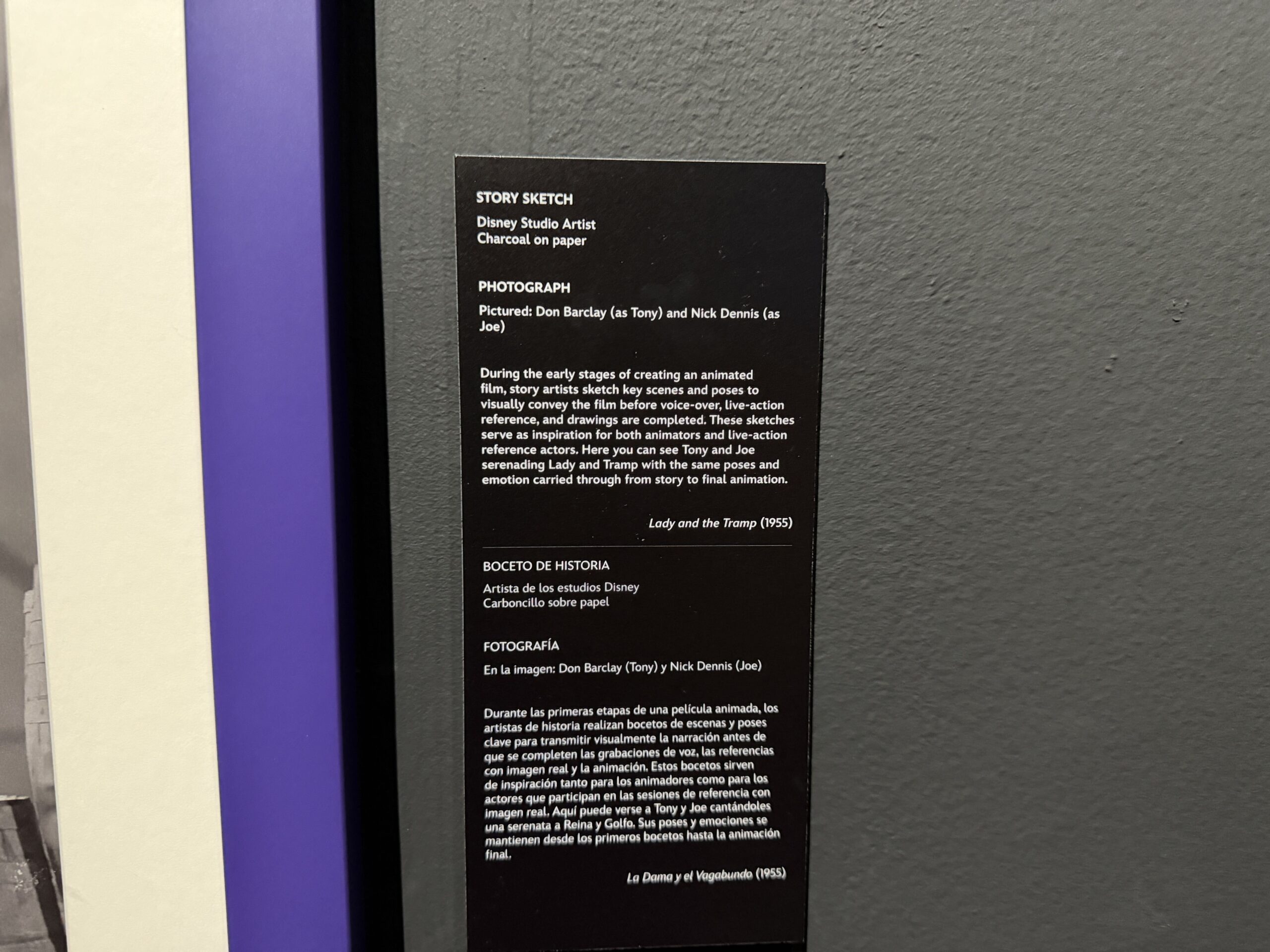
Among the examples are scenes from Lady and the Tramp.
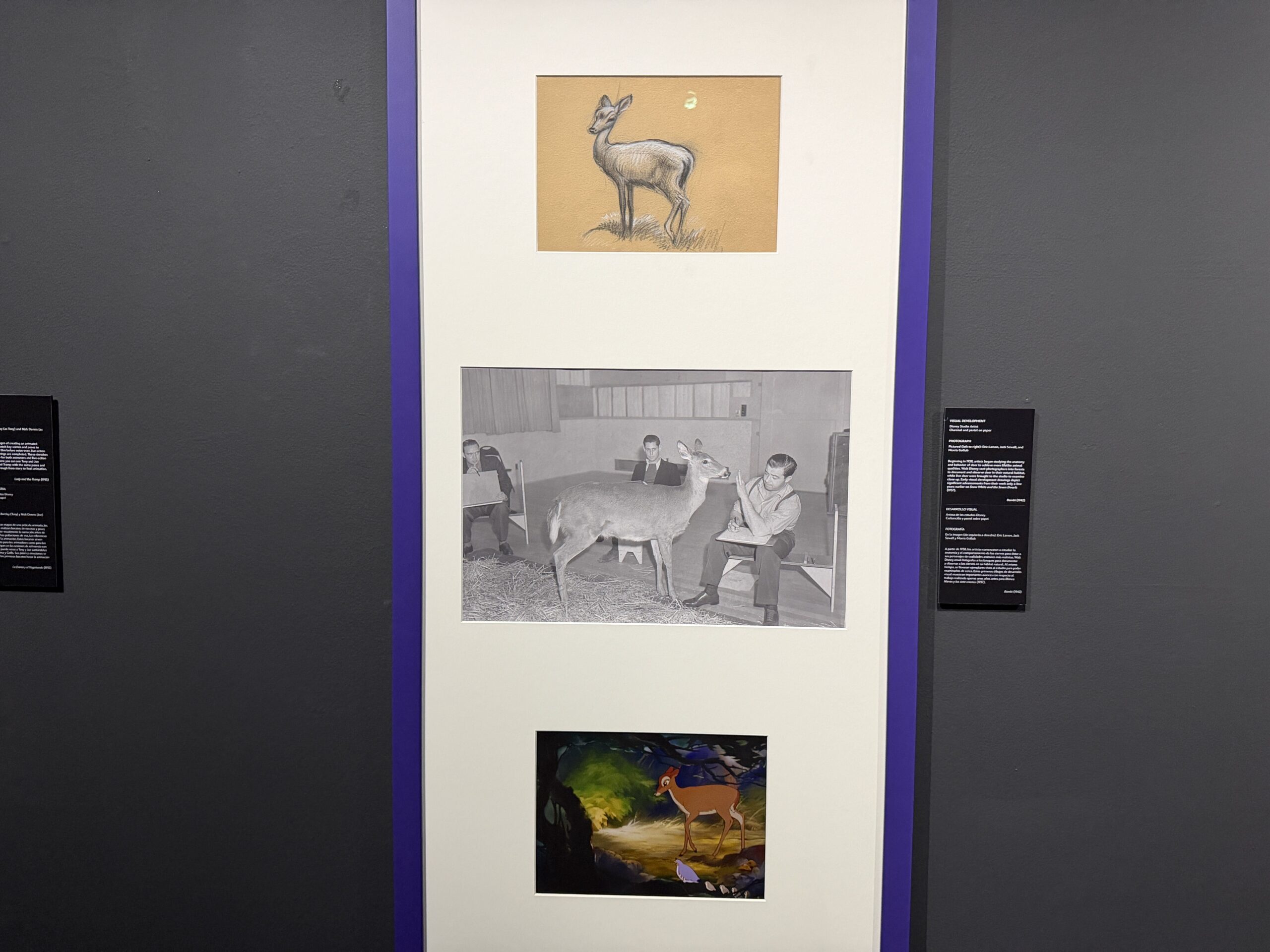
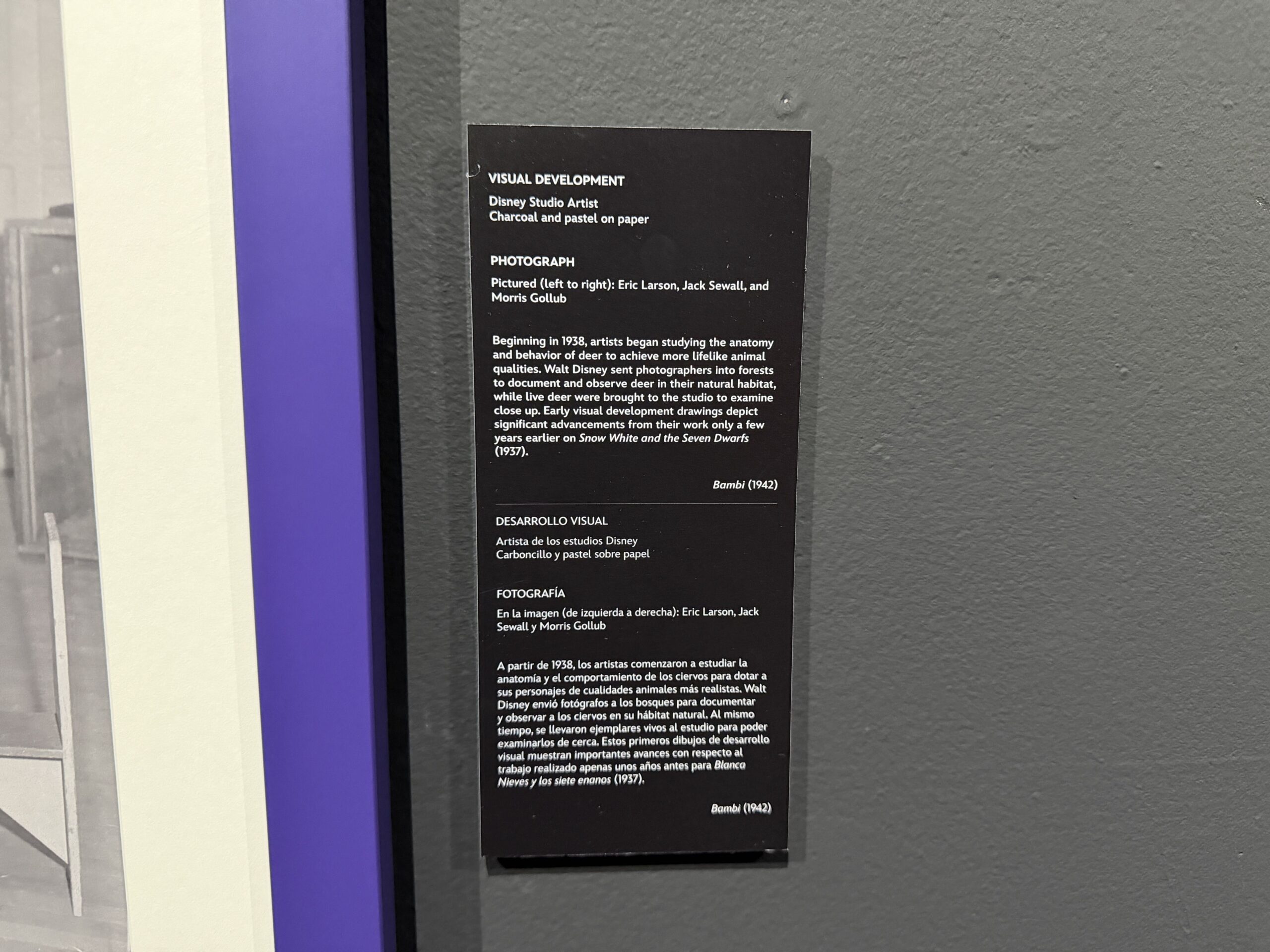
Animal references were utilized extensively for the production of Bambi.
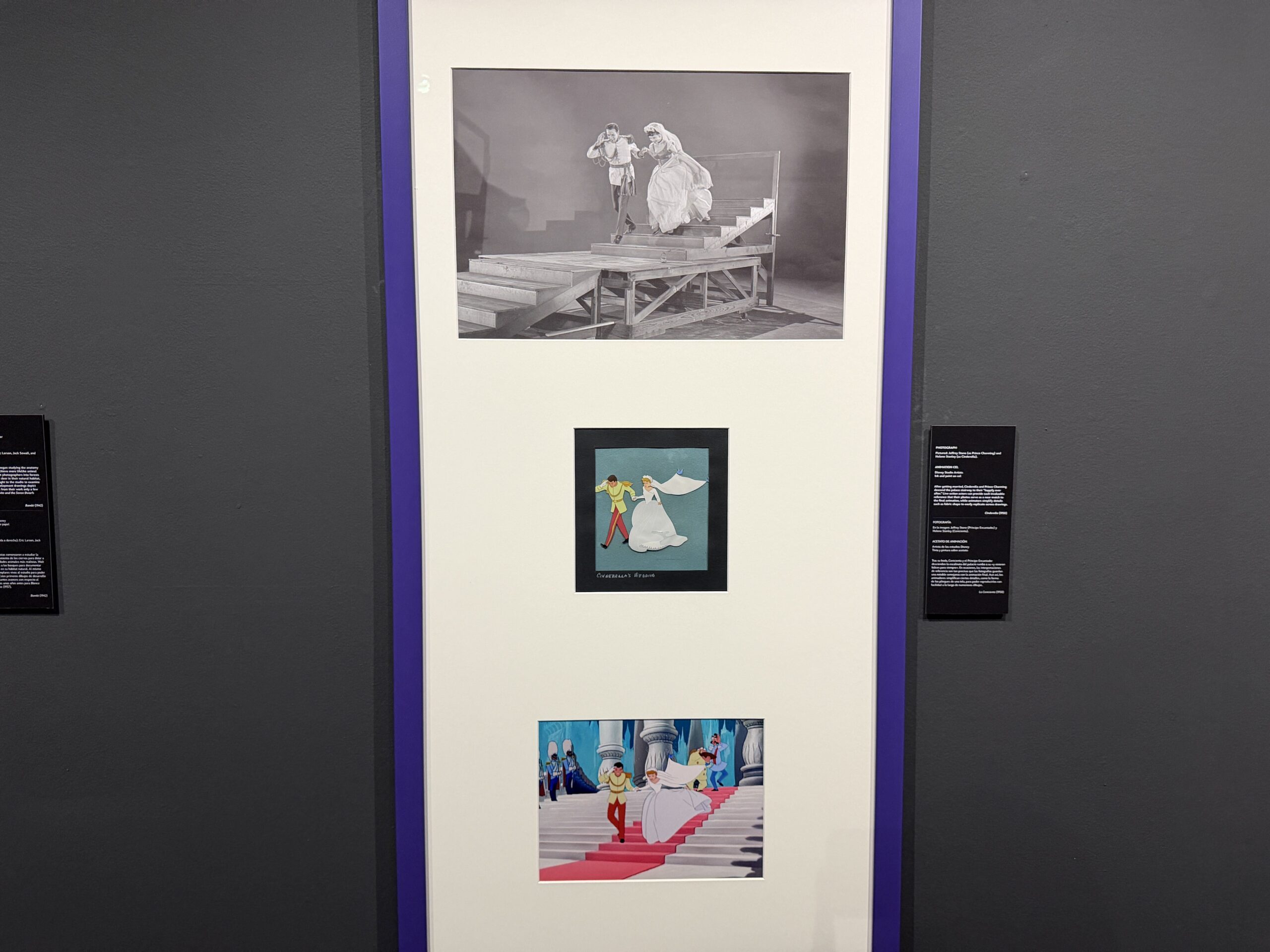
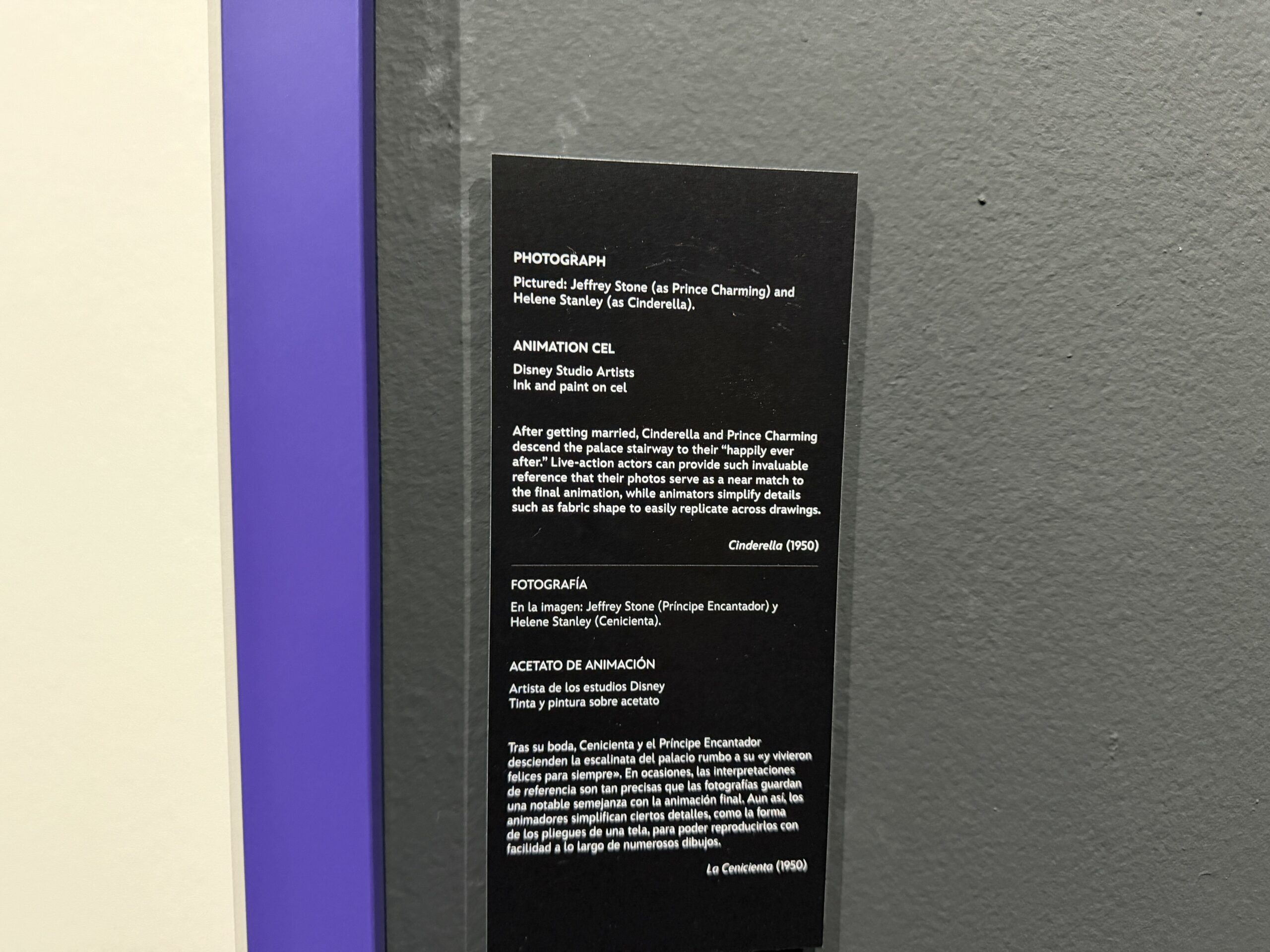
Ornate costuming and large physical production elements can be seen in the references used for Cinderella.
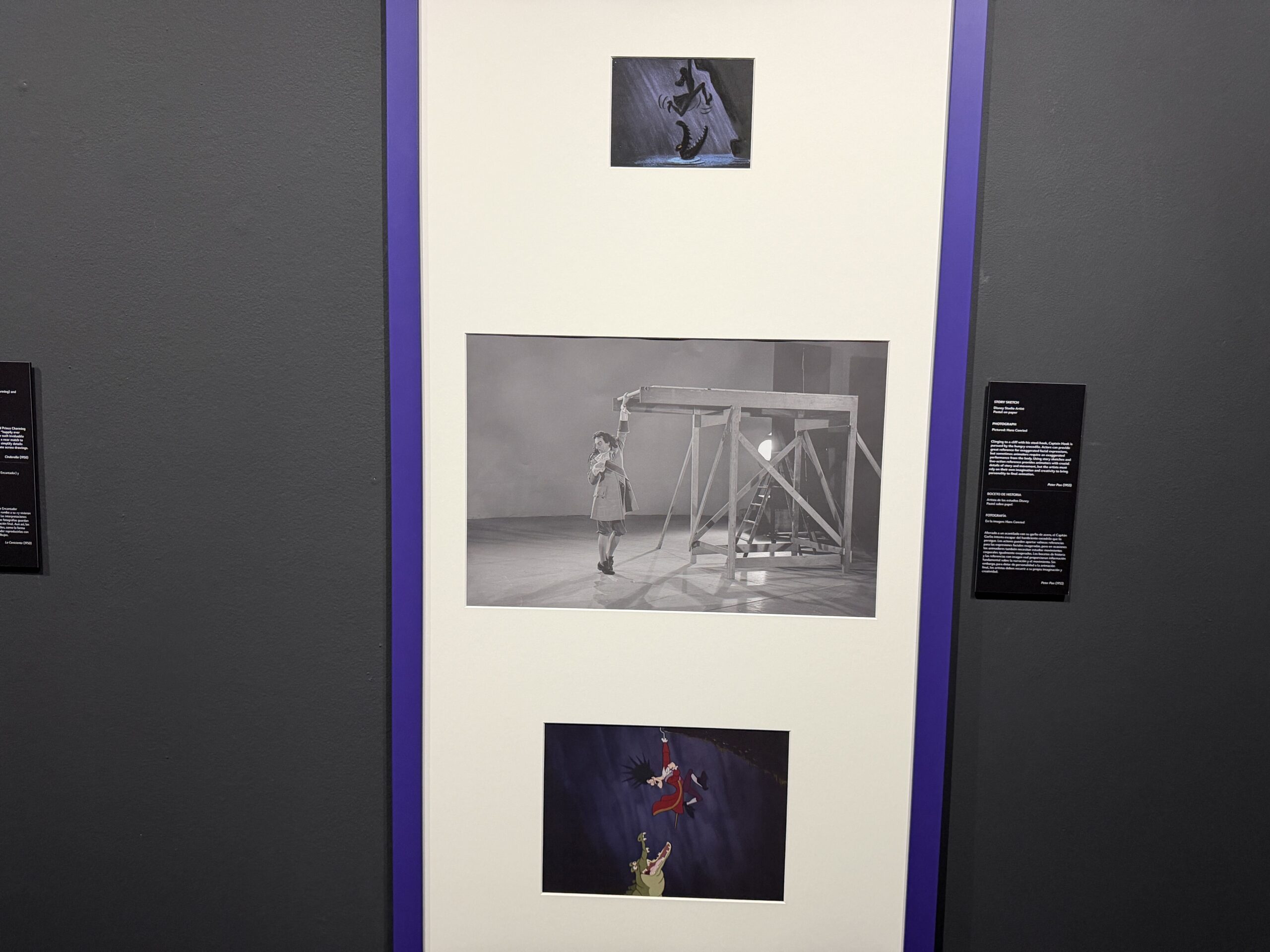
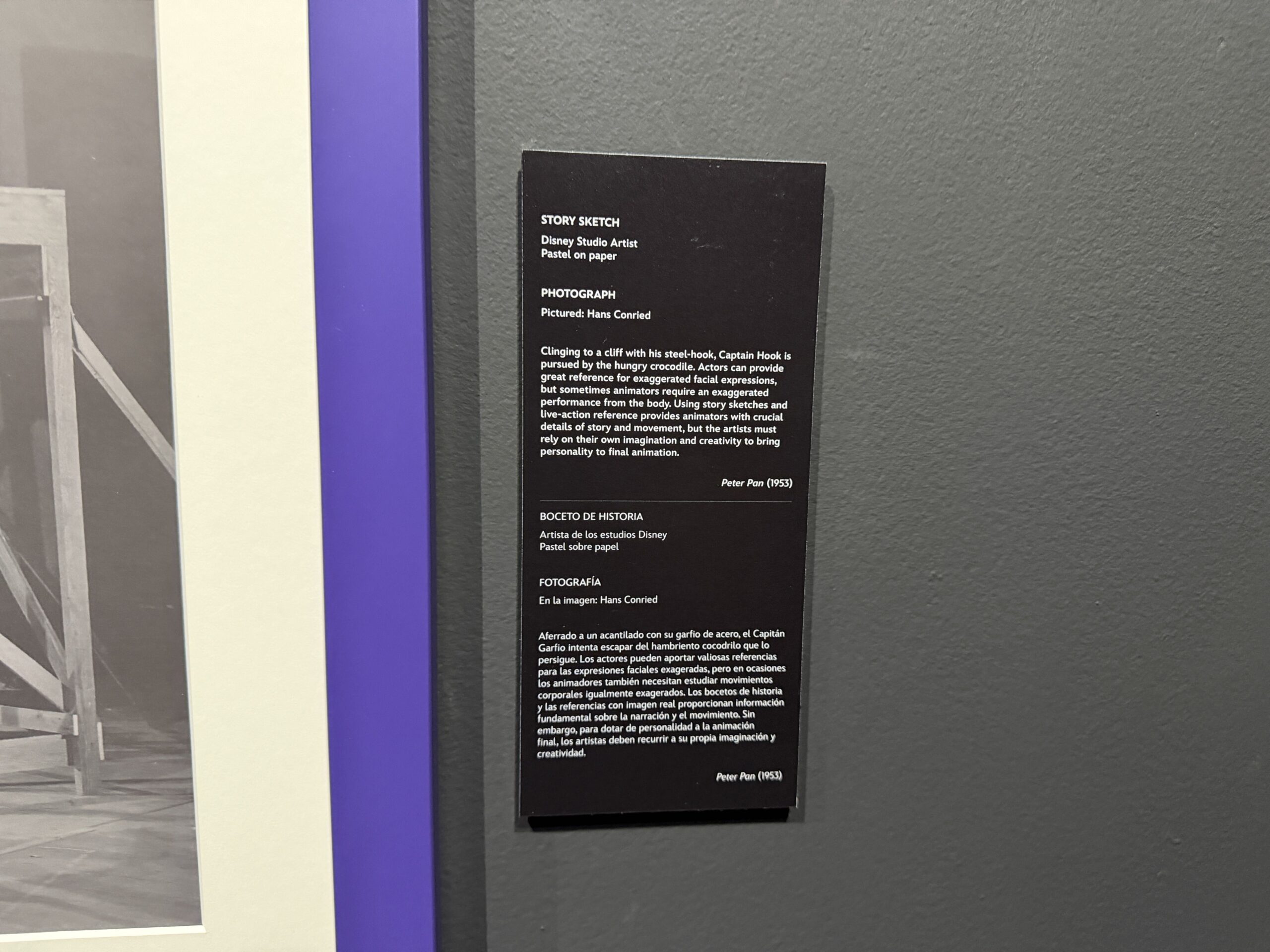
Peter Pan also required the use of large set elements and soundstage references, such as this scene with Captain Hook dangling over the jaws of Tick-Tock Croc.
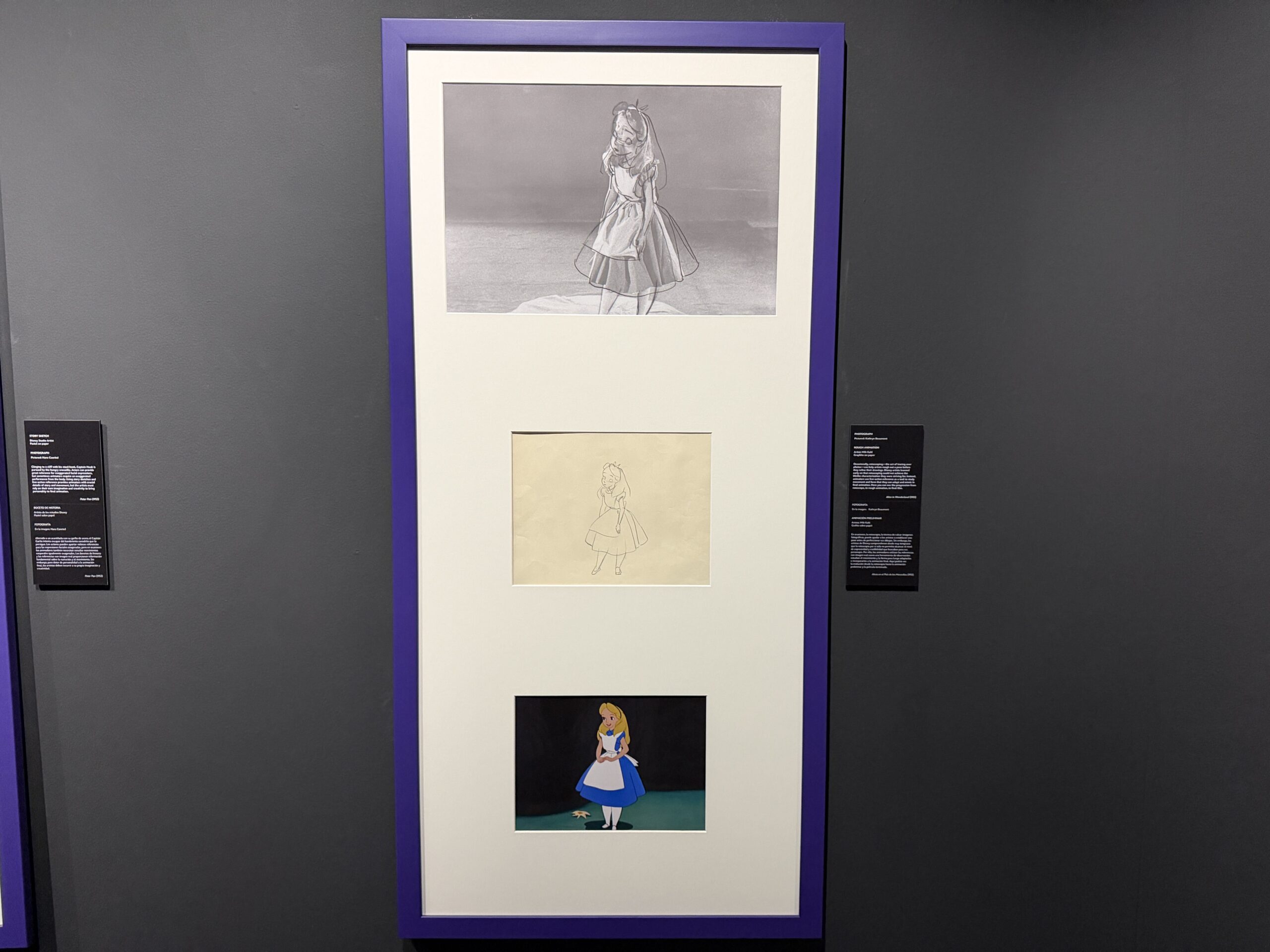
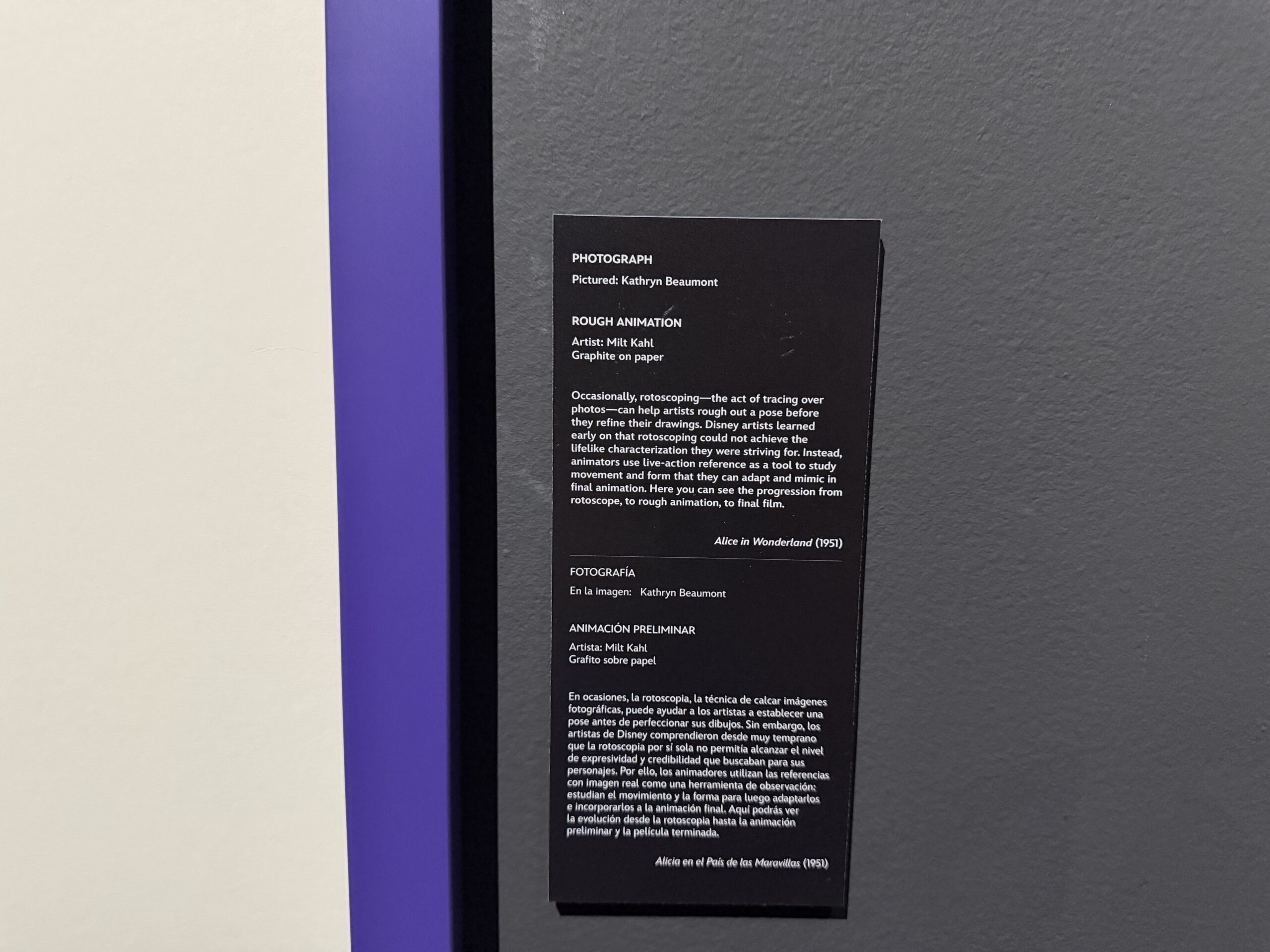
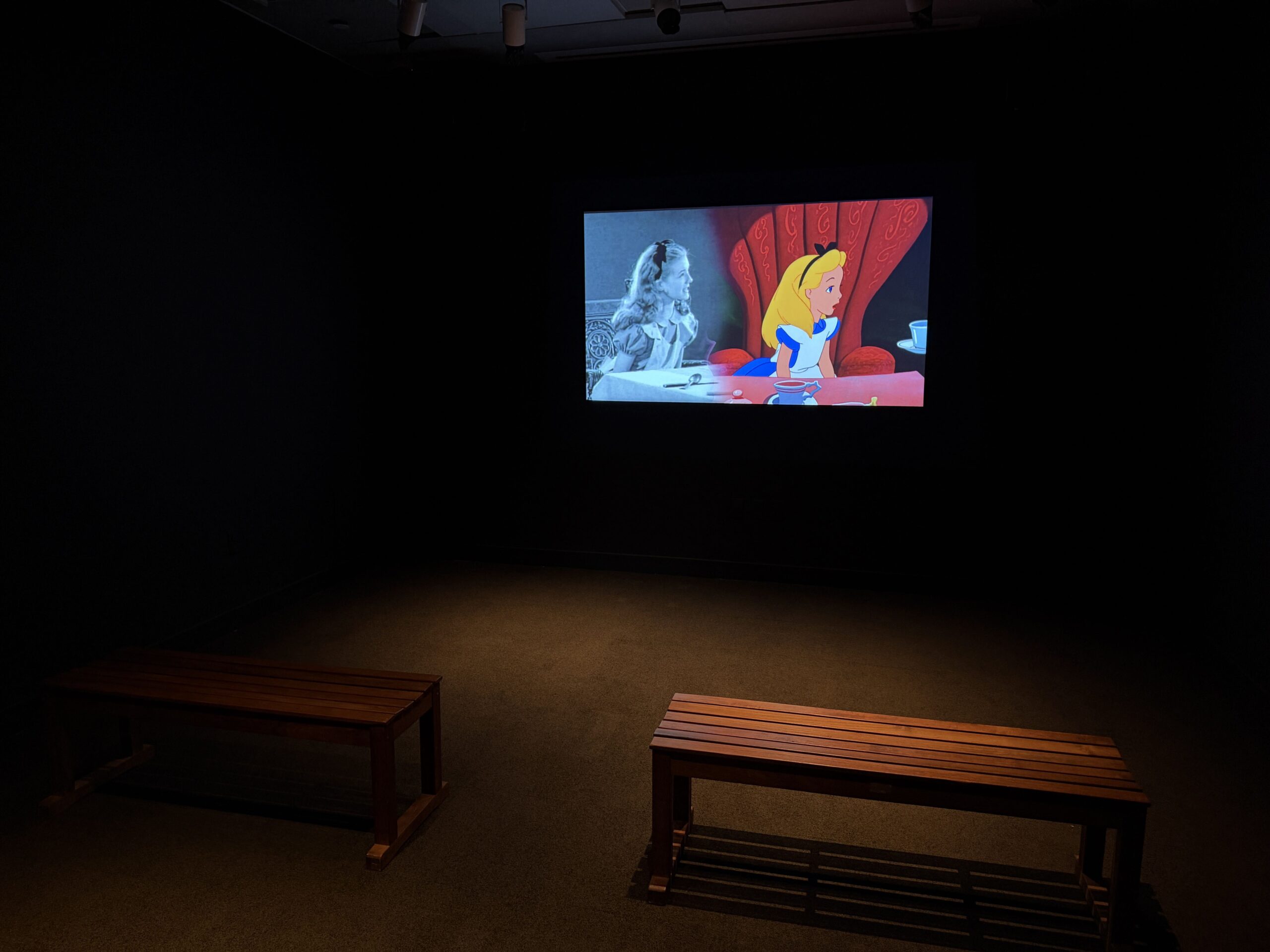
Returning to Alice in Wonderland, we can see in this display how animators actually traced over Alice’s voice and live-action performer, Kathryn Beaumont, to better refine the movement and posture of her character in the final film.
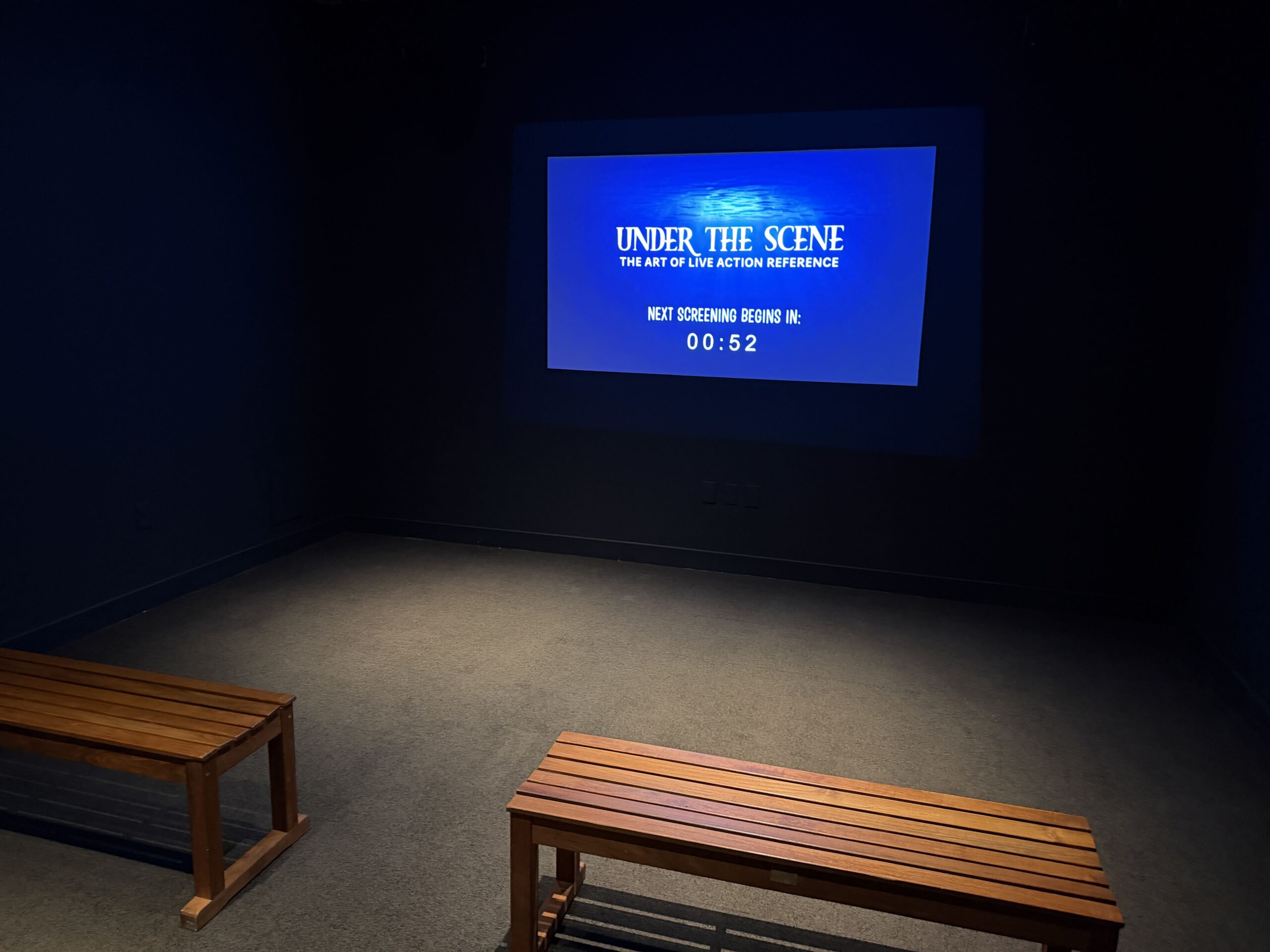
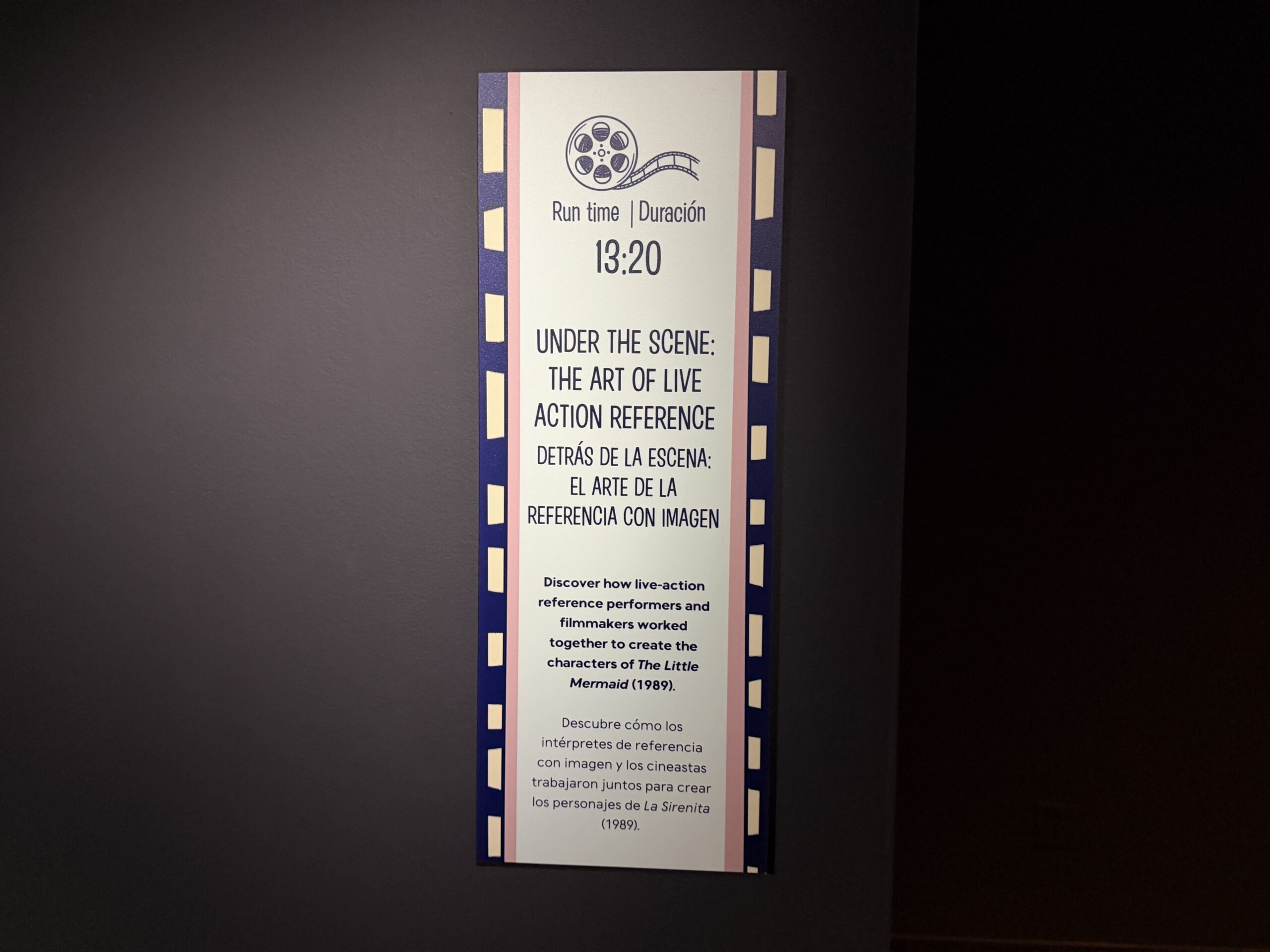
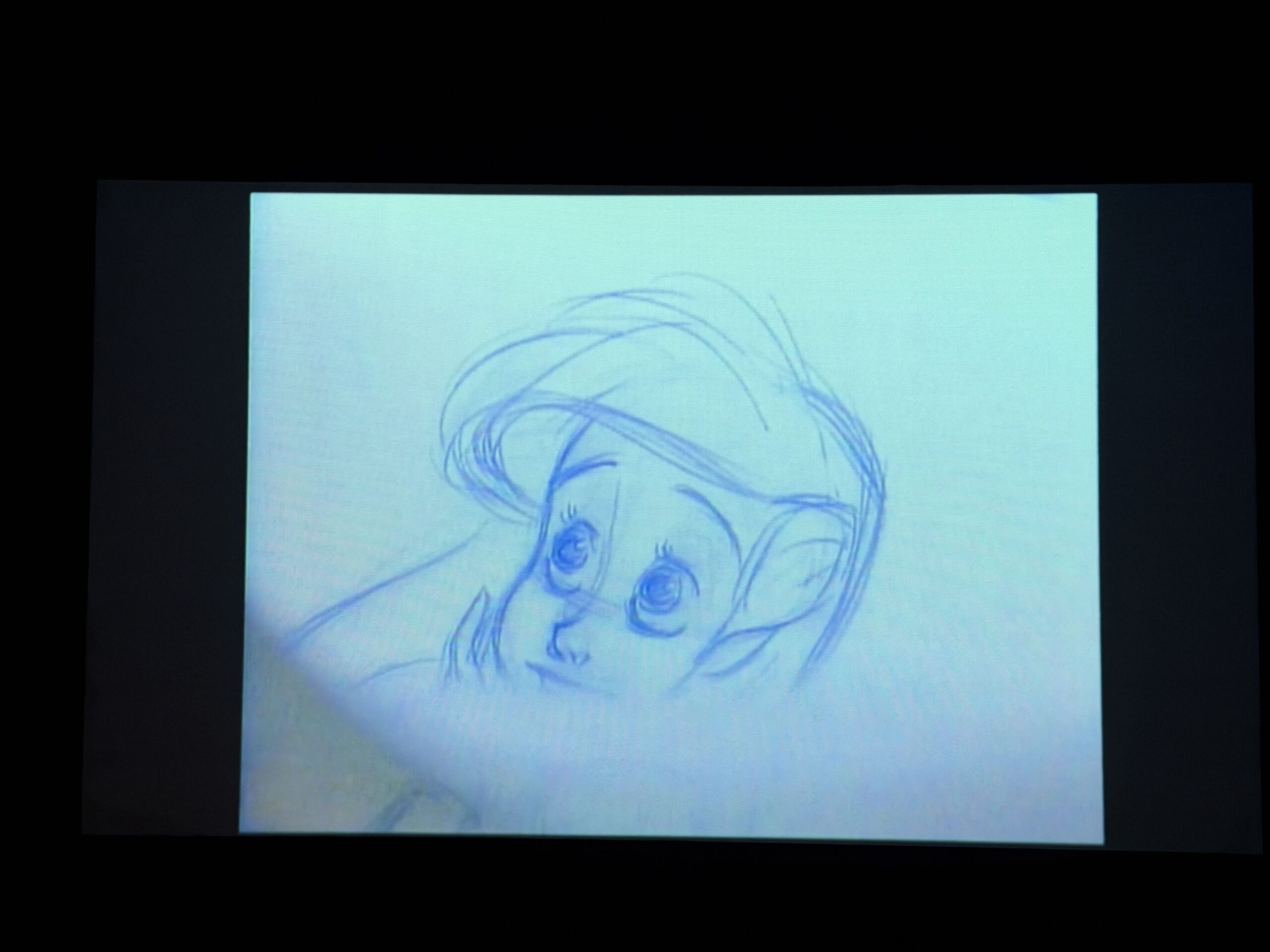
A final behind-the-scenes short film, titled “Under the Scene: The Art of Live Action Reference”, shares a look at archival reference footage used to create the characters of The Little Mermaid.
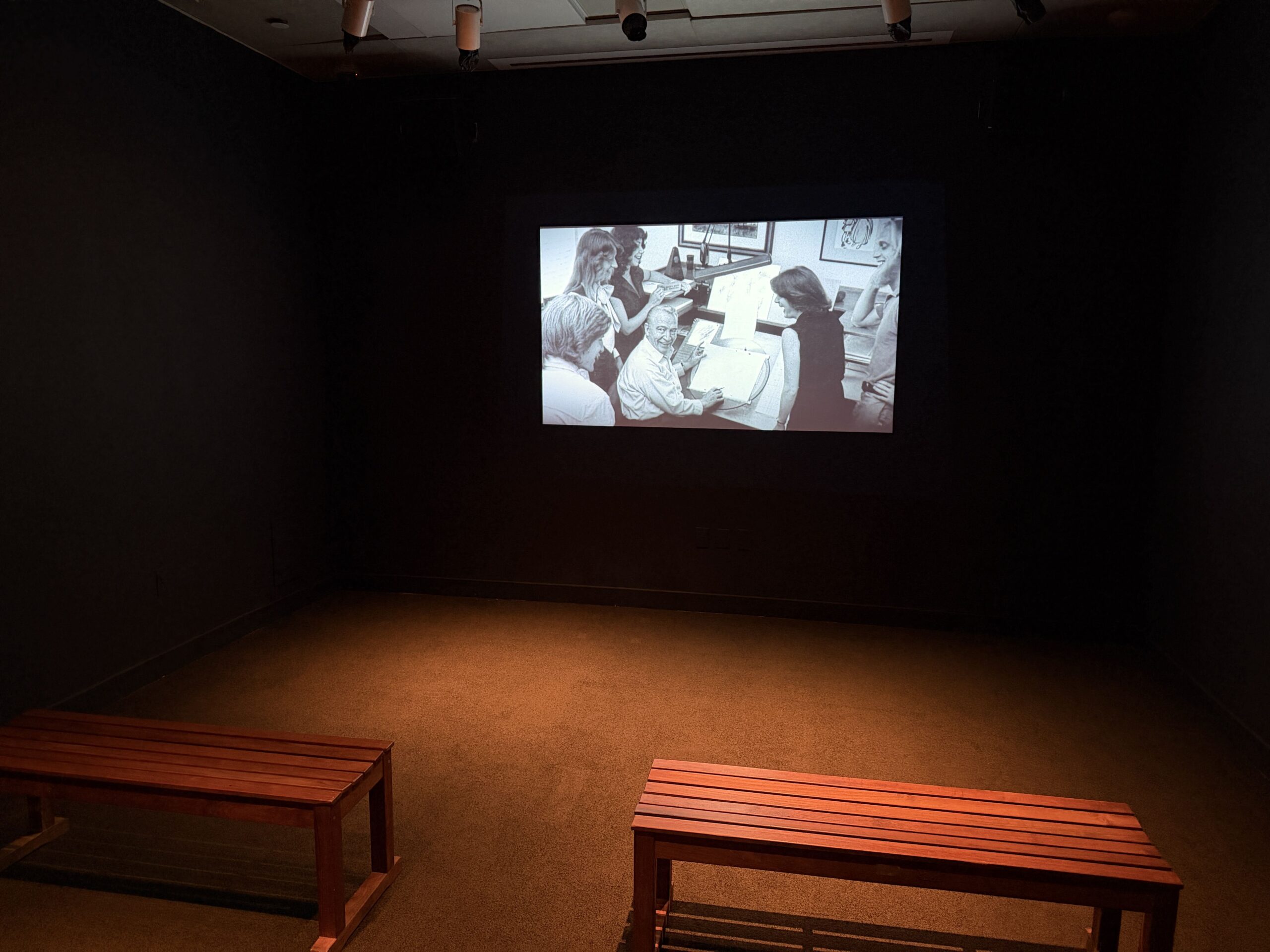
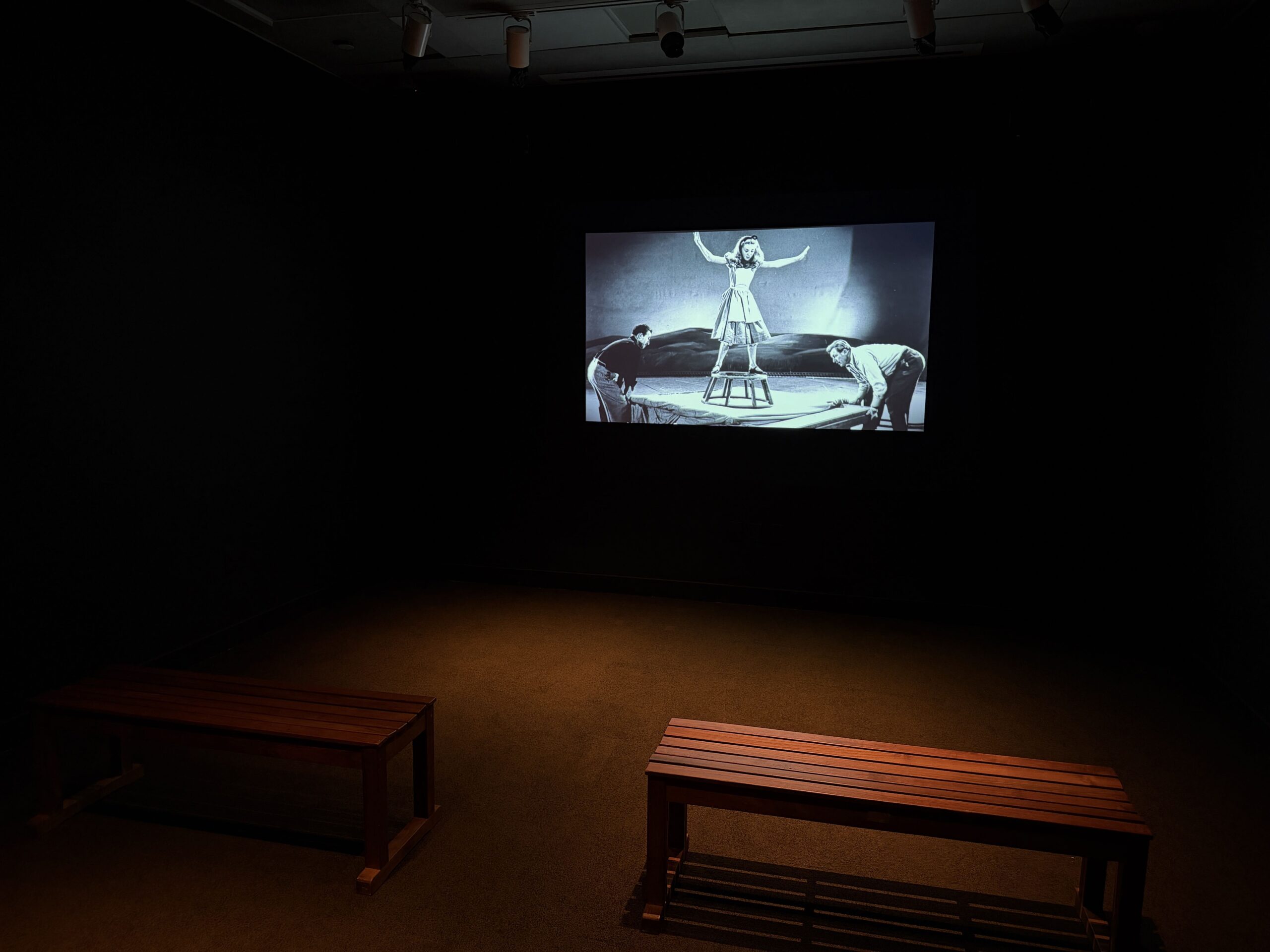
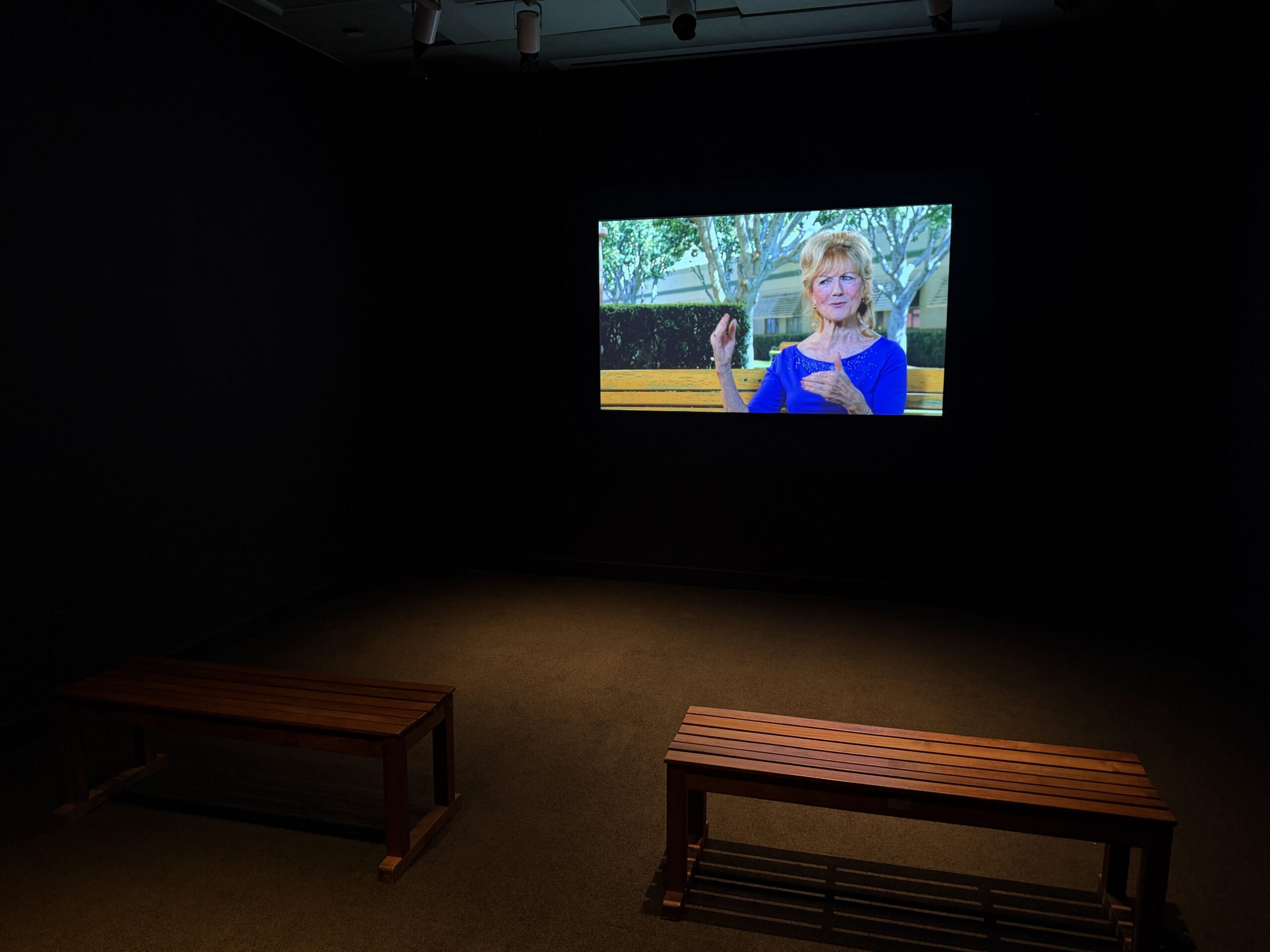
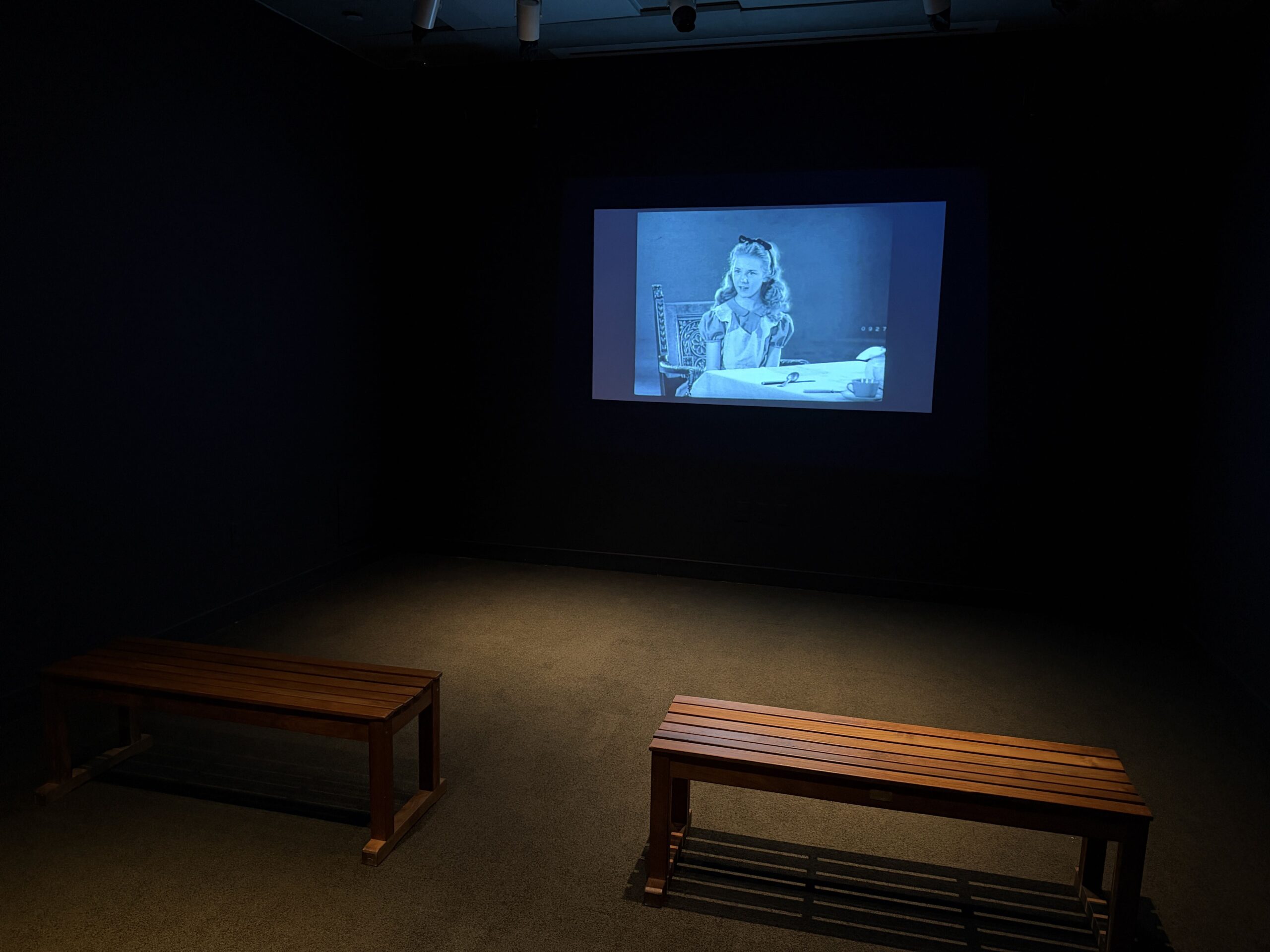
Several examples of live-action reference for Alice in Wonderland are shown before transitioning to the more recent efforts on The Little Mermaid.
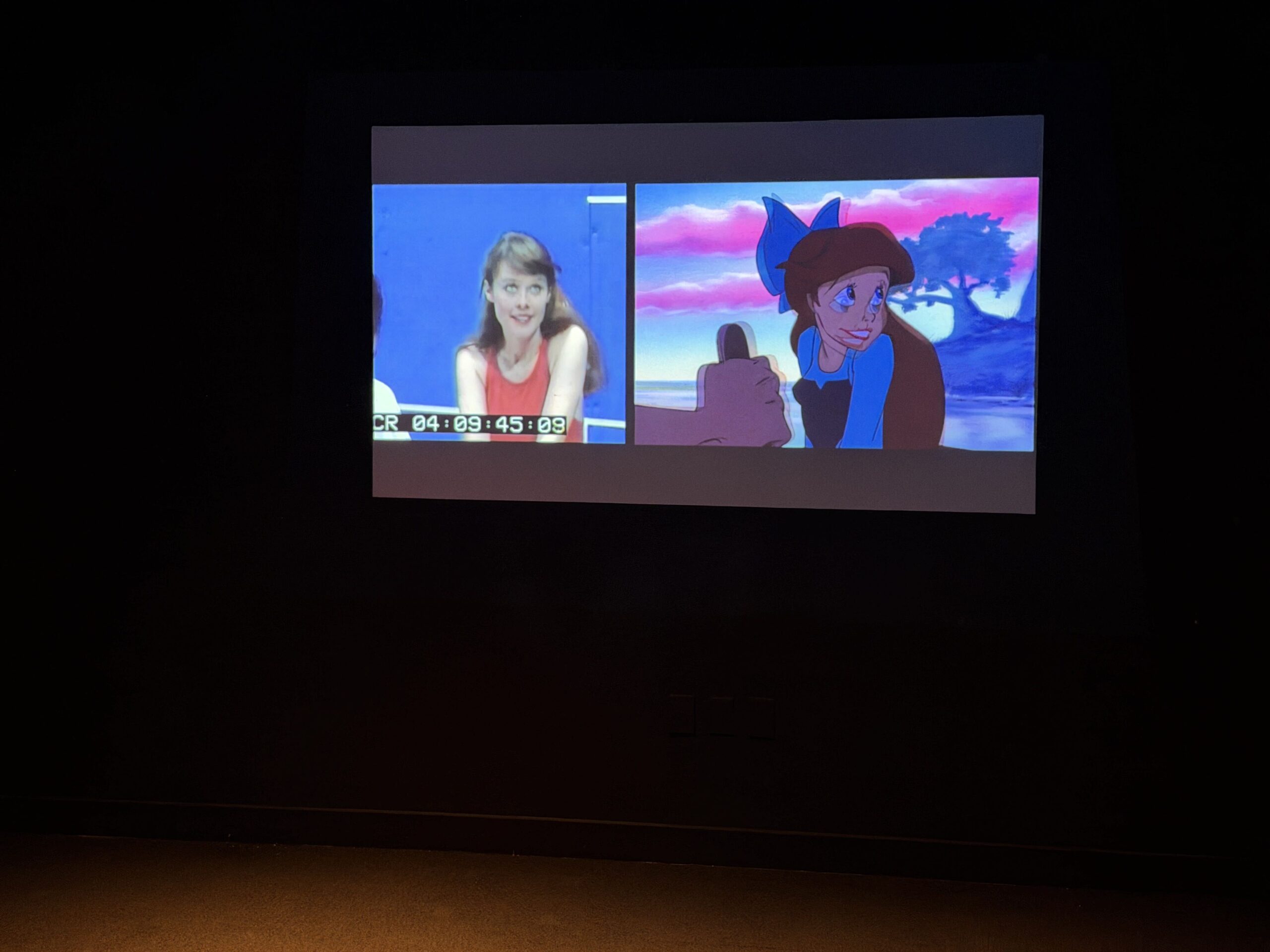
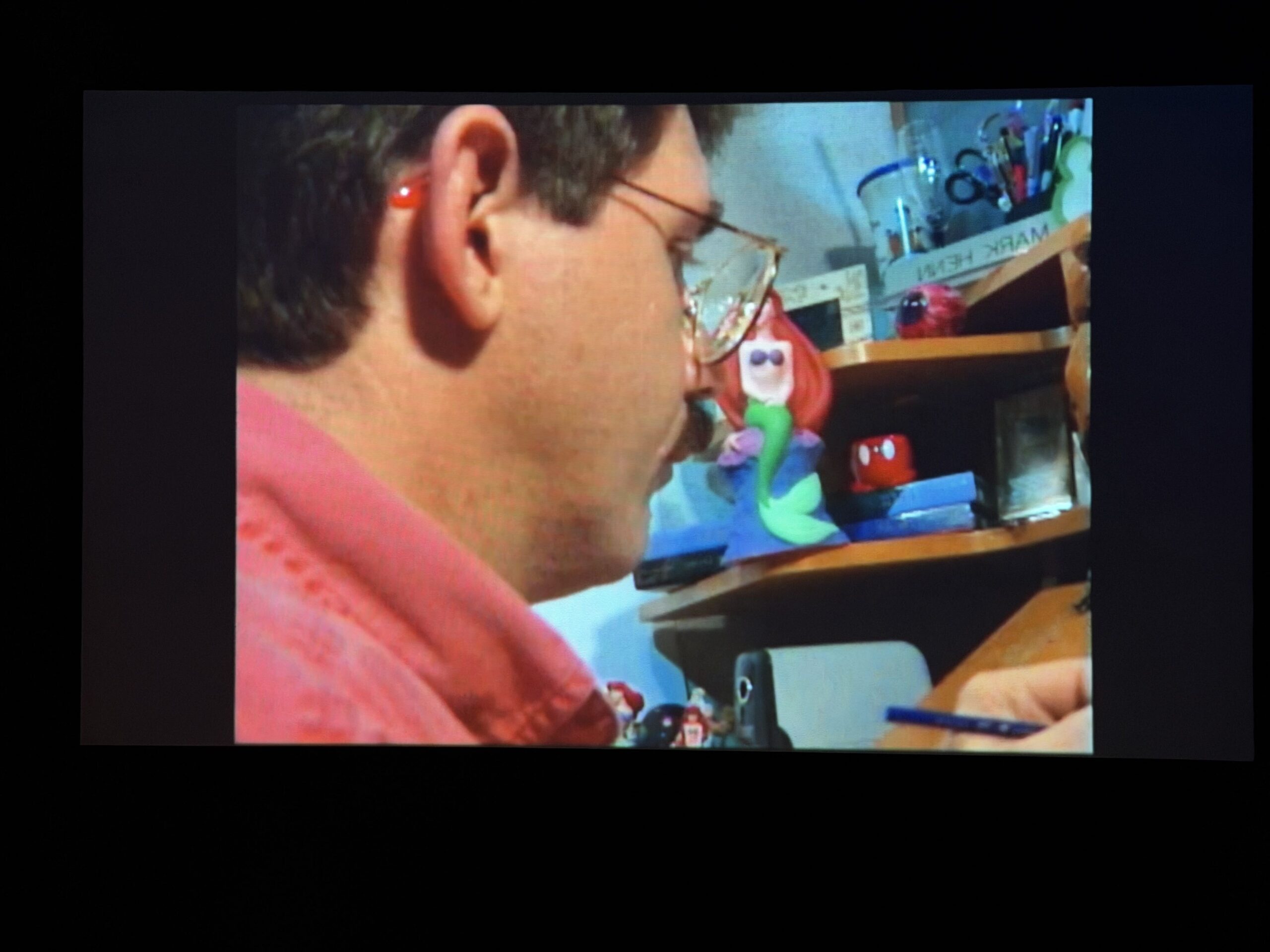
Animators on The Little Mermaid utilized live-action references for much of Ariel’s movement throughout the film, particularly after she magically acquires human legs and first learns to walk.
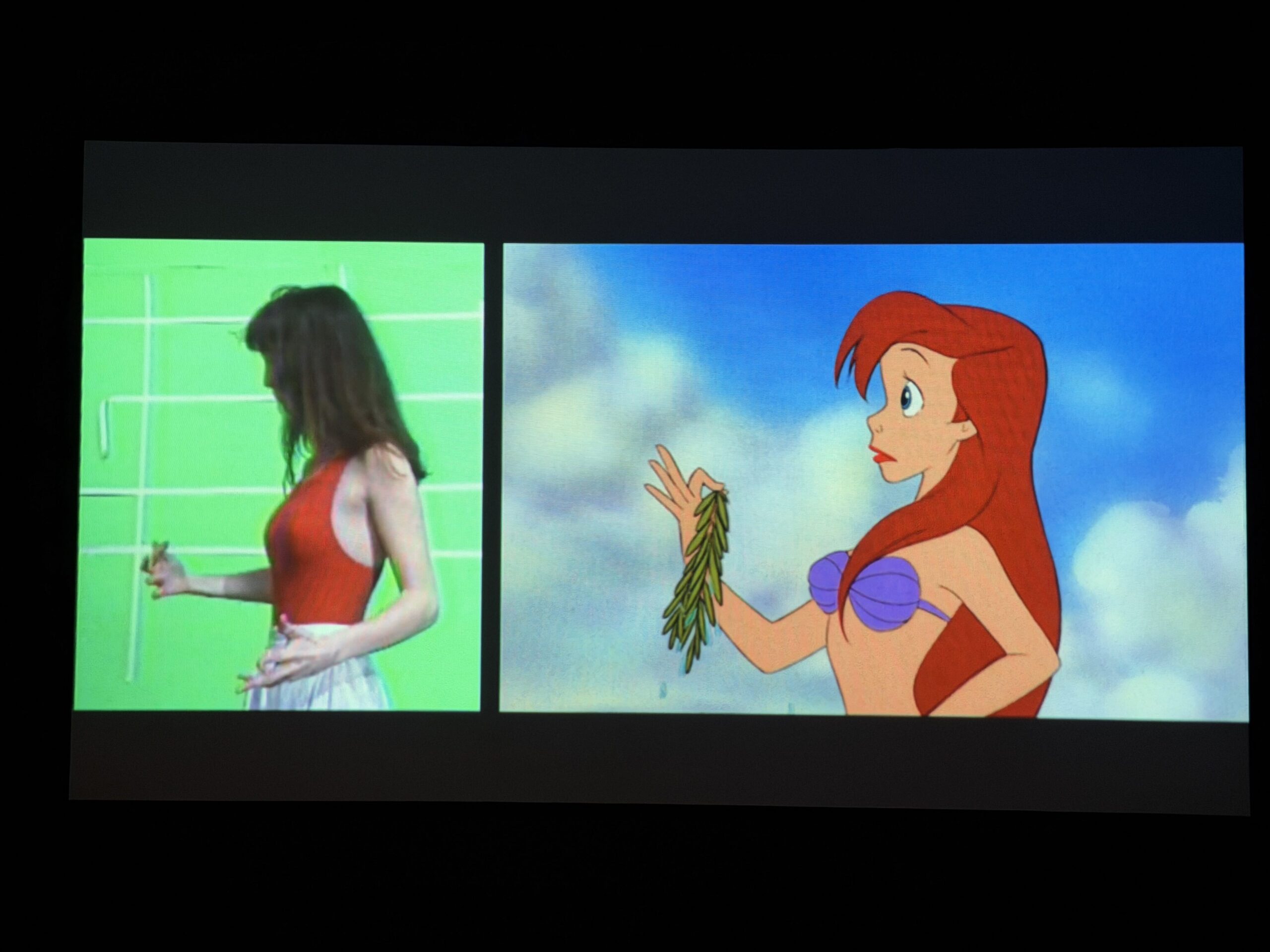
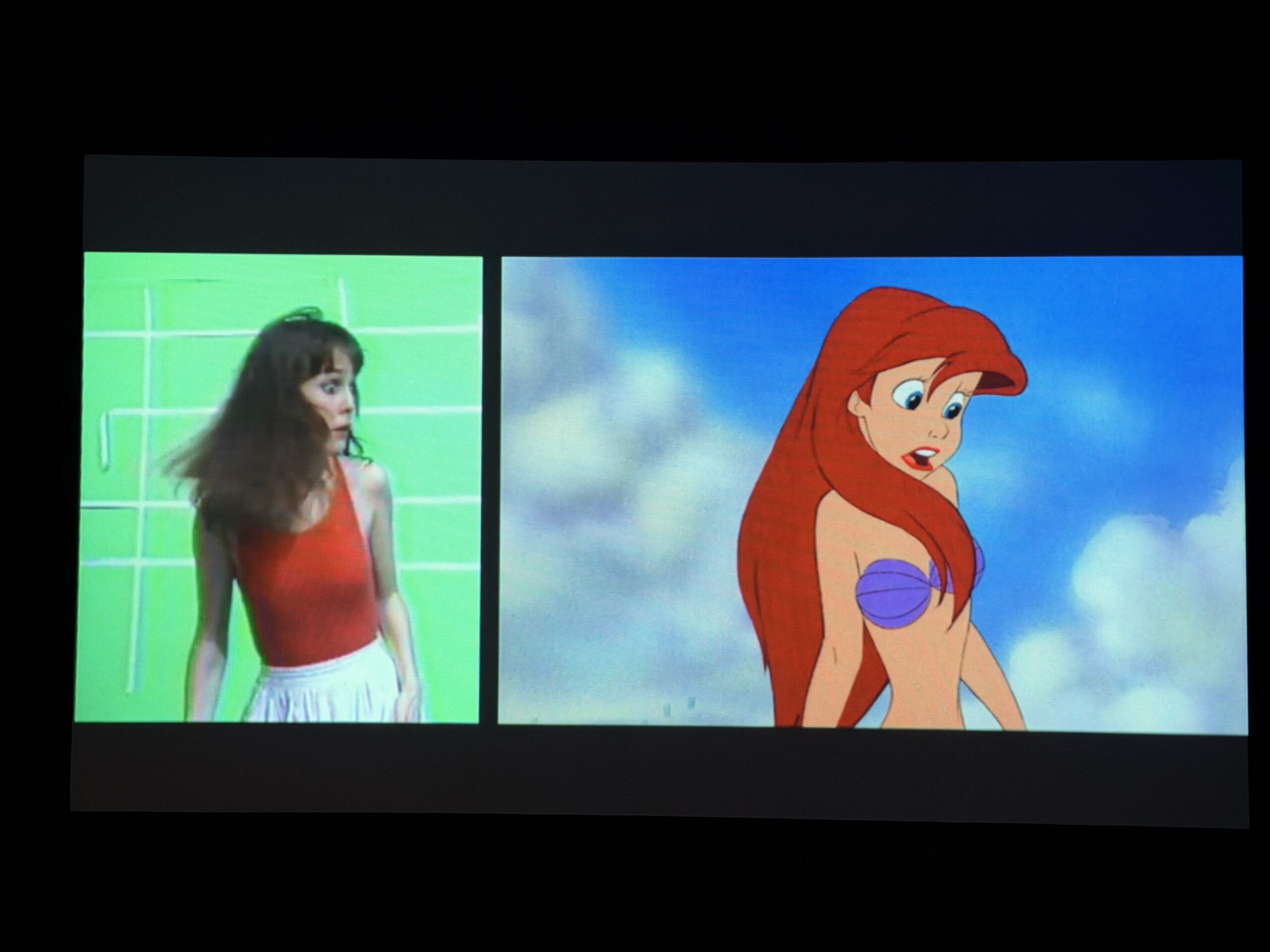
Even the slightest turn of a torso or wave of a hand adds a lifelike subtlety to Disney Animation, a subtlety that only real actors can best convey.
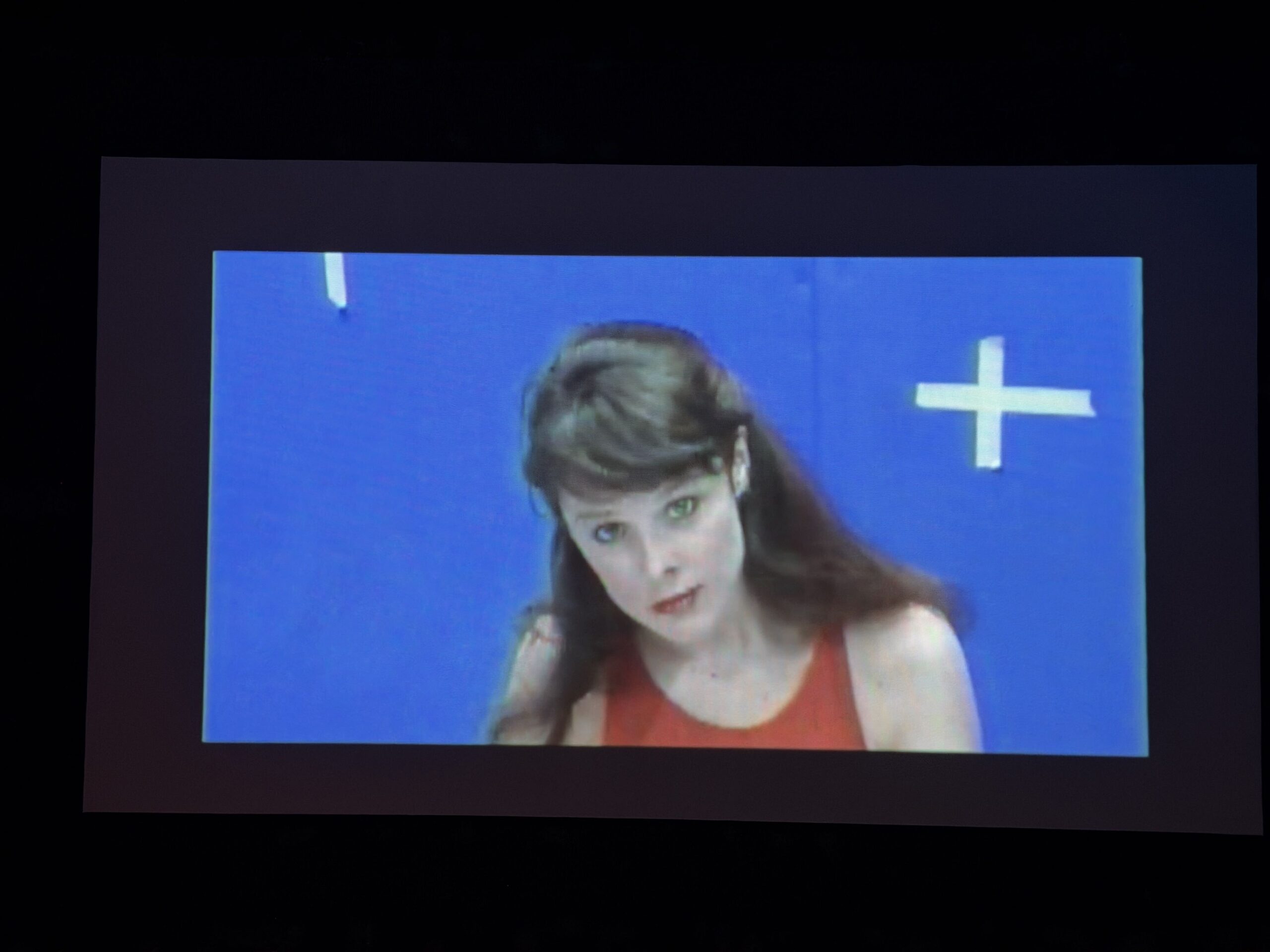
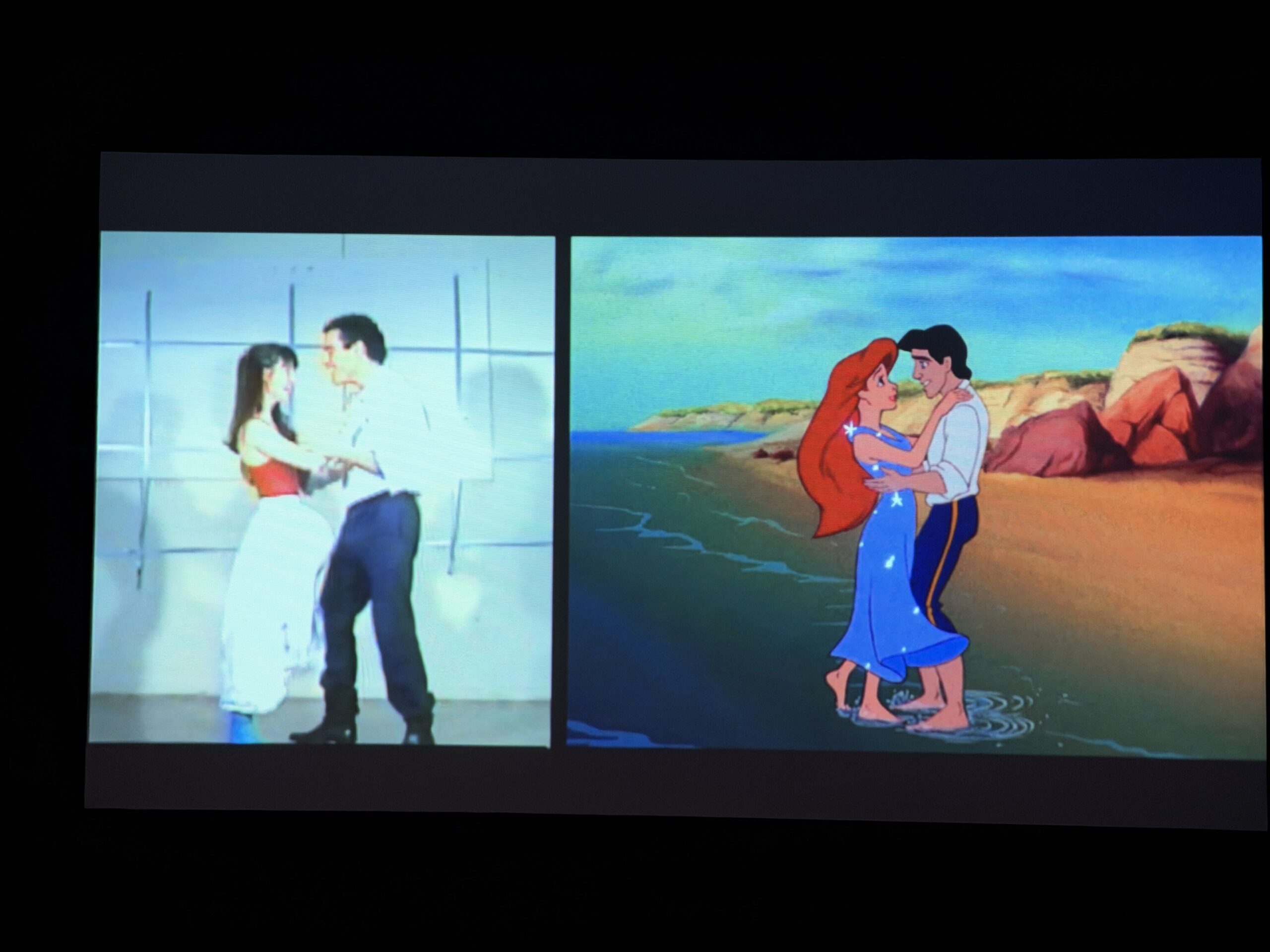
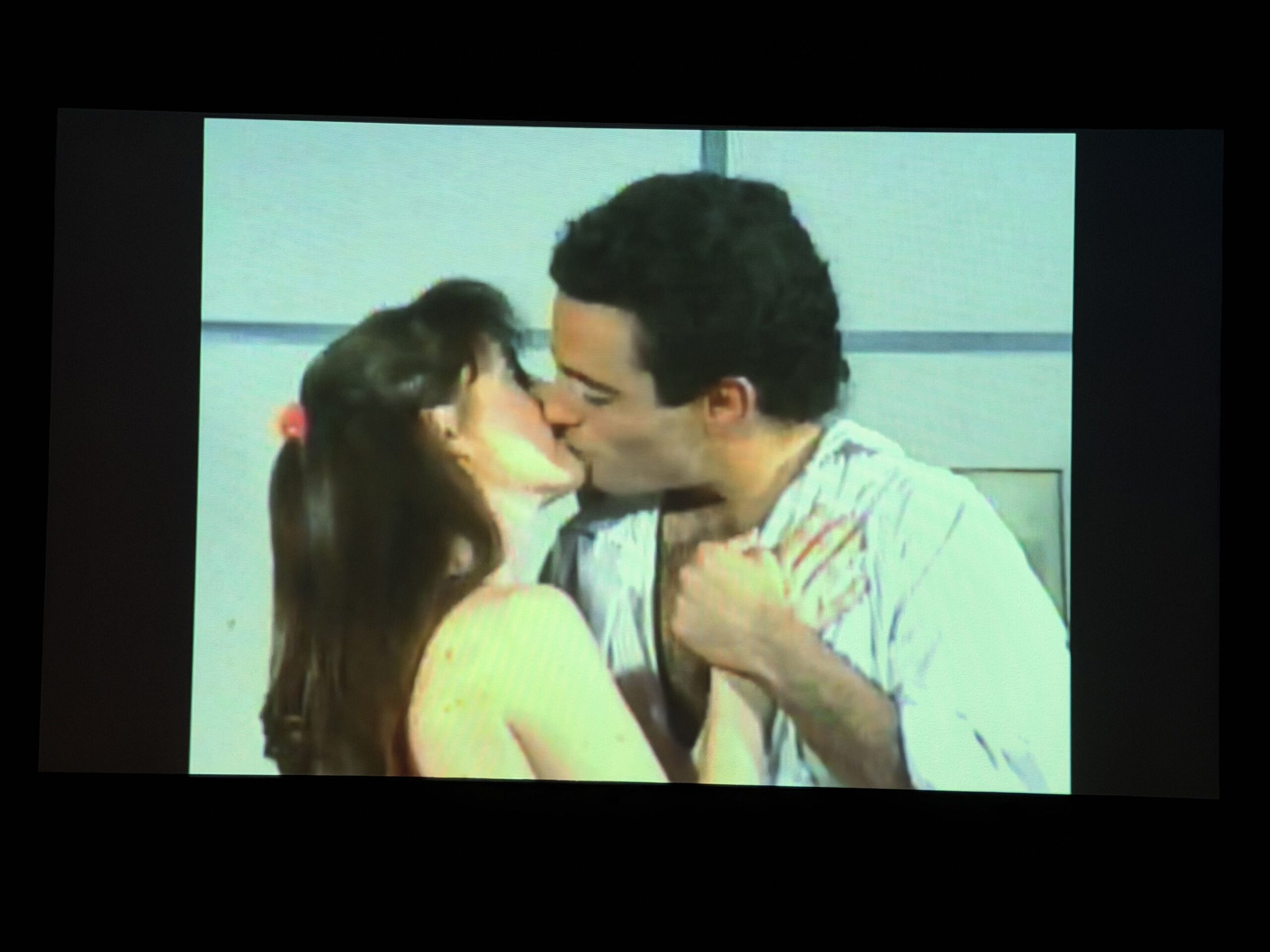
Live-action references are not always a one-person job, of course, and even some of the film’s most intimate moments were recreated for reference footage to ensure the animation team could capture the romantic climax as true to life as possible.
Last Note
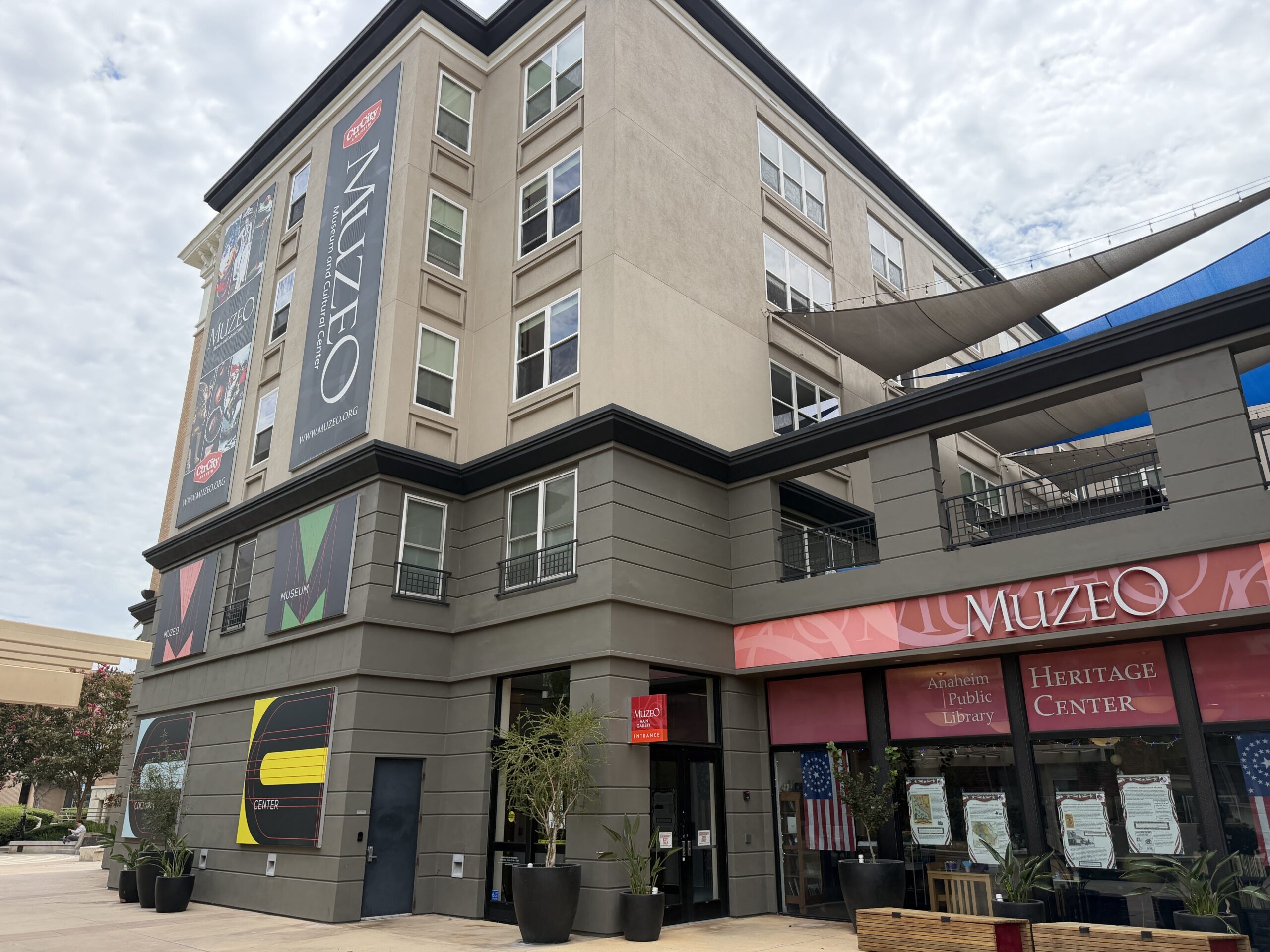
This is the first-ever Walt Disney Archives domestic traveling photography exhibit, with the Muzeo Museum as the first stop and more stops to be announced in the future. D23 members can also enjoy discounted admission to the museum and access to programs and events accompanying the exhibit.
The exhibit runs from August 8, 2026, to November 1, 2026.
Will you be visiting the Capturing Life, Creating Character exhibit? Let us know on social media.
For the latest Disney Parks news and info, follow WDW News Today on Twitter, Facebook, and Instagram.