
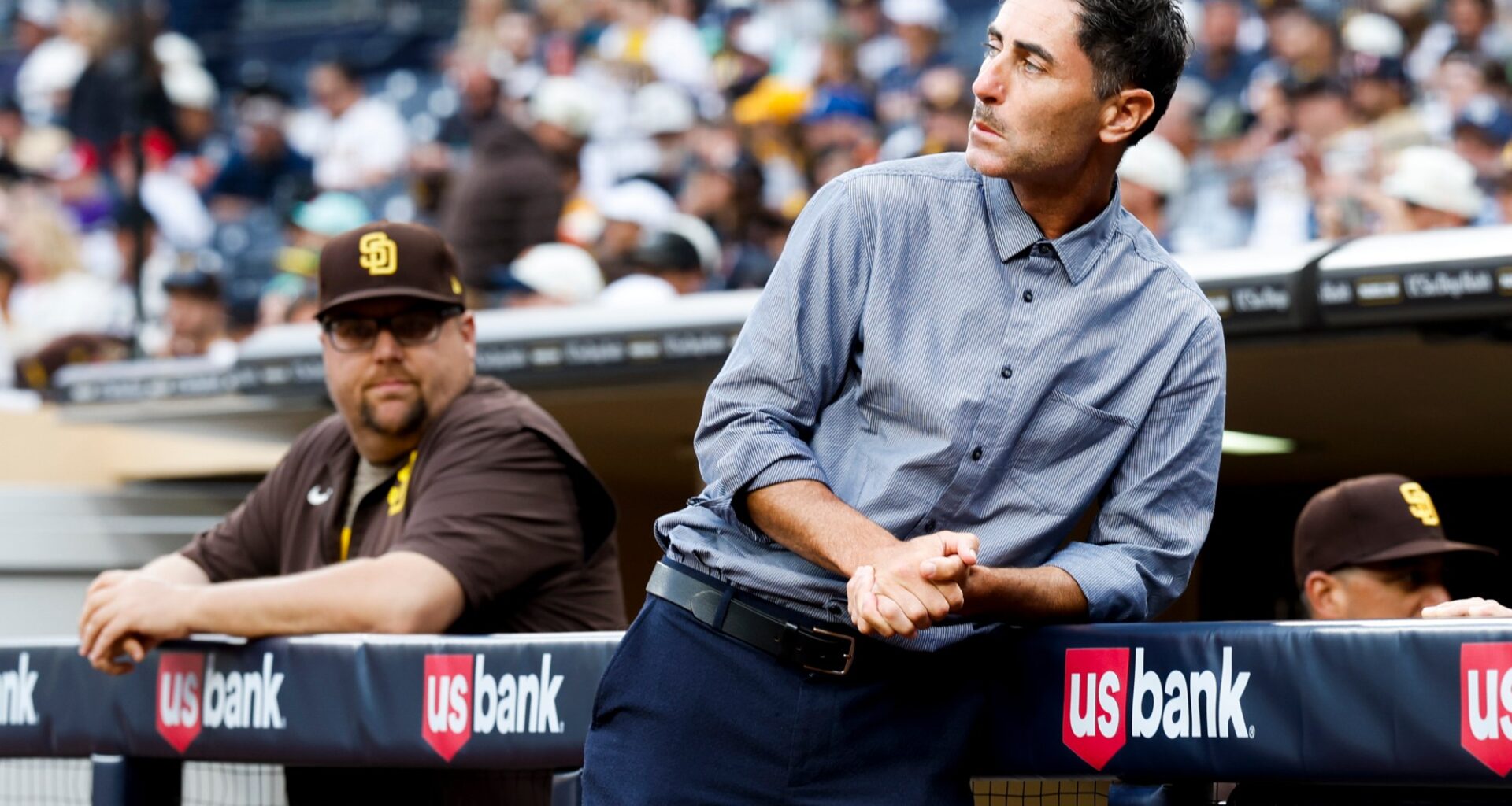
In a subtle way, baseball’s summer trade season benefits the Padres more than several other teams.
A.J. Preller and scouts glean truths that otherwise would remain hidden to them — truths about what other teams actually think of their own players and Padres players, be they big leaguers or minor leaguers.
Though all 30 teams engage in trade talks, the Padres go further down those roads than most teams, evidenced by Preller’s high number of trades in his 12-year run atop the team’s baseball operation.
No other wheeler-dealer, save perhaps the Phillies’ Dave Dombrowski, parts with more prospects who appear in the top 100 of the MLB rankings or top 20 of team listings compiled by former scouts.
Preller’s peers know the Padres have dealt several prospects who became stars, such as Trea Turner, Max Fried and James Wood.
Preller’s not one of the GMs who refuse to ever move a Grade-A prospect.
The combination of Preller’s credibility and the franchise’s ability to replenish the farm system with players who attract serious interest leads to this: Preller can extract nitty-gritty information from every trade season, rather than work strictly on the edges. And compared to the less active clubs, he can get more of the real stuff.
“It’s always an interesting process, always a good process,” he said on Monday, trade deadline day.
“It enables you to have fun conversations and consider different options. That’s what these last couple of weeks are about.”
Preller added this: “When you get a chance to see what others in the industry think about your players, it gives you a very clear picture of how they see your organization.”
Serious trade talks serve as truth serum, like in poker when cards must be revealed.
“It’s one thing to see a ranking or publication about how somebody values a player from the outside or a media chair,” Preller said. “But when you’re there and you’re actually talking about, ‘Would you do this player for that player?’ … You get a very clear sense in real time about the actual value of your players and other players.”
Ahead of this summer’s deadline, Preller ultimately did what he typically does.
He traded minor leaguers for big leaguers, landing starting pitchers Robbie Ray and Casey Mize.
We can’t see the intel that Preller and staff gathered from another active trade market.
But it exists.
And it may become known to us via future trades or free agent signings.
For example, although Preller didn’t provide details on trade talks involving uber-closer Mason Miller, the Padres’ descent into perceived seller territory, six to 10 days before the deadline, may have brought him revelatory inquiries into the 27-year-old righty, who’s under team control through 2029.
“(The information) helps us in future deadlines and the offseason,” Preller said, speaking generally.
He also said: “Again, when you have talent, it gives you the ability to have flexibility and options. I hear at times about players signed to multiyear deals, but the industry spoke over the last week or 10 days that they see a lot of our players — contracts, stats, everything that comes with them — as super valuable players.”
Miller isn’t a prospect, but Preller got him last summer for Double-A shortstop Leo De Vries, baseball’s top-ranked prospect as judged by former and current MLB scouts.
The Padres have a few heavy contracts on their roster.
In such situations, teams sometimes move that contract by packaging it with a high-value big leaguer or prospects.
Will the summer-market intel lead to Preller making blockbuster trades this offseason?
Stay tuned.