
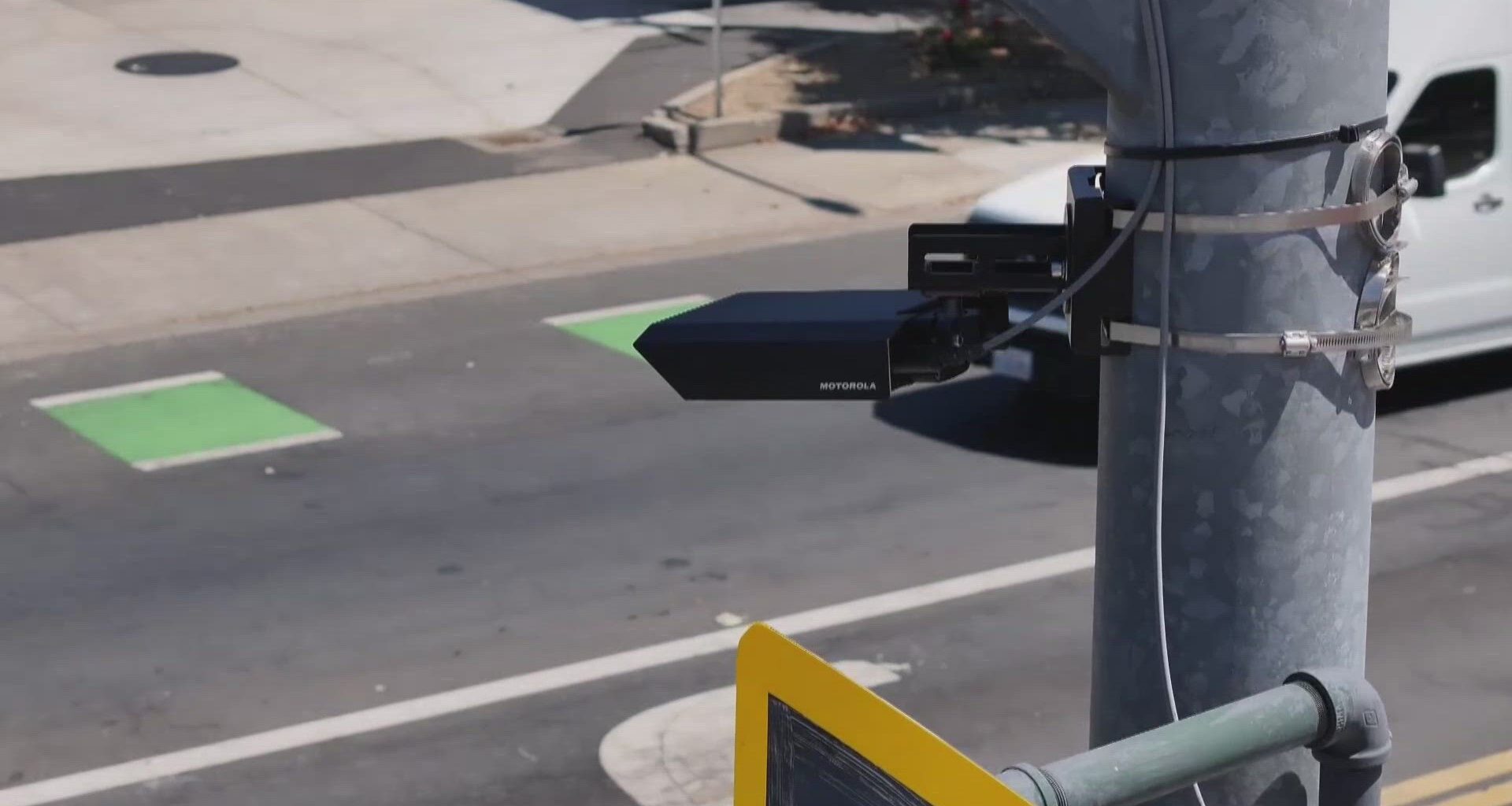
DeFlock questions oversight of automated license plate readers as law enforcement highlights their investigative value.
SACRAMENTO, Calif. — Automated license plate reader cameras are helping law enforcement agencies across the Sacramento region track stolen vehicles, identify suspect vehicles and solve crimes faster, but the technology continues to draw criticism from privacy advocates.
The Sacramento County Sheriff’s Office uses Flock cameras, which Sgt. Edward Igoe said are strategically placed throughout the county to generate investigative leads.
“Flock cameras are automated license plate reader cameras that are strategically placed around the county,” Igoe said. “What those are used for or for investigative leads for us, whether that’s locating a stolen vehicle, whether that’s locating an abducted or missing individual, and just helps us solve crimes.”
As the use of automated license plate readers has grown nationwide, so have concerns about privacy and oversight.
Thomas Hammock of DeFlock Yuba-Sutter said privacy and accountability remain the group’s biggest concerns.
“The privacy aspect of it. I believe that’s most of everyone’s concern and also the lack of oversight,” Hammock said. “A lot of the agencies around the country say that they have an oversight committee and something that I’ve even found in my work is that, essentially, the oversight isn’t working.”
DeFlock, an organization that raises awareness about the use of automated license plate readers, maintains a map showing potential camera locations in Sacramento, including at the intersection of Riverside and Broadway.
Sacramento police confirmed a camera at that intersection is a license plate reader but not a Flock camera. Hammock said his group’s concerns extend beyond one specific company.
“It would be safe to say that we’re against mass surveillance,” Hammock said.
The Sacramento County Sheriff’s Office said it does not share or sell data collected by its Flock cameras.
“One thing people need to understand is it’s identifying vehicles and that’s it. It’s not identifying occupants there’s no facial recognition hooked up with it and it’s only shareable with in state and not with federal or or immigration enforcement,” Igoe said.
The Sheriff’s Office said it has 168 Flock cameras in Sacramento County. A spokesperson would not confirm where the cameras are located or whether a camera observed by ABC10 was a Flock camera, though it matched the logo on Flock Safety’s website.
A spokesperson for Flock Safety provided ABC10 with this statement:
“We understand there are concerns over privacy, and we welcome the conversation. We believe privacy and public safety can coexist. Flock’s LPRs capture still, point-in-time images of vehicles in public view, they do not record video or use any facial recognition technology. Flock does not sell data. Agencies own and control their data, access is limited to authorized users, every search requires a documented reason, and each search creates a permanent audit trail. Data is automatically deleted after 30 days by default unless an agency establishes a different retention period consistent with applicable law and policy. More than 40 courts across the country have determined that fixed license plate readers do not violate the Fourth Amendment and cannot track the whole of an individual’s movements.
Additionally, just yesterday the San Mateo County Civil Grand Jury released an independent review on Flock and ALPR technology. As a neutral oversight body, the Civil Grand Jury provides a credible and objective assessment of ALPR technology, recognizing the significant steps Flock has taken to strengthen privacy, transparency, and accountability.
The report notes that many of the operational improvements made by agencies over the past year were driven by stronger default compliance built into the Flock platform, including eliminating nationwide sharing for California agencies, strengthening audit capabilities, standardizing offense categories, and introducing additional oversight tools. It also found that no San Mateo County agencies were sharing ALPR data with out-of-state entities.
At Flock, we believe technology should continually evolve alongside public expectations and legal requirements. We will continue investing in product safeguards that help agencies comply with California law while giving them the tools to solve crime, locate missing people, and protect both public safety and privacy.”
Elk Grove Police have 90 Flock cameras within the city.
Roseville police acknowledged their Flock cameras misread license plates 71% of the time.
DeFlock is organizing a national week of action against automated license plate readers from Aug. 16-22.
Watch more: Gann Fire families describe losing homes in fast-moving flames
ABC10: Watch, Download, Read












1
/
12