
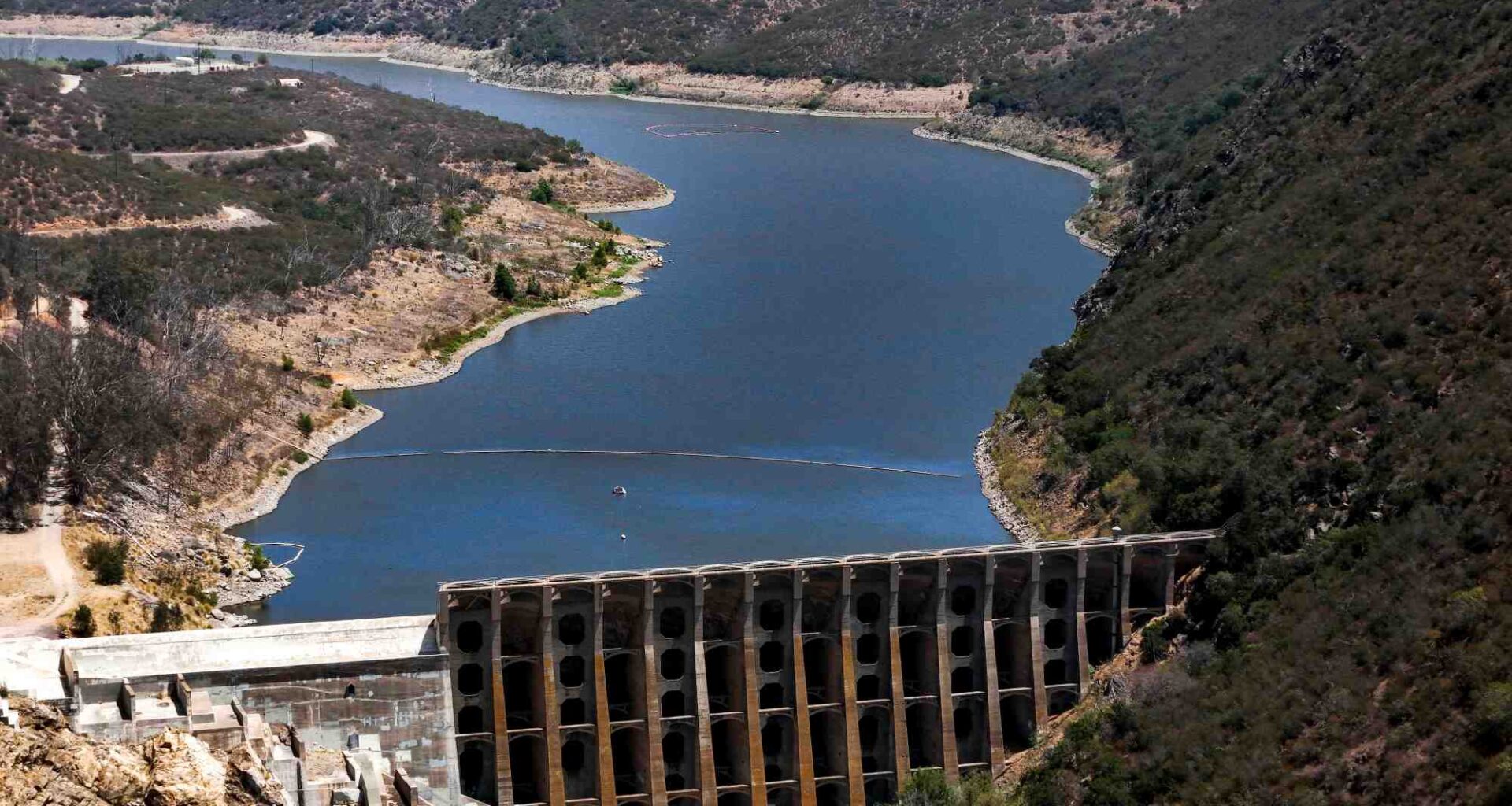
A growing coalition of civic groups is lobbying San Diego to accelerate efforts to rebuild Lake Hodges Dam and to raise the dam’s existing water level — but city officials are limited by state regulations and cost concerns.
The lobbying effort comes as city officials finalize two complex studies: one analyzing whether a new dam should be built, another analyzing how to handle the existing 108-year-old dam until there’s a long-term answer.
The civic groups say a new dam is crucial to keeping downstream communities like Rancho Santa Fe safe from flooding, securing a reliable local water supply, supporting existing wildlife and limiting risks to homes in the wildfire-prone area.
The groups, which include the Rancho Bernardo Community Council and the Friends of Lake Hodges, also want the water level raised from 280 feet to 295 feet during the roughly 10 years it will take to build a new dam.
They say that will reduce wildfire risk and restore recreational and boating opportunities on the lake, which have been curtailed or eliminated since the water level was lowered.
In addition, the groups stress that the existing 280-foot water level renders useless a taxpayer-funded $208 million pump built in 2012 to dump excess Lake Hodges water into the nearby Olivenhain Reservoir.
City officials don’t dispute that the 280-foot level prevents use of the pump, but they stress that the 280-foot level is based on a comprehensive safety analysis and was chosen in concert with state regulators.
That analysis was prompted by state officials’ 2023 declaration that Hodges was the most dangerous dam in California, giving the dam’s safety level the unusually low rating of “unsatisfactory.”
While the state based those concerns mostly on the risk of a seismic event, subsequent analysis by the state has raised concerns about the dam’s safety even without an earthquake.
City officials have indicated they have no plans to reconsider the 280-foot level with the existing dam, so the level couldn’t be raised any higher unless a new dam is built or the existing dam is essentially rebuilt.
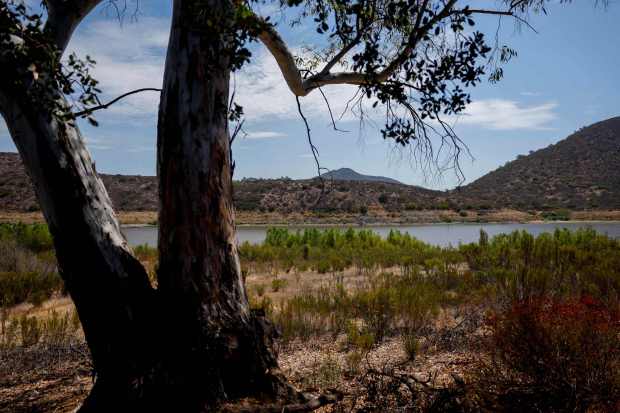 Lake Hodges on seen on Friday, Aug. 7, 2026 in Escondido. (Meg McLaughlin / The San Diego Union-Tribune)
Building a new dam had been the city’s first and only choice until last year, when a sharp jump in cost estimates prompted the County Water Authority to renege on an agreement to help fund a new dam.
The new cost analysis determined the price tag had leapt from $275 million to somewhere between $474 million and $697 million.
The city’s plans have always called for the water authority to cover half the cost, for the city to cover 25% and for the Santa Fe Irrigation District and San Dieguito Water District to jointly cover the remaining 25%.
The city owns the dam, while the water authority and the downstream water districts have storage rights to the water in the reservoir. All the agencies have been sharing the costs to maintain the dam.
The city and the water authority are locked in complex litigation over the water authority’s decision not to help fund a new dam — but the city’s new analysis has to consider the possibility that there will be no water authority contribution.
That would make a new dam potentially much more costly for the city’s water ratepayers, who are already facing a series of rate hikes in coming years.
City officials also must analyze how much bang for their buck a new dam would provide
In 2024, the city secured a $240.6 million federal loan for the dam replacement under the Infrastructure Investment and Jobs Act of 2021. It’s not clear whether that loan would apply to less ambitious projects.
The civic groups lobbying for a new dam contend it would be a smart investment — one with high upfront costs, yes, but limited operating costs to capture millions of gallons of essentially free rainwater for ratepayers.
“It’s clear that they have to have a new dam there,” Rhonda Farrar, leader of Friends of Lake Hodges, said last week.
But with the first phase of the city’s Pure Water sewage recycling project scheduled to begin operating this winter, the city’s water needs are shrinking. In addition, as much as $700 million for a dam to store rainwater might not be a smart investment.
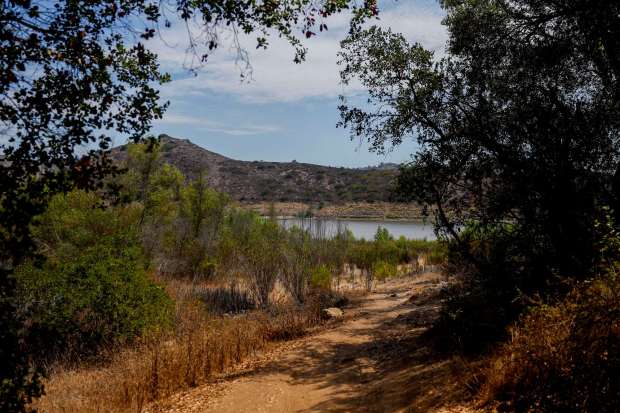 Lake Hodges on seen on Friday, Aug. 7, 2026 in Escondido. (Meg McLaughlin / The San Diego Union-Tribune)
Those kinds of questions are key to the two studies city officials and a consultant are finalizing right now.
The first study, called an interim risk-reduction analysis and expected to be released in September or October, will analyze how to operate the existing dam until a long-term solution is chosen.
It will focus on things like how the city can maintain the 280-foot water level in heavy rains, such as those expected with the El Niño this coming winter.
State officials have expressed concerns about the city potentially needing several days to remove excess water after a storm, so the study may recommend new pipes or valves or a smaller spillway for the dam.
The second study, an analysis of how to build a new dam and whether that should happen, is expected to be completed in early 2027.
It will examine possibilities that may seem unrealistic, such as the city eliminating the dam and what impact that could have on downstream communities.
The civic groups say the two studies are crucial to the future of the city and to the area near Lake Hodges.
“The decisions made in the coming months will echo for generations,” the groups said in a joint statement. “Set aside bureaucratic and budgetary obstacles and collaborate on a solution that protects public safety and honors more than a century of investment in this watershed.”
The groups say wildfire risk should be a high priority, stressing that the area already lost several hundred homes during the 2007 Witch Creek fire.
They say it makes no sense for 500 acres of former lakebed to be exposed as fuel for wildfires in a fire-prone area.
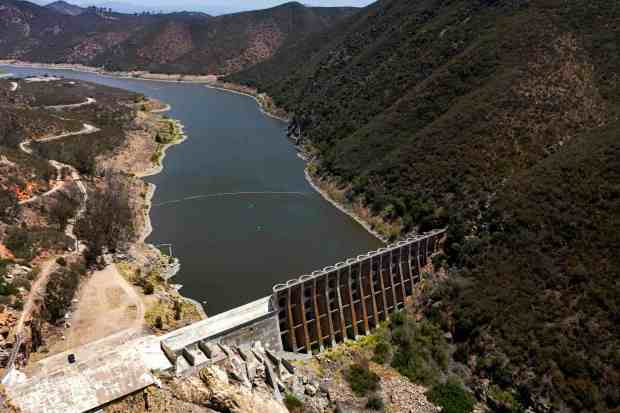 The Lake Hodges Dam is seen on Friday, Aug. 7, 2026 in Escondido. (Meg McLaughlin / The San Diego Union-Tribune)
A city spokesperson said Friday that city officials are on top of any safety risks.
“California’s state and local brush management programs are designed to reduce flammable shrubs and grasses in the wildland-urban interface,” said the spokesperson, Jennifer McBride.
In addition, McBride said the city’s Fire Department and Cal Fire have confirmed that their helicopters and other equipment can access water at Hodges, in addition to other surrounding water sources, as operational needs require.
Robin Kaufman, chair of the Rancho Bernardo Community Council, said last week that despite Hodges still being viable for firefighting choppers, the lake would be more effective if it had more water.
Kaufman suggested the lower level could force choppers to reload at Lake Miramar, potentially reducing how frequently they can drop water on a raging wildfire.
She said Rancho Bernardo residents want a new dam built for many reasons, and she stressed the savings from storing rainwater in the lake versus buying expensive imported water.
Farrar agreed, calling it financially shortsighted to keep the Lake Hodges level low and to give up on the pump to Olivenhain, where even more water could be stored.
“We have billions of gallons of free water being flushed out to the sea,” she said.
Her group, which was founded four years ago, plans to continue lobbying the city.
“The Friends of Lake Hodges is focused on working with elected officials and their staffs and our partners to accelerate the completion of the new dam and raise the lake level permanently for everyone as soon as possible,” the group said in a statement. “And to make sure that we are capturing all the precious rainwater that flows into Lake Hodges for the next 100+ years.”
Other civic groups lobbying with the friends group include RaiseLakeHodges.org, Friends of San Diego Lakes and the North County Climate Alliance.
The county water authority did not respond to requests for comment.