
California Forever hopes for last minute help from state lawmakers, Gov. Newsom | CA Politics 360

The developers of a new, proposed town called California Forever have been struggling to get it started and are now hoping to get some last-minute help from state lawmakers and the governor to move it forward.
California Forever is a plot of land that was purchased by a group of Silicon Valley tech billionaires and investors to create a new town. It sits near the halfway point between San Francisco and Sacramento in Solano County.
With just weeks left in California’s legislative session, California Forever wants lawmakers to carve the project out of some of the state’s environmental requirements to speed up timelines if lawsuits are filed against the project. Developers also want the ability for a neutral, third party to be able to step in if cities and counties can’t agree how to divide up the tax money. All of this would be under the condition that a business such as manufacturer or shipyard decides to locate to the area. As of Sunday night, there was no formal legislation filed for lawmakers to consider any of this.
Supporters believe the changes could attract major businesses to the area, boosting the economy and addressing California’s housing shortage. However, they warn that without these adjustments, the project could become another “cautionary tale” about the challenges of doing business in the state.
Saronic Technologies, which was considering California Forever, ultimately chose to set up a new factory in Brownsville, Texas.
In response, a coalition of concerned residents, local leaders, and organizations, known as Solano Forever, has urged Governor Newsom and legislative leaders to reject the proposed changes.
In a statement, the group said, “Advancing these proposals at the last minute would be extraordinarily harmful to Solano County communities and the environment, and we urge you to reject any such legislation.” They added, “The breadth and scope of what is being asked demands the kind of transparency and evaluation that can only be achieved through the full legislative process.”
California Forever has enlisted the help of two former state lawmakers, Democrats Bob Hertzberg and Darrell Steinberg, the latter also a former mayor of Sacramento, to advocate for the project. Both served as legislative leaders. Hertzberg was the Speaker of the State Assembly from 2000 to 2002 and Steinberg served as the President Pro Tem of the State Senate from 2008 to 2014.
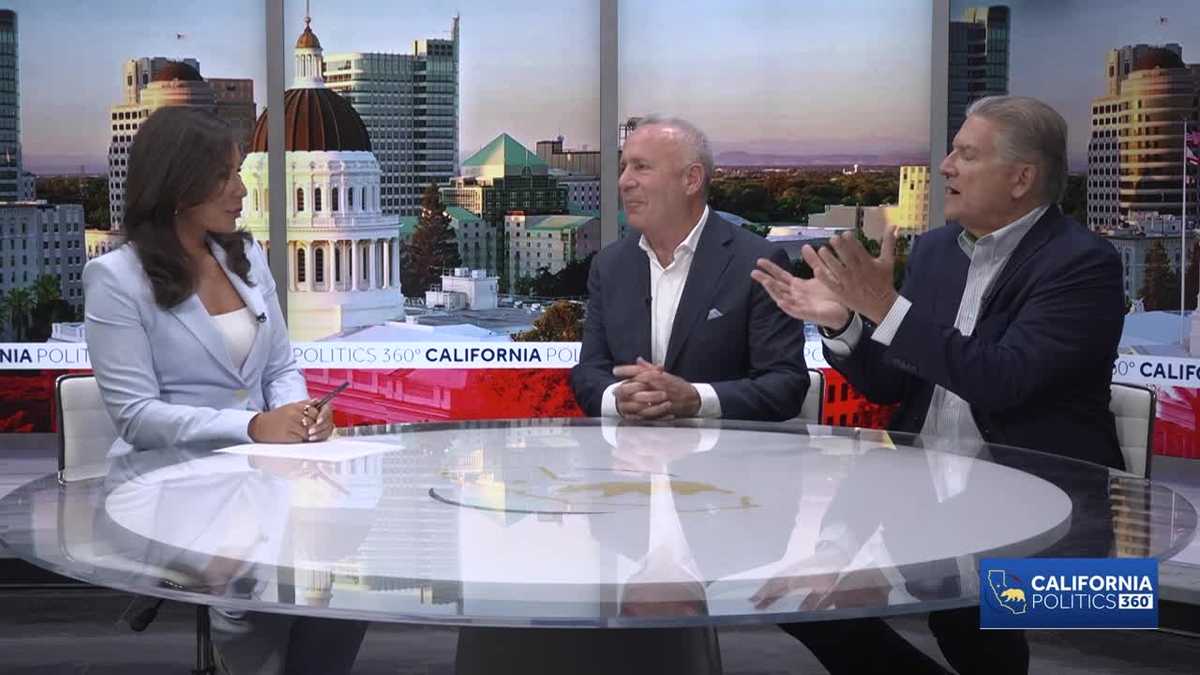
The two joined California Politics 360 this week to explain exactly what it is they’re trying to accomplish.
“We believe in California, and we see a unique opportunity,” Steinberg said. “This is a statewide issue. We know several things about California. Number one, we have a housing shortage. And number two, we don’t have enough high-wage manufacturing, shipbuilding, industrial kinds of jobs.”
Hertzberg added, “I’m sick and tired of the brand of California. Texas has beaten us. This state’s beaten us. All we’re asking in this effort that we’re engaged in, private sector funded, is just let’s get rid of a few of the impediments, not local control, but a few of the impediments that slow down the ability for people to want to come.”
When asked if they were surprised Saronic Technologies chose Texas instead of California, Hertzberg and Steinberg said they were disappointed.
“We knew if we didn’t get legislation in place in time that there was probability they would go to Texas,” Hertzberg said, noting the company’s contracts with the Navy.
“As I said, it’s a cautionary tale,” Steinberg said.
The project, which is five times the size of Manhattan, would focus on developing a shipyard and industrial facilities in Solano County, along with workforce housing to support the new businesses. Steinberg emphasized that the goal is not to build a massive new city but to create enough housing to support one or two major employers.
“There’s a lot of history here,” Steinberg said. “The shipyard out in Solano County and the so-called foundry, all the industrial land and land for manufacturing, has sat virtually vacant for five decades. Simply to shorten the timeline for environmental review, not to waive the environmental laws, would give the next company the incentive and the certainty to be able to say, ‘Okay, we’re going to choose California.’”
Hertzberg outlined the specific legislative changes they are seeking, including applying a 270-day environmental review timeline for leadership projects, using a 2008 environmental impact report for the shipyard, and implementing binding arbitration if cities and counties cannot agree on tax-sharing agreements.
“We understand how rat think developers come in and promise you the world and deliver nothing,” Hertzberg said. “What we said was no relief, none of these things happen, unless the jobs come and the workers come to make this thing happen. As he likes to say, ‘you can wipe your windows with the bill.’ As I like to say, for the Jewish members in the audience, you can wipe your tuches with the bill. It has no impact.”
Concerns remain about the project’s potential impact on local resources, including water, land, and marshlands, as well as the lack of local voter approval. A ballot measure for the project was pulled in 2024.
Steinberg acknowledged the trust issues surrounding the project, saying, “The history is real, and there has been a lack of trust. In many ways, it’s understandable. Do you look backwards and say, in a county that is really hurting, ‘Because of that, we’re going to do nothing?’ Or do you make the developer verify and give them a chance to get started?”
Hertzberg and Steinberg emphasized that their proposal is focused on creating jobs and housing while maintaining local control. “Local control is maintained 100 percent,” Hertzberg said. “We’re just trying to set up to plow the road, give an opportunity for this to happen.”
The developers also stressed that the project would not proceed without securing commitments from major employers. “What we’re offering here is low risk and potentially very high reward,” Steinberg said. “It doesn’t happen unless you attract a major employer.”
The timeline for action is tight, with the legislative session set to end in August. While the developers are pushing for a budget trailer bill to expedite the process, concerns remain about whether the public will have enough time to review the proposal. Budget trailer bills don’t get the typical vetting required for normal legislation and they take effect as soon as the governor signs them.
“This is a prime topic of conversation in Solano County,” Steinberg said. “What we’re suggesting is not the big vision in one fell swoop. We’re talking about getting started—what it’s going to take to attract one, two, or three major shipbuilders or manufacturers.”
As the debate continues, the project’s backers hope to convince lawmakers and the governor that their proposal represents a significant opportunity for economic growth in California. “If it’s not controversial, it probably isn’t that important,” Steinberg said. “A little controversy means that there’s something really at stake here.”
KCRA 3 Political Director Ashley Zavala reports in-depth coverage of top California politics and policy issues. She is also the host of “California Politics 360.” Get informed each Sunday at 8:30 a.m. on KCRA 3.