
By Sonia Campos-Rivera, Special for CalMatters

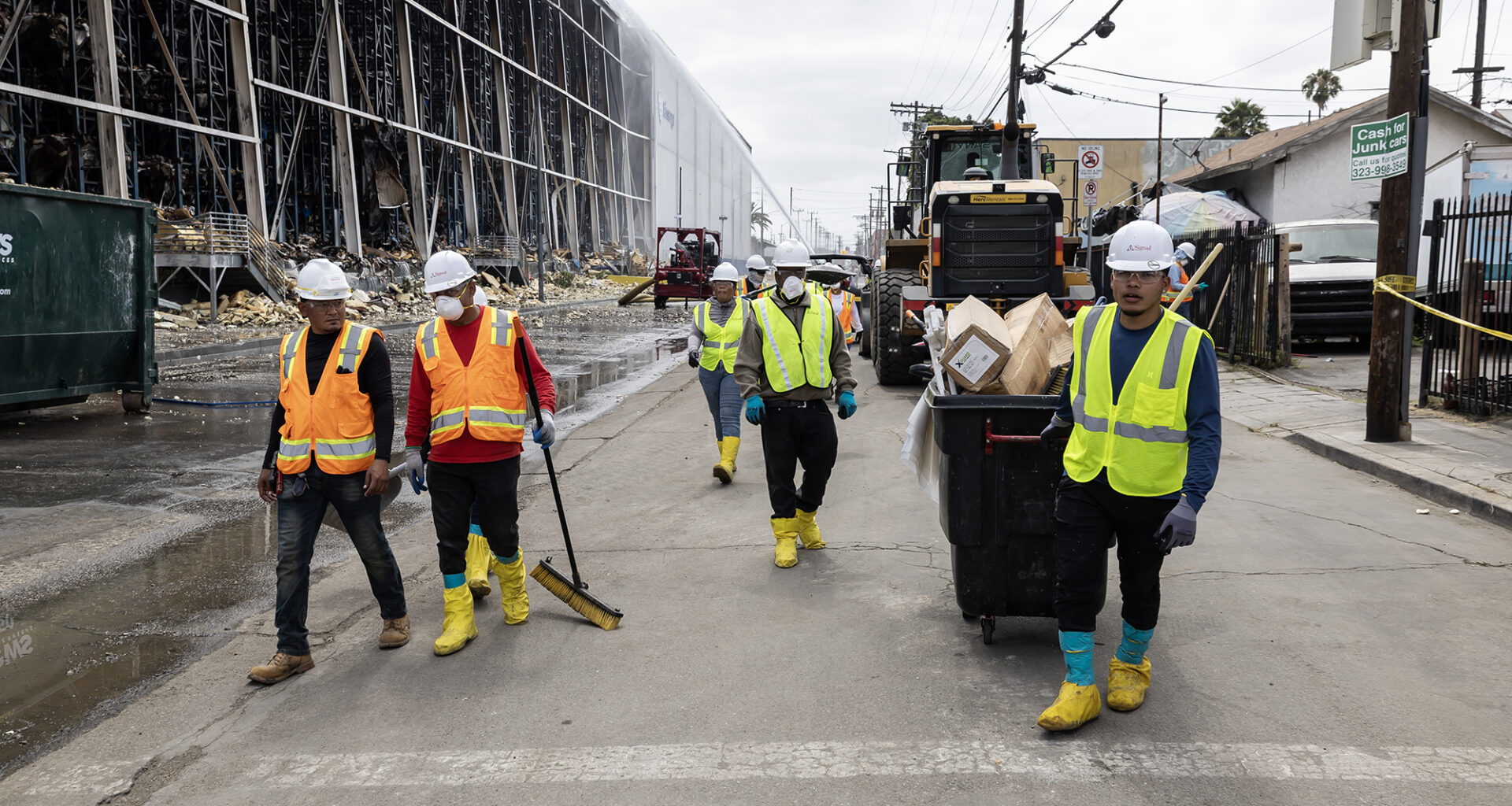
Workers clean up the aftermath of the Lineage warehouse fire in Boyle Heights in Los Angeles, on June 29, 2026. Millions of pounds of food destroyed in the fire are decomposing, creating a putrid odor that has spread throughout the community. Photo by Ted Soqui for CalMatters
This commentary was originally published by CalMatters. Sign up for their newsletters.
Guest Commentary written by
More than a month after the Lineage Logistics warehouse fire in Los Angeles released pollutants and the persistent smell of rotten meat into the air, the people of Boyle Heights are still waiting for cleanup and answers.
I watched this disaster unfold on streets I have known my whole life. I know what it means to have a business in this community and what losing it, even temporarily, costs.
I watched La Carreta and La Chispa de Oro restaurants survive decades of disruption and keep serving this neighborhood. I watched the Picaresca Barra de Cafe and Lilly’s Cafe launch during COVID — the scariest possible moment to start something new — because their owners decided waiting for the right time was a luxury they could not afford.
We have always had to show up for ourselves before anyone else does. Resiliency is not something you are born with. It’s what you develop when the system keeps failing you.
But resiliency has a limit.
This warehouse fire was the fifth major crisis to hit East Los Angeles businesses in six consecutive years: There was COVID-19, the 2025 wildfires, ongoing federal immigration raids and the East L.A. crude oil spill.
The same streets, families and businesses are absorbing shock after shock, with no permanent infrastructure to catch us.
The Lineage facility had a documented record of health and safety violations. Residents had no idea what was behind those walls, but these hazards seem to be concentrated in Black and brown communities. According to UCLA’s Latino Policy and Politics Institute, the smoke advisory zone surrounding the Lineage Logistics fire carries a cumulative environmental burden score that’s 63% higher than Los Angeles County overall.
The financial reality is just as stark. More than 15,400 workers living in the smoke advisory zone earn below L.A. County’s very-low-income threshold. Per capita income in the area is roughly half the county average.
This community has never stood on even ground.
When a small business goes dark for nearly two weeks, there is no cushion to draw on. For immigrant entrepreneurs, the gap between crisis and relief is wider than for other groups.
Mayor Karen Bass has signed executive orders directing cleanup efforts and referencing financial assistance for affected businesses. Lineage announced $2.5 million in relief at a town hall in July. That matters, but executive orders and announcements are not checks.
The promise of assistance is not the same as delivering it.
UCLA’s research documented what many community members already know: Heightened federal immigration enforcement is discouraging immigrant families from seeking government services — including the public health resources and assistance programs set up in the wake of this fire.
East Los Angeles, next to Boyle Heights, is an unincorporated community with no city council, mayor or city services. Residents and businesses rely entirely on county resources shared across more than 120 unincorporated communities.
That structure has never worked in our favor, and every new disaster makes the math worse.
What actually worked in the days after this fire was the community itself. Inclusive Action, the Boyle Heights Chamber of Commerce, the Los Angeles Economic Equity Accelerator and Fellowship, or LEEAF, and the Hustle and Heart Collective launched a relief fund within days. Leo Abularach and Elisa Hoyos of La Picaresca organized local business owners and civic leaders to identify solutions.
The local governments that serve this area should establish a standing and sustainable small business resiliency fund before the next fire, spill or immigration raid. It must be accessible to immigrant entrepreneurs who cannot depend on federal resources in the current climate.
Community organizations like mine are ready to help design and implement it. County and city leadership must meet us there. East Los Angeles has never stopped waiting. We deserve better.
CalMatters CEO Neil Chase is a member of the UNITE-LA Board of Directors.
This article was originally published on CalMatters and was republished under the Creative Commons Attribution-NonCommercial-NoDerivatives license.