
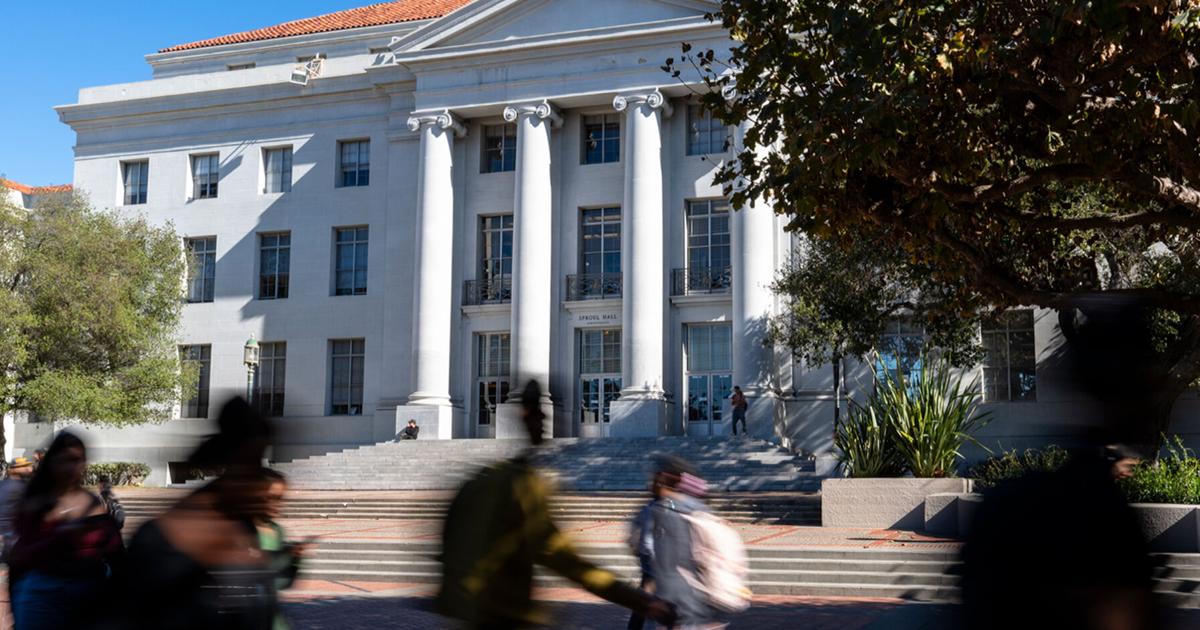
UC Berkeley became the second UC system campus this February to join a network of institutions improving the lives of older adults and promoting healthy aging.
The Age-Friendly University Global Network, or AFU-GN, consists of more than 140 institutions that hope to achieve their goals through education, research, curriculum development, community engagement and more.
Campus specifically intends to encourage older adults to participate in educational and research programs — what it describes as some of a university’s core activities.
The designation of UC Berkeley as an Age-Friendly University is a part of a long-term commitment to “change the narrative of aging,” according to Cary Sweeney, director of the UC Berkeley Retirement Center. She added that uplifting older adults in a space “where they’re not traditionally seen,” such as a university campus, is ongoing work.
The process to obtain this designation was co-led by Sweeney and Susan Hoffman, assistant dean of lifelong learning and the director of the UC Berkeley Osher Lifelong Learning Institute.
The designation has already made an impact, according to Sweeney, who said people have already reached out asking if retirees could volunteer with the UC Berkeley Retirement Center.
“Those are some of the indicators that help me see that we’re making a difference,” Sweeney said. “People are actually starting to ask more and see that retired faculty and staff are available to help them and volunteer.”
Campuses with the AFU-GN designation are involved in researching topics that could benefit adults as they age, such as caregiving and social connection.
One such campus center conducting this research is the UC Berkeley Center for the Science of Psychedelics. Michael Silver, the center’s director, has designed a study referred to as “PLASTICITY,” or “Psychedelic Longitudinal Aging Study In Cognitively Healthy Older Adults.”
PLASTICITY is trying to discover whether the psychedelic compound psilocybin could serve as a possible strategy to promote healthy aging.
“Older adults are often marginalized or discounted in our society, so having a study that’s just dedicated to a better understanding of older adults, in the context of psychedelics research … is helpful for acknowledging and collecting data in a way that is not excluding (them),” Silver said.
Beyond benefiting the retirees, Sweeney said the AFU-GN will also provide a “two-way street,” where students can get academic guidance from retirees as well.
“Looking ahead, our greatest hope is to firmly establish a culture of lifelong belonging at Berkeley by integrating older adults into the university’s teaching, learning, and research,” Sweeney said in an email.
This article was authored by Lily Pak and Maryann Rosas Velazquez, participants of The Daily Californian’s High School Journalism Intensive.