
Unlike AB 1642, AB 1795 leaves testing protocols and clearance thresholds to future CalEPA rulemaking, adds no causation presumption, and preserves a role for “accepted trade and industry standards” in insurer estimates and restoration work unless they conflict with CalEPA’s rules. Pacific Palisades Community Council (PPCC) has a second objection on a separate ground, that the Insurance Code has covered smoke damage as a fire loss for more than a century and AB 1795 must preserve those rights rather than displace them. The consequence is that health standards may exist while disputes persist over whether additional testing is warranted, if contamination stemmed from the fire and which cleanup costs an insurer must cover.
That divide reflects how the bills emerged. Harabedian told senators the nine-month Department of Insurance task force behind AB 1795 included participants with a commercial stake in current remediation practices and too few scientists; its final report acknowledges the task force never reached agreement.
The industry-standards provision is one of the sharpest fault lines. EFRU’s concern is not simply that AB 1795 leaves protections out. It argues that writing “accepted trade and industry standards” into law could make current problems harder to challenge by giving insurers a statutory basis to defend narrower testing and less extensive cleanup. EFRU wants that language removed entirely. PPCC has raised the same concern and has said AB 1795 is not a substitute for AB 1642.
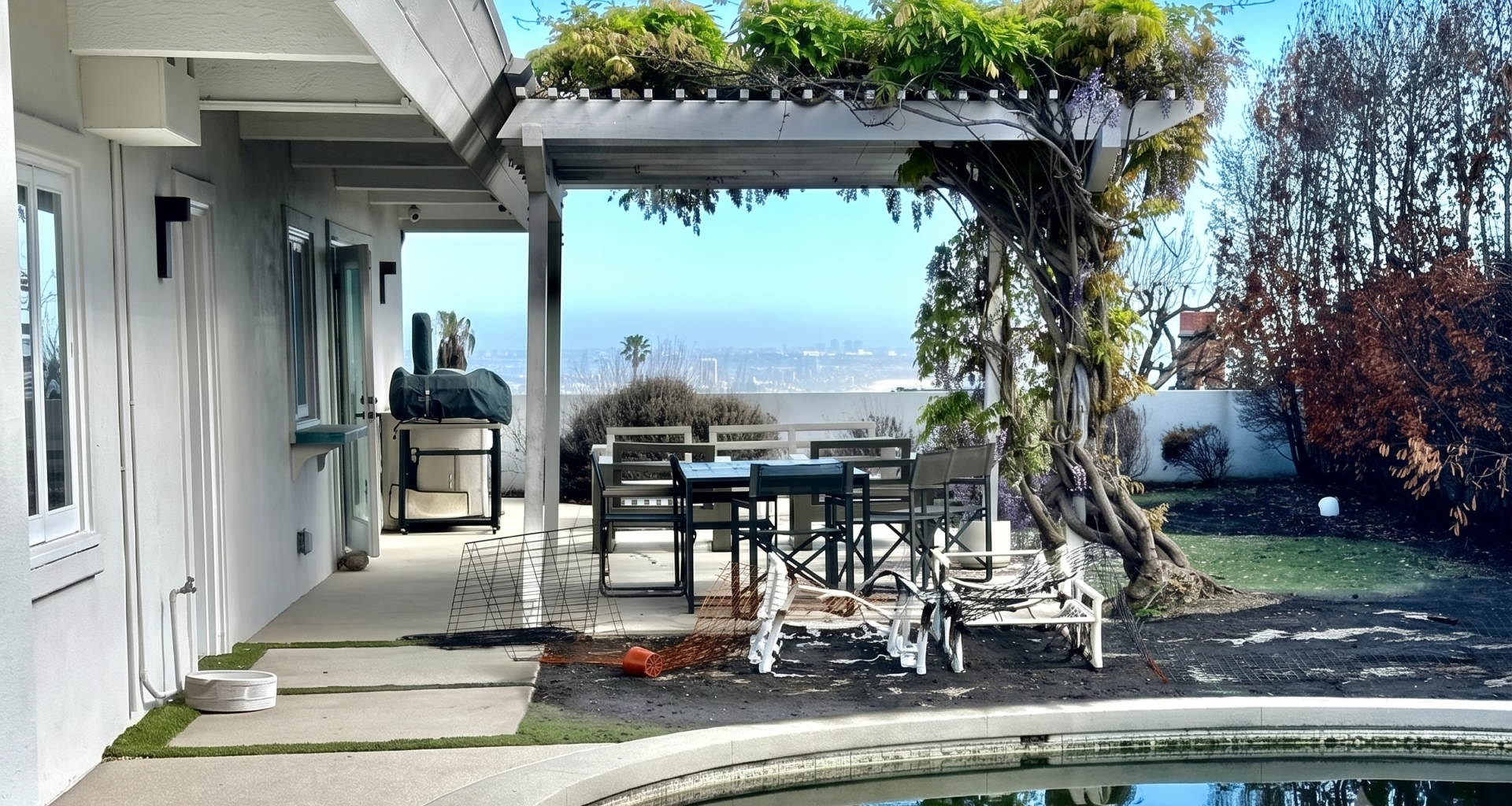
That concern is not hypothetical. The New York Times reported that many residents with standing homes were denied insurer-funded toxic-substance testing and later documented an Altadena family that returned after insurer-approved remediation only to find unsafe contamination through independent testing. EFRU’s testing found lead still detectable in 96 percent of remediated Altadena homes, and asbestos in 36 percent. No California standard says whether those homes are safe to live in.
Industry standards are only one of EFRU’s objections. It says it would support AB 1795 with six changes: removing that language; adding interim lead and asbestos thresholds; adding a wildfire-causation presumption; broadening the impact-zone method; fixing policy-renewal timing; and requiring disclosure of insurer ties. Consumer Watchdog, Resilient Palisades and PPCC have opposed AB 1795 for overlapping reasons.
Insurer trade groups oppose both bills, but more strongly oppose AB 1642. They argue its causation presumption could make carriers responsible whenever lead or asbestos is found, and that its impact zone could extend claims beyond neighborhoods directly burned. Survivors counter that the zone would be drawn by state scientists using fire data and would still require evidence of wildfire debris such as soot, char or ash.
A Los Angeles court has already ruled on the underlying question. The court held in Aliff v. California FAIR Plan Association that policy language requiring smoke damage to be visible to the unaided eye or detectable by the unaided nose, while excluding laboratory testing, was unlawful. It was a trial court ruling, not binding precedent, which is why August 13 matters: The Legislature can write that principle into statute, or something weaker.
Until it does, the law protects the wrong person. Since July 2025, Cal/OSHA’s rules have set enforceable lead and asbestos limits for remediation workers sent into private homes. The crew a carrier hires to clean a smoke-damaged house now has a legal ceiling on what it can be exposed to. The family moving back in has none.
This is not only a 2025 Los Angeles story. Hardened homes are the homes that survive, and homes that survive are the ones that end up contaminated rather than destroyed. Every dollar California spends on fire hardening adds to the number of families who will eventually be where thousands in Altadena and the Palisades are now: holding a policy, holding a test result, and waiting for someone to agree on what it means.
State Senator Ben Allen, whose district includes the Palisades, has said he will support both bills only if the final deal centers on the health-based protections at the heart of AB 1642. Legislators decide this, and legislators respond to their own constituents. A short message to your state senator, or a request that your community council take a position, carries more weight before August 13 than most people assume.
Kent Newmark is a native of Pacific Palisades and serves on the PPCC’s Advocacy Advisory Task Force.