
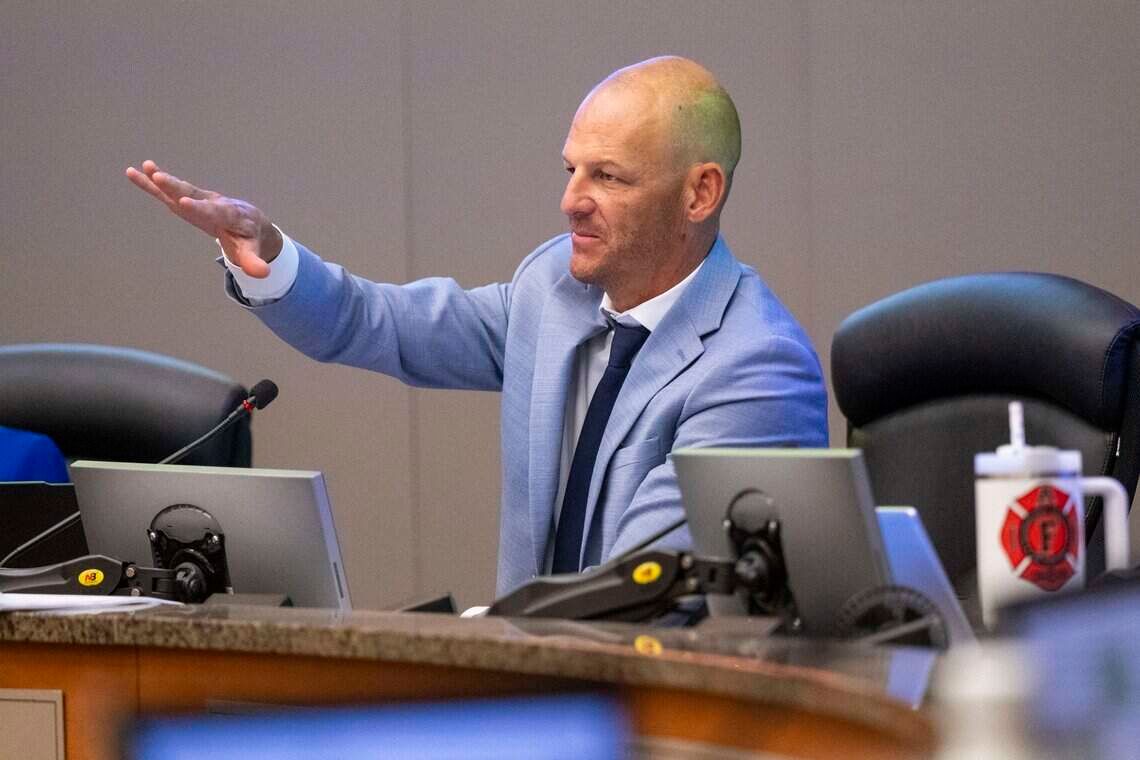
Sacramento is one of many cities in California and nationwide dealing with heightened tensions within their city chambers, raising questions about decorum during public meetings.
Tuesday will be the first regularly scheduled council meeting since July 28, which marked the fourth time in two months that the council declared a recess and the third time that members of the public were made to clear the chambers. The recess was called after a portion of the audience erupted in calls to “abolish ICE” and to “recall them all,” resulting in a 40 minute-long recess which elongated an already lengthy meeting about a project unrelated to immigration.
Mayor Kevin McCarty’s spokesperson Geneva Jacob did not answer a question about why the recess went on longer than several other recent recesses, citing closed session restrictions.
Last month’s infamous hot mic moment exacerbated an already fraught relationship between city leadership — namely McCarty and Councilmember Karina Talamantes — and local activists who are upset with what they characterize as a lack of action on the city’s part to protect residents from federal immigration enforcement.
Immigration advocates have also taken issue with the city’s renewed grant agreement with a local fusion center, a federally funded hub where local and state agencies share intelligence with agencies, including Immigrations and Customs Enforcement.

A member of the audience yells at Sacramento City Council members during a meeting on July 28. Moments later, Mayor Kevin McCarty called for a recess.
But their approach has also spawned backlash to the backlash, with some calling on McCarty to put a stop to the disruptions.
In his hushed conversation with Talamantes, McCarty stopped her from issuing warnings to disruptive members of the audience, saying that he had already spoken with the city attorney about giving people probation before she lunged to turn off the mic.
McCarty’s comment about the legal advice he was given conflicts with state law. The Brown Act details the process by which a disruptive person can be barred from a public meeting — they must receive a clear verbal warning and could lawfully be removed from the meeting if they continue to impede meeting proceedings.
McCarty has declined The Sacramento Bee’s request to elaborate on his comment, but has publicly said that he does not plan to call for changes to chamber protocols and that he expects the disruptions to taper off.
City Attorney Gustavo Martinez also declined to answer The Bee’s question seeking clarification on the mayor’s comments and on the city’s policies and procedures.
Former Mayor Darrell Steinberg, who faced a number of chaotic situations in the chamber related to the killing of Stephon Clark and a ceasefire resolution, said that it is difficult to balance honoring the public’s expression and maintaining a civil environment.

Stevante Clark, whose brother Stephon Clark was fatally shot by Sacramento police, sits on the City Council dais in front of then-Mayor Darrell Steinberg, briefly forcing the council to call a recess, in 2018.
“It’s a very difficult situation for elected officials because your obligations and our responsibility is to make sure everybody is heard, and when things go that way it prevents everyone from being able to participate,” he said.
He said that removing or putting people on probation may in the end cause more disruption as supporters come to speak in their place.
According to Tuesday’s 2 p.m. agenda, the City Council will not be discussing any matters directly related to topics that local activist groups have taken interest in.
Local members of the Party for Socialism and Liberation have vowed to continue demonstrating outside of City Hall meetings until the council considers pulling out of its agreement with the federal fusion center.